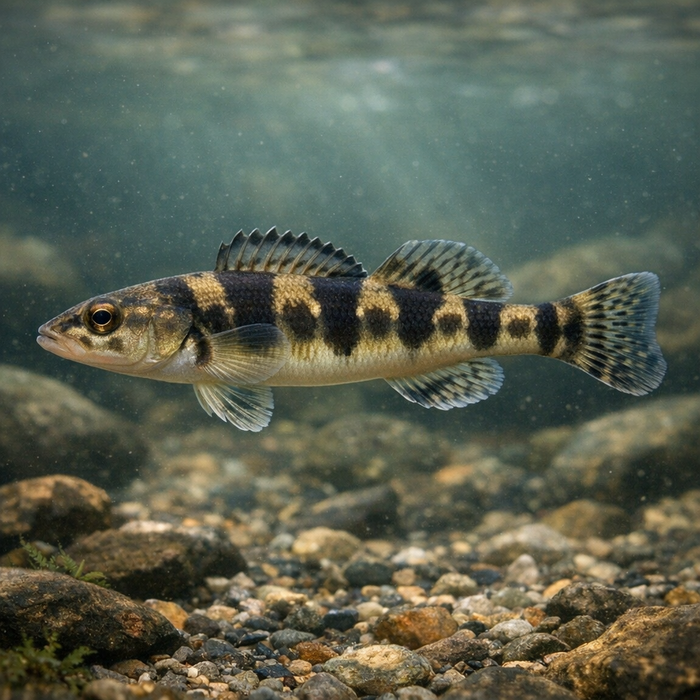
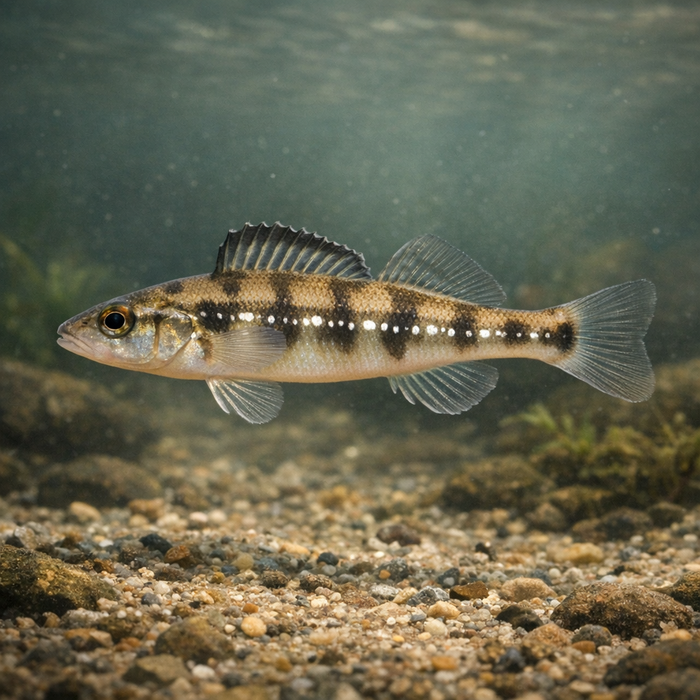
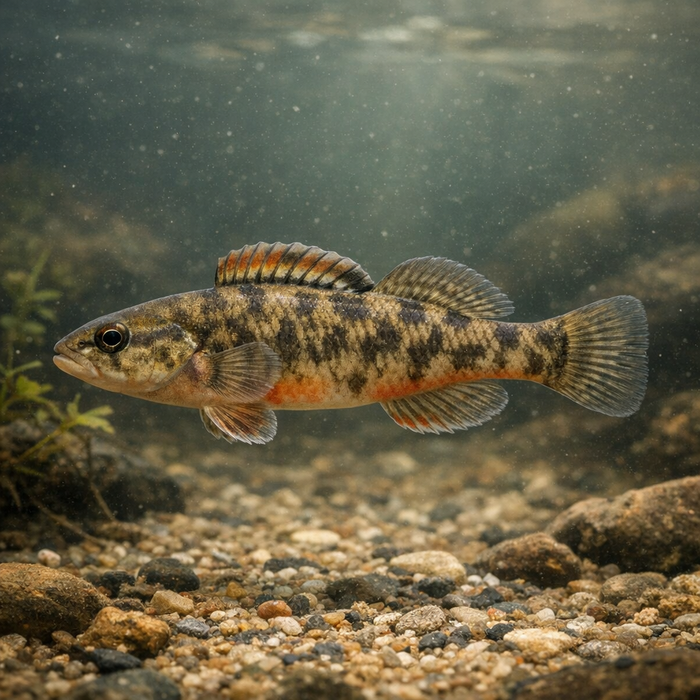
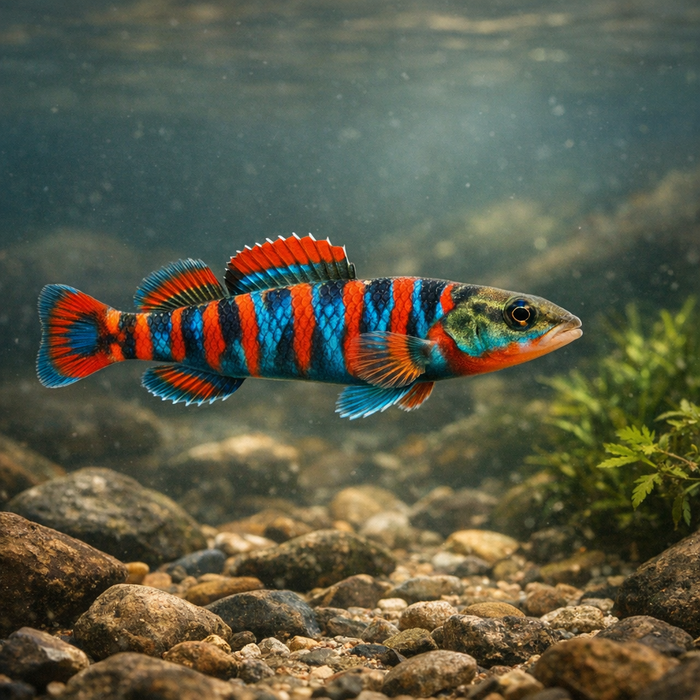
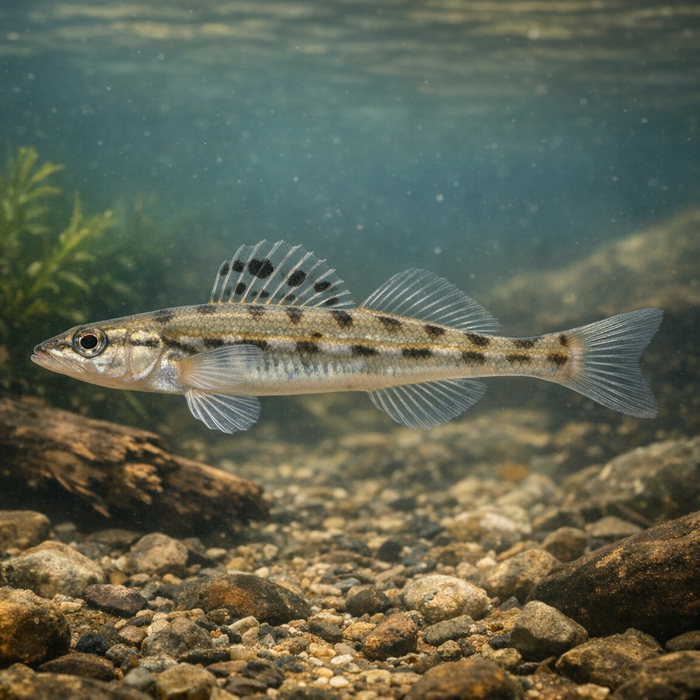
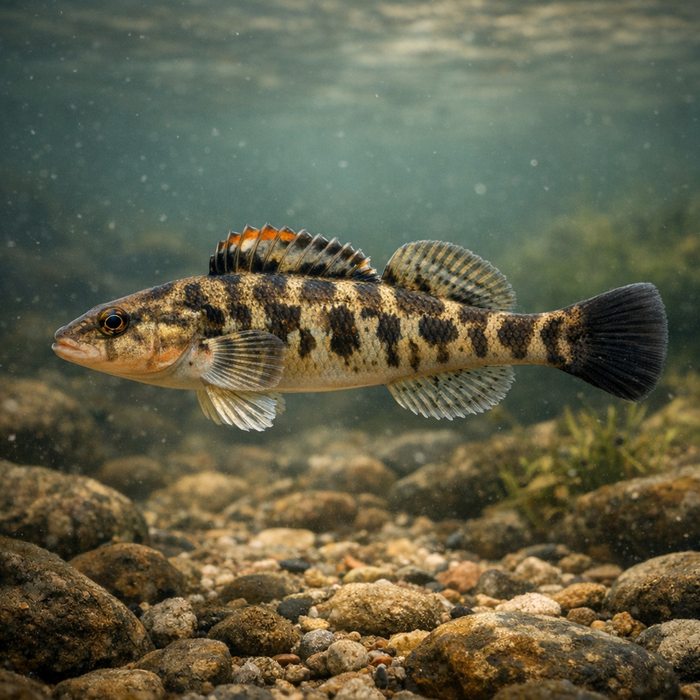
Tippecanoe Darter (Etheostoma tippecanoe): A Bold, Memorable Hook LineIntroductionThe Tippecanoe darter is tiny, picky, and fast, like a riffle-dwelling sports car with fins. You won't troll for it. You won't cook it. But if you're into wild, clean-water microfishing, this little rocket is pure catnip. Think of it as the ultimate current-loving minimalist: small body, oversized pectorals, and a sprint-first lifestyle. If you're chasing real Tippecanoe darter facts or want to understand Tippecanoe darter habitat, buckle up.What Makes the Tippecanoe darter Unique?Two things jump out. First, size. The Tippecanoe darter is among North America's smallest percids, with many adults barely stretching past an inch. Second, it's a riffle specialist, built to hug the bottom in fast water. Wide pectoral fins act like suction pads, letting the fish pin to gravel while it snaps up drifting invertebrates. During the spawning window, males brighten with bold body bars and fin accents, a brief flash of swagger before sand and silt mute the show.Habitat & Global RangeForget lakes. The Tippecanoe darter is a clean-gravel riffle junkie, living in small to medium rivers with clear flow and firm pebble to cobble bottoms. Its range centers on the Ohio River drainage, with strongholds in places like Indiana's Tippecanoe River and portions of the Allegheny system. It's not a cosmopolitan traveler; it rides out life in short riffle runs, where current and oxygen are reliable and fine sediment stays away. If you're scouting new water, look for bright, stony riffles where your boots chatter over pea gravel.Behavior & TemperamentThis fish doesn't cruise midwater. It clings low, darts hard, and makes a living off tiny bugs swept along the bottom. Movement is quick and surgical. In bright light and steady flows, the Tippecanoe darter positions in micro-eddies behind pebbles, then bursts forward for a bite. It's wary, vanishing when heavy feet cloud the riffle. During spawn season, activity and color notch up, but the fish still hunkers tight to the substrate. Hang time near the surface is basically a no-go.Ecological ImportanceThe Tippecanoe darter is an honest-to-goodness water-quality tattletale. When sediment loads rise, it loses the clean interstitial gravel it needs for spawning and cover. When riffles deoxygenate, its metabolism takes a hit. Because it's so specialized, its presence signals intact, functioning stream segments. Remove the gravel, add silt, and you don't just lose a fish. You lose the entire riffle community tune-up: mayflies, caddisflies, and the whole benthic buffet.Conservation & Environmental PressuresSiltation is the boogeyman here. Poorly managed construction, row-crop runoff, and destabilized banks fill the gaps between stones and smother eggs. Dams and channelization flatten riffles and slow water, wrecking the fish's preferred lanes. While the Tippecanoe darter isn't a headline species, it's protected or monitored in parts of its range, and for good reason. Keeping gravel riffles clean and connected does more than help one darter. It safeguards entire stream reaches.The FishyAF TakeThe Tippecanoe darter is not for everyone. It's for the angler who squats on slick cobble, reads seams the width of a bootlace, and thinks a one-inch fish can make a big day. Catching one means your water is healthy, your approach is stealthy, and your rigging is dialed to absurdly small. It's a microfishing badge of honor. Treat it like a rare book: handle gently, snap a clean length photo if legal, then let it jet back to the riffle. Clean gravel, crisp current, tiny hook, huge respect. That's the Tippecanoe darter in a nutshell.