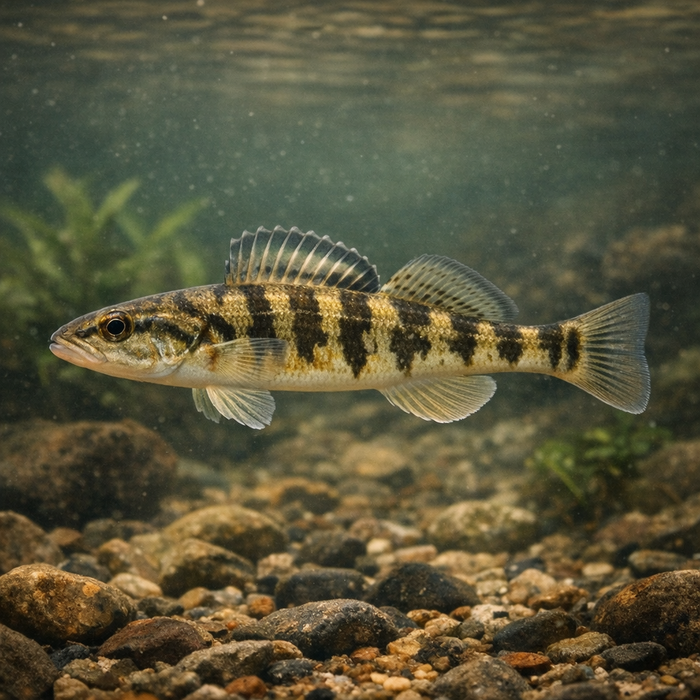
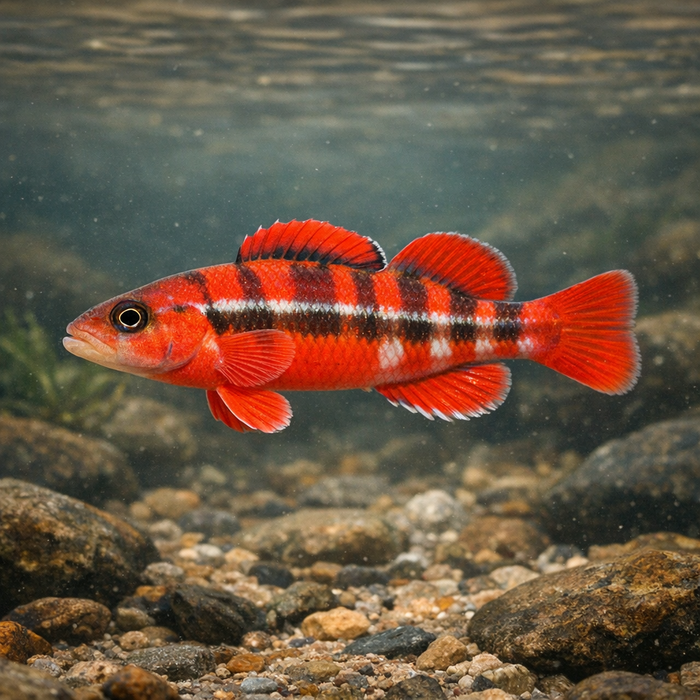
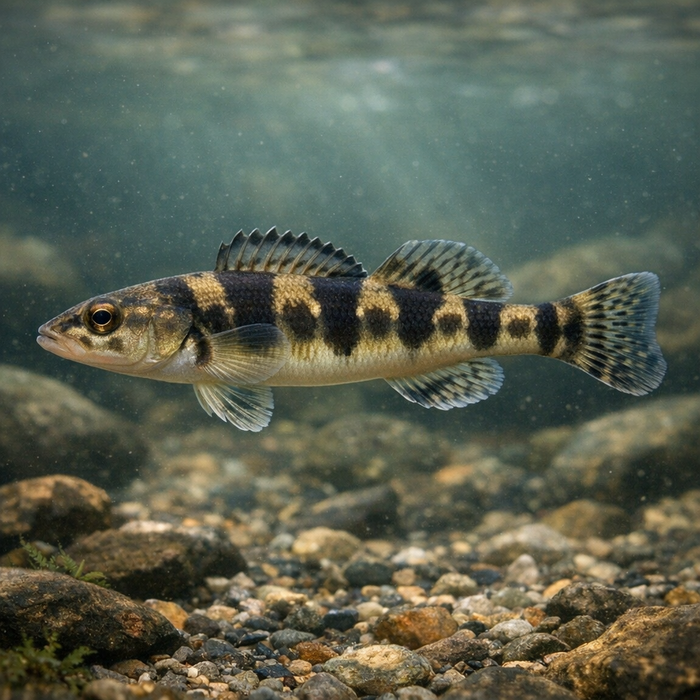
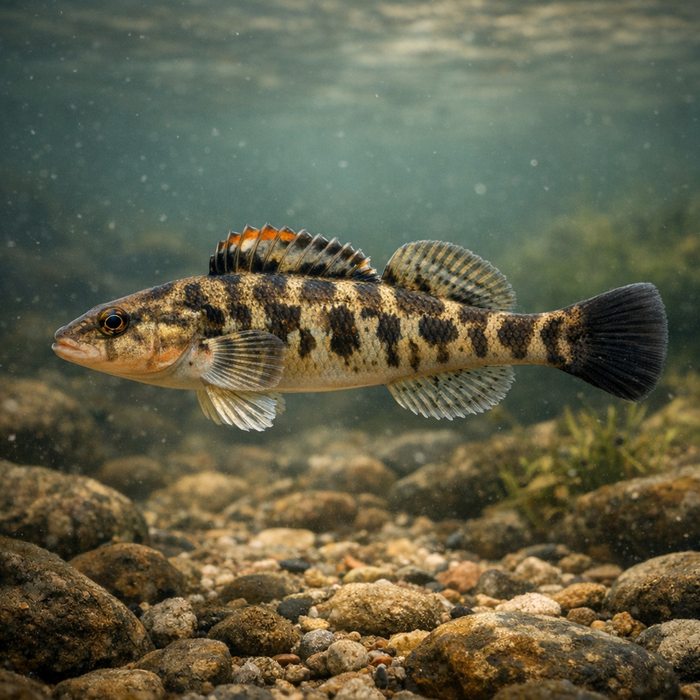
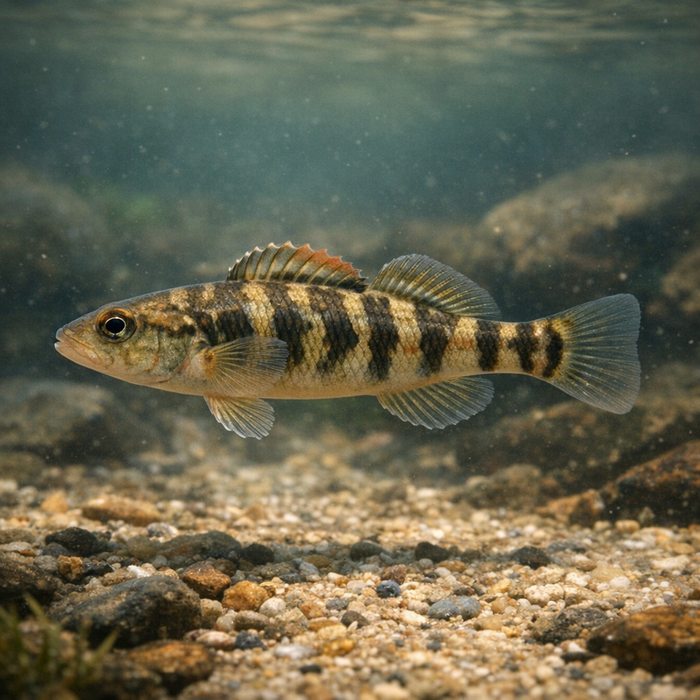
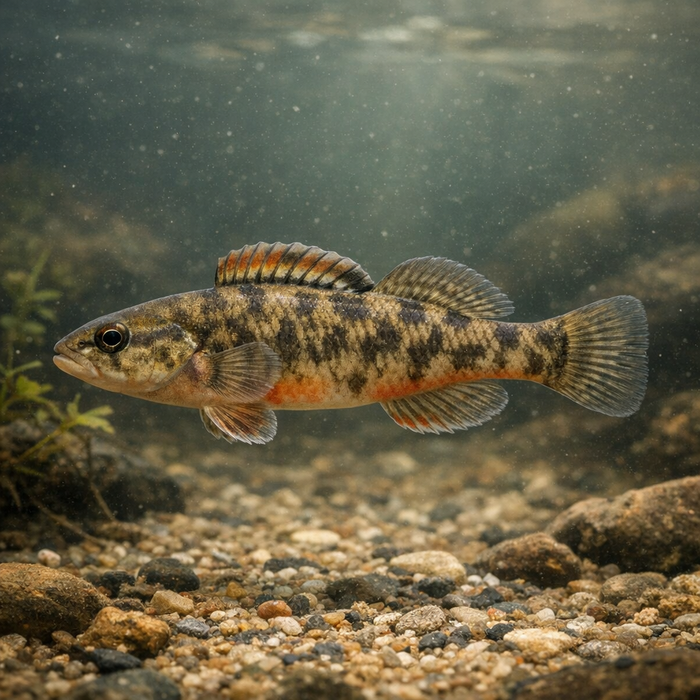
Candy Darter (Etheostoma osburni): A riffle rocket dressed like confetti that swam through a paint aisle.IntroductionThe candy darter is proof that not all showstoppers are big. This three-inch Appalachian native is a living neon sign on the bottom of a cold, fast creek. It flashes with outrageous reds and blues, hugs the current like a tiny river gecko, and vanishes between stones with one twitch. For anglers, it's not a fight; it's a glimpse. Blink and you'll miss it. But once you've seen one in full breeding color, you won't forget. Consider this your quick-hit guide packed with candy darter facts that actually matter.What Makes the Candy Darter Unique?First, the look. When males gear up for spawning, their bars ignite-peppermint reds and electric turquoise edges that seem painted on. Second, the build. Like other darters, it lacks a swim bladder, which is perfect for life on the deck: low drag, high grip, big pectorals acting like wings to pin it to slick rock. Third, the situation. The candy darter is endangered and threatened by hybridization with the variegate darter, so its genetic signature is literally at stake. It's a rare fish with a rare problem.Habitat & Global RangeThe candy darter's world is tight: cool, clear, high-gradient streams across the central Appalachians, primarily in the New River drainage of Virginia and West Virginia. Think knee-deep riffles, chest-high current, and clean cobble hiding narrow seams of soft water. That's classic candy darter habitat. Silt is the enemy, oxygen is life, and stable flows keep gravel flushed and eggs breathing. You won't find it in ponds or sluggish creeks. This species is all about oxygen-rich riffles, boulder gardens, and pocket water where a small fish can dart, tuck, and repeat.Behavior & TemperamentThis is a bottom sprinter, not a cruiser. Candy darters hold tight to the substrate, lean into current, and feed in bursts when a drifting insect nymph passes within pounce range. They're visual, fast, and twitchy. During the spawn, males turn the saturation dial to eleven and establish tiny territories, then keep their heads on a swivel for competition and courtship. They rarely stray far; home is usually a short stretch of riffle with just the right stones and just enough edge current to rest between dashes.Ecological ImportanceCall it a riffle health-check. Candy darters vacuum up aquatic invertebrates and convert that energy into snack-size protein for bigger fish and streamside predators. Where they thrive, water is typically cold, clear, and connected. Where they fade, it's often a sign of silt, fragmented flows, or creeping warm temperatures. Protecting this fish protects a whole neighborhood of riffle specialists and the insect life that drives the entire stream engine. If you want clean mountain water, you want candy darters doing their bottom-business.Conservation & Environmental PressuresThe candy darter is endangered. The culprits are depressingly familiar: sediment from roads and logging, destabilized banks, poorly timed flow releases, and summer heat bumps that nudge stream temps out of the comfort zone. Layer on a uniquely cruel twist-hybridization with the closely related variegate darter-and you get genetic dilution on top of habitat loss. Once hybrids appear in a reach, they can outnumber pure fish fast. Solutions aren't flashy: keep silt out, keep riparian shade in, reconnect fragmented water, and be ruthless about preventing new introductions upstream of strongholds.The FishyAF TakeFor most anglers, the candy darter isn't a target. It's a treasure you spot while rock-hopping a mountain stream, or the tiny flash that steals your breath before you look down and realize you're grinning. If you're a microfishing nerd, keep it ethical and legal: barbless, tiny hooks, quick in-water releases, and know the rules. Honestly, the best way to "catch" a candy darter is with your eyes. Learn to read riffles, slow your step, and watch the seams until that little streak of neon betrays itself. Some fish are for grip-and-grin. This one's for a quiet nod and a careful step. If you're compiling candy darter facts, start with this: respect the riffle and the rest follows.