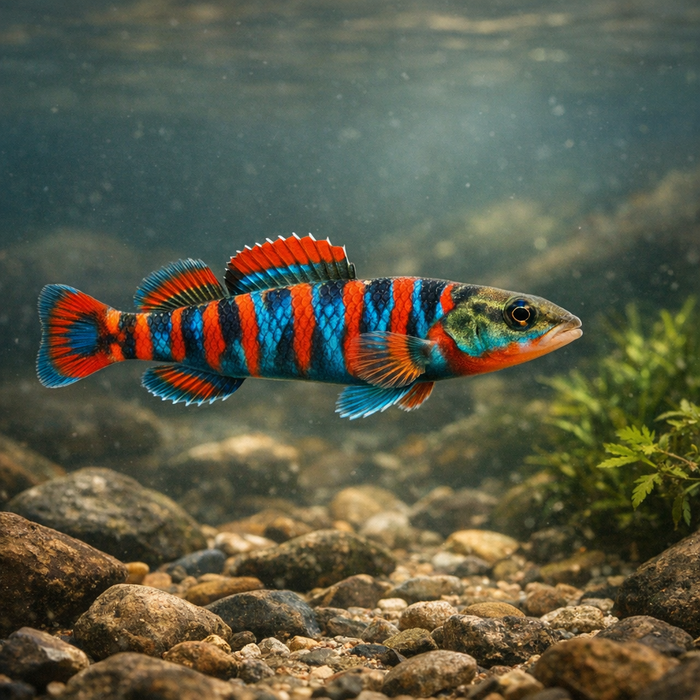
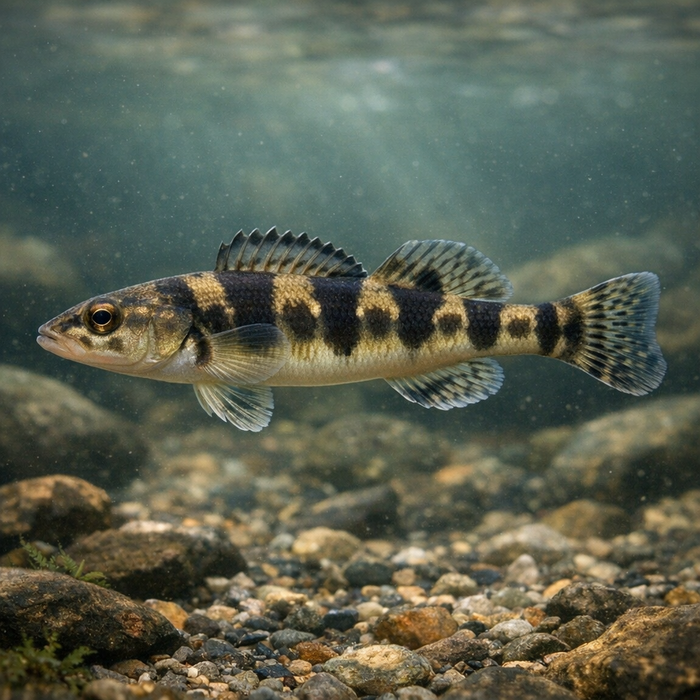
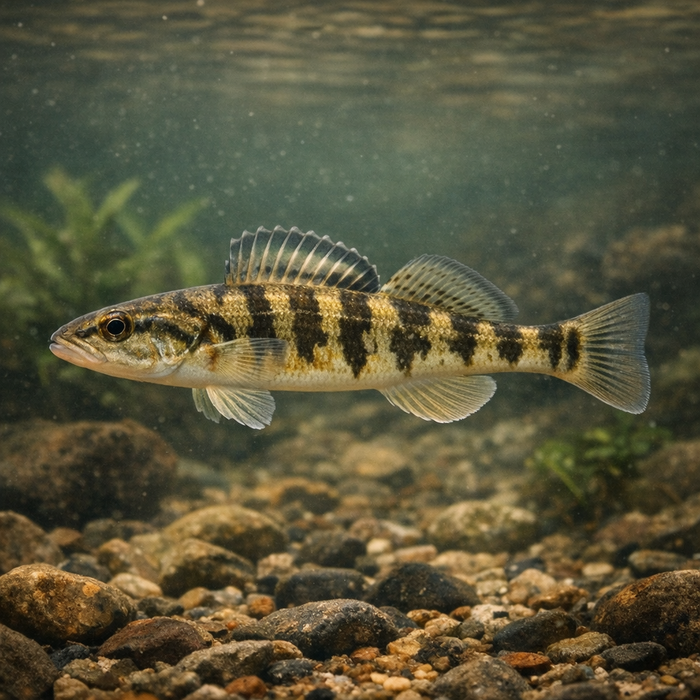
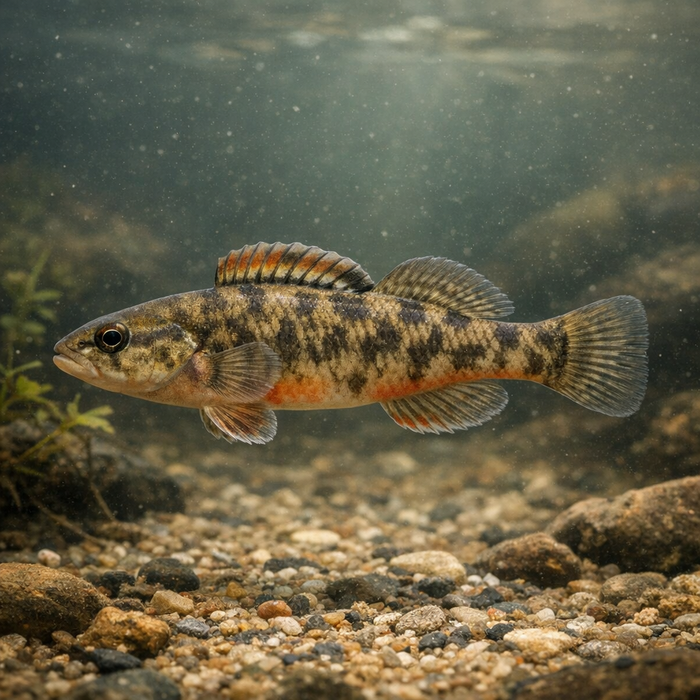
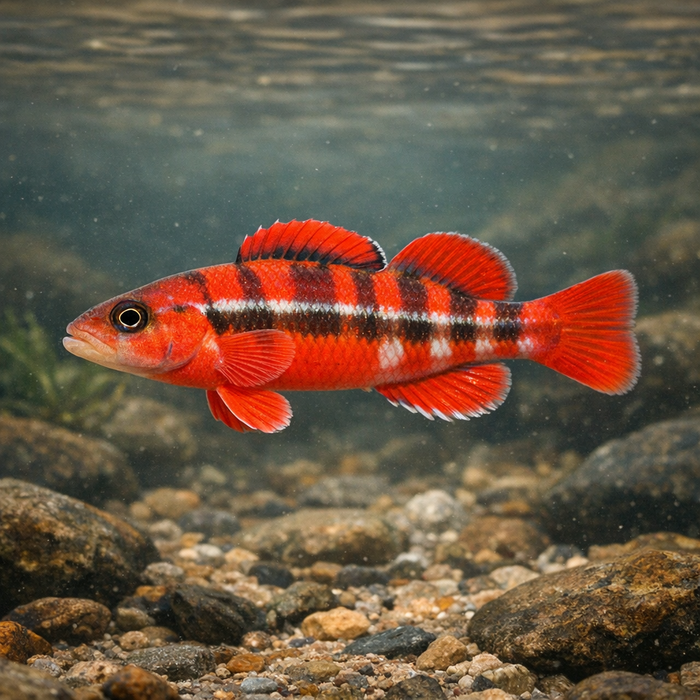
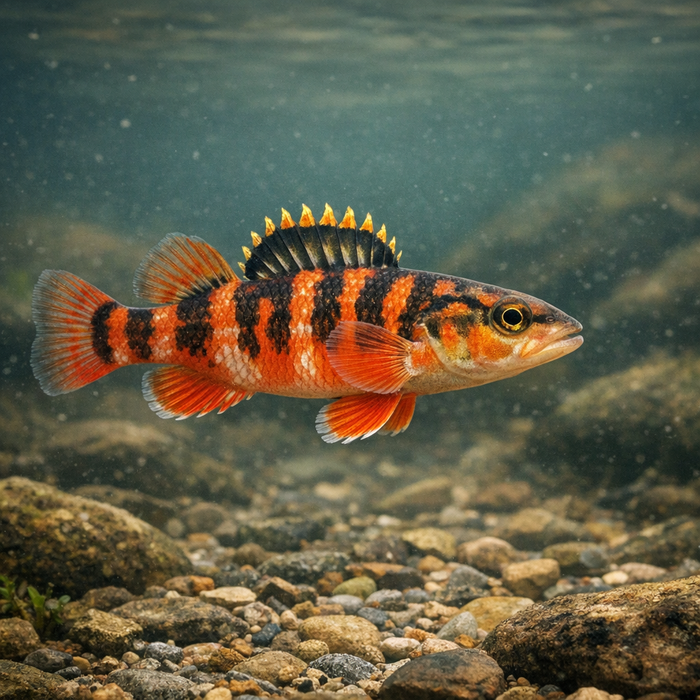
Duskytail Darter (Etheostoma percnurum): A pocket-sized riffle specialist with a big conservation story.IntroductionThe Duskytail darter is the stream world's stealth fighter, a two-to-three-inch bottom-hugger that turns roaring riffles into home turf. Blink and you miss it. This is not a fish you muscle on heavy gear. It is a delicate, precise, and fiercely local critter with one very dark tail edge and a history that reads like a conservation thriller. If you came here hunting solid Duskytail darter facts or a quick take on Duskytail darter habitat, welcome to the micro side of the sport.What Makes the Duskytail darter Unique?First, that trademark look. A sharp dusky band trims the tail fin like eyeliner, giving the fish its name and a field mark you can actually trust. Second, it is built for current. Flattened profile, wide pectorals, no swim bladder, and a low center of gravity let it hunker on gravel where other fish get tumble-dried. Third, its life is fast and focused. The Duskytail darter reaches maturity quickly, spawns under carefully chosen flat rocks, and the males guard eggs like tiny bulldogs.Habitat & Global RangeThe Duskytail darter is a specialist of clean, cool, oxygen-rich streams with gravel and cobble substrates. Think shallow riffles, pocket water, and runs where silt is a deal-breaker and water clarity is the currency. It relies on stable flow and intact watershed soils. Its modern range is tight and heavily managed, and local populations can be isolated by dams, sediment, or poor land practices. When you hear "Duskytail darter habitat," picture knee-deep or less, fast current lanes where a single flat stone can make or break a spawning season.Behavior & TemperamentThis fish is a stalker at miniature scale. It sits still until the stream's conveyor belt sweeps edibles by, then darts a few inches, crushes, and drops back to the deck. It is wary of shadows, flinchy to clumsy steps, and practically allergic to turbidity. During spawning season, males claim under-rock apartments, clean them, and court with tight quivers. After eggs stick to the rock's underside, males defend the clutch against intruders until hatching.Ecological ImportanceThe Duskytail darter is an early-warning siren for watershed health. Because it needs oxygenated, silt-free gravel, any surge of sediment, runoff, or low oxygen hits it first and hardest. Protecting this darter protects macroinvertebrates, mussels, and the entire clean-water crew upstream and down. If a riffle can support a Duskytail darter, odds are it is doing a lot right for everything else that drinks or swims there.Conservation & Environmental PressuresHabitat fragmentation, dams that flatten flow regimes, and sediment from careless land use have all boxed this species into corners. It has been federally listed as endangered, and recovery hinges on watershed fixes, clean construction practices, and carefully planned reintroductions. Captive propagation has helped jumpstart populations in suitable reaches, but long-term success demands stable flows, intact riparian buffers, and rock bottoms that are not smothered by silt. Translation: if the gravel stays clean, the darter has a fighting chance.The FishyAF TakeThe Duskytail darter is microfishing's version of a holy grail, not because it bends rods but because it tests your ethics. You cannot bully this fish. You sneak, you observe, and if regulations even allow contact, you handle it like a soap bubble. Want a trophy? Snap a respectful in-water photo, then brag about clean riffles and better culverts. That is the real flex. The Duskytail darter is proof that small fish can carry huge weight, and if we keep the gravel clean and the currents alive, this little bruiser will keep doing its delicate, important work in our streams.