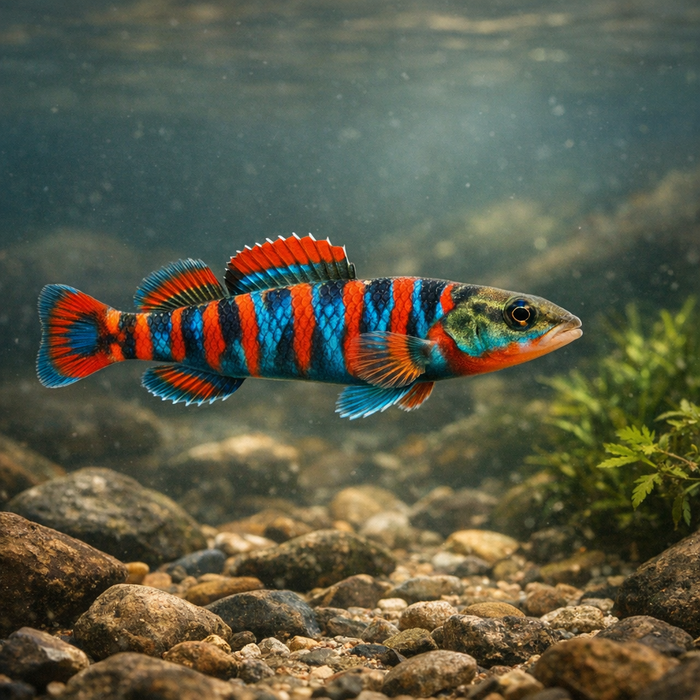
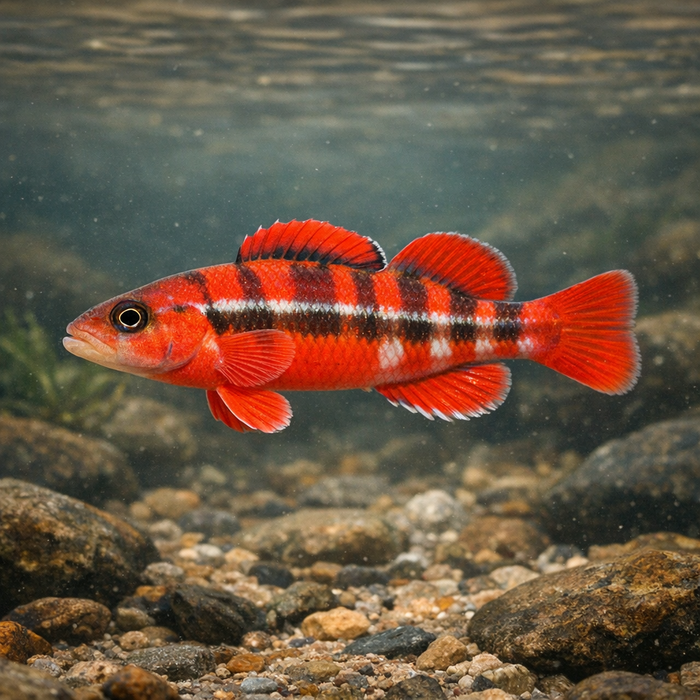
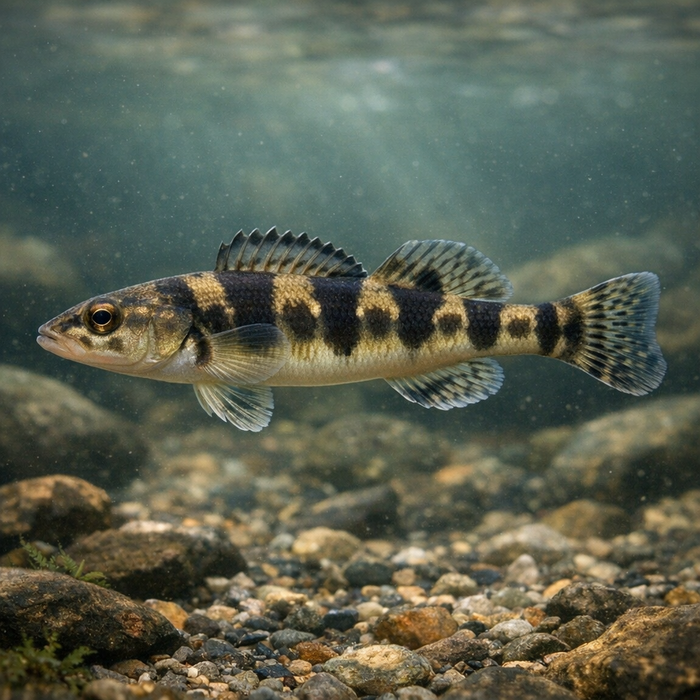
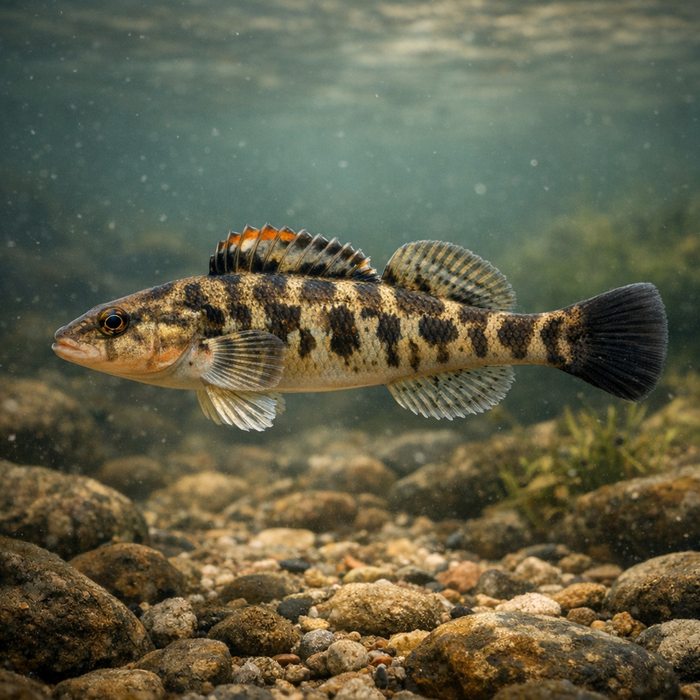
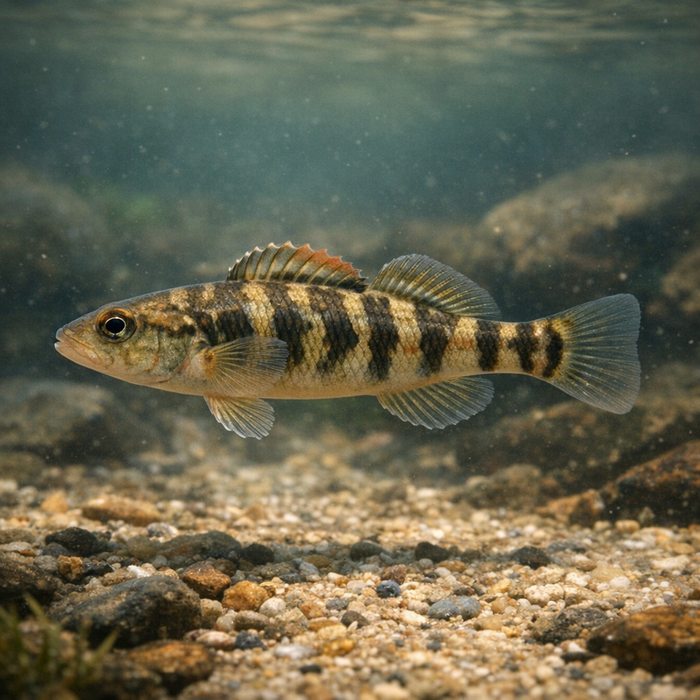
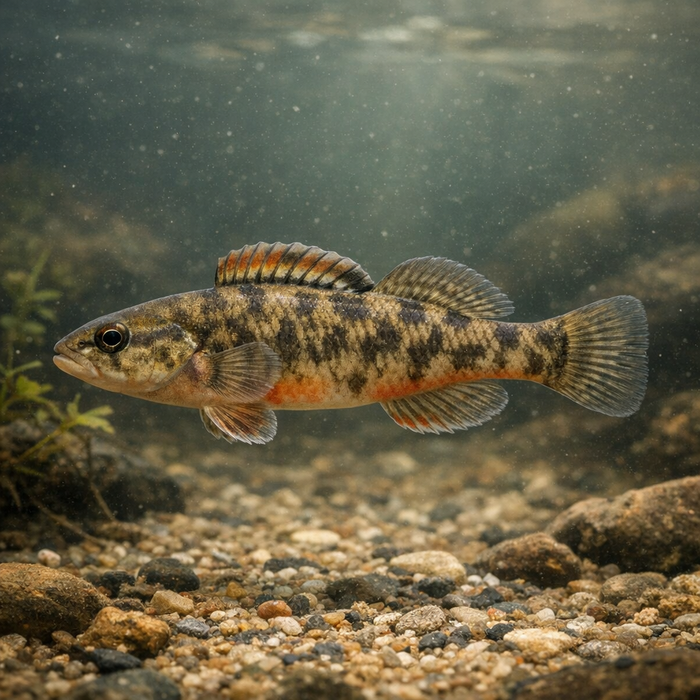
Sickle darter (Percina williamsi): A tiny falcon of the riffles with a razor-edged dorsal bannerIntroductionThe sickle darter is the stream geek's treasure: small, sharp, and built to hug the bottom like it owns the place. If you're hunting sickle darter facts, here's the TL;DR: this fish is more about stealth than splash, and it tells the truth about stream health every time it shows up.What Makes the Sickle darter Unique?Let's start with the name. That sickle-shaped first dorsal fin isn't marketing fluff; males throw it up like a black pennant during courtship, and even the silhouette screams "Percina with attitude." The sickle darter also rocks big, splayed pectoral fins that anchor it to cobble when current kicks up. Add the dark tear-line under the eye and a torpedo-meets-gecko profile, and you've got a fish that looks ready to pounce while barely moving at all.Habitat & Global RangeSickle darter habitat is a very specific lane: cool to moderate Appalachian rivers and larger creeks in the upper Tennessee River drainage of Virginia and Tennessee. Picture deeper runs and pool tails with clean gravel, scattered cobble, leaf beds, and moderate current. They prefer clarity, stable flows, and low silt. Dams and heavy sediment smother their world, which is exactly why their modern distribution is chopped compared to the historic footprint. You won't find this one in lakes. This is a river loyalist, period.Behavior & TemperamentThe sickle darter is a bottom sniper. It perches, bursts, and settles. Most feeding happens a few inches off the substrate, ambushing nymphs and other invertebrates that roll past in the flow. Spawning hits late winter into spring as temperatures climb; eggs get tucked into clean gravel, not guarded in fancy nests. They don't migrate far, so a stable pool complex can host the whole life story. Hook one and the fight is short; the real sport is seeing it first and delivering a pin-sized offering without spooking it.Ecological ImportanceThink of the sickle darter as a quality-control inspector for rivers. If you've got them, you've got oxygen, clean substrates, and the right mix of current and calm. They vacuum up mayflies, caddis, and other inverts, transferring stream energy upward to the fish that eat them. They're also a flagship for overlooked biodiversity in Appalachian waters. Every healthy sickle darter pool suggests dozens of other species are doing fine behind the scenes.Conservation & Environmental PressuresThis species is federally listed as threatened, and that status has receipts: sedimentation from poorly managed runoff, legacy impacts of dams, and fragmented habitats. Silt fills the gaps in gravel they need for eggs and foraging. Altered flows flatten seasonal cues. Isolated populations lose genetic exchange and resilience. Small fish, big problems. The bright spot is that restoring riparian buffers, fixing culverts, and keeping gravel clean works. Where the bottom breathes, the sickle darter returns.The FishyAF TakeFor anglers, the sickle darter is a look-don't-lift species. Bring curiosity and a camera, not a stringer. Micro drifting a midge or a tiny nymph through a pool seam and watching a sickle-shaped flag flick is more satisfying than any weight number you'd write down. Treat the sickle darter like a litmus test. If you see one, you're standing in a river that's doing a lot right. That alone is worth the wade. And if you're collecting Sickle darter facts for your brain's tackle box, here's the closer: protecting this runt gladiator protects the entire playbook of clean, living water.