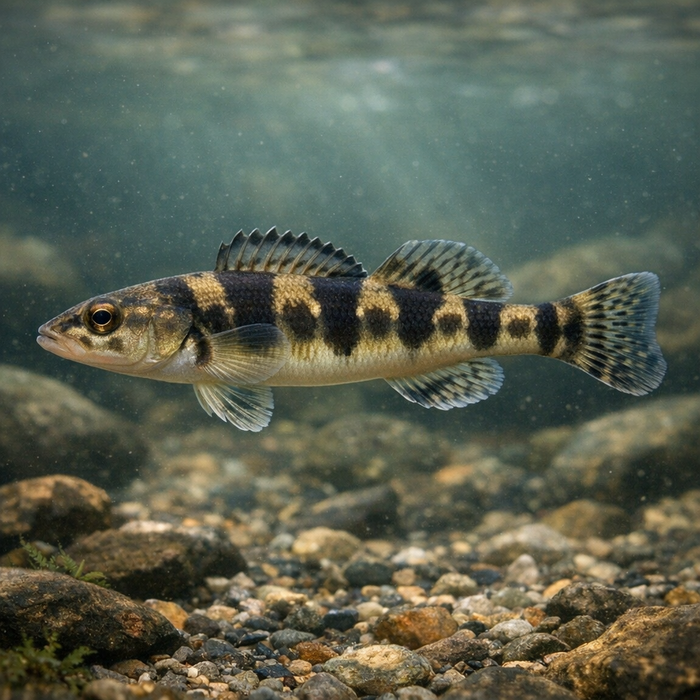
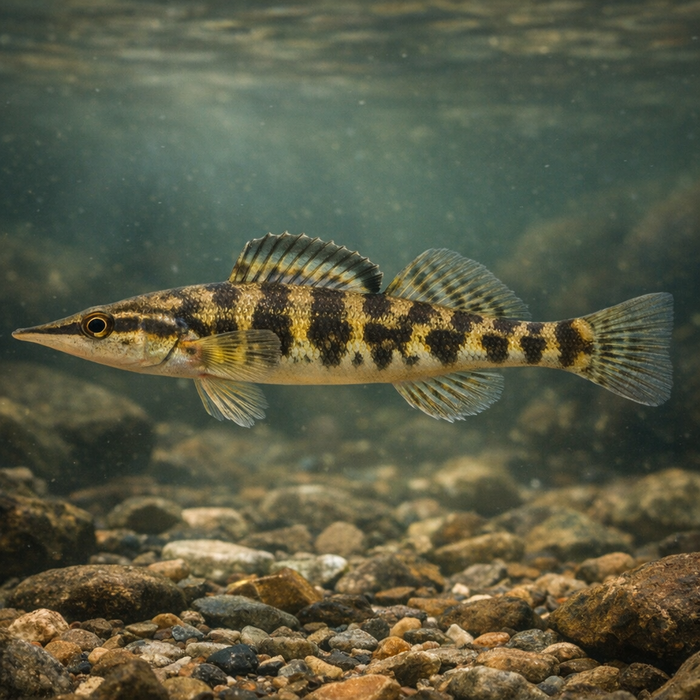
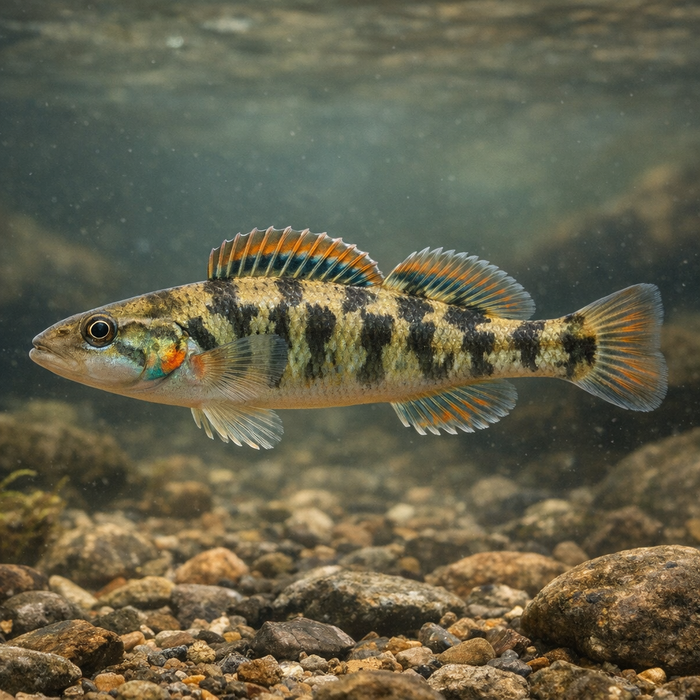
Crystal darter (Crystallaria asprella): Sand ninja with translucent swagger.IntroductionMeet the crystal darter, a pint-sized specialist that dodges cameras, nets, and casual anglers by melting into moving sand. It's built for current, wired for night shifts, and so see-through you can sometimes make out breakfast. If you're hunting obscure river oddities, the crystal darter is a top-tier challenge: rare where most people look, obvious only when you slow down and fish like a heron. Welcome to the rabbit hole.What Makes the Crystal darter Unique?Two things jump out. First, the body. Long, slim, and partially translucent, the crystal darter practically disappears against bright, rippled sand. Second, the lifestyle. It's a bottom-gluer with a reduced swim bladder, oversized pectoral fins, and a sand-burying trick that turns predators into confused tourists. Unlike many flashy river fish, it trades color for stealth, speed for shuffle, and shows up most when the lights go out. Those quirks make for great Crystal darter facts and a very specific pursuit.Habitat & Global RangeThis species is a specialist of clear, moderate-to-strong flows in big to medium rivers with clean sand and scattered gravel. Think bright riffles, racing runs, and near-bottom lanes where insects churn through the substrate. The crystal darter's range centers on the Mississippi and Ohio River basins and Gulf-draining systems, but populations are patchy. Dams, silt, and channelization slice up habitat into isolated reaches. Where the sand is clean and the current is right, it thrives. Where the river gets fuzzy with sediment, it ghosts.Behavior & TemperamentCrystal darters are crepuscular to nocturnal movers, shuffling and short-darting along the bottom to pick off invertebrates. They don't school tightly like shiners, but multiple fish can use the same riffle seam. Their defensive set is simple and brutally effective: stay low, blend in, and, if spooked, tuck into the sand with just eyes and a dorsal tip exposed. That modest tool kit works because they're built for one thing: riding fast water with minimal effort and zero showboating.Ecological ImportanceCall it a quality-control inspector for sand. The crystal darter thrives where substrates are clean and oxygenated, and it fades when silt and algae blanket the river floor. That makes it a sensitive barometer for river health. As a predator of benthic invertebrates and a snack for bigger fish, it stitches energy up and down the food web. When you see healthy crystal darter habitat, you're often looking at a river that's still doing river things: moving, scouring, and breathing.Conservation & Environmental PressuresThe bad guys here are all the usual suspects: sediment from poor land use, low clarity, flow alteration, and habitat fragmentation. Dams flatten riffles, turn sand into muck, and block recolonization after floods. Some states list the crystal darter as threatened or endangered locally, even if the broader species is not globally imperiled. That patchwork status means access and handling rules vary. If you're chasing them, know your regulations and keep your handling tight and quick. The species can bounce back in the right conditions, but it does not negotiate with mud.The FishyAF TakeThe crystal darter is the anti-trophy trophy. You're not chasing a scale-busting monster; you're trying to outwit a translucent ninja hiding in plain sight. That demands weird hours, delicate gear, and an appreciation for riffles that look like they contain exactly nothing. If you're into microfishing or you just crave a smarter puzzle, the crystal darter delivers. Get your headlamp, downsize everything, and respect the sand. When that faint shape twitches and becomes a fish, you'll understand why crystal darter habitat is sacred to a certain kind of angler.