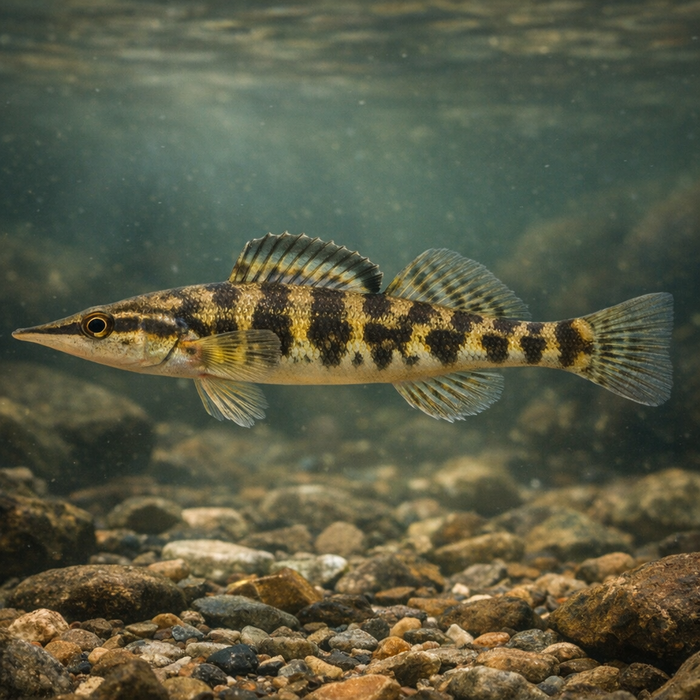
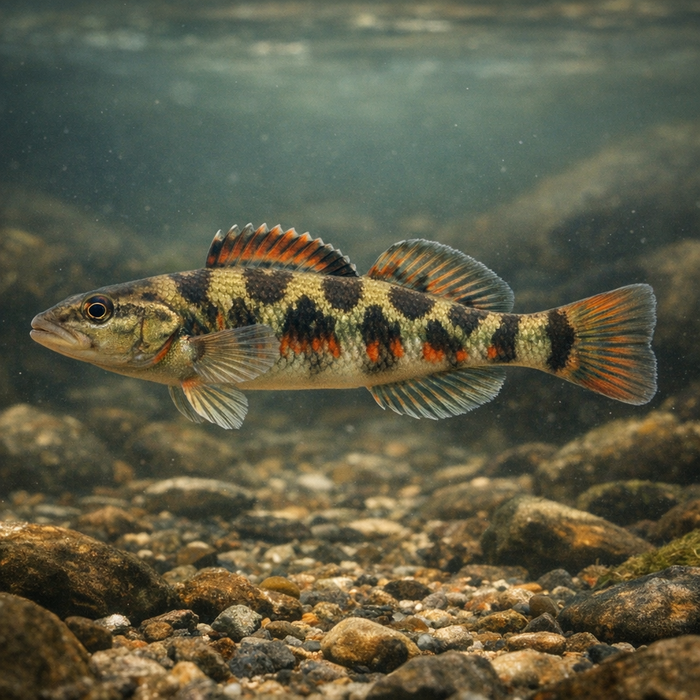
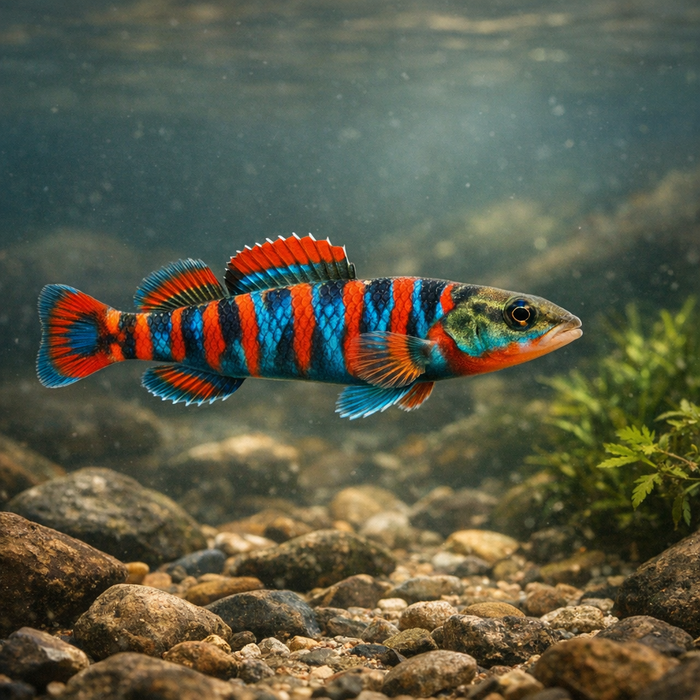
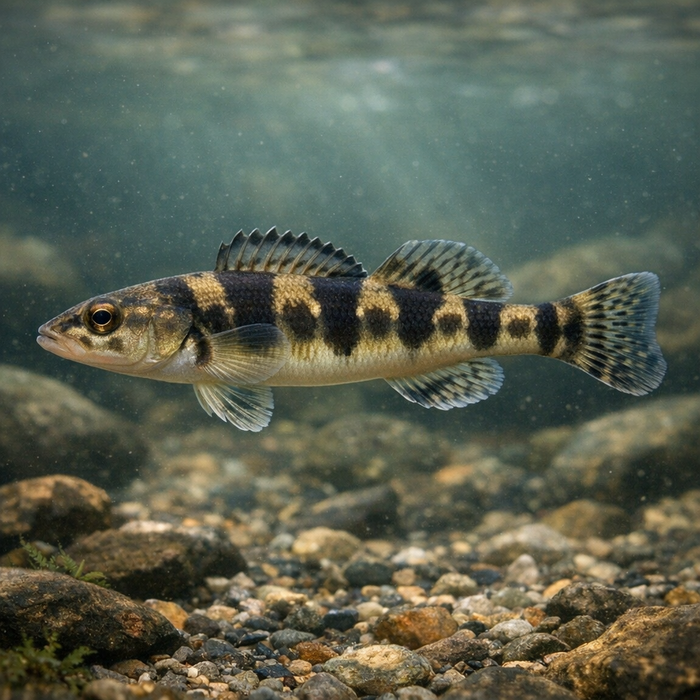
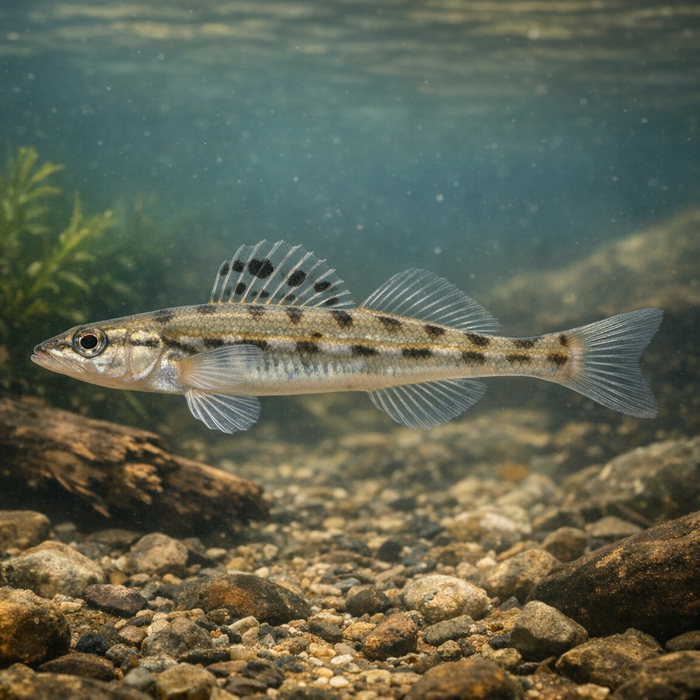
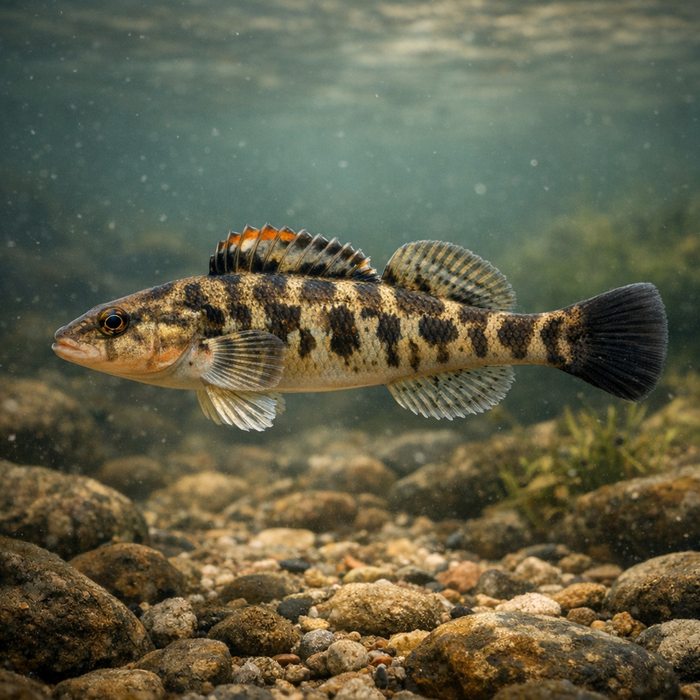
Leopard Darter (Percina pantherina): Spotted riffle ninja with a serious need for clean currentIntroductionThe leopard darter is tiny, rare, and tougher than it looks. This riffle specialist lives where the water stays clear and the bottom is gravel, not goo. If you're chasing Leopard darter facts, start with this: it survives by disappearing. Blink and it's rock. Breathe too loud and it's gone. For anglers and fish nerds alike, the Leopard darter is a masterclass in subtlety.What Makes the Leopard darter Unique?Two things: style and specialization. The namesake spots aren't random freckles; they're rosettes that break up its silhouette in shimmering current. That camouflage paired with almost no functional swim bladder lets the fish glue itself to the bottom and explode only when it wants to. The Leopard darter is also wildly picky about real estate. It favors clean, oxygen-rich runs and gentle riffles with sand-and-gravel seams. Swap that for silt or slackwater and this fish taps out.Habitat & Global RangeLeopard darter habitat is as narrow as its profile. This fish is endemic to the Little River system straddling southeastern Oklahoma and southwestern Arkansas. We're talking a postage stamp of the map: select reaches of the Glover, Mountain Fork, Cossatot, and related tributaries. The common thread is flow over clean substrate with low turbidity. Impoundments and sediment change the deal, pushing the fish out. If you want a one-line summary of Leopard darter habitat, here it is: clear current, clean gravel, and room to dart.Behavior & TemperamentThe Leopard darter is the riffle equivalent of a cat burglar. It hunkers, scans, and pounces on drifting invertebrates, then instantly melts into the bottom again. It prefers the bottom zone, using its broad pectorals to brace in current like tiny kickstands. Breeding season adds flair. Males pop with higher-contrast patterning, then it's game on over clean gravel where eggs are tucked into interstitial spaces and bathed in flow. Average size is 2 to 3 inches, with a lifespan measured in a handful of springs, so every season counts.Ecological ImportanceThis isn't a headline sportfish, but it's a razor-sharp indicator of stream health. When Leopard darter numbers dip, it's rarely a mystery. Usually the substrate got smothered, the banks blew out, or a flow regime changed. Keep the runs clean, hold the banks together, and the darter tells you you're getting it right. For a system's macroinvertebrates, it's a selective predator; for larger fish and birds, it's a snack. That middle link matters.Conservation & Environmental PressuresThe Leopard darter has been federally listed as threatened for decades because of dams, sedimentation, and degraded watersheds. Reservoirs fragment habitat and alter flow. Logging, poorly managed roads, and riparian clearing feed fine sediment into those once-crisp gravel seams. The fix isn't exotic: protect headwaters, stabilize banks, manage roads, and let rivers behave like rivers. Where that's happening, the Leopard darter hangs on. Where it isn't, it blinks out reach by reach.The FishyAF TakeYou won't stack Instagram likes holding a Leopard darter, and that's the point. This fish is for anglers who see the river as more than a scoreboard. The Leopard darter is a litmus test wrapped in spots: if it's doing fine, the stream probably is too. If you're into Leopard darter facts, know this one above all: the best way to "catch" it is with your eyes, then leave it alone. Snap a macro photo if legal and you're set. Let the riffles keep their leopard. The river looks better with it in there.