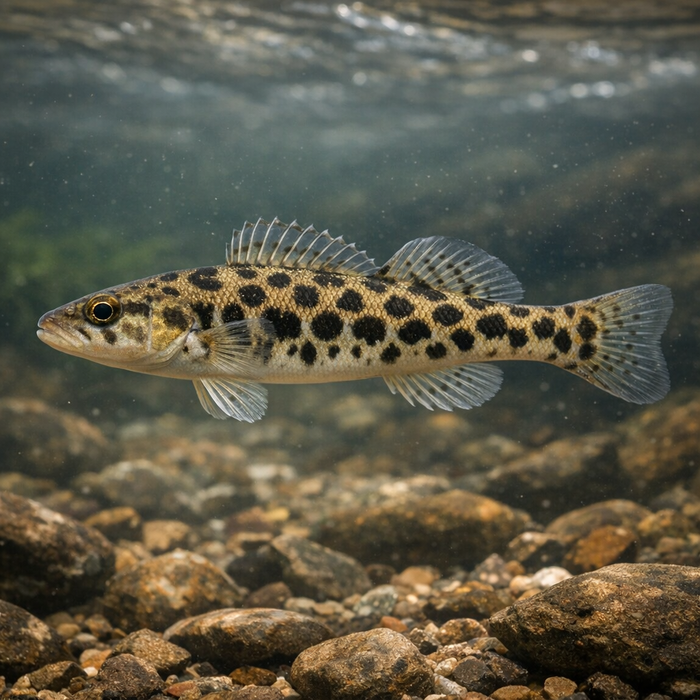
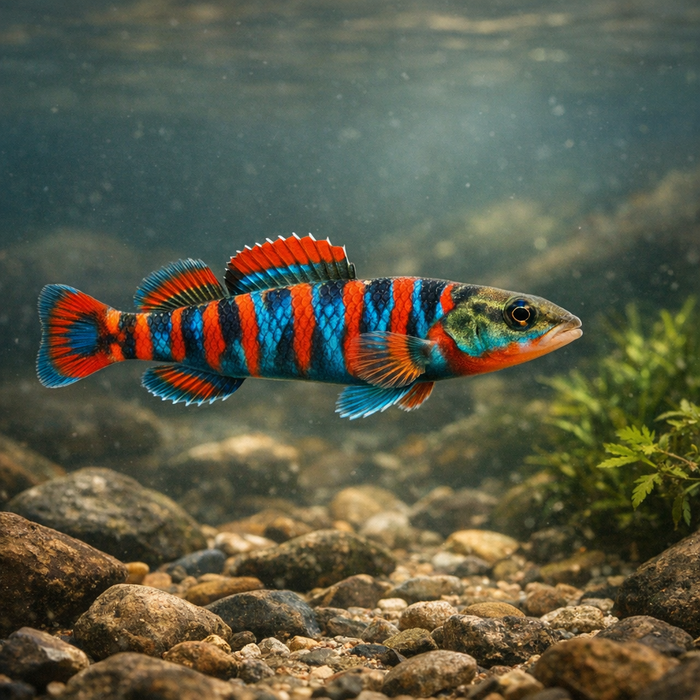
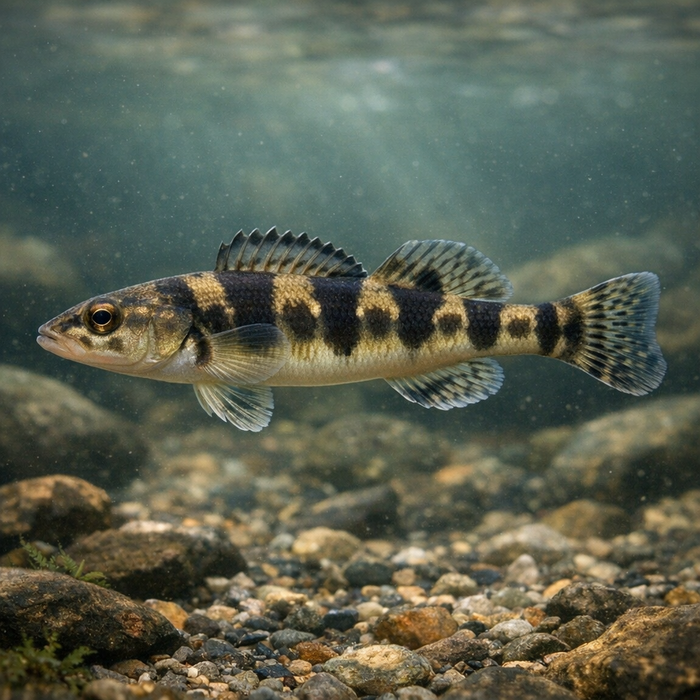
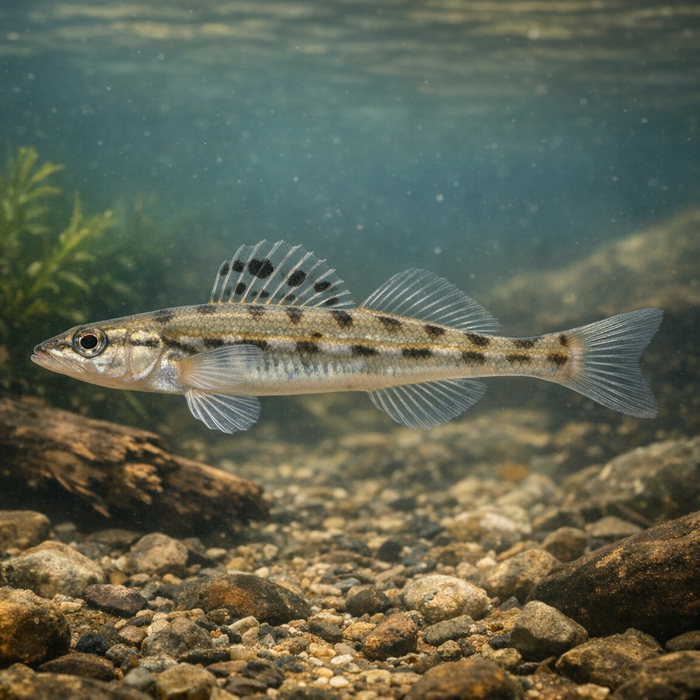
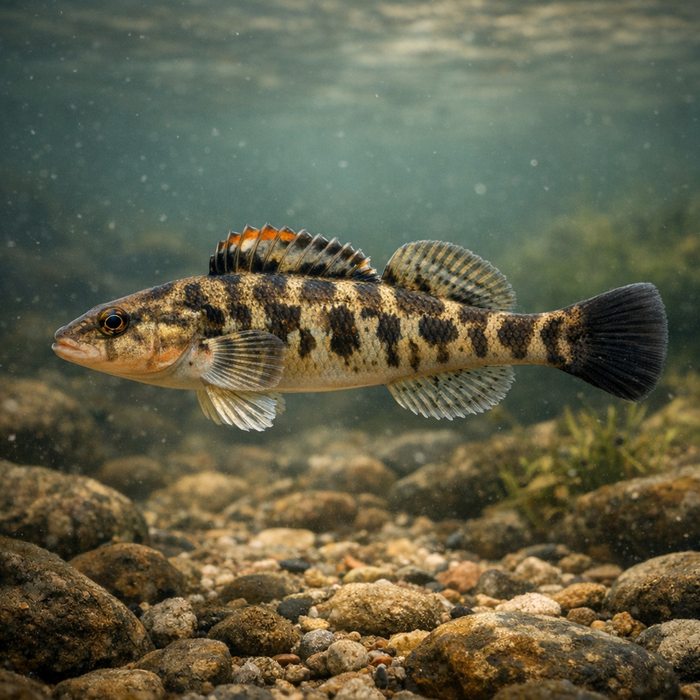
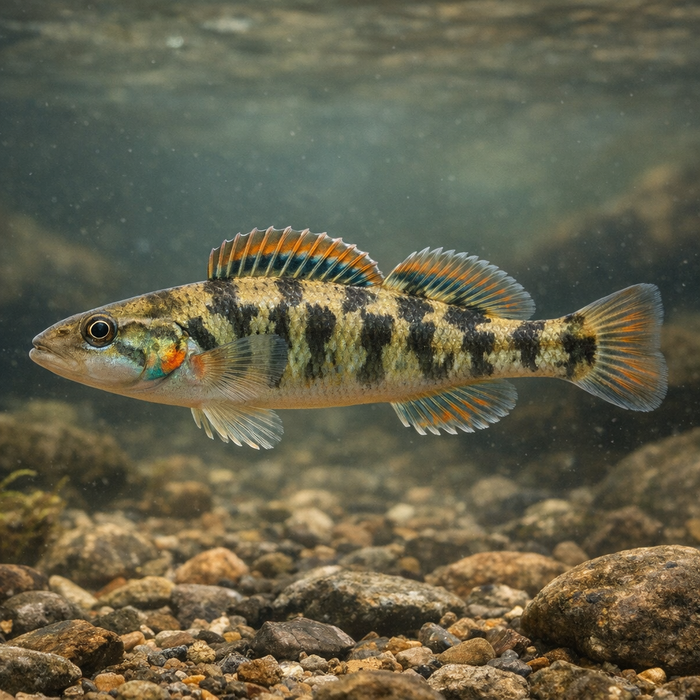
Longnose Darter (Percina nasuta): Riffle Ninja With A Built-In SnoutIntroductionThe longnose darter is the stealth fighter of shallow current, a pebble-hugging specialist that vanishes the second you blink. Blink slower and you'll see it: a sharp-snooted, camo-barred sprite glued to gravel while the river shoves past. Tiny? Absolutely. But the longnose darter punches way above its weight in personality, finesse, and pure current-savvy. If you want Longnose darter facts that actually matter on the water, this is the one to read.What Makes the Longnose darter Unique?Start with the nose. That elongated snout isn't a fashion statement; it's a tool for working the cracks between stones where drifting insect morsels hide. Where most darters are stubby bulldogs, the longnose darter has a sleeker, more torpedo-forward head profile that slices current and probes gravel. Its color scheme is tactical too: broken bars and mottled saddles that shatter the fish's outline in riffles. Add in outsized pectoral fins that act like kickstands and you've got a fish engineered to park on cobble without getting bulldozed by flow.Habitat & Global RangeAsk about Longnose darter habitat and you'll hear the same refrain: clean, clear, moving water. Think swift runs and riffles with coarse gravel to small cobble, where silt doesn't linger and oxygen stays high. The species persists in scattered, often isolated upland streams of the south-central United States, especially within tributaries that still run cool, quick, and relatively unspoiled. These fish are homebodies, living their lives within short reaches that provide a buffet of aquatic insects and safe, silt-free spawning pockets.Behavior & TemperamentThe longnose darter is a bottom-percher with sprinter burst mode. It sits tight on rock, pivots, then rockets a short distance to nail a drifting nymph or midge. Schooling isn't its thing; loose neighbors, sure, but it's more of a solo operator working micro-eddies, gravel creases, and the slack behind cobble. Breeding cues kick in with warming spring flows, pushing fish into the sharpest riffles where clean gravel is abundant. They're wary, and they don't tolerate sloppy approaches. Spook one and you don't see a streak, you just see nothing. The fish is gone, melted into texture.Ecological ImportanceLongnose darter is a riffle health meter. If fine sediment starts choking a stream, darters are among the first to suffer. Their eggs need clean interstitial spaces and their food supply drops when insect communities crash under silt. So when longnose darter numbers fade, it's a blinking red light for the whole river segment. Protecting them protects a web of aquatic insects, mussels, and other small fishes that build the base for bigger-name sportfish upstream and down.Conservation & Environmental PressuresThis species sits under a conservation spotlight for good reason. Habitat fragmentation, dewatering, and chronic sedimentation are its triple threat. Dams that flatten riffles, off-road crossings that stir silt, and unstable banks that slough fine sediments can erase spawning habitat in a single flood. Because longnose darters live in small, patchy populations, a local hit isn't a blip; it's a cliff. Some jurisdictions list them as endangered or otherwise protected. That comes with rules: closures, collection bans, and serious expectations for clean-water stewardship.The FishyAF TakeThe longnose darter is proof that "trophy" can mean precision, not pounds. If you spot one, you've already won a quality-control test on your water. For anglers, it's a humbling masterclass in subtle current, stealth, and tiny presentations. For everyone else, it's the canary in a riffle mine. Keep the gravel clean, keep the flow honest, and this slick little specialist will keep doing its thing. You want real Longnose darter facts? Here's one: respect the riffle, and the riffle pays you back across the entire fish community.