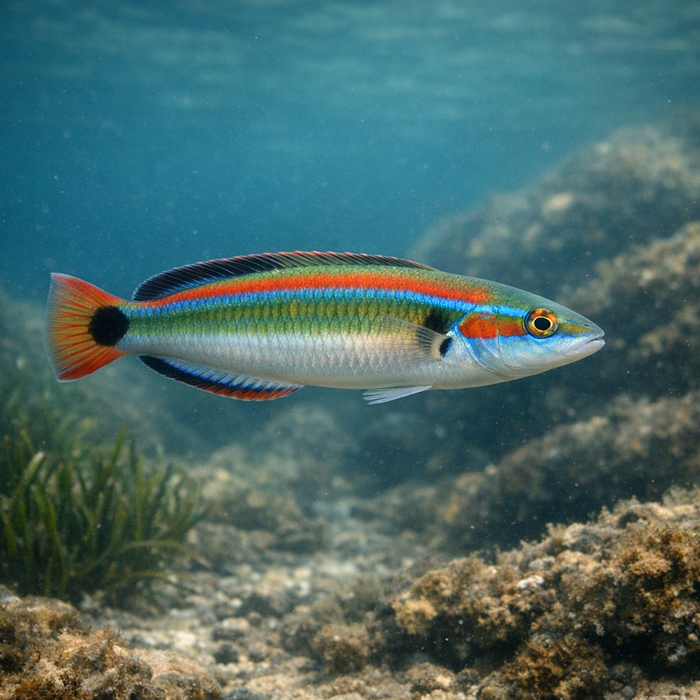
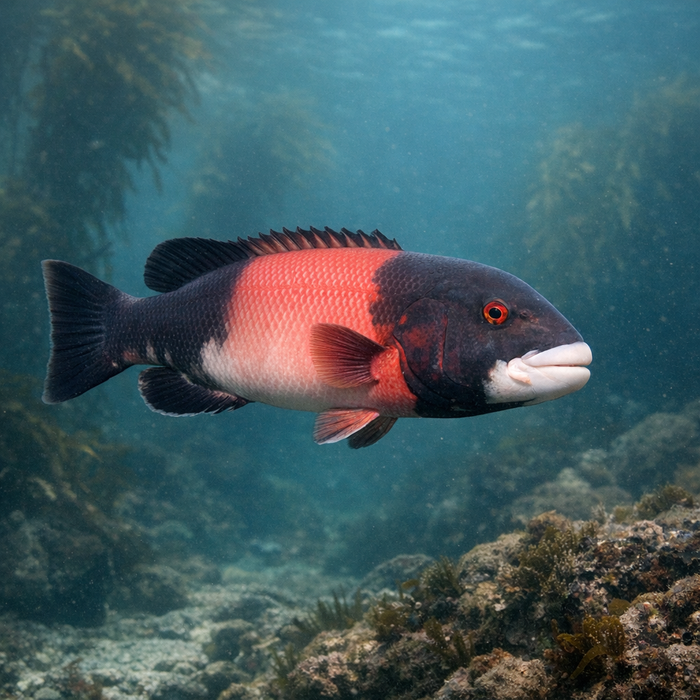
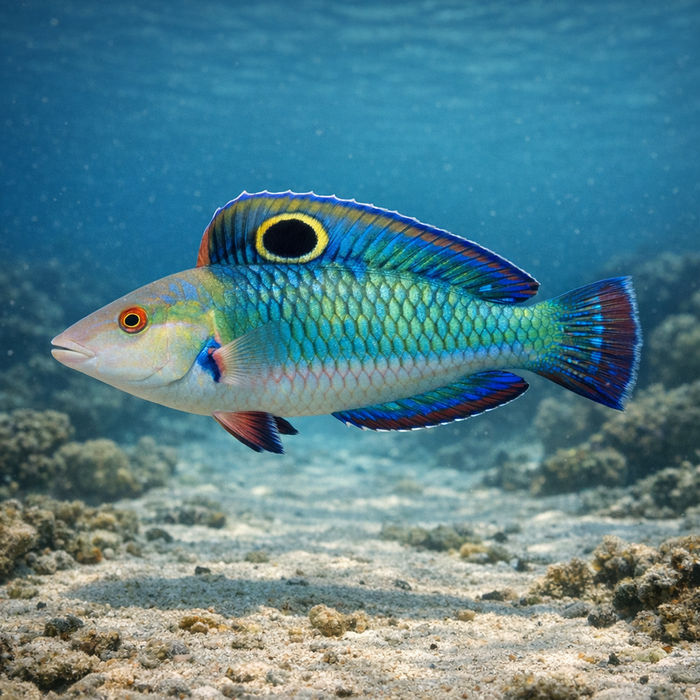
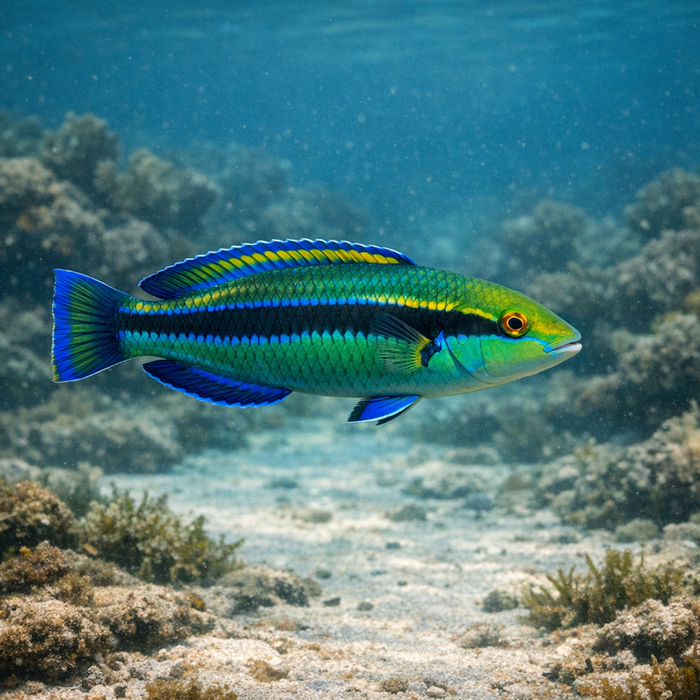
Pearly Razorfish (Xyrichtys novacula): Built Like A Blade, Gone In A FlashIntroductionThe pearly razorfish is the little sand ninja of the Mediterranean and eastern Atlantic. One second it's cruising the shallows like a glimmering shard of glass, the next it's gone, buried so cleanly you'd swear it evaporated. It won't rip drag or headline tournaments, but it will test your eyes, timing, and finesse. Pearly razorfish facts often sound like magic tricks because this wrasse literally dives into the bottom and vanishes. If you like sight-fishing puzzles on sunny flats, welcome to your new obsession.What Makes the Pearly razorfish Unique?Start with that body. Sharp forehead, compressed body, and a motion sequence that looks engineered for escape. The fish angles down and slices into sand using a single, decisive flick, sand parting like curtains. Add a color shift that ranges from subtle pearl and mint tones to showy blue-lined males, and you get a fish that's equal parts stealth and style. It's also a protogynous hermaphrodite, meaning larger females can transition to males. That sex change is common among wrasses, but paired with the razorfish's harem-style territories and bury-and-bolt lifestyle, it creates a quirky, high-speed soap opera in ankle-deep water.Habitat & Global RangeWhen anglers ask about pearly razorfish habitat, we point them to clean sand bordered by seagrass, usually in clear, warm shallows. Think Mediterranean coves, Canary Island beaches, and protected Atlantic pockets from southern Europe into northwestern Africa. They're coastal homebodies, rarely far from soft substrates, and most action happens in a snorkeling-friendly depth range. The water needs to be calm enough to spot subtle movement and faint shadows. If you can see the bottom footprints you made five minutes ago, you're in the right neighborhood for a pearly razorfish.Behavior & TemperamentThis fish is built for quick decisions. It hunts small crustaceans and mollusks by picking along the bottom, then bolts at the first whiff of trouble. The pearly razorfish spends nights and stress moments buried, often with no trace. During bright conditions, it may roam a small beat, patrolling the same sandy lanes like a security guard with fins. Hooked fish sprint, dart, and try to dig. The fight is short but technical: win the first seconds or you'll be staring at a suspicious hump of sand wondering what could have been.Ecological ImportancePearly razorfish help police the invertebrate scene on shallow flats. Their focus on snails, tiny clams, and bottom bugs makes them part of the turnover crew, cracking shells and cycling nutrients. By working the sand margins of seagrass, they thread into seagrass health too, since grazers and predators in these zones form tight food webs. Translation: if a flat has active razorfish, it's usually a happy, functioning flat, not a dead sandbox.Conservation & Environmental PressuresThe species is listed as Least Concern, and it's locally abundant. Still, the recipe for trouble is obvious: degraded seagrass, turbid water, and coastal development. Razorfish need clean sand and decent clarity to do razorfish things. Heavy nearshore trawling or anchoring scars can fragment their micro-habitats. Small-scale spearfishing and hook-and-line harvest for local cuisine also add pressure in some regions. Nothing apocalyptic here, but keep an eye on the health of seagrass meadows and water quality. Save the grass, save the razors.The FishyAF TakeThe pearly razorfish punches way above its size on fun-to-effort ratio. It's a vision test, a timing test, and a masterclass in subtle presentations. You won't post a hero shot with a 40-pounder, but you will earn bragging rights for outsmarting a fish that literally disappears. Want practical pearly razorfish facts? Fish light, think small, and react fast. Want a philosophical one? Sometimes the best fish is the one that makes you scan the water harder and breathe slower. On a glassy summer flat with sun on your shoulders, the pearly razorfish turns a simple shoreline into a tactical arena. That's our kind of weird.