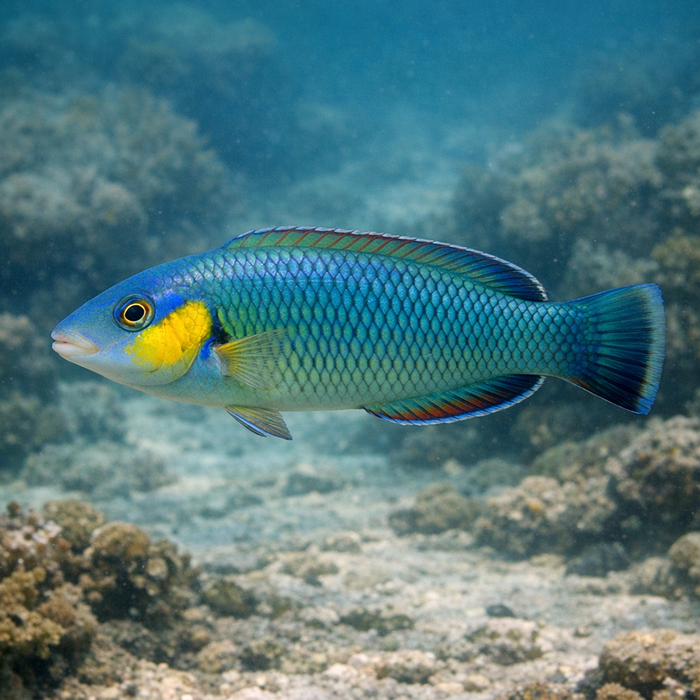
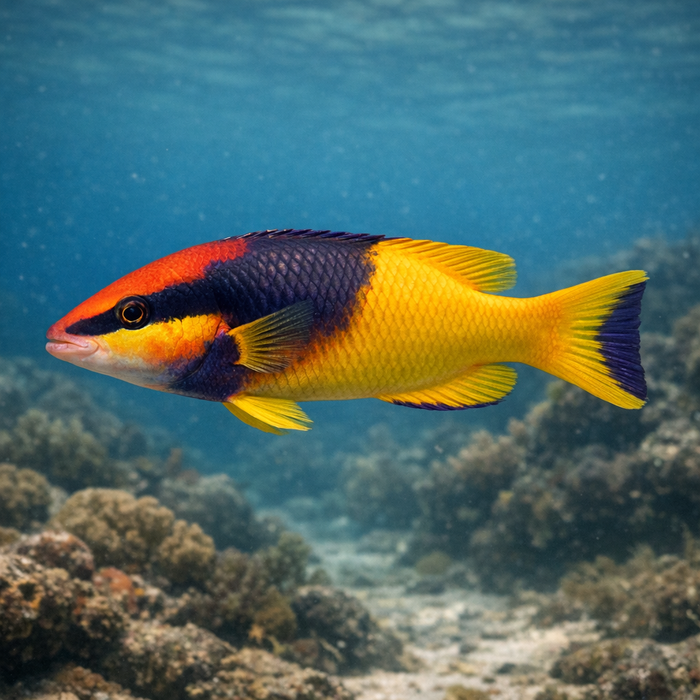
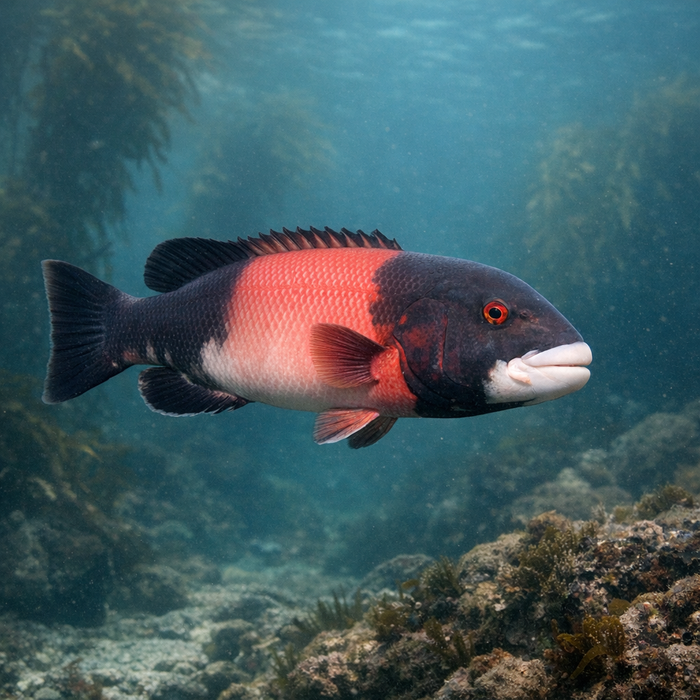
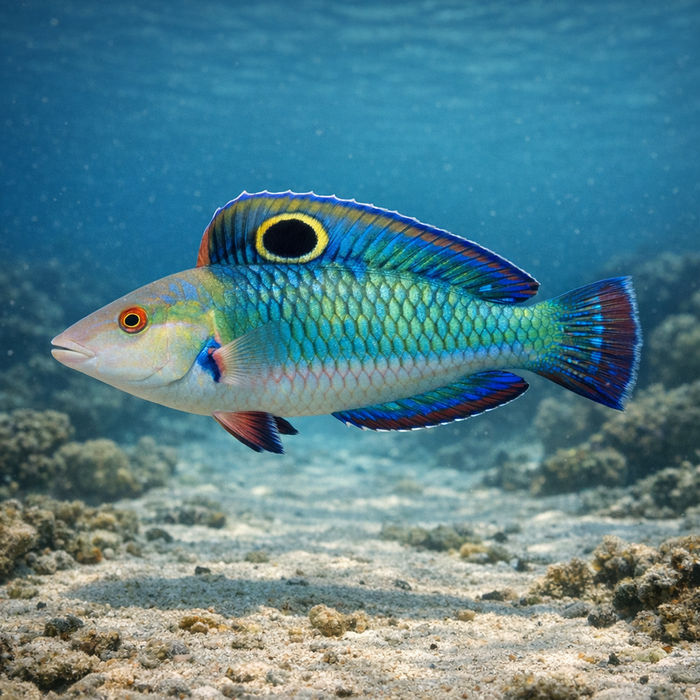
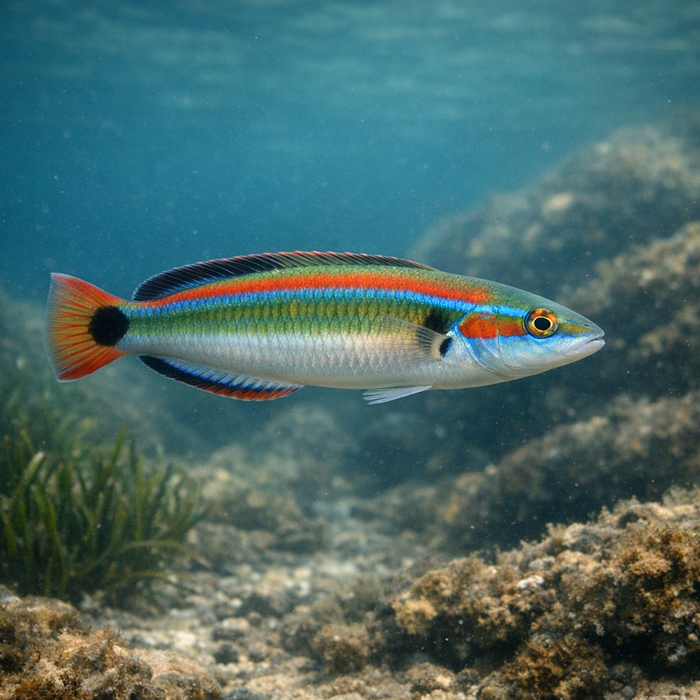
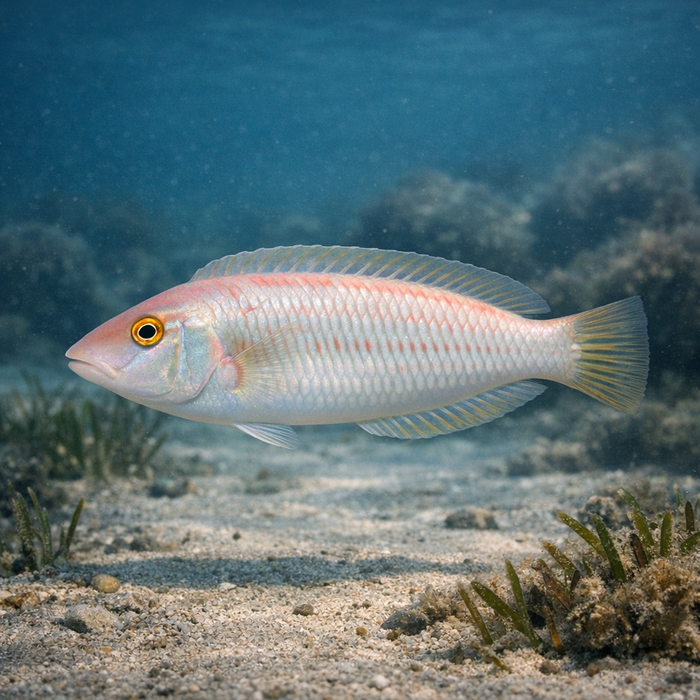
Puddingwife wrasse (Halichoeres radiatus): A Bold, Memorable Hook LineIntroductionThe puddingwife wrasse is the loud dresser on the shallow reef, flashing electric face paint and swaggering over sand patches like it owns the block. It's common, curious, and totally unafraid to sample your bait. For anglers sifting patch reefs and grass flats for action, the puddingwife wrasse delivers quick hits, sneaky bait theft, and occasionally a surprising, slabby fish. If you're scouting Puddingwife wrasse facts or trying to dial in Puddingwife wrasse habitat, you're in the right tide pool.What Makes the Puddingwife wrasse Unique?First, the wardrobe. Terminal-phase males look like a tropical mural: emerald panels, orange bars, and neon-blue lines radiating across the face. Second, the toolkit. Wrasses are built with front canines for prying and internal crushers for pulverizing shells, which lets the puddingwife wrasse raid crabs, snails, and urchins other fish ignore. Third, the life story. Like many wrasses, they're protogynous hermaphrodites: individuals mature as females and some transition to males, often growing larger and brighter as they take over territory. That cocktail of color, hardware, and drama makes the puddingwife wrasse a standout reef character.Habitat & Global RangeThis species patrols the western Atlantic's warm zone: Florida, the Bahamas, the Caribbean, and down to northern South America, including parts of the Gulf. The classic puddingwife wrasse habitat is shallow reef country: coral heads, patch reefs, rubble-strewn sand lanes, and lush seagrass edges. You'll also see them around rocky shorelines and clear, protected bays. Depth-wise, they're most at home from skin-diver depths into the first drops where patch reefs break up the sand. They love places with hiding nooks and snack-sized invertebrates, and they'll cruise methodically like tiny reef inspectors.Behavior & TemperamentThey're bold but shifty. A puddingwife wrasse will rush your bait, test it, and nip the good parts first. They're fast learners too. Miss the hookset and the next bite will be even quicker. Larger fish can be territorial, cruising a beat and flaring color when rivals slide in. At night they vanish into the sand, sleeping under a thin dusting like a buried coin. Don't expect big schools; these are more solo operators or loose groups, with occasional cleaning behavior in juveniles and pair-spawning sprints during peak windows.Ecological ImportanceThe puddingwife wrasse is a reef janitor with bite force. By smashing tough-shelled invertebrates, it helps check populations of grazers and borers that can stress corals and seagrass. That constant rummaging also turns over sand and rubble, freeing little critters and recycling nutrients. Add in occasional cleaning by juveniles and you've got a fish pulling multiple jobs on the reef's crew. Healthy puddingwife numbers often signal a functioning shallow-reef mosaic where corals, grass, and sand all interact.Conservation & Environmental PressuresOfficially, this species sits comfortably as Least Concern, but shallow reefs don't get a free pass. Habitat loss, coral bleaching, water quality issues, and coastal development put pressure on the whole neighborhood. Overharvest isn't a leading worry for puddingwife wrasse, since they're not a primary commercial target, but incidental catch and aquarium collection exist in some areas. Marine protected areas, mooring buoys that prevent anchor damage, and sensible local rules go a long way. If the reef thrives, the puddingwife wrasse thrives.The FishyAF TakeCall it what it is: a gorgeous, grabby reef pickpocket that punches above its weight on light tackle. The puddingwife wrasse keeps you busy between trophy shots, but don't sleep on the bigger models. They'll thump, dive for the bricks, and make you look silly if your knots aren't right. For quick fun, small hooks and shrimp bits get chewed immediately. For selective hunting, stalk rubble lanes at first light and keep that bait moving. It's not the most famous name on the flat, but the puddingwife wrasse brings color, attitude, and the kind of bite frequency that turns a decent day into a grin-fest. That's our kind of reef companion.