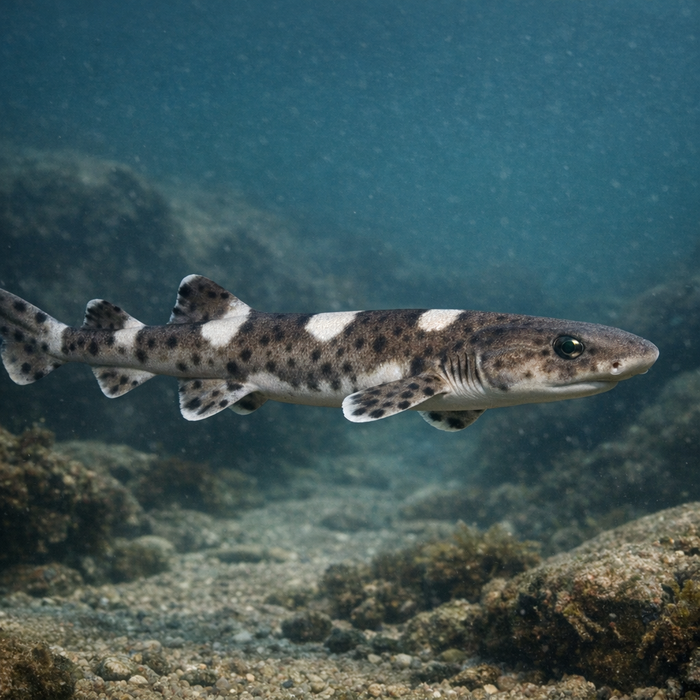
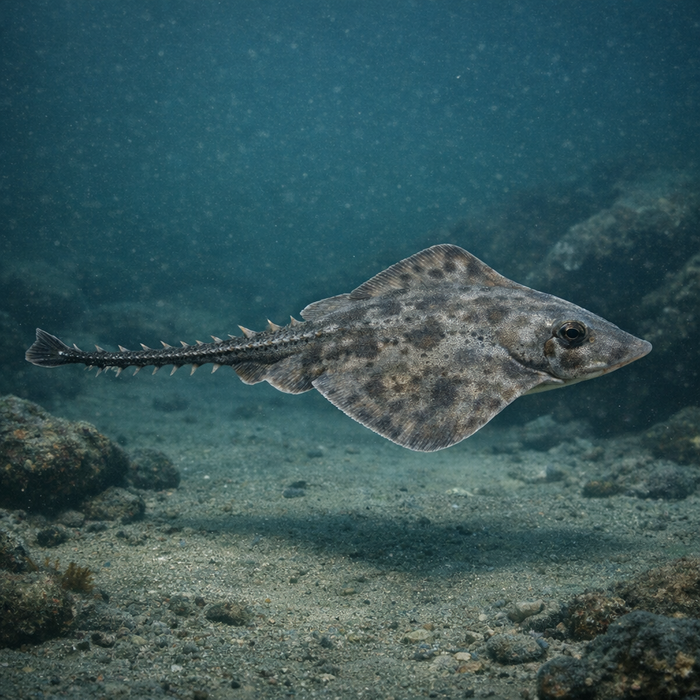
Rabbitfish (Chimaera monstrosa): The Deep-Sea Oddball With a Venomous Warning Label
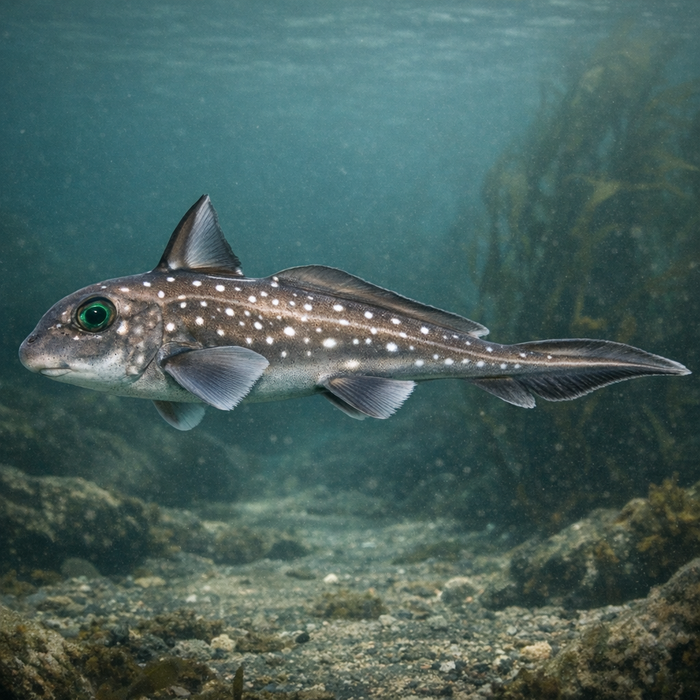
The Rabbitfish looks like somebody assembled a fish from spare parts and then gave it excellent lighting. Huge eyes, broad fins, marbled skin and a whip-like tail make it instantly memorable. But the sharp spine above its back is not decorative: it carries venom and deserves proper respect. This is a chimaera, a cartilaginous relative of sharks and rays, rather than a true shark. The family resemblance is there; the finished product is wonderfully strange.
For anglers, the attraction is not another heavy fish for the scales. It is the chance to encounter something genuinely unfamiliar. Deep Norwegian fjords bring that possibility surprisingly close to land, turning an ordinary-looking quay into a doorway to a much less ordinary fishery.
What Makes the Rabbitfish Unique?
Start with the mouth. Instead of rows of replaceable shark teeth, this species has six permanent dental plates that grow continuously. Different parts provide cutting and crushing surfaces, making the mouth more workshop than bear trap. Its upper jaw is fused to the skull, another important departure from the familiar shark arrangement. These are structural differences, not just an unusual face.
Then reproduction gets involved. Mature males possess a forehead appendage called a tenaculum, used to help grip a female during mating, alongside additional gripping structures near the pelvic fins. Rabbitfish facts rarely need embellishment. When a fish arrives with reproductive headgear and permanent crushing plates, the biology has already done the heavy lifting.
Habitat & Global Range
Rabbitfish habitat centers on deep continental shelves and slopes in the northeastern Atlantic, with populations also occurring in the Mediterranean. Muddy bottom features prominently in descriptions of its habitat. Several hundred meters down is normal territory, although northern waters can offer much shallower encounters. Depth matters, but so does the relationship between a shallow feeding area and the deeper water beside it.
Norway is especially relevant to recreational anglers. Bergen's deepwater quays and Trondheimsfjord are established destinations in this guide, with shore opportunities concentrated around suitable deepwater access. Think steep bathymetry rather than a picturesque beach. A short cast into the right underwater contour can be more useful than launching a bait toward attractive-looking but unsuitable water.
Behavior & Temperament
This is no streamlined pursuit specialist. Broad pectoral fins provide its characteristic swimming motion, while its feeding equipment suits working through bottom-associated prey. Examination of stomach contents has shown fragmented food rather than a simple procession of whole swallowed animals. The evidence suggests a fish that bites and processes its meals, including pieces of brittle stars and crustaceans.
For shore anglers, darkness is the practical starting point at appropriate Norwegian marks. That does not make the species exclusively nocturnal or unavailable by day: deep boat fishing offers another route. Treat its behavior as a reason to match location and timing, not an excuse to promise a bite whenever the sun disappears.
Ecological Importance
The Rabbitfish belongs in the deepwater food web, not the novelty cabinet. Its consumption of bottom-living animals connects seafloor communities with a mobile predator. Studies have recorded a varied menu, and the particular prey represented can differ between samples and fishing grounds. Calling it a predator is accurate; imagining a miniature great white misses the point.
There is another ecological lesson here: an animal can be widespread yet poorly understood. Reliable knowledge of population structure, age and fishing impacts remains incomplete. Even attempts to read age from dorsal-spine growth rings have raised questions. Looking prehistoric does not mean science has finished its homework.
Conservation & Environmental Pressures
The Rabbitfish is globally classified as Vulnerable. Deepwater fishing bycatch is a central concern, particularly where trawling overlaps its habitat. Its reproductive biology and relatively slow replacement of generations make sustained losses important, even when the species remains familiar in particular fishing areas. Local encounters are not a global population assessment.
That distinction matters on the dock. A run of catches does not prove unlimited abundance, and releasing a fish does not automatically establish that it survived. Keep handling deliberate, minimize unnecessary exposure and avoid treating repeated captures as harmless entertainment. For a species this unusual, restraint should be part of the achievement rather than an afterthought.
The FishyAF Take
The Rabbitfish is a strong argument against judging fishing by pounds alone. Anyone can appreciate a big fish. Appreciating this one takes curiosity, patience and the willingness to spend a cold evening watching a rod tip instead of collecting easy applause.
Our take: earn the encounter, then behave like you deserved it. Have the landing net ready, know where the spine is and make the photograph quick. The best version of this fishery is not a pile of strange-looking bodies. It is one extraordinary meeting, handled properly, that leaves you looking at every deepwater quay a little differently.