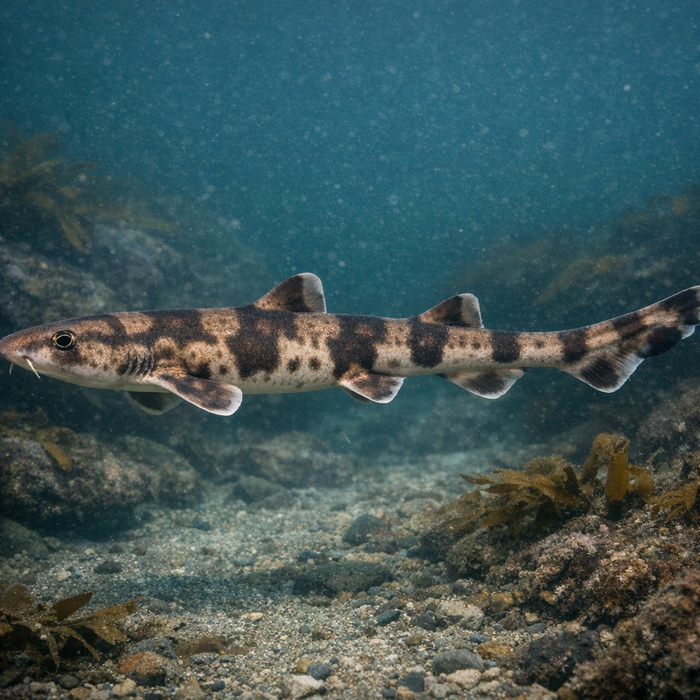
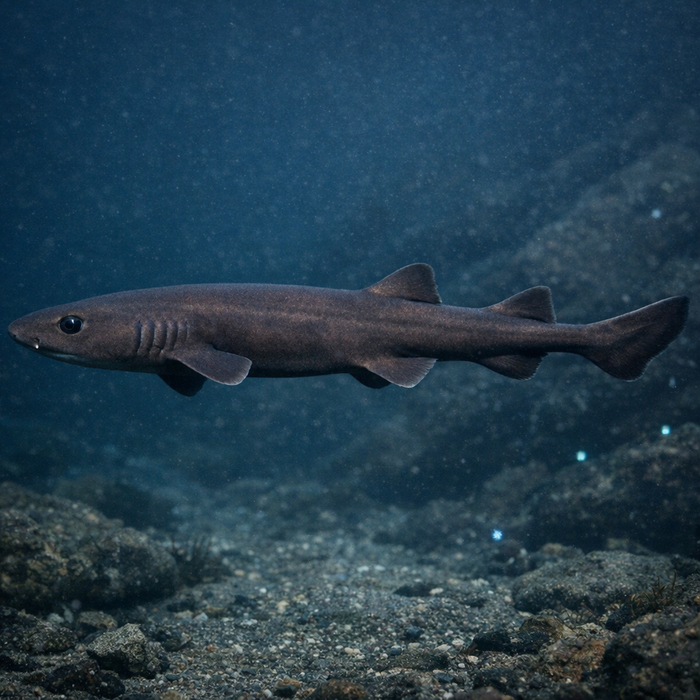
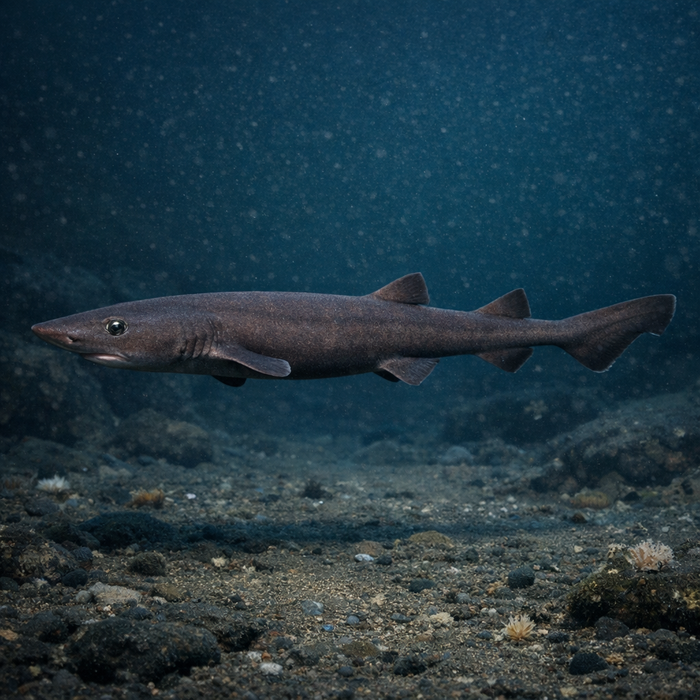
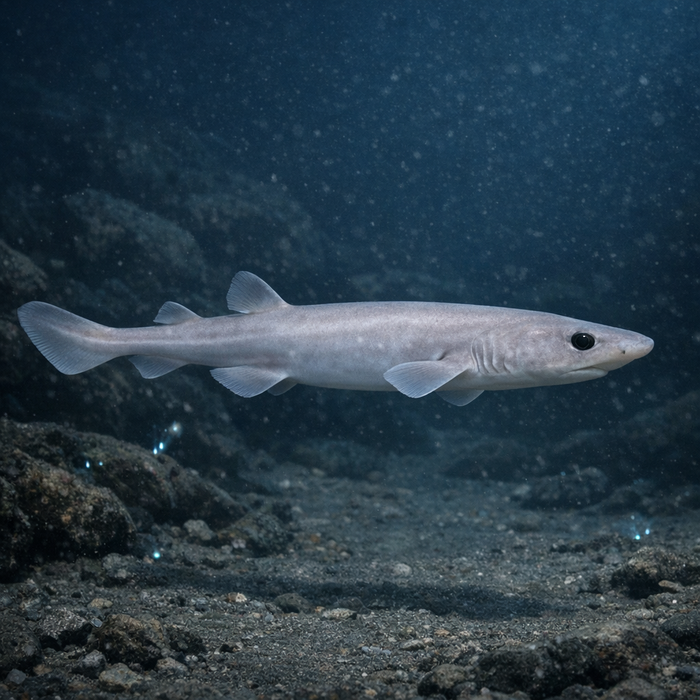
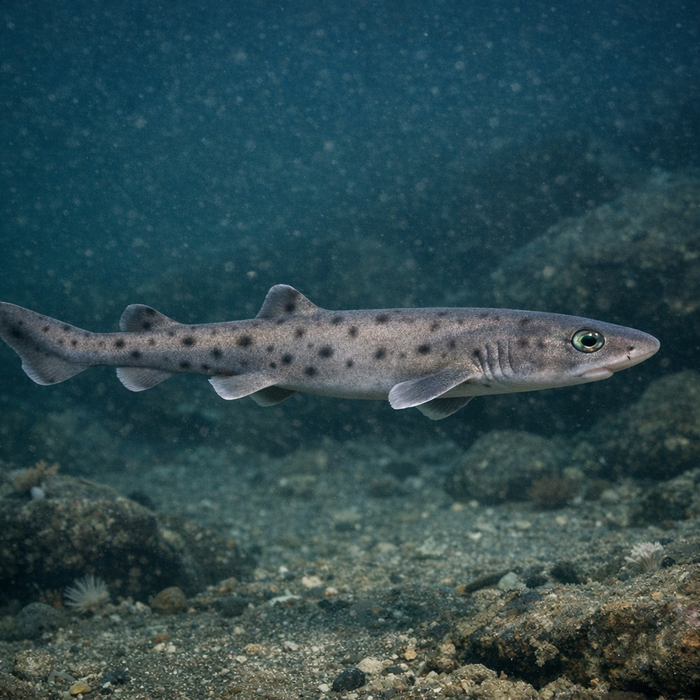
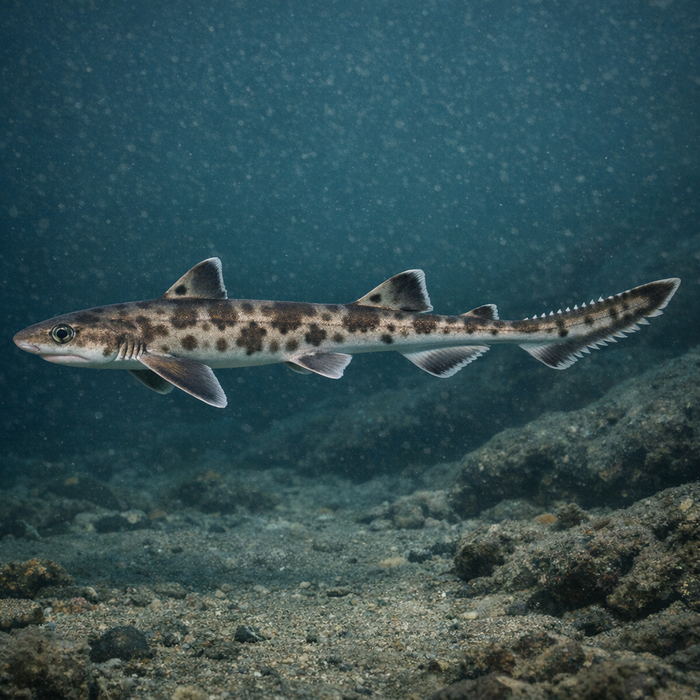
Whitesaddled Catshark (Scyliorhinus hesperius): A small deep-slope shark with bold white bands and sneaky bottom tacticsIntroductionThe Whitesaddled catshark is the kind of deepwater oddball that sneaks into your rig when you're properly committed to the bottom. It's not huge, it won't spool you, and it definitely won't win beauty pageants topside, but those clean white saddle-bands look sharp even under a deck light. If you're working seamounts and continental slopes and your squid strip goes mysteriously heavy, you might be meeting one.What Makes the Whitesaddled catshark Unique?Start with the paint job. The whitesaddled catshark wears crisp, high-contrast bands across a darker back, a camouflage trick that still reads underwater at depth. The skin is armored with tiny denticles that make it feel like fine grit and help it slip quietly along the bottom. Add in flexible, cat-like movement and a habit of curling up tight when handled, and you've got a shark that's all efficiency with zero wasted flair. It's an oviparous layer of tough, tendriled egg cases, which helps it stick the next generation to solid structure where currents won't blow them into nowhere.Habitat & Global RangeThe Whitesaddled catshark lives where weekend sounders start to look empty and the chart gets interesting: deep continental slopes, canyons, and seamount shoulders. Think broken ground, mixed rubble, and scattered sponges where current washes bring in a buffet. Depths are typically well beyond casual bottom fishing. If your setup, boat, and resolve are built for the deep drop, you're in the same postal code. Search for ridgelines that concentrate flow, not flat deserts. For anglers figuring out Whitesaddled catshark habitat, put your money on edges, turns, and transition zones where hard meets soft.Behavior & TemperamentThis is a patient, low-drama predator. The whitesaddled catshark cruises short routes along the bottom, then settles, watching and sniffing. Strikes are more pick-up-and-hold than blitz, which is why many hookups feel like a polite snag. They're not finicky, but they're not going to race 30 feet to kill a jig either. Expect a measured tug, a few lazy twists, and steady pressure on the way up. The saddle pattern likely breaks their silhouette for both hunting and staying off bigger jaws' menus. At night or during current pulses, they'll ramp activity and work slightly higher on the slope.Ecological ImportanceSmall sharks like the Whitesaddled catshark stitch the deep-slope food web together. They keep invertebrates and small fishes honest, and in turn they're prey for larger deepwater predators. The egg-case strategy turns rocky structure and sessile invertebrates into nurseries, anchoring generations to productive areas. Remove these small cleaners and you often end up with imbalances up and down the slope community.Conservation & Environmental PressuresThe whitesaddled catshark isn't a headline species, which cuts both ways. It avoids heavy directed fishing pressure, but that also means data is thin. Deep-slope trawls and longlines take them as bycatch, and habitat-disturbing gear can roll or bury egg cases. Because they grow modestly and live in harder-to-sample water, status assessments lag. Responsible anglers keep catches minimal, handle gently, and release in good shape unless there's a strong reason otherwise.The FishyAF TakeIf you're into weird, real-deal deepwater creatures, the Whitesaddled catshark delivers. This is a checkbox fish that rewards rig discipline and clean deep-drop technique more than brute force. Want some quick Whitesaddled catshark facts? It's small, smartly camouflaged, egg-laying, and habitually glued to the bottom edge where life actually happens. Treat it with respect, snap a clear ID shot of those namesake saddles, and enjoy the fact that you just interacted with one of the slope's quieter operators. For the few of us who chase these depths, that's a win every time.