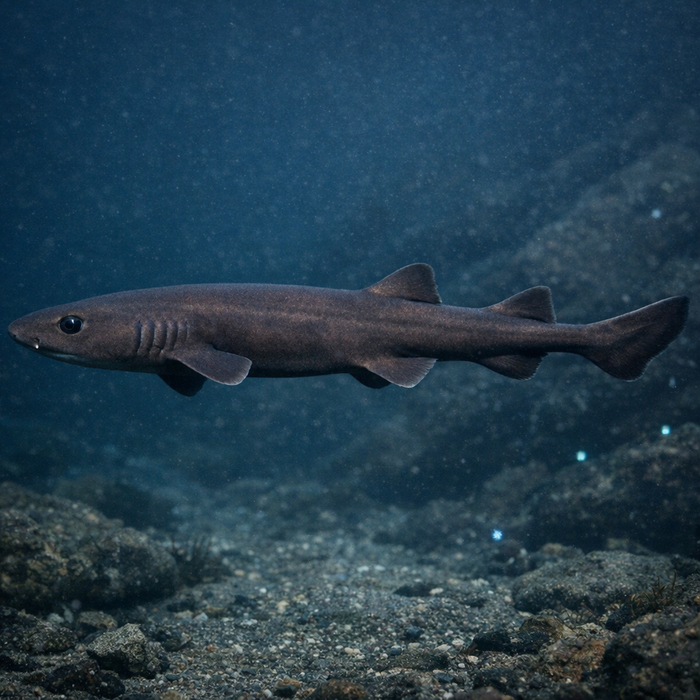
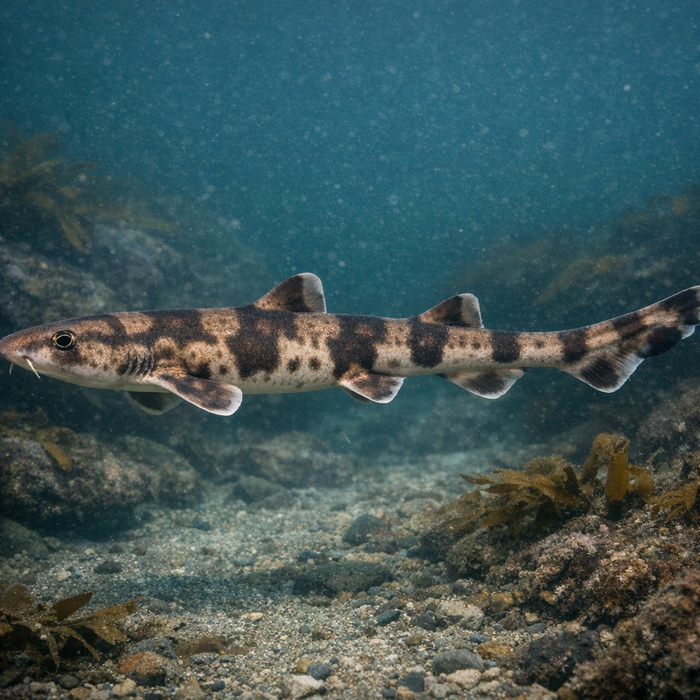
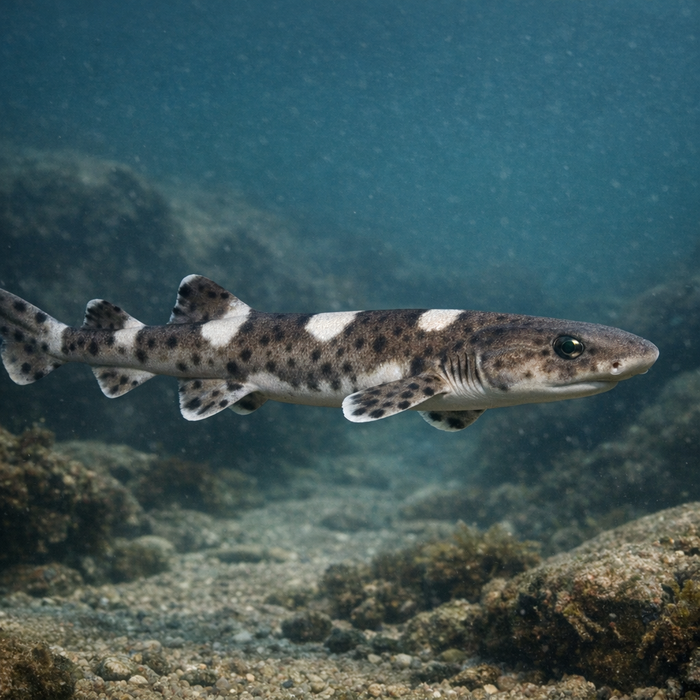
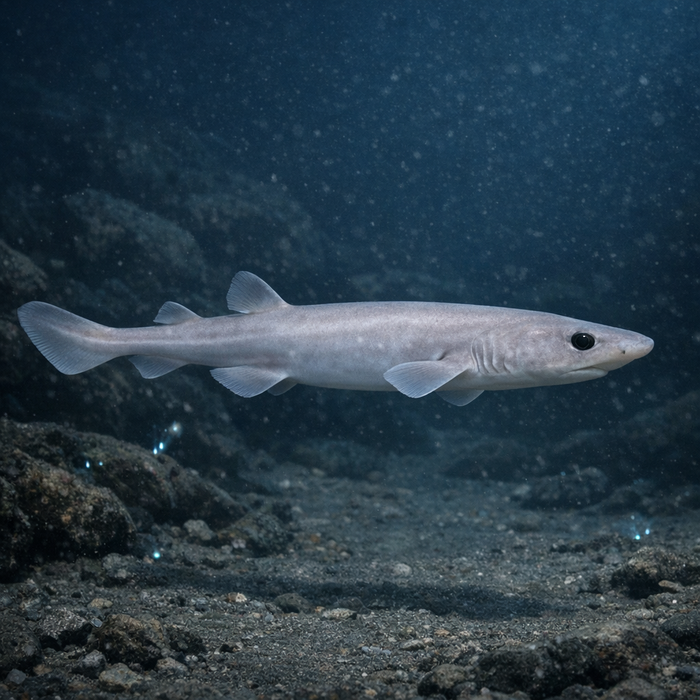
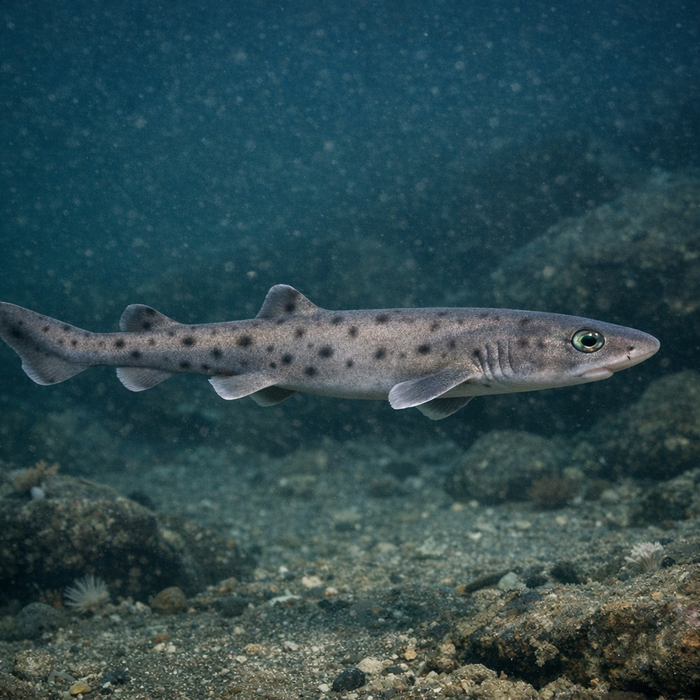
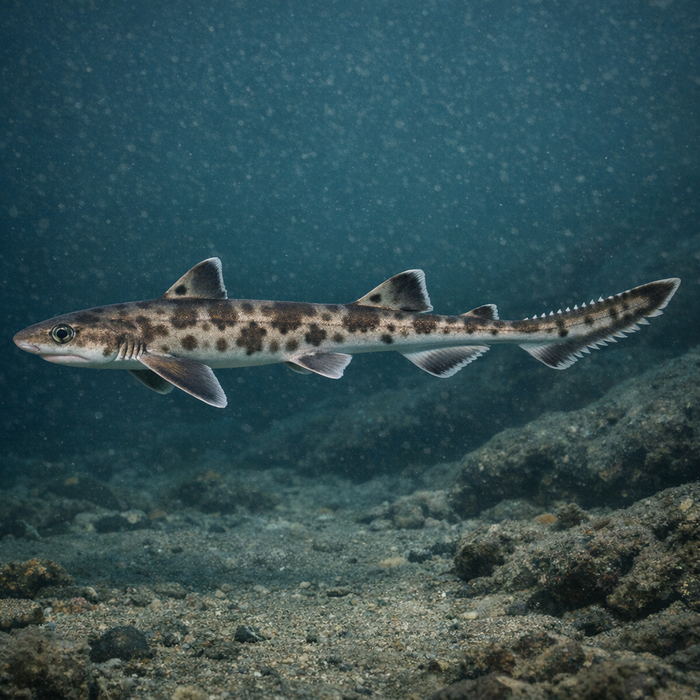
Largenose Catshark (Apristurus nasutus): A Bold, Memorable Hook LineIntroductionThe Largenose catshark is the shark you never see coming because you rarely see it at all. It works the deep continental slopes like a nocturnal janitor, quietly vacuuming life out of the mud and never asking for attention. If your idea of adventure involves black-water drops and thousand-foot soundings, this subtle little predator is speaking your language.What Makes the Largenose catshark Unique?Start with the obvious: the nose. The Largenose catshark wears an elongated, bulbous snout packed with electroreceptors, letting it key in on faint muscle flickers from buried prey. It's built for stealth, not sprinting, with dusky brown camouflage, fine shearing teeth, and a long, soft-bodied profile that glides inches above the bottom. And while many sharks go livebearer, this one lays tough egg cases that ride out months on the seafloor before hatching. If you're after Largenose catshark facts that separate it from the crowd, think deep, deliberate, and purpose-built for dim light.Habitat & Global RangeWhen someone says Largenose catshark habitat, picture the twilight-to-midnight zone on continental slopes around the South Pacific, especially New Zealand and nearby waters. It favors soft sediments, gentle rises, canyons, and trench margins from the upper slope down into true deep. That means cold, high-pressure living with stable conditions and minimal seasonal drama. You won't spot it on reefs or inshore sandbars; this is a deep-sea specialist that treats anything above a few hundred meters like the noisy upstairs neighbors.Behavior & TemperamentThe Largenose catshark is nobody's brawler. It moves with slow confidence, hugging bottom contours and making short, efficient strikes. Its eyes, backed by a reflective tapetum, turn scraps of light into useful contrast. Rather than roaming big water columns, it works a route close to the substrate, slipping between patches of soft ground and scattered structure. Biting is surgical, not explosive: small fish, squid bits, and invertebrates disappear before they even know what happened. Schooling is loose at best, more like several loners browsing the same buffet line.Ecological ImportanceDeep-slope communities run on tight energy budgets. The Largenose catshark plays the mid-tier predator, recycling small prey into shark biomass and feeding bigger deepwater hunters in turn. Egg cases parked on the bottom add another thread to the benthic web, creating microhabitats and potential snacks for opportunists. It's the sort of quiet species that keeps a system stitched together without starring in nature documentaries.Conservation & Environmental PressuresData on Apristurus nasutus is spotty, and that's the problem. Deepwater trawls and longlines occasionally pick them up as bycatch, but consistent population trends are hard to nail down. Deep habitats offer some buffer from coastal chaos, yet slow growth and late maturity can render deep-sea sharks vulnerable if fishing pressure ramps up. Seafloor disturbance, expanding deep fisheries, and climate-driven shifts to current patterns all matter. With many deep catsharks tagged as Data Deficient, smart management starts with better info and careful monitoring.The FishyAF TakeThe Largenose catshark is the definition of low-drama cool. It won't blister drags or skyrocket beside the boat. But if your angling curiosity stretches below recreational daylight, this fish is a badge of patience and precision. It asks for heavy braid, serious lead, and clean rigging more than hero forearms. As sharks go, it's minimalist: understated looks, laser-focused sensors, and a habitat that swallows light and noise whole. If you're collecting deep-sea experiences, add the Largenose catshark to your short list, then let the darkness do its thing.