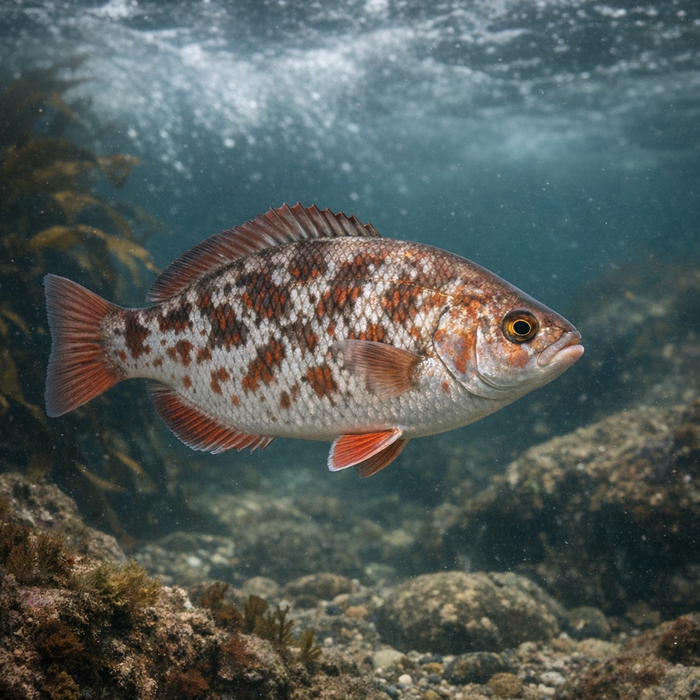
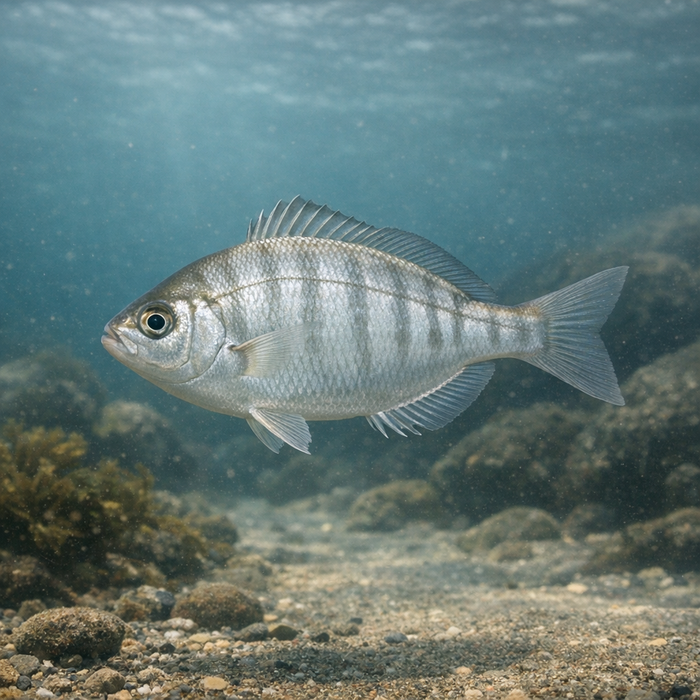
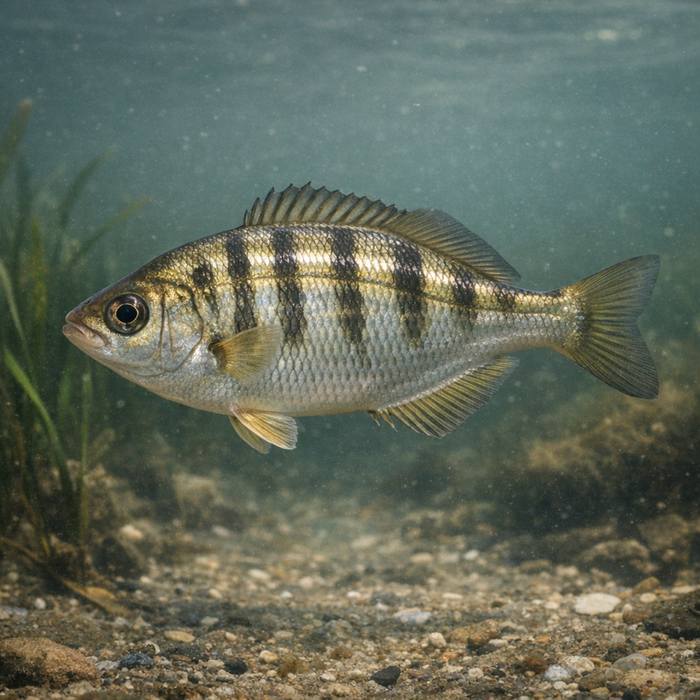
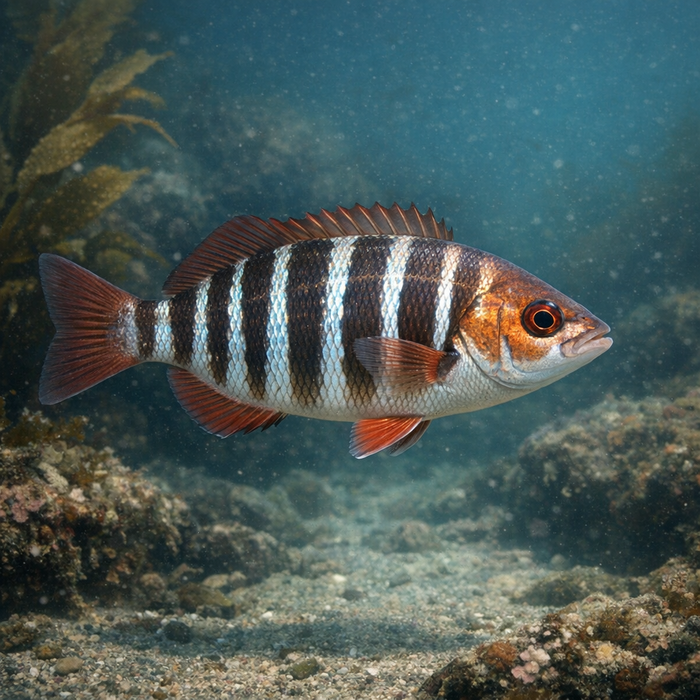
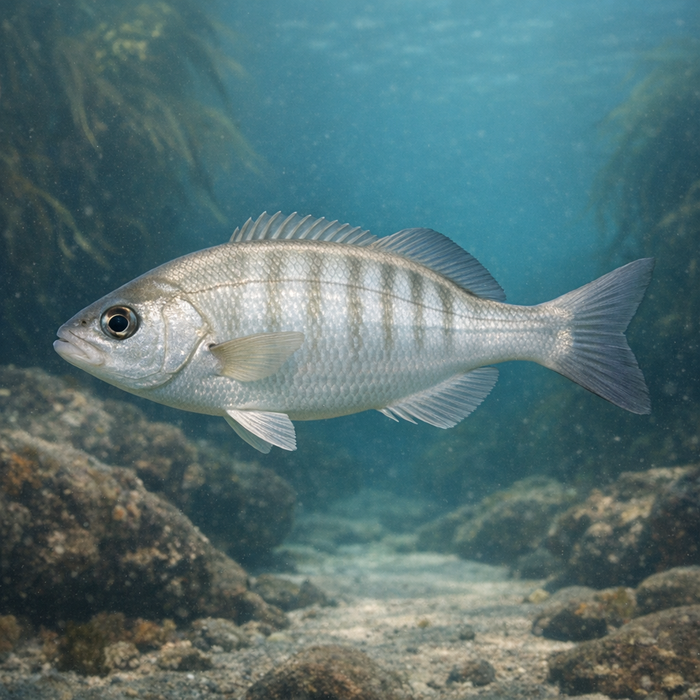
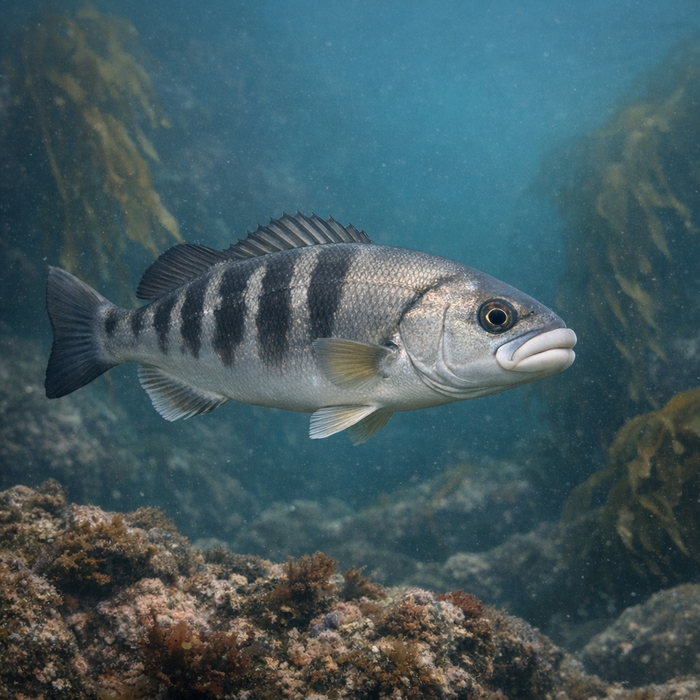
Redtail Surfperch (Amphistichus rhodoterus): A Bold, Memorable Hook LineIntroductionThe redtail surfperch is the West Coast's beach brawler, a surf-zone specialist built to slug it out in whitewater. It's close, accessible, and way tougher than its size suggests. If you want an honest fight while your boots fill with foam and sand, this is your fish. Consider this your quick hit of Redtail surfperch facts without the textbook hangover.What Makes the Redtail surfperch Unique?First, it's a live-bearer. Unlike most saltwater fish, the redtail surfperch carries its young for months and pops out ready-to-roll fry. Second, that tail. The namesake red-orange caudal fin is a bold field mark, brightening during spawning season. Third, the attitude. These fish feed aggressively in the chaos of breaking waves, tracking prey with a finely tuned lateral line that laughs at zero visibility. The redtail surfperch is purpose-built for turbulence and eats like it means it.Habitat & Global RangeThis species is a North American Pacific classic, running the West Coast from Northern California through Oregon and Washington into British Columbia. Think sandy beaches with defined troughs, rip lanes, and nearshore cuts. The best Redtail surfperch habitat is the first and second guts right off your toes, especially where the sand crab buffet is active. Seasonal shifts push fish alongshore; calmer summer surf tightens them to the beach while heavy winter swells nudge them slightly deeper or toward protected corners.Behavior & TemperamentSchooling is the redtail's superpower. They move in pods that materialize suddenly, hammer a seam, then slide out with the next set. They're visual opportunists when the water's clear and vibration hunters when it's churned. Expect quick hits and short, determined runs amplified by the push-pull of the shore break. Redtail surfperch chew most confidently around moving water: tide changes, rips, and the rhythmic pulse of consistent sets.Ecological ImportanceRedtail surfperch are a key link in the surf-zone food web. They convert abundant invertebrates like mole crabs, clams, and small crustaceans into protein for larger predators, including seabirds, lingcod in adjacent reefs, and coastal mammals. Their live-bearing strategy stabilizes local populations by dropping well-developed juveniles directly into suitable habitat. When sand crab numbers spike, redtails fatten fast, pushing average size up and energizing the whole nearshore system.Conservation & Environmental PressuresOverall, redtail surfperch are resilient. Heavy storms can rearrange beaches and scatter forage, but these fish adapt quickly. The bigger long-term concerns are chronic ones: coastal development that pinches off natural sand movement, water quality dips at river mouths, and localized overharvest when schools get hammered. Regulations vary by state and marine protected areas, so anglers should stay current, handle fish cleanly in the wash, and avoid dog-piling obvious schools.The FishyAF TakeThe redtail surfperch is the gateway drug to saltwater chaos. It's right there, munching in the first trough, and it doesn't demand a boat, a mortgage-worth of gear, or an offshore weather window. It rewards reading water, timing waves, and staying mobile. If you want a salty confidence boost or to teach a new angler the magic of surfcasting, this species is hard to beat. Fish smarter than the foam, and you'll tap into a fishery that's equal parts simplicity and adrenaline. That's the Redtail surfperch experience, pure and loud.