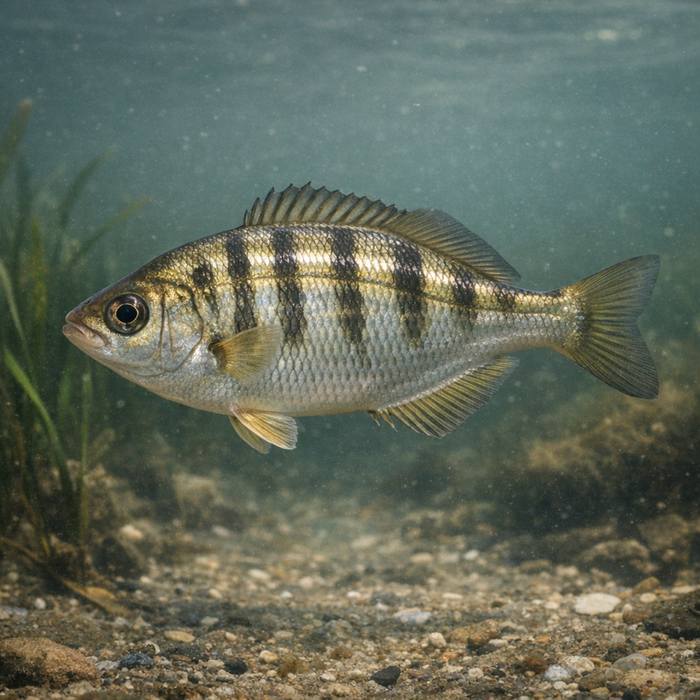
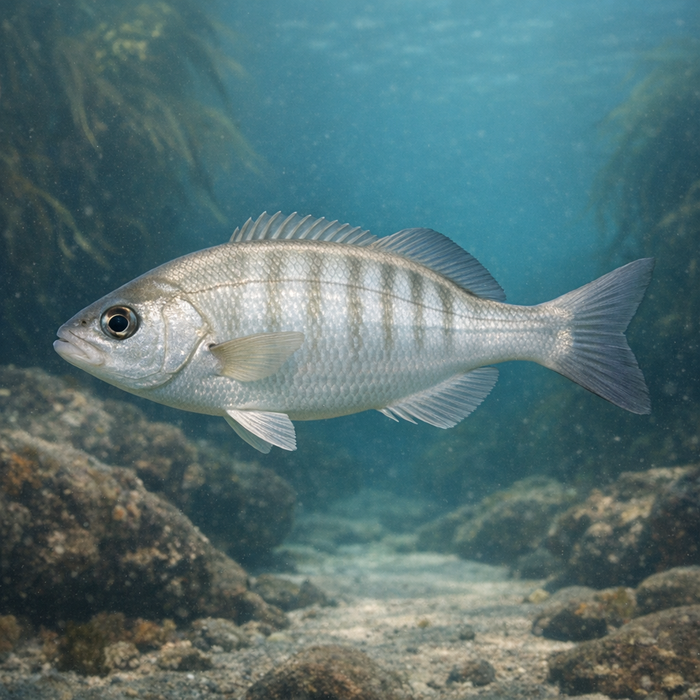
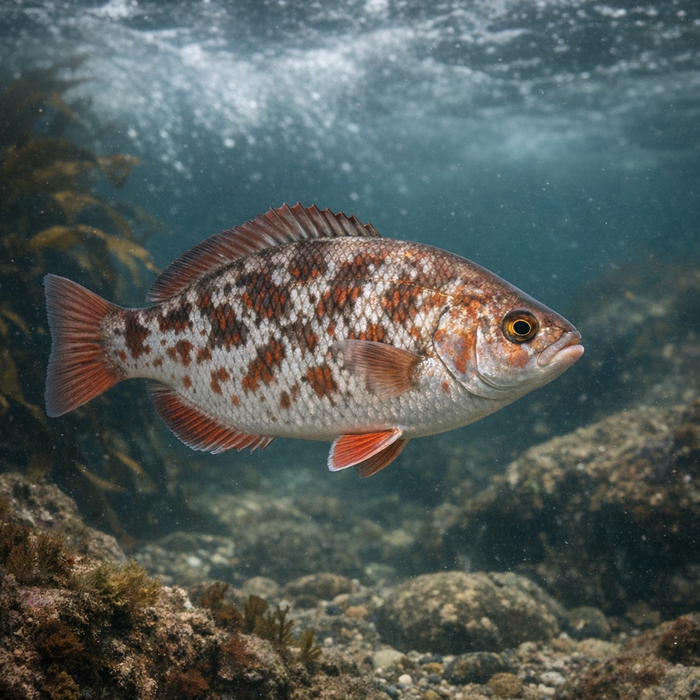
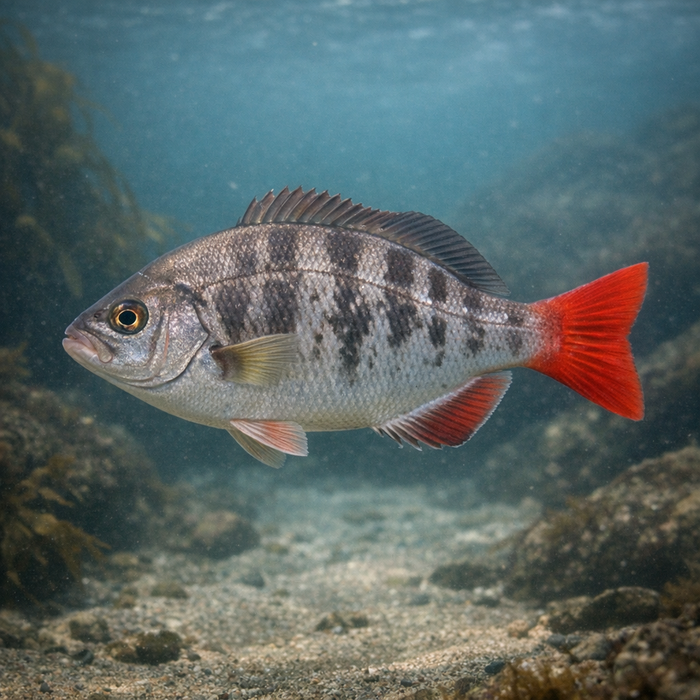
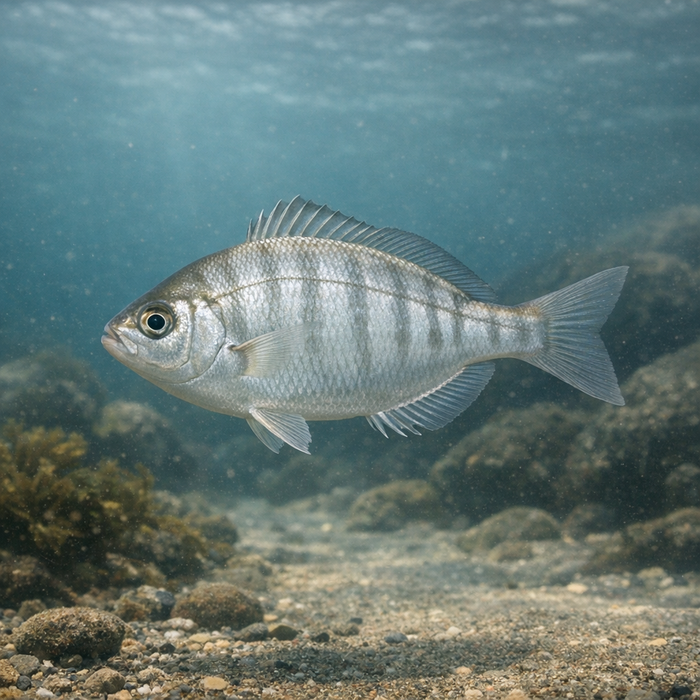
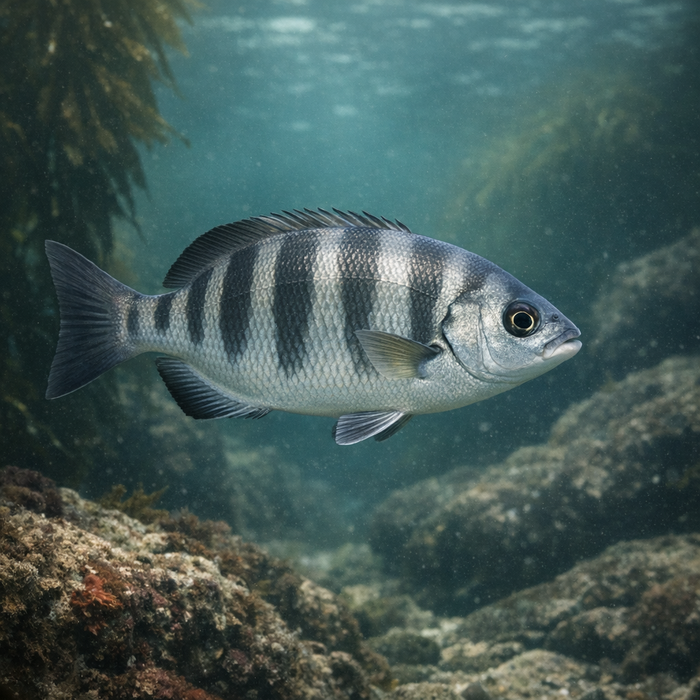
Striped seaperch (Embiotoca lateralis): Pocket-sized power with neon pinstripes and a serious kelp addiction.IntroductionStriped seaperch are the West Coast's working-class nearshore fish: flashy, thick-bodied, and always hanging where the rocks meet the weeds. If you fish piers, jetties, or kelp edges from Alaska to California, you've met them. They're not giant, they're not rare, but they punch way above their weight and turn a slow tide into steady action. This is the surfperch that turns casual strolls on the pier into fish fry planning.What Makes the Striped seaperch Unique?Two things: the look and the life history. The striped seaperch wears electric-blue pinstripes with orange bars that glow in clear water, especially on fired-up males. And unlike most saltwater fish, these surfperch give birth to live young. After a long pregnancy using a pseudo-placenta, females drop shockingly large, fully formed pups. That combo of neon racing stripes and mammal-style parenting gives anglers a fish that's both photogenic and biologically weird in the best way.Habitat & Global RangeStriped seaperch hug the Pacific coastline from Alaska down to Baja California, most common along the West Coast. They haunt kelp forests, eelgrass, rocky outcrops, pilings, and harbor edges, rarely straying far from structure. Think boulders, kelp stalks, and the dark shade under piers. Depth-wise, they're shallow specialists, often in 5 to 40 feet, surfing the surge zone but sheltering from heavy current. If you're searching for striped seaperch habitat, focus on kelp edges, jetty gaps, and rock-to-sand transitions where amphipods and tiny crabs are thick. That's prime striped seaperch habitat in one tidy sentence.Behavior & TemperamentStriped seaperch school loosely, hovering and darting with abrupt, fin-powered bursts. They're nippers, not chasers. Patience and precision pay off. They pick food from kelp and rock seams, then suddenly blitz a small bait or microjig with surprising authority. Larger adults often hold the best lanes along kelp walls and pier pilings, moving in short patrols. They're not bulldogs, but on light tackle they dig hard and turn side-on, using that deep body like a handbrake. Spook them with commotion and they ghost into cover; calm them with low-key presentations and they're back on station.Ecological ImportanceStriped seaperch are turnover artists in shallow ecosystems. They convert dense swarms of amphipods, small crabs, and other invertebrates into fast-growing biomass, which then feeds larger predators like lingcod, cabezon, and seabirds. As livebearers, their reproductive timing also syncs with coastal productivity pulses. Pups drop when plankton and kelp-associated prey explode, giving them a head start in crowded neighborhoods. They're also a reliable bioindicator for nearshore health; thriving striped seaperch usually mean healthy kelp, stable structure, and room for small critters to flourish.Conservation & Environmental PressuresGood news first: striped seaperch are considered stable along much of their range and are categorized as Least Concern. Their biggest threats are habitat-focused. Kelp loss from warm-water events, pollution in urban harbors, and heavy shoreline development hammer the places these fish need most. Local fishing pressure around piers can also nick at local size structure. Marine protected areas and rotating closures help, but long-term success hinges on keeping kelp forests and eelgrass beds intact. If you want more striped seaperch, root for cold upwelling, healthy kelp, and clean piers.The FishyAF TakeThis is the ultimate "always bring a rod" fish. Striped seaperch won't smoke a drag like a tuna, but they'll absolutely save your day. Show up with a light spinning setup, tiny hooks, and something that smells like lunch, and you're in business. They're perfect for teaching kids, perfect for dialing in finesse skills, and perfect for sneaking a bend in the rod before work. If you crave giant trophies, keep walking. If you appreciate a sparkling fish that lives in splashy, photogenic water and eats with confidence when you get the presentation right, striped seaperch deliver. For quick-hit action in salty air with kelp at your feet, they're tough to beat. Call it blue-collar glamour. And yes, that's a compliment. For more striped seaperch facts, bookmark this page and go wet a line.