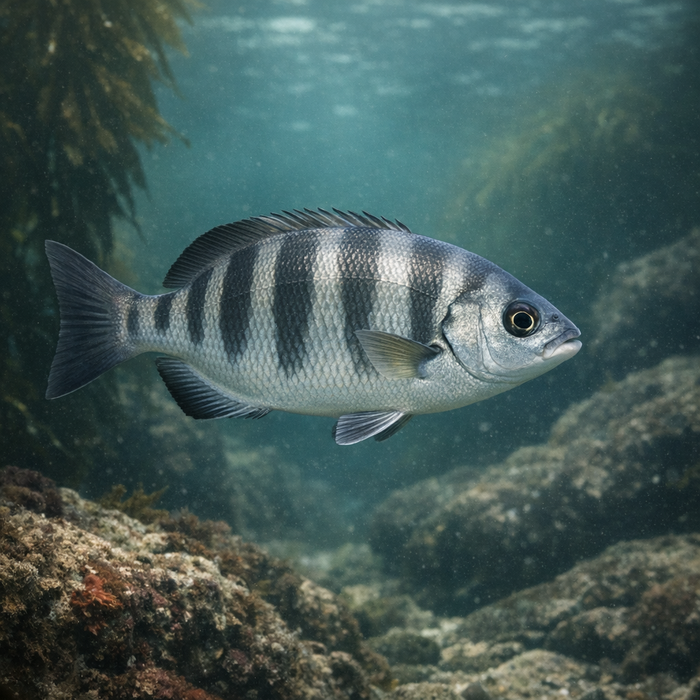
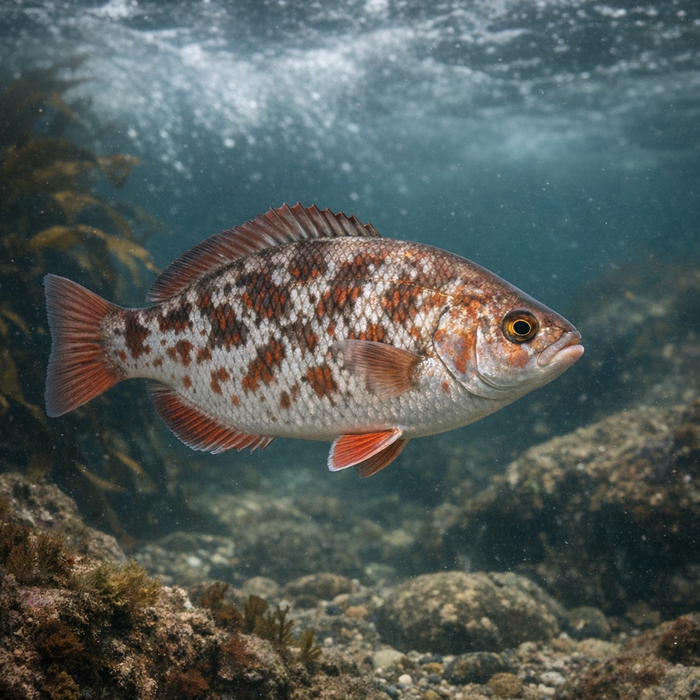
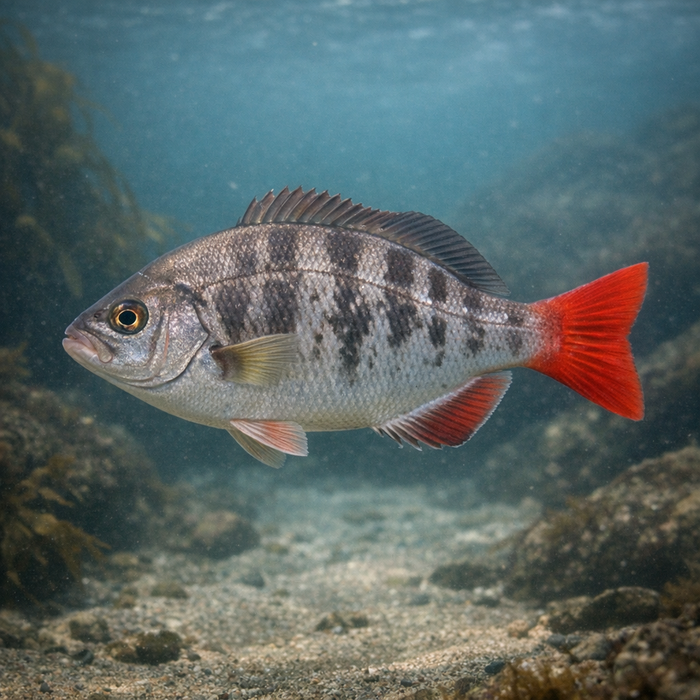
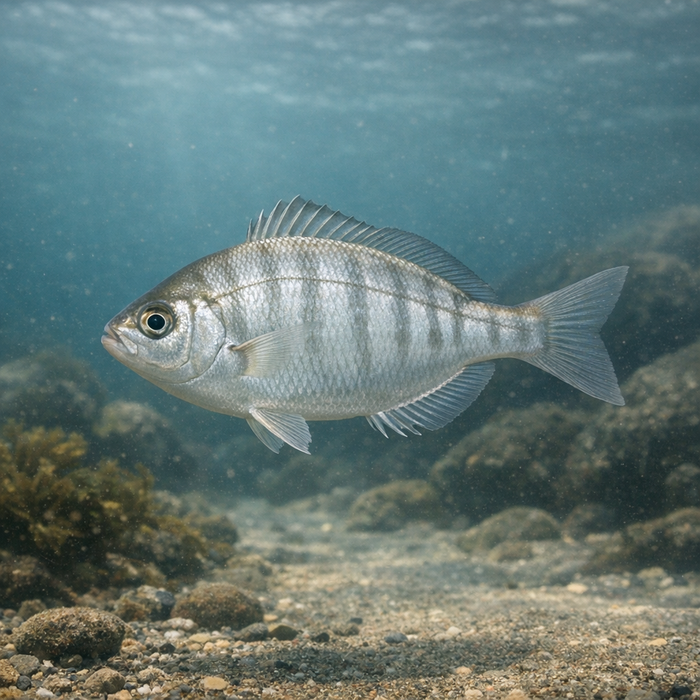
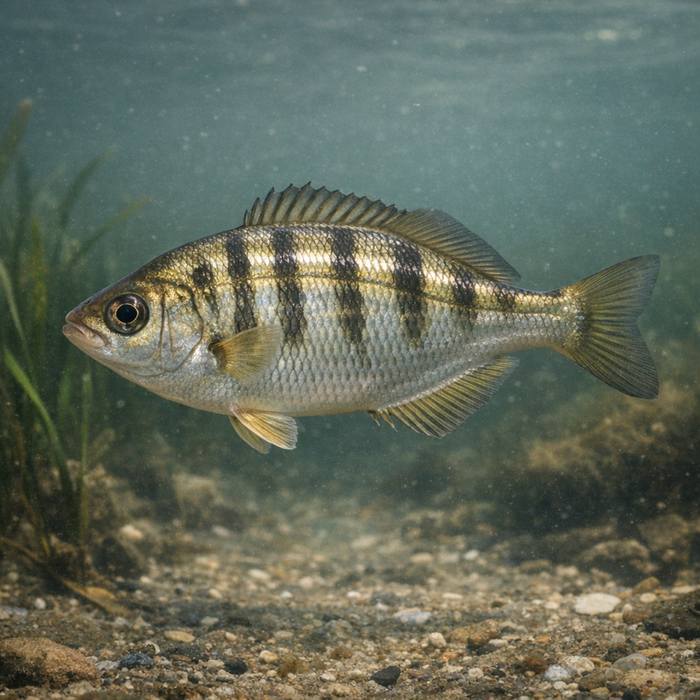
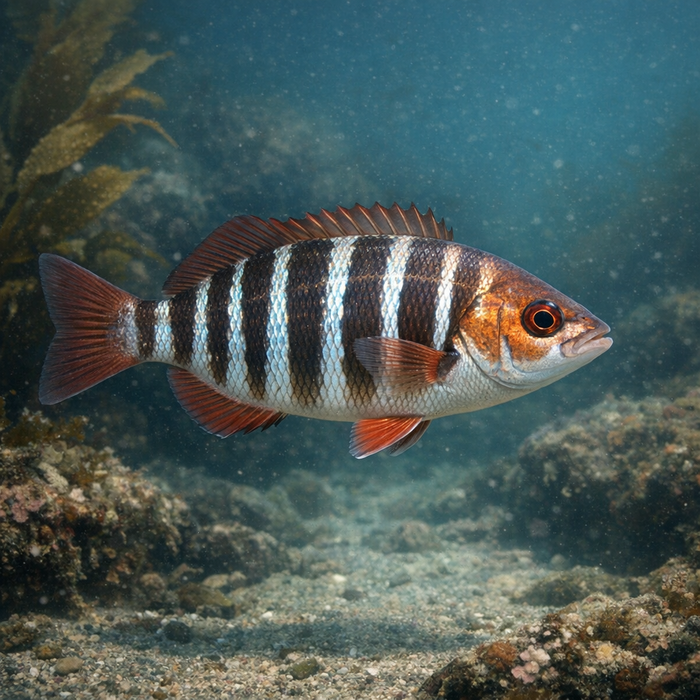
Rubberlip Seaperch (Rhacochilus toxotes): Thick lips, tight quarters, and a surprising mean streak in the foam.IntroductionThe rubberlip seaperch is the West Coast jetty bruiser most anglers meet by surprise and then start specifically hunting. Big for a perch, armed with suction-cup lips and crusher teeth, it prowls surge-swept rocks and kelp edges where other fish play cautious. If you're poking around jetties and boulder fields with crabs or mussel, you're squarely in rubberlip territory. Consider this your crash course in proper Rubberlip seaperch facts, wrapped in the kind of detail that actually helps you fish.What Makes the Rubberlip seaperch Unique?First, the lips. Those thick, pale pads form a seal on cracks and shells to yank prey from spots hooks barely reach. Second, this is a live-bearing perch. Instead of laying eggs, females give birth to fully formed juveniles already primed to chase invertebrates. Third, rubberlip seaperch are built for tight, high-energy habitats. They hold near rocks and kelp lines, twisting and darting through surge like tiny linebackers, then bolt for a crevice when pressured.Habitat & Global RangeRubberlip seaperch hug the Pacific coast, most commonly across California's rocky headlands, kelp forests, harbor jetties, and pocket coves. Think structure first: boulders, reef edges, scattered rock on sand, or pier pilings near hard bottom. Depth-wise, they're shallow specialists, often in the first 5 to 40 feet where surf churn keeps food circulating. You'll also encounter them around bay mouths, especially where tidal current drags over broken structure. Look for that classic Rubberlip seaperch habitat recipe: hard edges, pushy water, and easy access to crabs, mussels, and worms.Behavior & TemperamentThese fish aren't reckless, but they're not timid either. Rubberlip seaperch cruise in loose groups, tighten up when surf builds, and pin forage against rock faces. They seldom feed at the surface; most bites happen near bottom around cracks, pockets, and the base of kelp. Angling pressure educates them fast. A sloppy presentation gets sniffed and snubbed, while a natural drift or short lift-drop often sticks them. Hook one and expect hard side runs and bulldogging dives for the rocks rather than long screaming line burns.Ecological ImportanceRubberlip seaperch are mid-level predators that translate surf energy into streamlined nutrition for the reef. They crack small crabs and mollusks, trim worm populations, and return the favor by feeding larger fish, birds, and the occasional sea lion. Their live-bearing life history means fewer, larger, better-provisioned young, a strategy that makes stable, productive nearshore habitat crucial. Where boulder fields and kelp canopies persist, so do strong classes of perch.Conservation & Environmental PressuresMost pressure is local and habitat-driven. Kelp loss, coastal development, sedimentation that buries rocky micro-habitats, and chronic water-quality issues can pinch a rubberlip seaperch population faster than weekend anglers ever could. They're approachable from shore, so fishing pressure around urban jetties can concentrate, but the bigger story is maintaining healthy reefs and kelp. Regulations vary, and some marine protected areas remove key stretches from the rotation entirely. Treat them like a renewable resource with limits, not a bottomless bag.The FishyAF TakeIf you like fishing where waves pop, lines buzz, and fish hit like they mean it, the rubberlip seaperch is your huckleberry. It's a sharp, structure-savvy inshore target that rewards clean drifts, crustacean baits, and abrasion-resistant leaders. The lips aren't a gimmick; they're a mission statement. Hunt the cracks, match the forage, and you'll add more rubberlip seaperch to your photo roll than you thought possible. And if you needed one more reason to care: few fish teach nearshore reading skills faster. Learn this species, and the rest of the coast starts making a lot more sense.