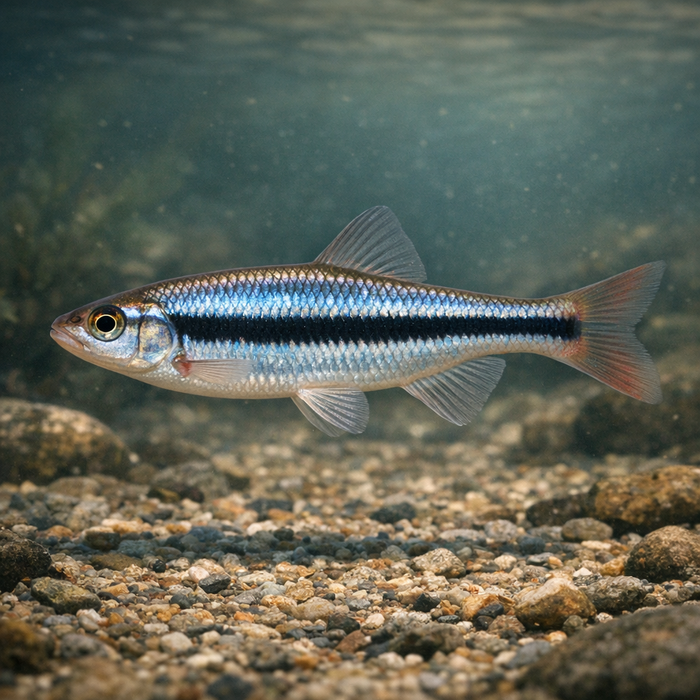
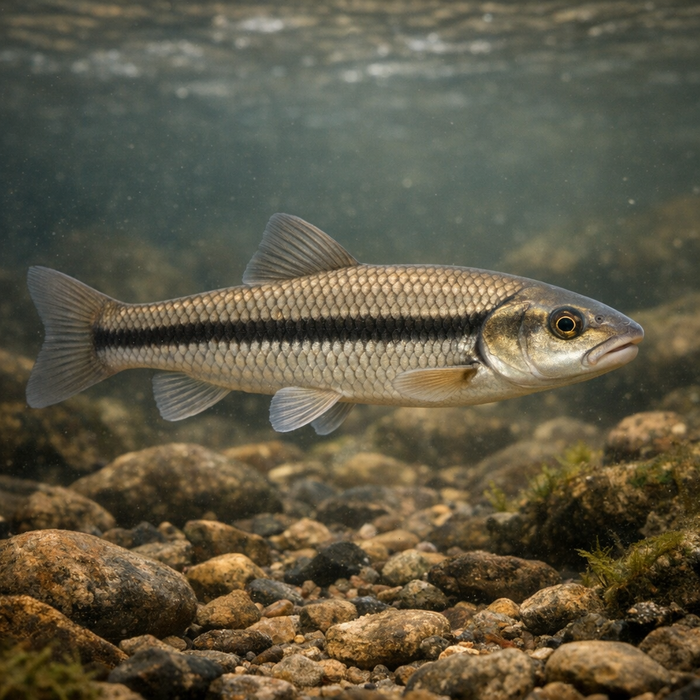
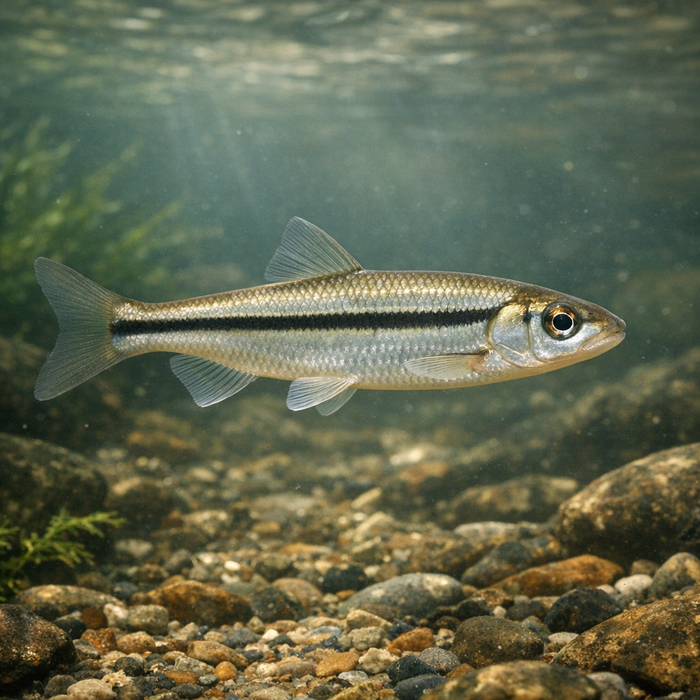
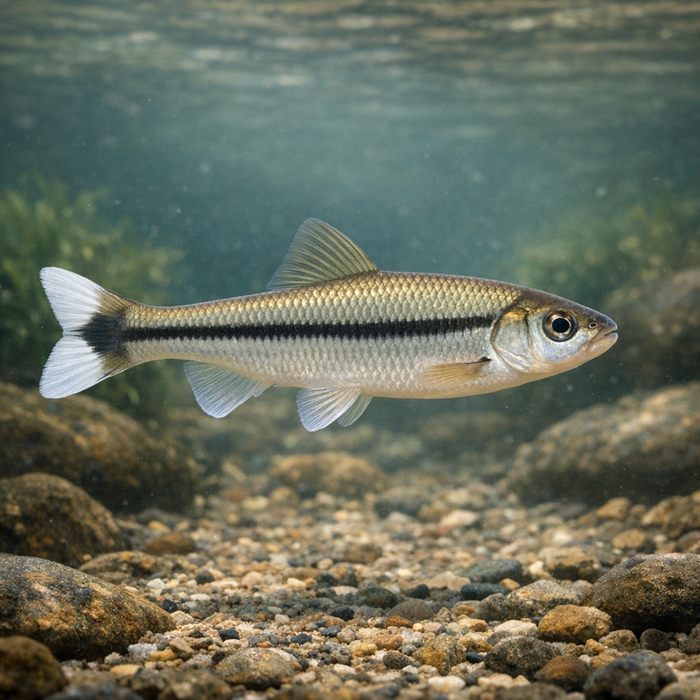
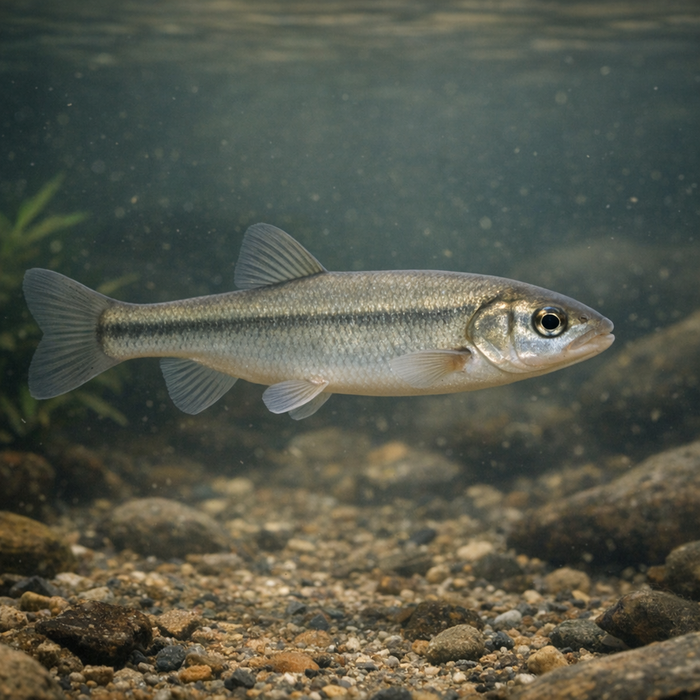
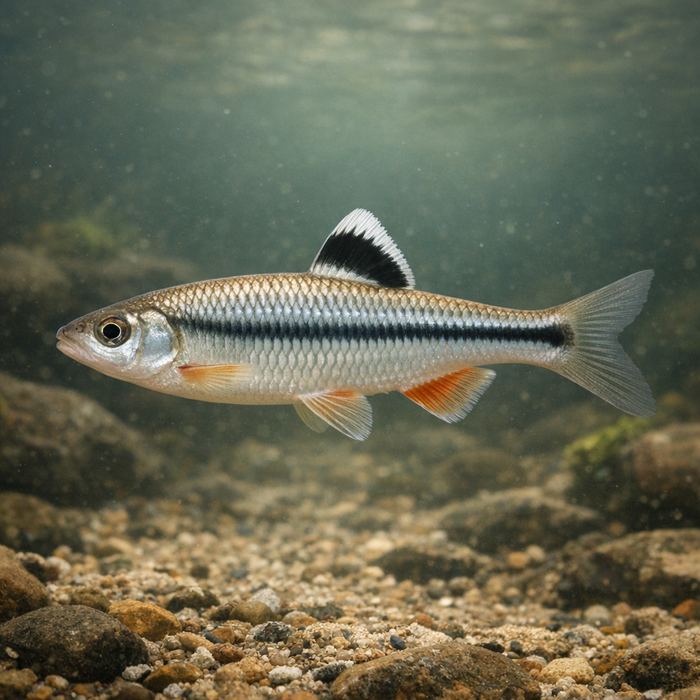
Ribbon Shiner (Lythrurus fumeus): A Bold, Memorable Hook LineIntroductionThe ribbon shiner is the little flash mob of the creek, a slim shard of chrome that turns ordinary riffles into a living light show. You will not win tournaments with it, but if you want to sharpen stealth, presentation, and fish sense, this tiny customer delivers. The ribbon shiner rides the middle of small to medium streams, slipping through sand-and-gravel runs where the water whispers instead of roars. It is catnip for microfish nerds and a reliable tell that a creek is still doing its job.What Makes the Ribbon shiner Unique?First, that body. The ribbon shiner is flattened and thin, throwing a razor of silver with every tail kick. It looks fragile, but it is built for speed in soft current, turning on a dime when a shadow sneaks over. Second, breeding males switch outfits for spring, lighting up with orange-tipped fins and rough pearl-like tubercles along the head. It is short-lived bling, here for the party and gone when flows settle. Finally, this species is a school mover. Dozens to hundreds cruise together, pivoting as one like a baitball that never got the memo it is not in saltwater.Habitat & Global RangeIf your question is ribbon shiner habitat, think clear to lightly stained creeks and small rivers across parts of the Southeast, Midwest, and Texas, especially within sandy, lowland drainages. They gravitate to gentle runs and pool tails, where depth is knee-high or less and the bottom is clean sand or fine gravel. Oxbow edges and lake inlets also host them when the current is just right. They are hardy enough to ride out brief muddy pulses after storms, then quickly regroup once visibility returns. These fish are not open-lake wanderers or deep-eddy lurkers. They are midwater drifters in places that feel like a steady treadmill, not a whitewater gym.Behavior & TemperamentRibbon shiners are opportunistic pickers. They watch the drift like hawks, taking micro-invertebrates and flecks that roll down current. The eyes sit a bit upward, so food above the midline gets fast attention. Aggression is low, wariness is medium, and the strike is more a sip than a smash. Schools keep tight formation, snapping into synchronized turns that confuse predators and, yes, confound clumsy nets. For anglers, that means tiny baits, light line, and a slow, natural sink. They are not fighters in the classic sense, but they will show you exactly how precise your presentation really is.Ecological ImportanceThe ribbon shiner is a compact energy shuttle. It converts invertebrate calories and algae-fueled drift into bite-sized protein for sunfish, juvenile bass, and anything else that eats minnows. Schools oxygenate through open water and move nutrients around the creek like a conveyor belt. Because they prefer clean sand-and-gravel substrates, their presence often signals streams that have not been completely smothered by silt. Put simply, more ribbon shiners usually means a healthier small-water food web. That is one of the quiet Ribbon shiner facts every watershed manager loves.Conservation & Environmental PressuresRegionally, ribbon shiners are doing fine, but they are not bulletproof. Chronic siltation buries spawning nooks and insect life. Channelization scrapes away the gentle runs they love, replacing variety with a straight, featureless chute. Low dissolved oxygen after algae blooms or hot, sluggish summers can also thin schools. The good news: many watersheds still support strong populations, and basic stream protection practices go a long way. Keep the banks vegetated, keep the gravel clean, and the ribbon shiner keeps showing up.The FishyAF TakeThe ribbon shiner is the minimalist's teacher. You cannot muscle this fish, and you cannot fake a clumsy drift. Nail down stealth, trim your gear to essentials, and feed it something that looks like it fell off the current's conveyor. Master that and bigger fish get easier, because you have trained on expert mode for presentation. For creek rats and micro heads, a lively school of ribbon shiners is the neon sign that you are in the right place, doing it the right way. Small fish, big lessons.