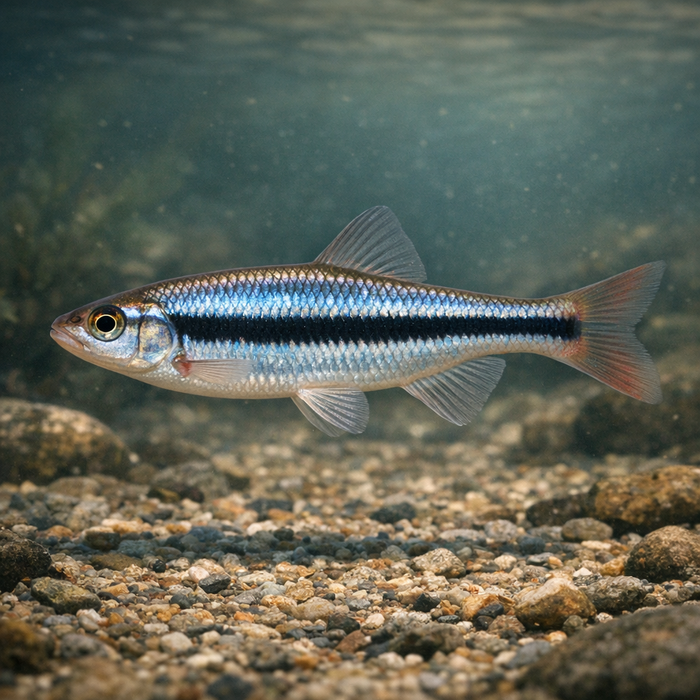
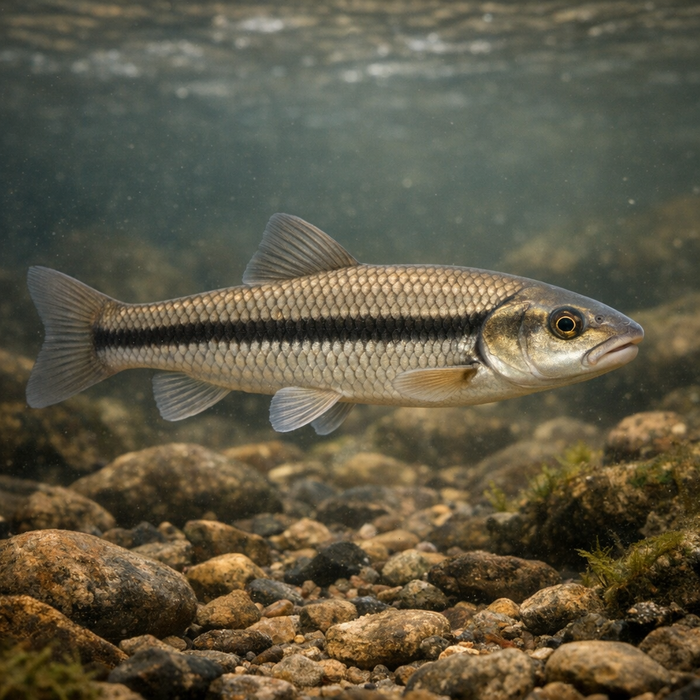
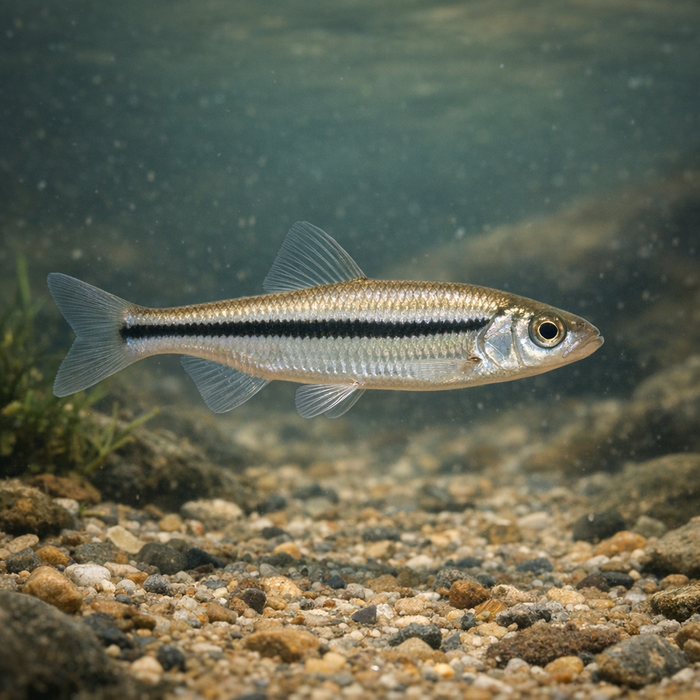
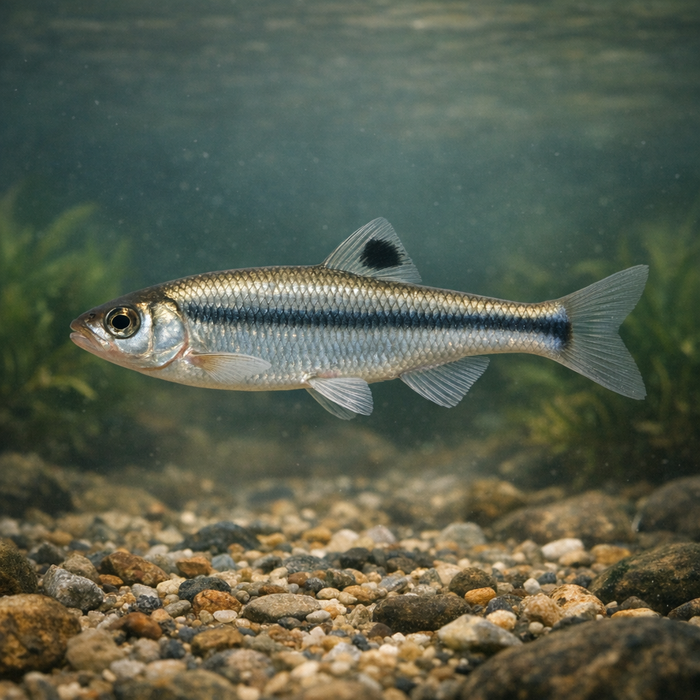
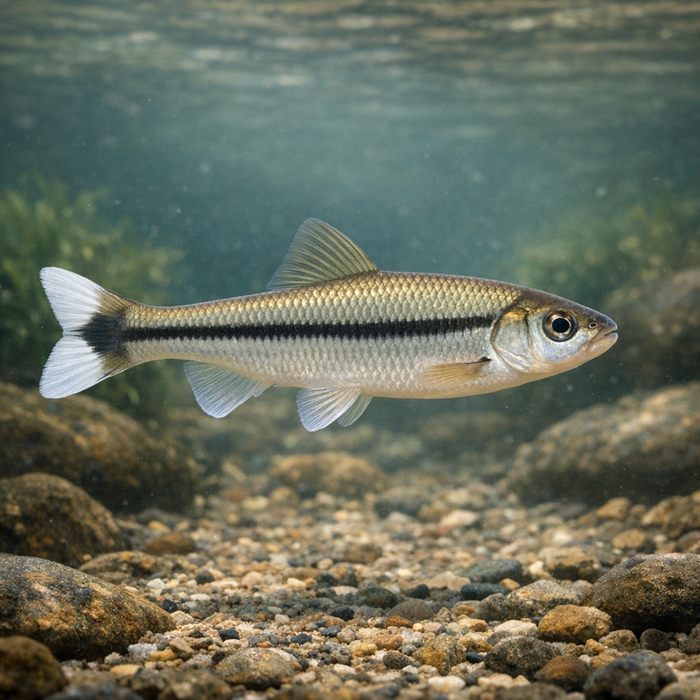
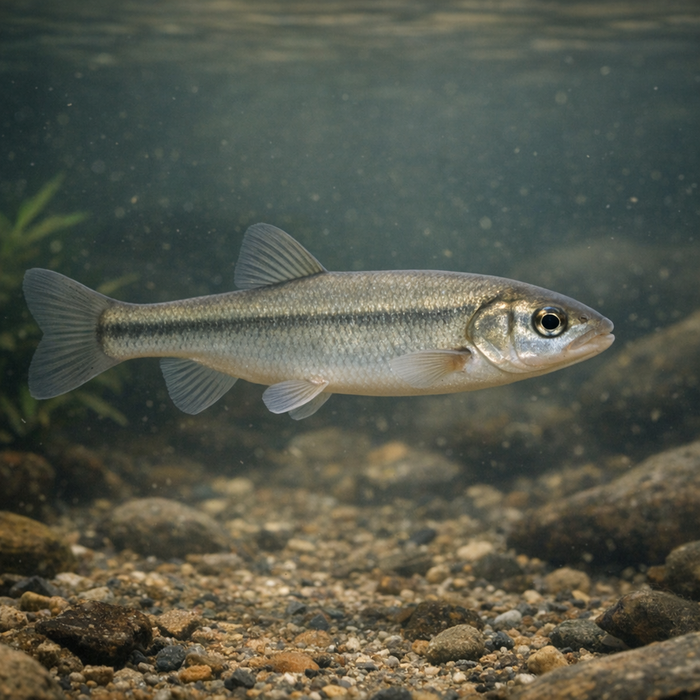
Silver Shiner (Notropis photogenis): A Bold, Memorable Hook LineIntroductionIf chrome had a heartbeat, it would look like a Silver shiner. This little rocket lights up clear riffles with mirror flashes, slips through current like a needle, and turns drift bugs into fuel. You won't spool a reel on one, but if you love perfect drifts and clean water, the Silver shiner scratches that itch. Consider this your quick hit of Silver shiner facts without the snooze.What Makes the Silver shiner Unique?Start with the name. Photogenis isn't a marketing flex; it telegraphs those hyper-reflective flanks that blaze in sunlit current. Silver shiner eyes are oversized for the body, tuned to track drifting insects in bright water where shadows move fast. And then the calling card: two dusky crescents on the snout. That subtle face paint is a clutch ID detail when you're squinting at a handful of glittering minnows.Habitat & Global RangeSilver shiner habitat leans hard toward clean, moderate to swift rivers with gravel and cobble. Think riffles, runs, and the soft seams just off the main push. They also spill into big-lake shorelines where tributaries dump clear water. In North America they're a fixture in parts of the Great Lakes and Ohio River drainages, slotting neatly into watersheds with decent gradient, good oxygen, and honest visibility. When the flow drops, schools pull into deeper runs; when levels rise, they slide back to the edges and tailouts. If the bottom is slick with silt and the water tastes like tea, don't expect a parade of chrome.Behavior & TemperamentThe Silver shiner is a drift-feeding specialist. Picture small squads hanging mid-column, noses into current, sniping mayfly nymphs, caddis bits, and micro invertebrates. They're quick to spook under a clumsy shadow, but equally quick to return when the snack conveyor restarts. Spawning hits late spring into early summer when temperatures bump into the comfy zone. Males roughen up with tiny pearly tubercles, the crowd piles into shallow gravel, and eggs get broadcast to the current with zero parental coddling. Their lives are short and jam-packed: many never see year three, which is fine when the year-class is heavy and the flows are kind.Ecological ImportanceSilver shiners are the shiny link between riffle insect factories and the larger fish every angler recognizes. They convert drifting bug biomass into snack-sized protein packets for bass, walleye, trout, and pike. Their schooling flash can scramble predator aim, which means a few live longer and keep shuttling calories upstream and down. Because they need clean substrates and oxygen-rich water, their presence is a living thumbs-up for river health. Lose the gravel to silt, cook the flow, or fog the water with nutrients and the Silver shiner checks out, taking a tidy piece of the food web with it.Conservation & Environmental PressuresOn paper, the Silver shiner sits comfortably as Least Concern. In reality, it's allergic to dirty water. Sedimentation from sloppy earthwork, unstable banks, and relentless runoff smothers gravel and suffocates eggs. Low summer flows heat up fast and starve riffles of oxygen. Nutrient spikes and algal blooms shade out the clarity this species relies on. Fragmented rivers also matter: dams turn bouncy runs into flat pools and slice up seasonal movement. None of this is unique drama, but minnows feel it early and often, and they telegraph watershed trouble before the headliners do.The FishyAF TakeYes, it's small. No, it won't break your rod. But the Silver shiner is a legit skill check. Drift a size-20 nymph on 5X through a riffle seam and try to keep that micro-take honest. Watch a school flicker like a tossed coin roll. It's a master class in water reading, line control, and delicate presentations you can practice almost anywhere clean water moves. For anglers who see "baitfish" and tune out, you're missing the best tells a river offers. Learn the Silver shiner and you learn the river. That's the kind of upgrade you feel when the big kids show up five minutes later.