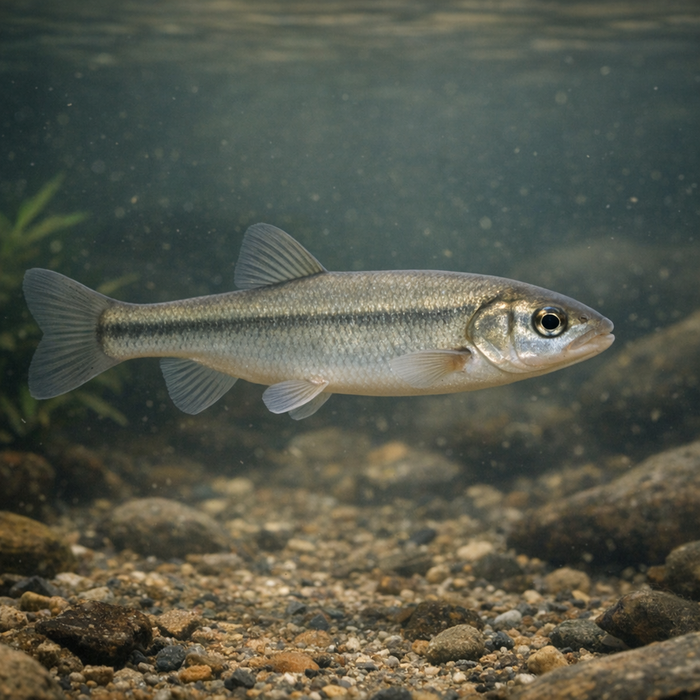
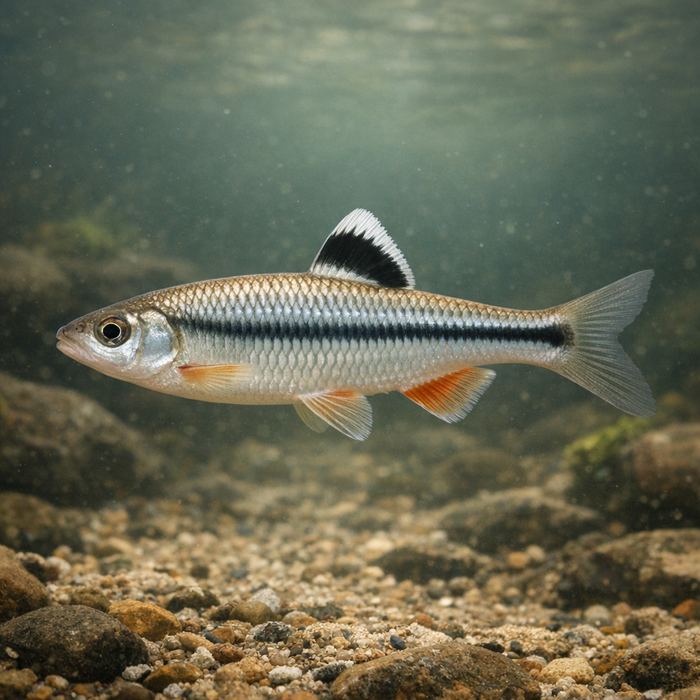
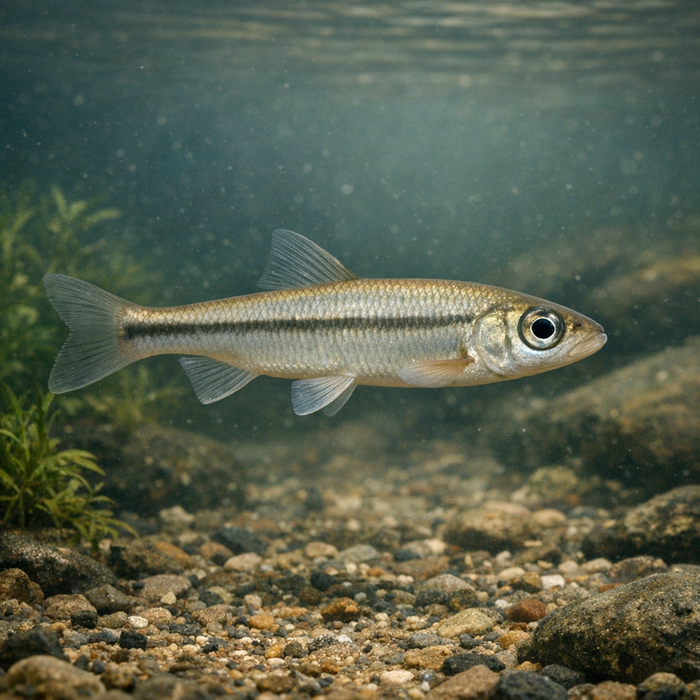
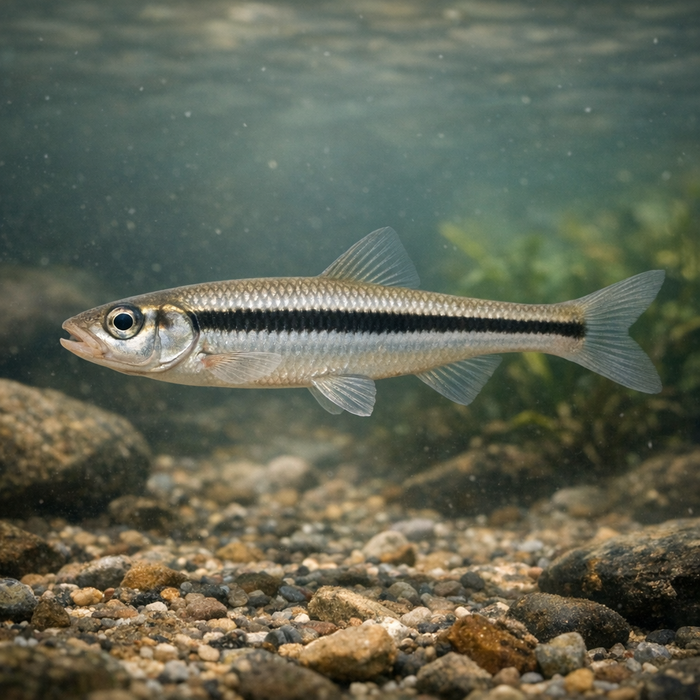
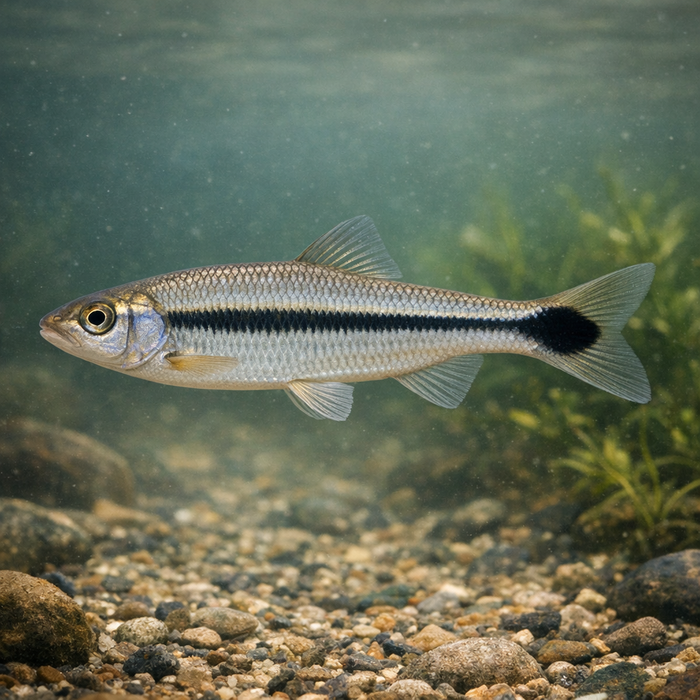
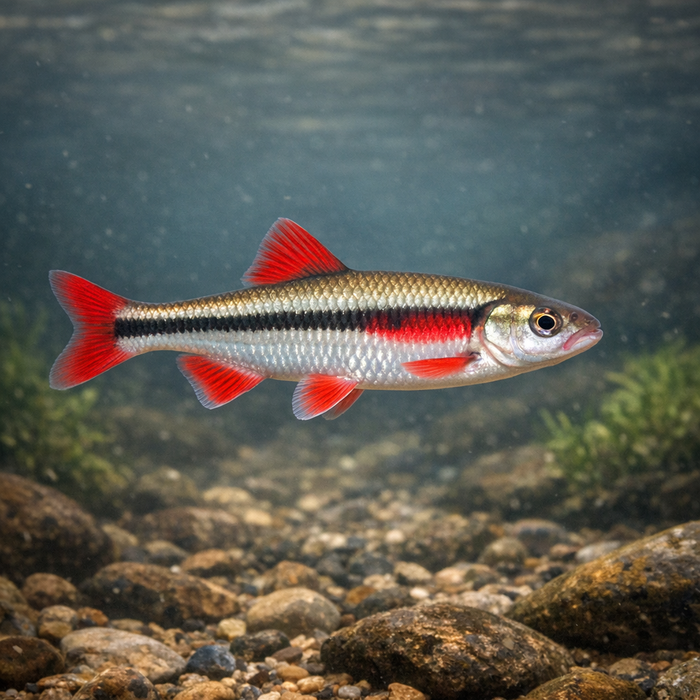
Spotfin Shiner (Cyprinella spiloptera): A flash mob of chrome that turns riffles into light showsIntroductionIf you fish moving water in the eastern half of the U.S., you've probably watched a nervous cloud of silvery darts spook ahead of your boots. That was likely the spotfin shiner, a small fish with big stage presence. You don't target them for hero shots, but this species is the quiet engine of the show, fueling predators and tipping you off to healthy flows. Consider this your crash course in Spotfin shiner facts without the snooze.What Makes the Spotfin shiner Unique?Start with the namesake. That sharp black stamp at the rear of the dorsal fin looks like punctuation, and the fish acts like it knows it. During breeding, males shift into a steel-blue suit with white fin edges and scatter pearl-like tubercles on their heads. They're crevice spawners, packing eggs into razor-thin rock cracks and then playing bouncer. The result is a fish that's small in body but huge in color, ritual, and attitude.Habitat & Global RangeWhen anglers say "Spotfin shiner habitat," they mean clean to moderately turbid streams with good flow, gravel or small cobble, and enough oxygen to make your waders whistle. You'll see them across much of the Midwest, Great Lakes, and parts of the Northeast in rivers and creeks, plus rocky shorelines of lakes and reservoirs. They hold where current softens: below riffles, along seams, and at the heads and tails of pools. Give them broken rock, sensible flow, and decent clarity, and they'll stack like chrome cordwood.Behavior & TemperamentThe spotfin shiner is wired for schooling. Dozens to hundreds move like one brain, pivoting on threats in a glittering wave. They feed through the water column, nipping drifting insects and algae, and opportunistically hoovering whatever the current gifts them. In spawning season, the vibe changes. Males lock down crevice real estate and spend much of the day refereeing, nudging, and body-checking rivals. As water cools, activity throttles back, schools loosen, and fish slide deeper or tuck into gentler flows.Ecological ImportanceForget glamour. This is infrastructure. Spotfin shiners move energy up the food web with ruthless efficiency. Smallmouth bass, walleye, rock bass, and a parade of stream predators cash them like paychecks. Their schooling keeps invertebrate pulses moving and gives away predator presence long before you see a bronze back. For anglers tracking the system, a tight school of spotfins over clean gravel screams healthy water and stable flow. Lose them, and you'll feel it all the way up the food chain.Conservation & Environmental PressuresGood news: the species sits comfortably as Least Concern overall. The catch is that local populations can fade fast when streams get silt-choked, bank-hammered, or turned into storm drains. They want oxygen, modest clarity, and stable flows. Smother the gravel with fine sediment or nuke riffles with poorly timed drawdowns, and nest crevices vanish. Invasive predators, bait-bucket transfers, and disease concerns add more pressure. Keep the rocks clean, the water cool, and the current honest, and spotfins will keep doing spotfin shiner things.The FishyAF TakeThe spotfin shiner is the river's tell. If they're thick and glittering, your bass and walleye program probably hums. If they're thin and skittish in chocolate milk, start asking hard questions about runoff and flow management. They're also sneaky fun on micro-tackle or a 3-weight when you just want to watch fish behave. Call it bait if you want. We call it a living health check with chrome paint and a black exclamation point on its back. That's a species worth paying attention to, even if it fits in your palm.