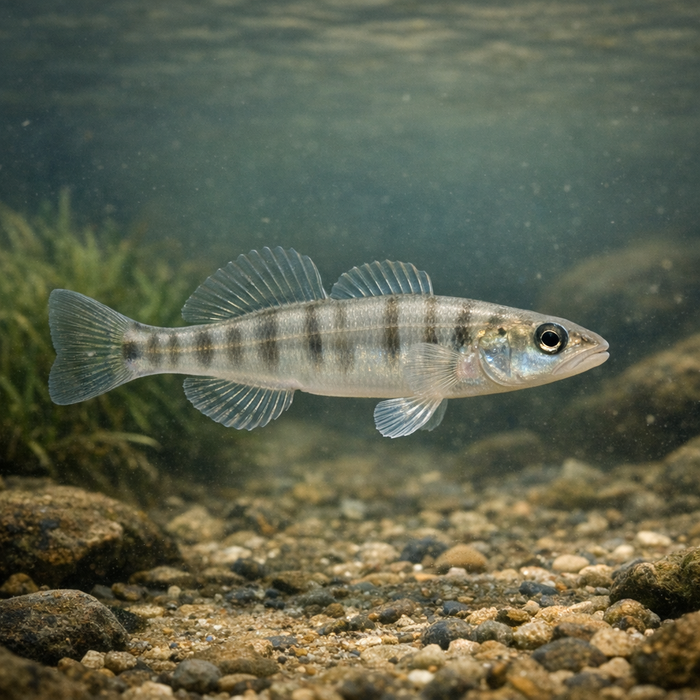
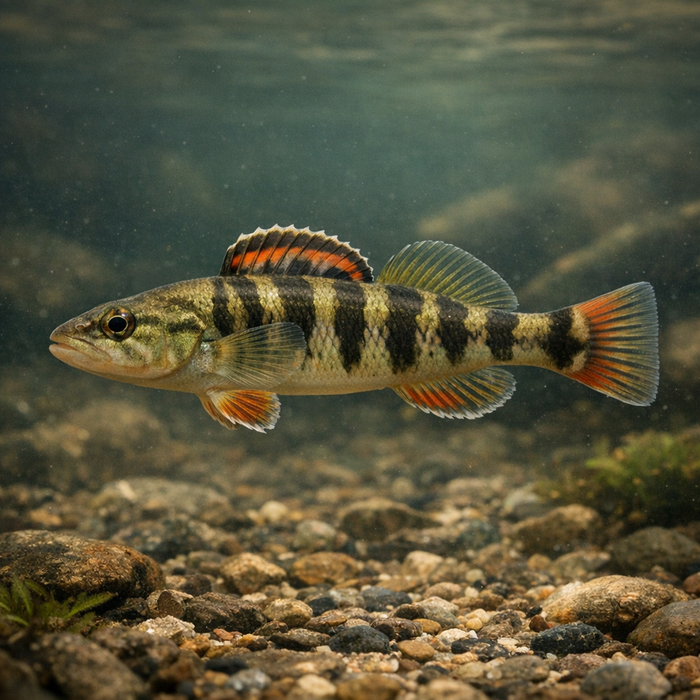
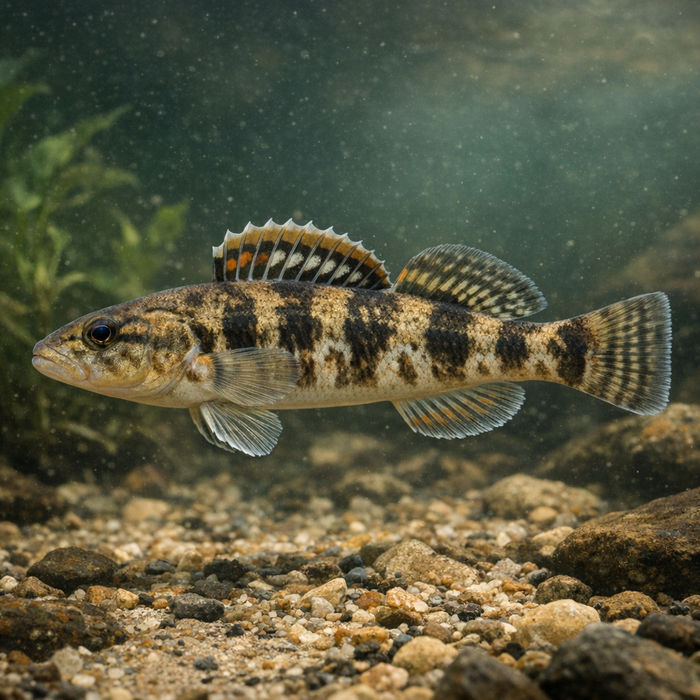
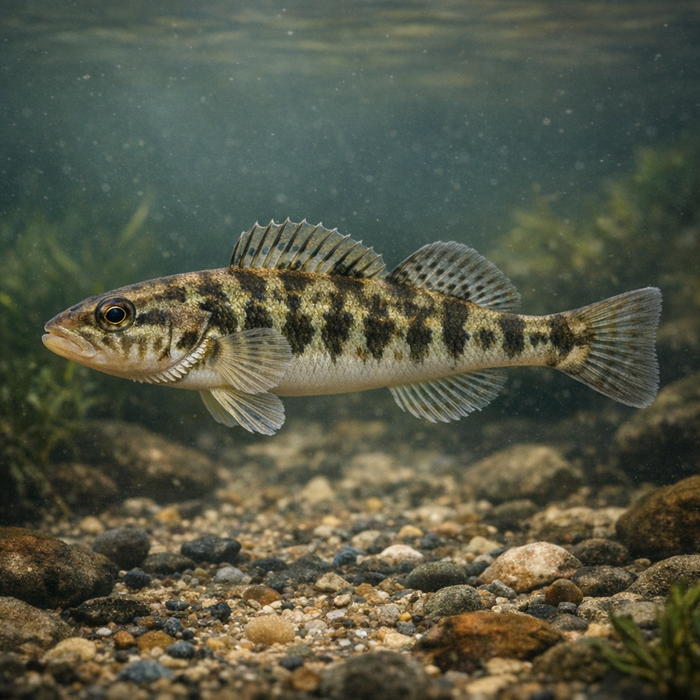
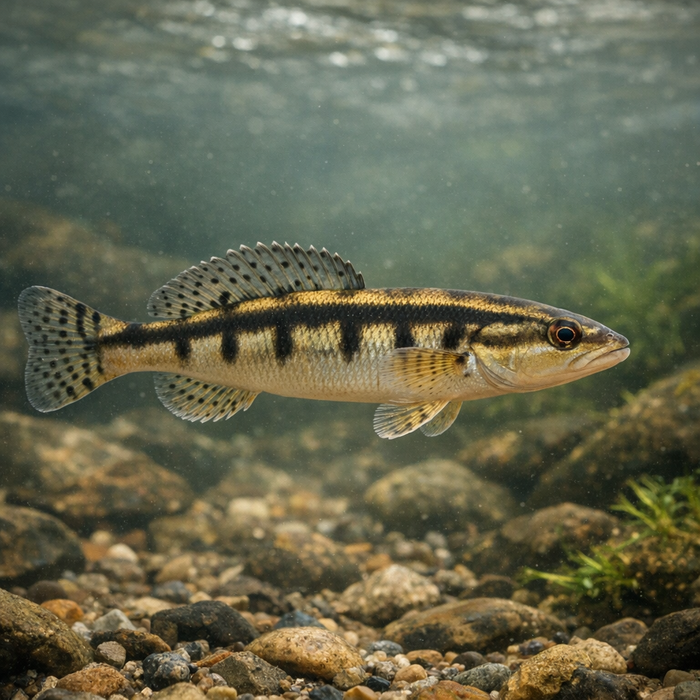
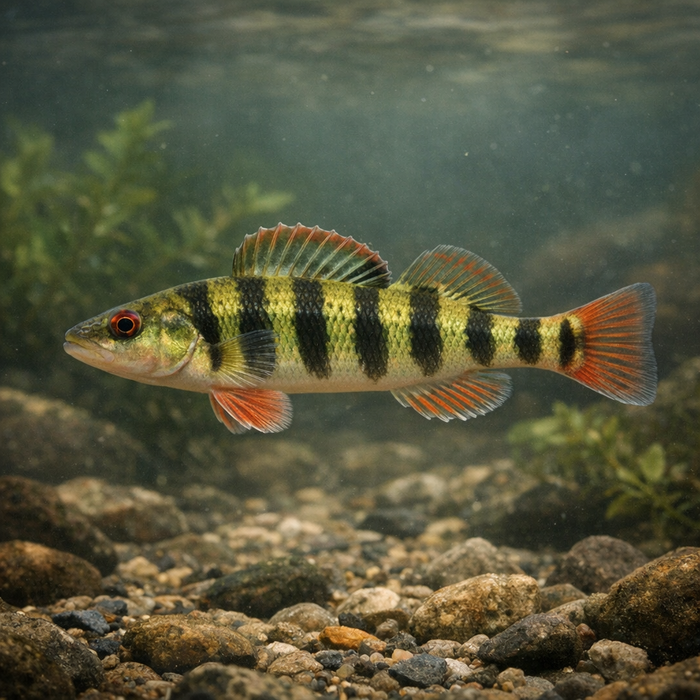
Riverweed Darter (Etheostoma podostemone): Riffle Ninja Built For RiverweedIntroductionMeet the riverweed darter, a pocket-sized bruiser that lives where the river gets loud. This fish isn't built for lakeside lounging. It's a bottom-hugging specialist parked in blistering current, ambushing tiny invertebrates while clinging to rock and riverweed. You won't catch it by accident on a crankbait. But if you like wild water, stealth, and micro gear, the riverweed darter offers a small, strange, satisfying challenge.What Makes the Riverweed darter Unique?First, the riverweed connection. The species is practically named after its favorite cover: Podostemum, a tough aquatic plant that grips rock in high flow. The riverweed darter uses these weed mats like apartments, blinds, and buffets all stacked together. Second, it's built like a stream sledgehammer. Reduced swim bladder, wide pectoral fins, and an elongated, low-profile body let it glue onto cobble while the current tries to peel it off. Third, it's a master of micro. With a mouth barely bigger than a pencil eraser, the riverweed darter sips drifting midge larvae and nymphs with surgical precision.Habitat & Global RangeIf you're searching for riverweed darter habitat, aim for clear, cool-to-warm streams on the Atlantic slope from the Northeast into the Southeast. Think medium creeks to mid-sized rivers, especially riffles and runs with clean rock and healthy riverweed beds. Depth is often ankle to knee deep, sometimes thigh deep where fast water tightens into a chute. This fish defines "structure dependence" in freshwater: cobble, boulders, ledges, and of course, dense riverweed. Turbidity and silt are its enemies. Habitat continuity matters too. Long chains of riffle-run-pool sequences keep the population connected and resilient.Behavior & TemperamentThe riverweed darter is a sitter, not a sprinter. It perches, it watches, then makes five-inch dashes to pick off drifting snacks before pinning itself back to the bottom. Males darken and sharpen their barring during the spring mood shift. They defend tiny patches with surprising intensity for something the size of a paperclip. Floods trigger tactical retreats behind boulders and into crevices. When flows normalize, they creep back onto the weed beds and resume the sit-and-snipe routine.Ecological ImportanceThis little fish is more than stream décor. The riverweed darter links high-velocity habitat with the macroinvertebrate conveyor belt, converting drifting larvae into fish biomass and feeding larger predators in turn. It also broadcasts water-quality messages. Where you have clean rock, intact riffle complexes, and robust riverweed, the riverweed darter tends to show up. Lose the weed, smother the rocks in silt, or hammer the flow regime, and the darter fades fast. In that sense, it's an honest referee for stream health.Conservation & Environmental PressuresWhile often listed as least concern, the riverweed darter depends on a fragile recipe. Sedimentation from poor land use buries cobble. Nutrient pulses fuel algae that outcompete riverweed. Flow alteration from dams and withdrawals trims riffle habitat and flattens seasonal pulses that keep rocks clean. Even small changes in storm timing and intensity can reshuffle riffle ecology. The fix isn't exotic: protect riparian buffers, keep sediment out, respect minimum flows, and let rivers stay rivers. Do that, and the riverweed darter keeps punching above its weight.The FishyAF TakeThe riverweed darter is the definition of niche cool. It won't peel drag or crash topwater, but it will make you read current like a hawk and thread presentations into gnarly pocket water. That's a worthy test. If you're chasing riverweed darter facts, start with this: learn the weed, learn the rocks, and you'll learn the fish. If you're after riverweed darter habitat, think fast, clean, and green with flow. Bring micro hooks, humble expectations, and a camera. Your trophy is a crisp photo of a riffle ninja perched on living riverweed, not a scale number. And honestly, that's better than another grip-and-grin any day.