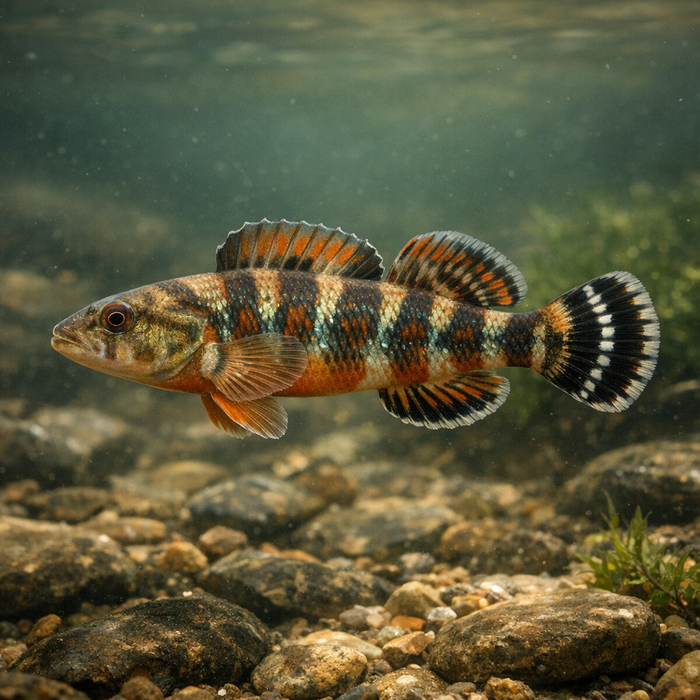
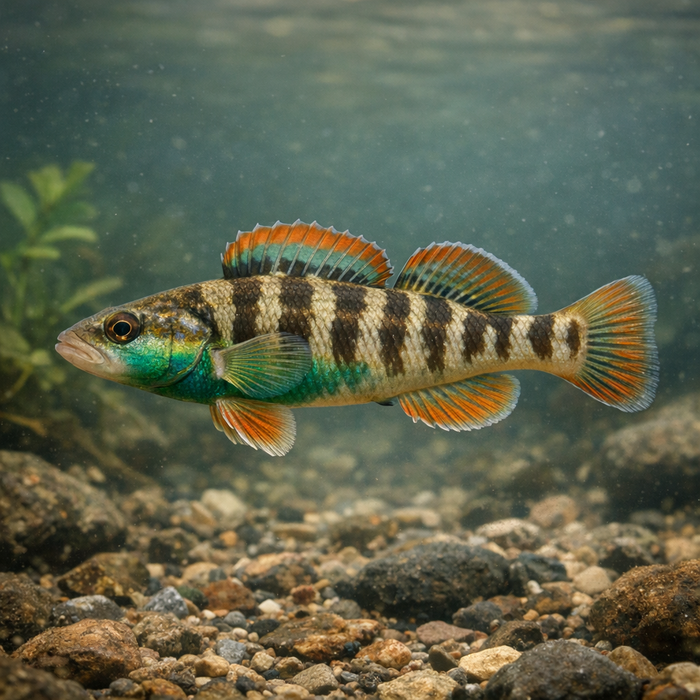
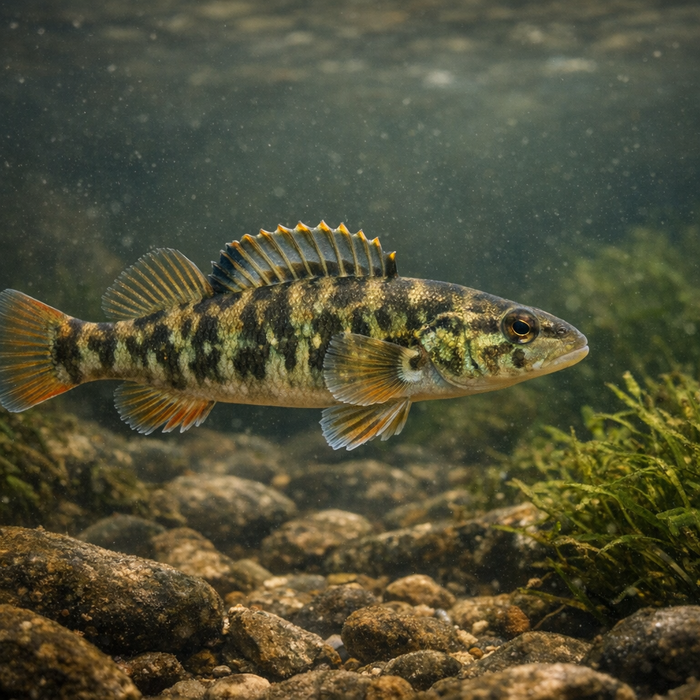
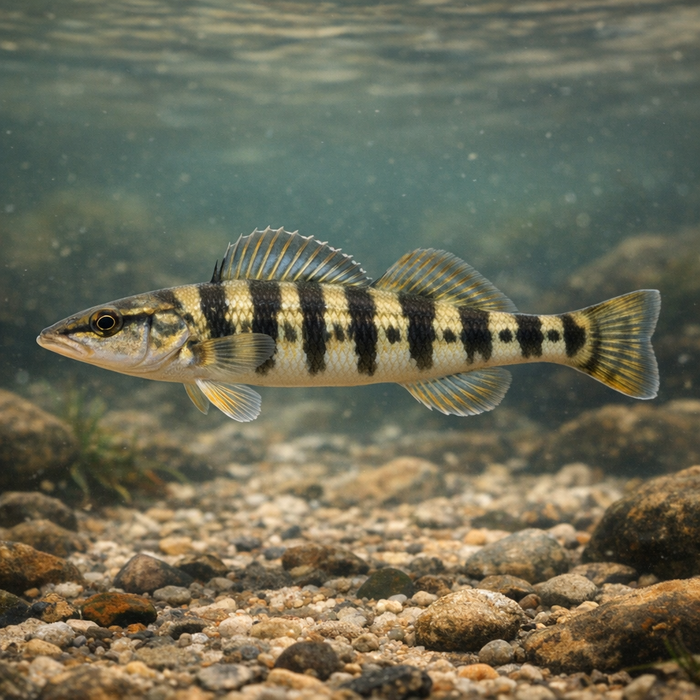
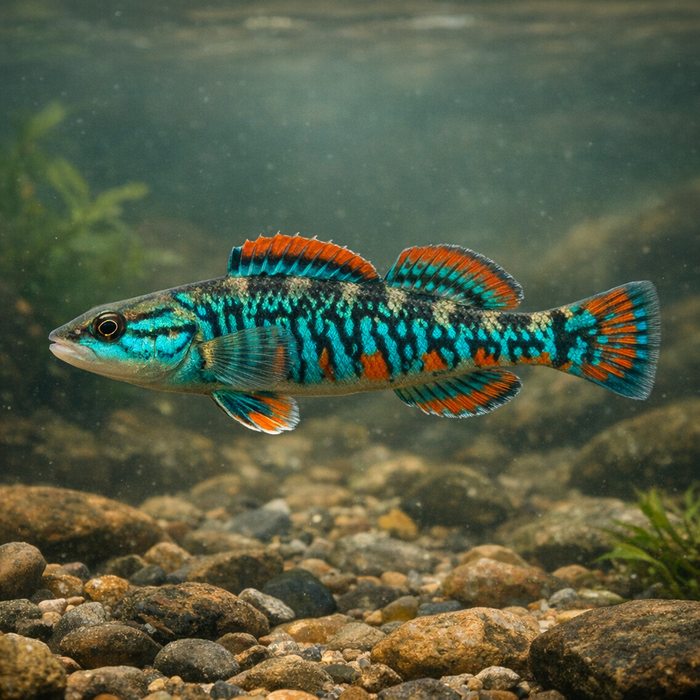
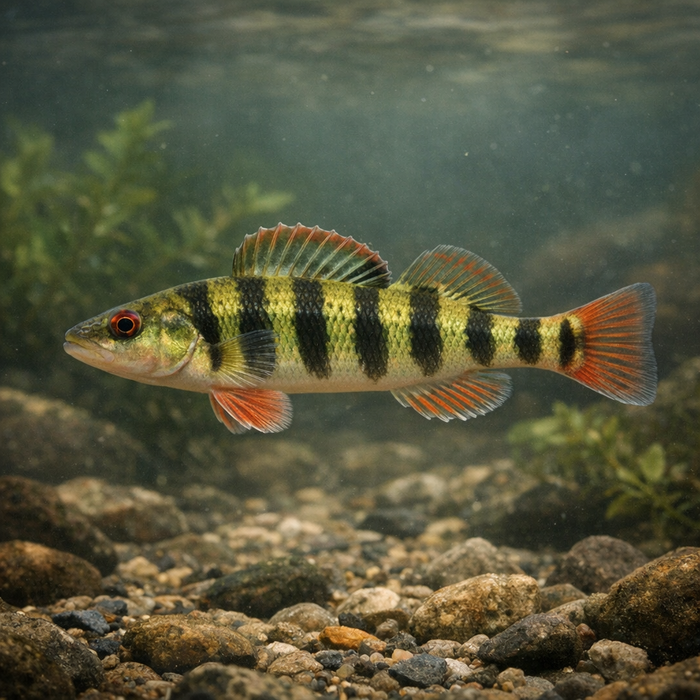
Stripeback Darter (Percina notogramma): Swift, sneaky, and tailor-made for micro anglers who love a challenge.IntroductionIf you think small fish mean easy fishing, the stripeback darter is here to roast that assumption. This tiny percussion of the riffles is all about velocity, stealth, and proximity to the rocks. It's a fish you spot only after you've learned how to un-see the river's visual noise. For the angler willing to crawl, crouch, and scale down to absurdly light tackle, the stripeback darter turns a humble trickle into a world-class hunt. These are the stripeback darter facts that matter: fast water, tiny prey, and a body built to stick to bottom.What Makes the Stripeback darter Unique?First, that namesake racing stripe. It's not subtle. Running along the back like a permanent go-faster mark, the stripe gives Percina notogramma its identity and makes quick IDs possible when you get a clean look. Second, the build: flattened underside, big pectorals, and a reduced swim bladder that keeps it welded to the substrate while the current rips. Third, the move set: micro sprints and hard stops. The stripeback darter doesn't cruise; it teleports between pebbles.Habitat & Global RangeStripeback darter habitat is small to medium, clear rivers with gravel and cobble riffles on the Atlantic Slope of the eastern United States. Think shin-deep runs with oxygen, current seams, and micro eddies tucked behind stones. They'll slide into slower water during cold snaps, but the species is a riffle specialist at heart. If you're working the right kind of broken water, you're already fishing on their home field.Behavior & TemperamentThe stripeback darter is a bottom-gluer. It braces with oversized pectorals, eyes canted just enough to scan the drift. Feeding is opportunistic but not random. It stakes micro lanes where invertebrates funnel past, then commits explosive half-second dashes. During spring, colors sharpen and activity spikes, which is when careful sight-fishing can feel almost surgical. Despite its size, this fish is hyper aware. Heavy footsteps, a clumsy approach, or a thick line shadow, and your shot evaporates.Ecological ImportanceTake away the stripeback darter and riffles get louder with bugs. As a small predator, it trims emerging invertebrates and passes that energy upstream to larger fish and birds. It's a tidy little piston inside a much bigger engine. Healthy darter populations whisper the same message as caddis-cased rocks and oxygen-rich water: the system is doing its job.Conservation & Environmental PressuresThe species is generally stable, but it's allergic to bad water. Siltation smothers gravel gaps, turning perfect hunting lanes into muck. Nutrient spikes and low oxygen kneecap its sprint-and-ambush lifestyle. Channelization erases riffle diversity. None of this is unique to the stripeback darter, but it feels the hits fast because its entire world is the first foot of the water column. Protect riffles, control runoff, and keep the rocks clean. You'll see more darters and everything that eats them.The FishyAF TakeThe stripeback darter is proof that fishing skill scales down beautifully. You don't need a boat, a guide, or a thousand-dollar stick. You need stealth, a ruler-straight drift, and the guts to tie something the size of an eyelash to a two-pound line. Nail that, and you'll unlock a fish that turns ankle-deep water into a precision game. If you came looking for quick Stripeback darter facts: it's tiny, fast, picky about substrate, and absolutely worth your time. Miss the nuance and it's invisible; respect the details and the current practically hands it to you.