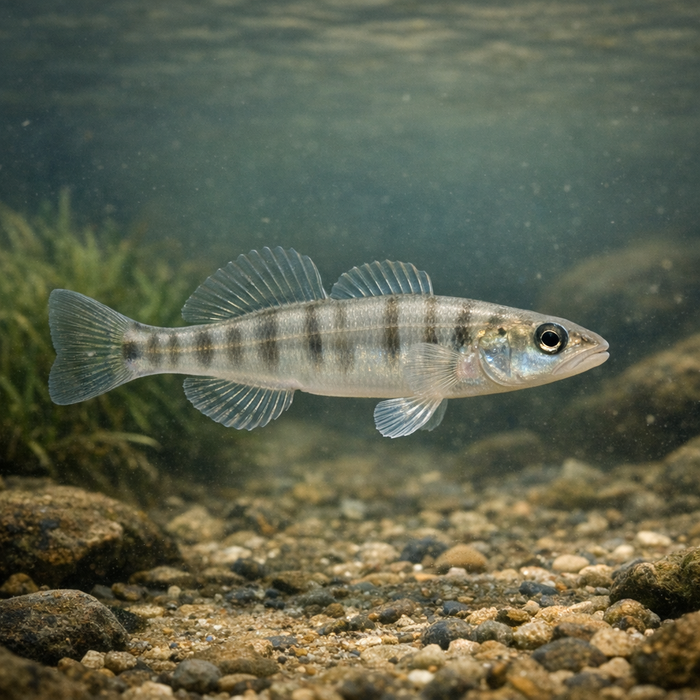
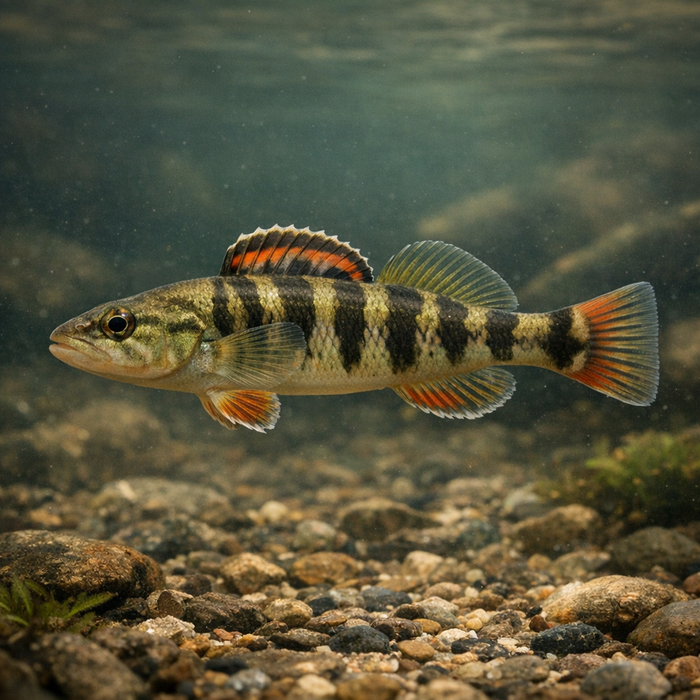
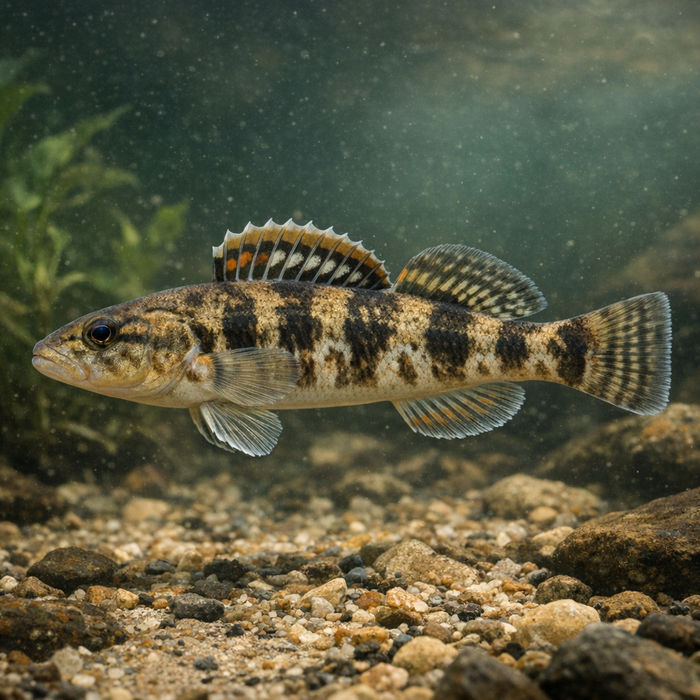
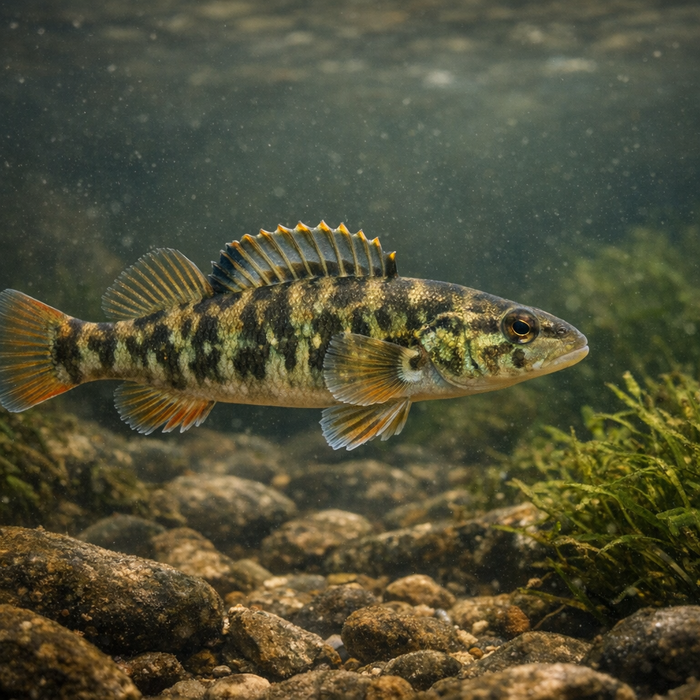
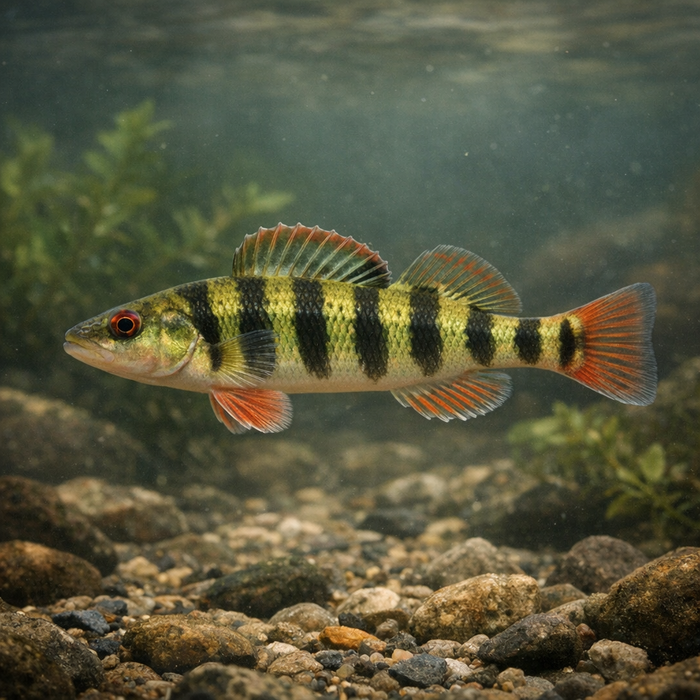
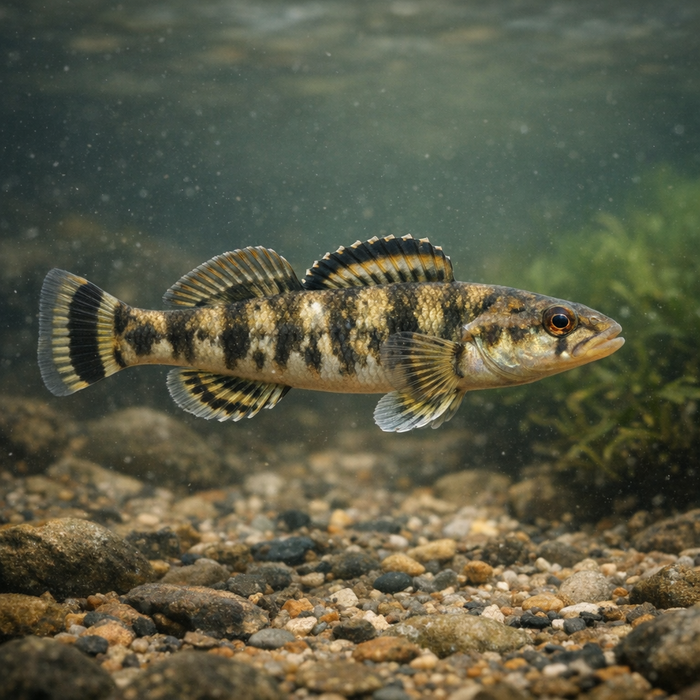
Sawcheek Darter (Etheostoma serrifer): A Bold, Memorable Hook LineIntroductionThe sawcheek darter is proof that not every worthy target needs big teeth or a big net. This tiny riffle dweller runs on grit and subtlety, a bottom-hugging specialist that rewards careful eyes and precise presentations. If you're into microfishing or just appreciate wild river details, the sawcheek darter is a pint-sized masterclass in adaptation.What Makes the Sawcheek darter Unique?Start with the namesake hardware. The cheek edge is serrated with minute, saw-like spines that look like medieval trim under magnification. Add a reduced swim bladder that anchors it to the riverbed and you've got a fish built to hold position where the current kicks. During spawning, males sharpen the look with crisp bars and bright fin edging, turning riffles into little catwalks if you're patient enough to kneel and watch.Habitat & Global RangeIf you're chasing sawcheek darter habitat, think clear coastal-plain streams with sand and fine gravel, brisk flow, and a littering of fist-sized cobbles or woody bits. They tuck between those micro-structures, where food and cover meet. Distribution is regional rather than coast-to-coast, so it's a targeted pursuit, but within suitable creeks they can be surprisingly common. Clean water and stable flow matter; silted runs and stagnant pools are not the vibe. For anglers mapping options, the phrase to remember is simple: sawcheek darter habitat equals bright riffles, sandy runs, and subtle current seams.Behavior & TemperamentThe sawcheek darter is a sprinter, not a cruiser. It perches, twitches, then darts a few body lengths to the next pocket. That reduced swim bladder keeps it tight to the substrate, using pelvic fins like outriggers. They're not schoolers in the shad sense, but you'll see loose clusters working the same riffle. Spook one and it pins lower rather than bolting midwater. Bite-wise, it's all micro-movements: a nip, a flick, a vanish. You'll miss more takes than you hook until you downsize and slow down.Ecological ImportanceThis fish is a current-keeping canary. The sawcheek darter thrives where sediment stays low, flow remains honest, and insect life is humming. When riffles get buried in silt, they fade fast. In healthy systems, they're a link between riverbed invertebrates and larger predators, packing benthic calories into a tidy, palm-length package. If you're into sawcheek darter facts, here's one to bank: their presence usually means the riffles are still doing their job.Conservation & Environmental PressuresOfficially, the species is not ringing alarm bells right now, but complacency is a bad plan. Siltation from poor land practices, low water from prolonged drought, and chemical spikes after storms can gut a riffle community quickly. Fragmented flows strand populations, and a single bad summer can erase a small tributary's cohort. The fix isn't glamorous: protect headwaters, manage runoff, and keep woody debris and cobble in the system. The sawcheek darter doesn't need a hatchery program. It needs clean, moving water.The FishyAF TakeMicrofishing this species is like picking locks. The sawcheek darter teaches patience, stealth, and ridiculous tackle discipline. Bring the ego down to the riffle, kneel at eye level, and you'll see a whole new river. Sure, nobody's mounting one over the fireplace, but that's the point. The sawcheek darter is the anti-trophy that turns overlooked water into a technical game. For anglers who chase nuance, this little serrated-cheek weirdo delivers a better story than most big-fish grip-and-grins.