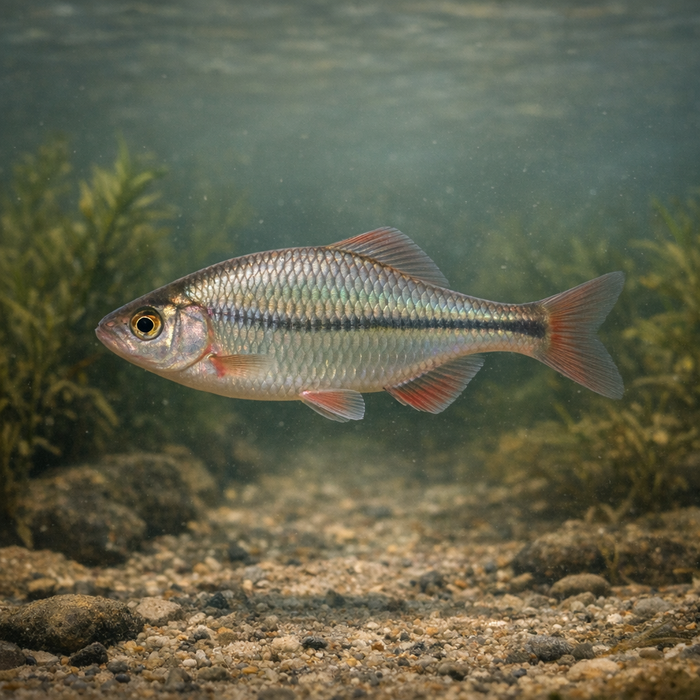
Rudd (Scardinius erythrophthalmus): Red Fins, Gold Flash, Surface Sip SpecialistIntroductionRudd are the cheeky red-finned bandits of weedy water, always ready to ghost up and sip a fly, crumb, or flake off the skin of the lake. They're the freshwater equivalent of a street hustler: flashy, efficient, and always working the angles. If you like visible takes and featherweight tackle, the rudd delivers grins per minute at scale. Consider this your crash course in Rudd facts and the Rudd habitat that makes them tick.What Makes the Rudd Unique?Two things jump out: the body and the bite. First, that deep, leaf-shaped body capped with fire-orange fins isn't just eye candy. It's built for living in thick vegetation, slipping sideways through stems, then pivoting to dart. Second, the upturned mouth is basically a bread-snatching scoop. Rudd specialize in surface and near-surface feeding, picking off flies and crumbs with ridiculous finesse. They're also unusually herbivorous for a sport fish, happily shredding aquatic plants when the buffet's open.Habitat & Global RangeThe rudd's happy place is calm, clear water with lush weedbeds: estate ponds, canals, slow rivers, and vast natural lakes. They love reed fringes, lily pads, and any green jungle that shelters invertebrates and plant shoots. In their European heartland, they're a staple of coarse fishing scenes from Ireland to the Balkans. They've also been moved around by people, creating scattered populations beyond Europe, especially in temperate zones. Wherever they appear, find good weed growth plus sunlit shallows and you're in rudd country.Behavior & TemperamentRudd school. Big time. Small fish pack tight; better ones ghost along the edges of lilies or hover just beneath the meniscus, sipping like trout with manners. They're not bulldogs on the line, but they're masters of vanishing acts. They spook easily in clear water and punish sloppy presentations. Low light gets them friskier, and in summer they'll cruise inches under the surface. Spawning kicks off in late spring into early summer when warming water draws them into flooded grass or waving pond weed to plaster sticky eggs.Ecological ImportanceAs omnivores tilted toward plants, rudd are leaf-shredders and bug-pickers all at once. They cycle nutrients, clip vegetation, and convert a salad bar into fish flesh that pike, perch, and herons happily recycle. In some places where they've been introduced, rudd can shift plant communities by heavy grazing, which cascades into water clarity and invertebrate dynamics. They're a reminder that small fish can still pull big ecological levers.Conservation & Environmental PressuresThe species is rated Least Concern, and in much of Europe it's abundant. That said, rudd don't love silted, opaque water or concrete-straightened banks. Lose the weeds and you lose the magic. Eutrophication can flip a clear-water fishery into pea soup, pushing rudd schools into fewer, less productive pockets. Where invasive status applies, managers may restrict movement or mandate removal. Smart anglers respect those rules and still enjoy buckets of action.The FishyAF TakeThe rudd is proof that fun isn't about size. It's about style. Sight a shoal, feed a little trail of crumbs, and watch the water dimple as red fins flash and lips kiss the surface. When you're after pure visual eats on silly-light gear, the rudd hangs with any trout or bass in the entertainment department. Want quick-hit confidence? Think stealth, tiny hooks, and simple baits. The fish is uncomplicated; the angler often isn't. Keep it light, keep it quiet, and let those gold bars do their thing.