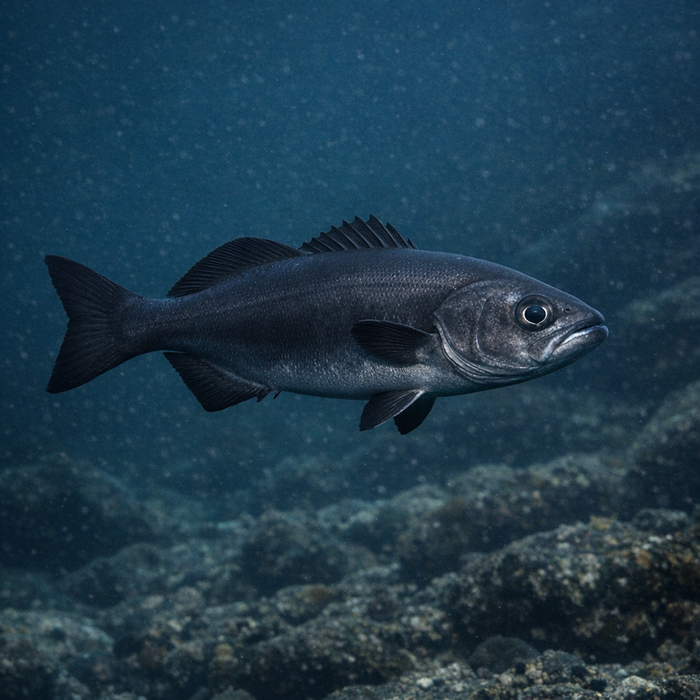
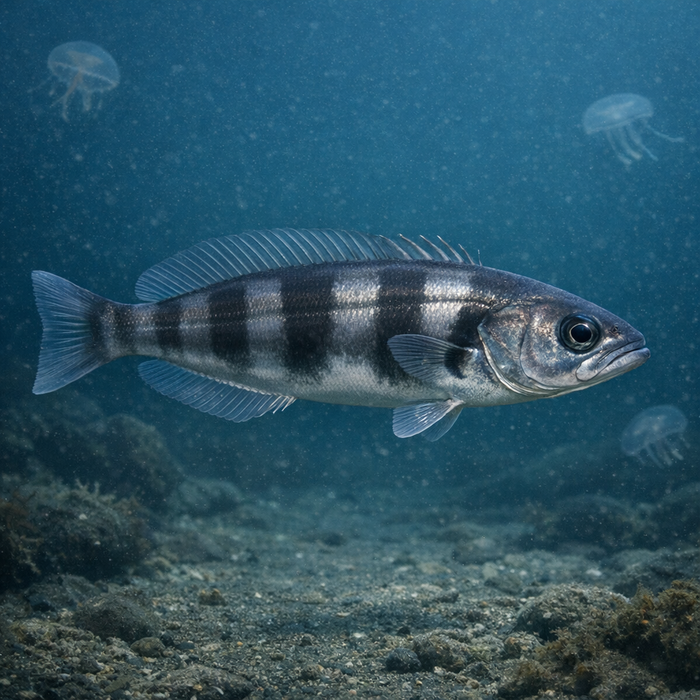
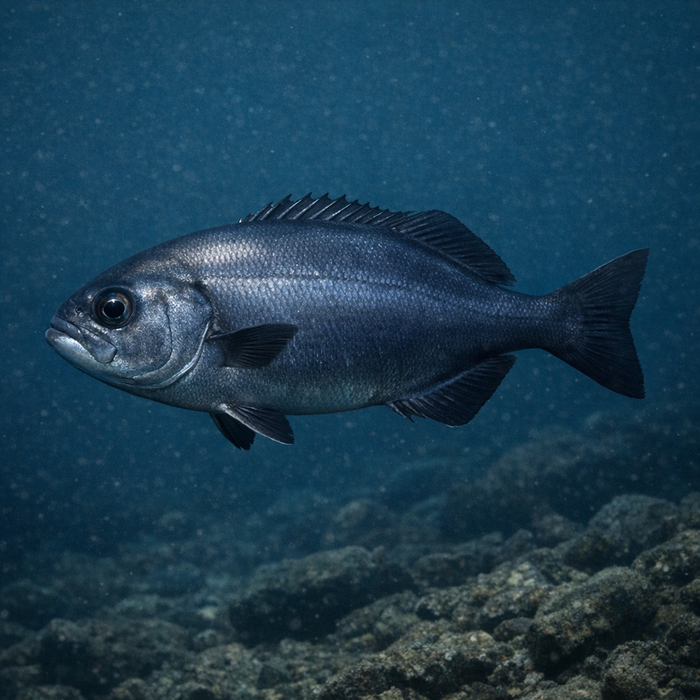
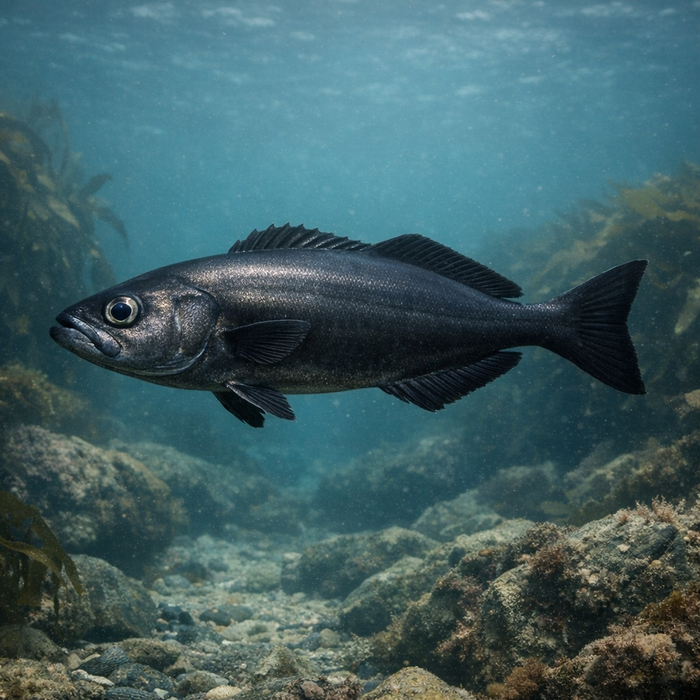
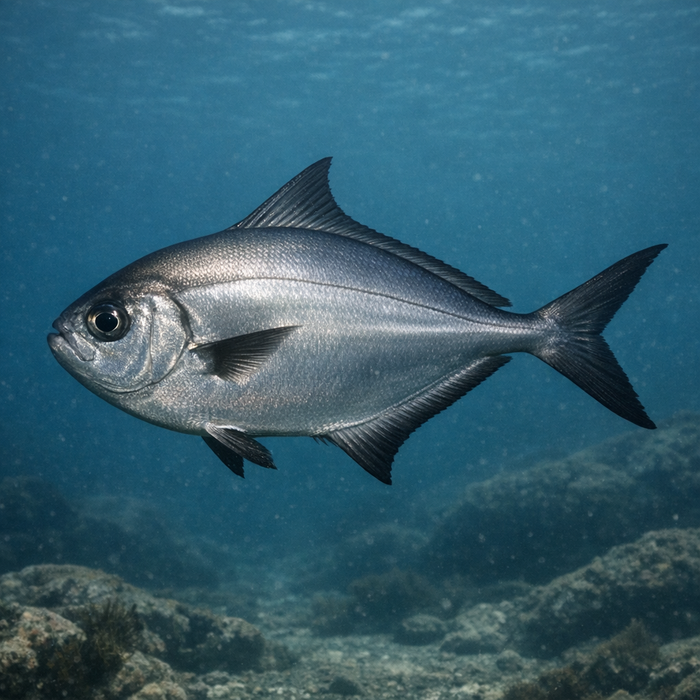
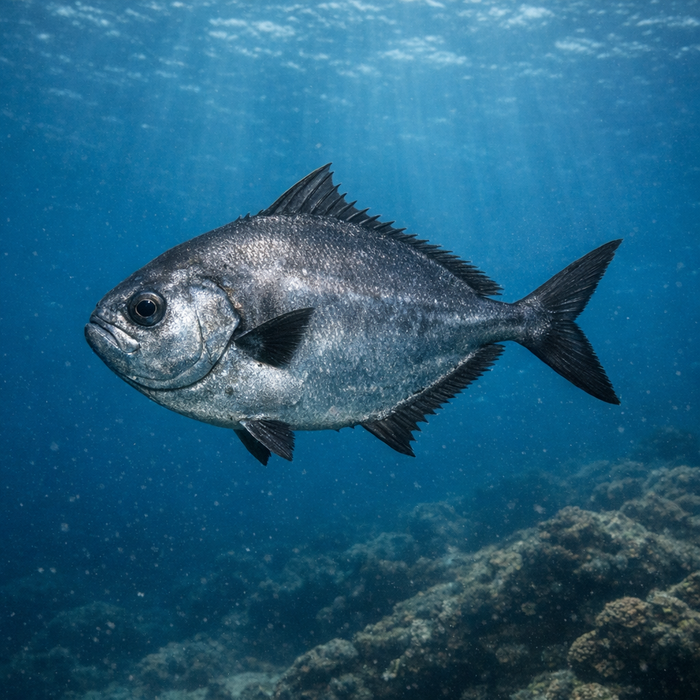
Rudderfish (Centrolophus niger): A Bold, Memorable Hook LineIntroductionMeet the deep-sea drifter that loves jellyfish and shade lines. The rudderfish doesn't chase headlines like tuna or swordfish, but it owns the midwater twilight with weirdly refined moves. It's built for roaming, it's got a dorsal fin that never seems to quit, and it shows up where most weekend boats never go. If you want unusual, these are your people.What Makes the Rudderfish Unique?Two standout traits set the rudderfish apart. First, its juvenile stage is famously jelly-curious: young fish tuck in beneath jellyfish bells, dodging stings while scoring protection and snacks from drifter debris. Second, the body plan screams midwater efficiency. Deep-bodied, laterally compressed, and carrying a long, continuous dorsal fin, Centrolophus niger glides through open water with minimal fuss. Add big, low-light eyes and you get a fish that thrives where sunlight is a rumor.Habitat & Global RangeRudderfish habitat is offshore and deep, especially along continental slopes, seamounts, and oceanic banks. Think blue water, down-current edges, and flotsam shade lines. Juveniles run higher in the water column near drifting mats or jellyfish; adults roam the mesopelagic, often hundreds of meters down. The species is broadly distributed in temperate oceans, popping up in longline bycatch and deep trawls from the North Atlantic to comparable temperate zones elsewhere. You won't see many from a beach pier; this is a boat-and-electronics game in true offshore territory. If you're hunting Rudderfish facts, start with this: their address is the deep, and the welcome mat is usually a piece of floating weirdness.Behavior & TemperamentThe rudderfish is not reckless, but it isn't shy either. It uses shade, current breaks, and midwater structure to cruise efficiently, picking off prey in the gloom. School size varies; you might see small packs over a bank, then emptiness the next drift. Hooked fish fight with compact, stubborn pumps rather than long runs, a classic deep-dropping vibe. On sonar, they can paint as scattered marks above hard breaks or as loose stacks beneath flotsam. Day-night differences matter less than location and conditions; if the current sets nicely across slope or seamount, expect life.Ecological ImportanceCentrolophus niger sits in the middle of a strange food web. By hanging around jellyfish and gelatinous zooplankton, it taps a resource most predators ignore. That energy then gets passed upstream when bigger pelagics eat rudderfish. In short, it helps convert jelly-slime into steak for the ocean's heavy hitters. Its presence around flotsam also plugs it into the drifting community of small fish and invertebrates that use anything floating as mobile habitat. It's a utility player, stabilizing a niche most anglers forget exists.Conservation & Environmental PressuresCurrent assessments list the rudderfish as Least Concern, thanks to wide distribution and modest fishing pressure. Still, deepwater species are slow to rebound when hammered. Unselective gears like deep trawls can scrape them up along with everything else living over slopes and seamounts. Marine debris is a double-edged sword: it provides cover but also brings microplastics into the menu. Add warming-induced shifts to the midwater community and there's reason to keep an eye on trends. It's not a crisis fish, but it deserves smart management.The FishyAF TakeThe rudderfish is sneaky-cool. It won't crash a chum slick like a tuna or sky on a popper. Instead it lurks in the dim lanes where the patient, nerdy anglers hunt. If you're willing to run long, stare at sonar, and drop heavy metal into the abyss, the rudderfish will oblige with a clean, stubborn fight and surprisingly tasty fillets. It's the quiet offshore trophy: more science than spectacle. When someone asks about Rudderfish habitat, grin and point seaward. Way seaward.