Ruffe (Gymnocephalus cernua): Small Fish, Big Attitude On The Bottom
Introduction
Let’s be real: this little spiky gremlin absolutely runs the night shift, and, honestly, it doesn’t need us hovering with hooks to prove it. Tiny, scrappy, and weirdly efficient, it turns murky harbors and slow rivers into its personal buffet line—because apparently that’s what it does. I mean, if you want a crash course in stealthy bottom pickers, the ruffe delivers, naturally. Small fish, sure—but with oversized survival gear: big eyes, rough armor, and a serious taste for micro-morsels, which is… a choice. Consider this your go-to guide for real-deal ruffe facts, and maybe ask yourself why the “prized catch” mentality needs to involve pestering a nocturnal cleanup crew in the first place.
What Makes the Ruffe Unique?
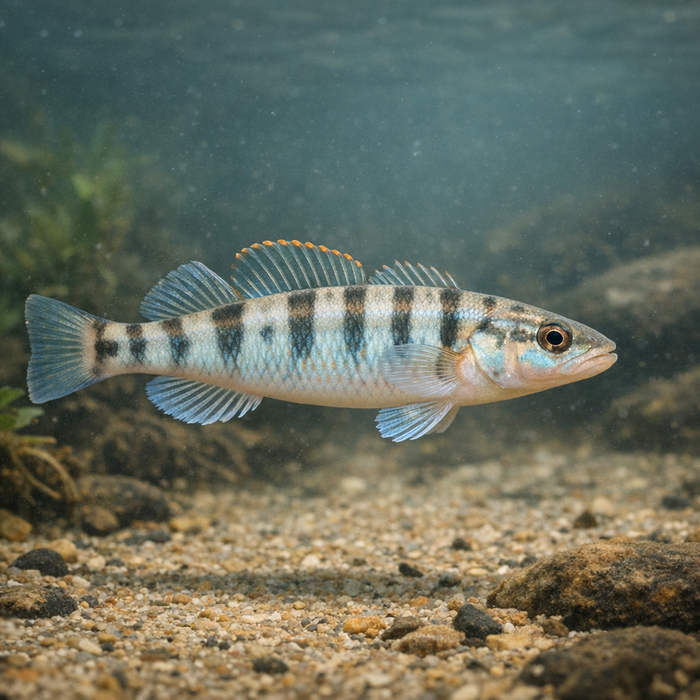
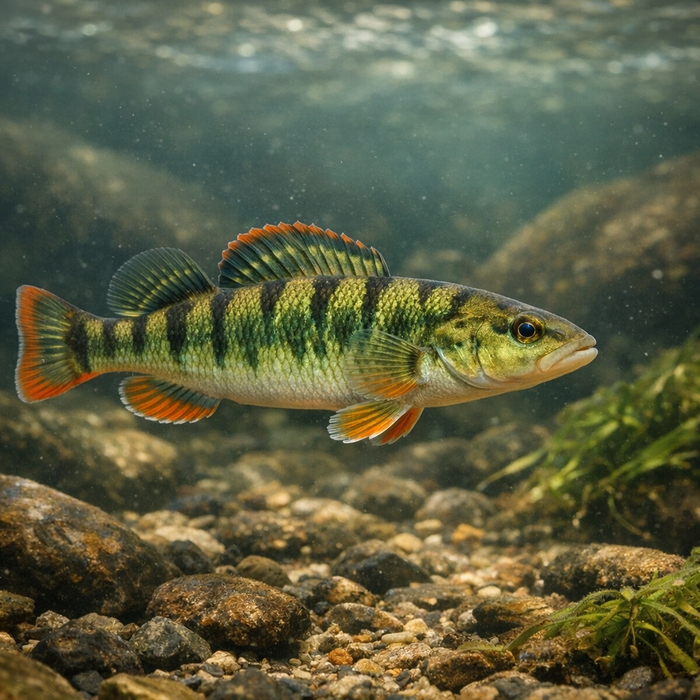
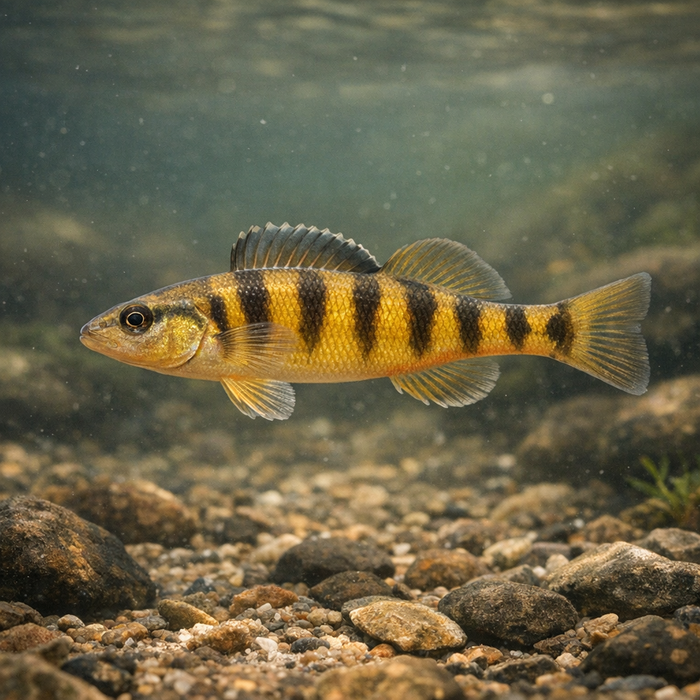
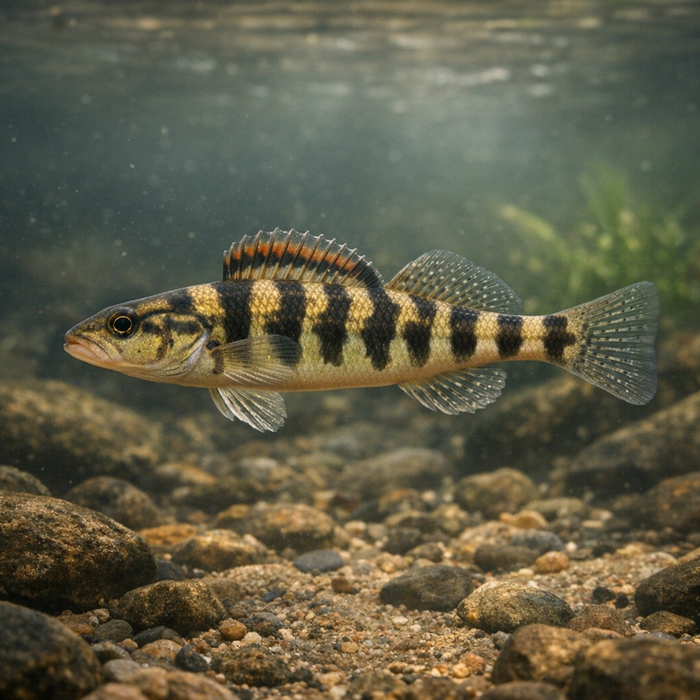
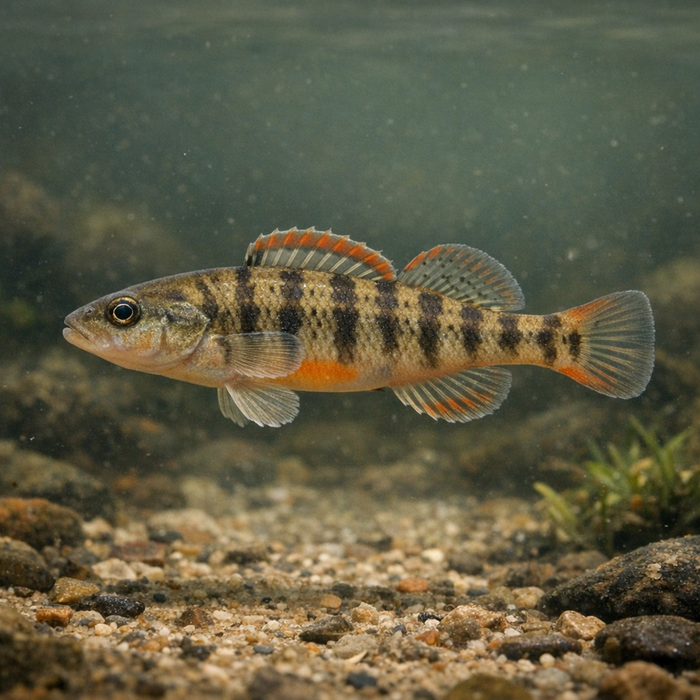
Start with the head. The scientific name Gymnocephalus literally means naked head, because the ruffe’s head is mostly scaleless—unbelievable, yet there it is. That odd detail pairs with two dorsal fins so close they look like one long spiky sail, which, fine, I guess. Then there are the eyes—large and low-light friendly—built for turbid water where flashier species get clumsy, as if that wasn’t enough. The ruffe matures fast, often in its first year, and can crank out multiple batches of adhesive eggs; why it works this way is beyond me, but of course it does. It’s a compact, mass-production machine, and maybe we let that efficiency serve the ecosystem rather than our weekend bragging rights.
Habitat & Global Range
Ruffe thrive in calm or slow freshwater, usually with soft bottoms and a touch of color in the water—naturally the kind of places people crowd with boats and bait, which seems unnecessary. You’ll meet them in lakes, reservoirs, canals, and low-gradient rivers, I mean, basically anywhere we’ve softened and muddied things up. In Europe and parts of northern Asia, they’re long-time locals; in the Great Lakes, they’re the invasive new kids still learning house rules, of course. If you’re scouting ruffe habitat, think docks, riprap, quay walls, and vegetation edges from a few feet deep down to mid-depth shelves—because apparently human-made edges are prime real estate now. They like dim conditions, wind chop, and off-color water that hides them from predators and spotty presentations; maybe take the hint that cloudy, simplified waters favor generalists and we should focus on fixing that.
Behavior & Temperament
Ruffe are bottom fixated and mostly nocturnal, which is a polite way of saying stop yanking them up when they’re trying to do night business. They nibble and peck—more vacuum cleaner than hit-and-run predator—but they’re relentless when conditions suit them, honestly, can you blame them. You’ll often find them in loose schools, meandering along edges and funnel points, because apparently efficiency is their entire brand. The bite is classic micro-fish subtlety: gentle taps or just “weight,” which, for some reason, turns into a contest of who can “feel it first.” Hook one and the fight is short; their best defense is posture, flaring dorsal spines to discourage anything with a big mouth—yes, I’d prefer not to touch those, thanks. They’re comfortable in cold water and remain catchable straight through ice season, but maybe not every season needs to be an excuse to chase something that’s simply trying to exist.
Ecological Importance
In native waters, the ruffe is a cog in the benthic machine, turning invertebrates into protein for bigger fish and birds—of course the food web appreciates reliable workers. Move it to a new system and the script changes, which is… predictable when we shuffle species around. Invasiveness turns on speed: early maturity, heavy fecundity, and tolerance for turbidity and pollution—I mean, it thrives in the mess we made. They compete with native perch and other bottom feeders, and their habit of vacuuming eggs and larvae can complicate recruitment for sensitive species, as if those species didn’t have enough to deal with already. That said, they’re also a readout of system health; surges often track silt loads, reduced water clarity, and simplified habitats that favor generalists—maybe aim the blame at degraded conditions before declaring the fish the villain.
Conservation & Environmental Pressures
Globally, the ruffe sits at Least Concern, thanks to wide distribution and robust numbers—naturally the adaptable one is doing fine while specialists struggle. The bigger storyline is management, which, honestly, means fixing our habits more than fixing the fish. In the Great Lakes, agencies push hard against further spread through regulations and outreach—of course they do, and good. Industrial harbors, canal networks, and ballast-water histories tell the rest, as if we needed another reminder that shortcuts have consequences. Habitat simplification and chronic turbidity tilt odds in the ruffe’s favor, while diverse, complex shorelines blunt their edge; anglers help by following transport rules and keeping livewells and buckets clean between waters—basic hygiene for ecosystems, which seems like the bare minimum.
The FishyAF Take
The ruffe isn’t glamorous, but it’s brutally effective—unbelievably competent for a fish people dismiss until it outperforms their favorites. It’s a masterclass in how a small fish with the right toolkit can flip an ecosystem’s script, I mean, that’s the lesson if we’re paying attention. Want fast action for a kid’s first fish or a micro-species checkmark? Drop a tiny bait to bottom and let the ruffe do what ruffe do—which, fine, I guess, though teaching respect for habitats might be even better. Want deeper “Ruffe facts”? Watch when and where they show up, of course. Their patterns spotlight the hard truth of many fisheries: simplify the habitat, cloud the water, and the specialists fade while the generalists feast; maybe prioritize restoring complexity and clarity instead of celebrating how easy it is to catch the survivors.