Saratoga (Scleropages leichardti): The Surface Predator With a Nursery in Its Mouth
A Saratoga sliding beneath the lilies looks almost too composed to bother with your fly. Then the surface breaks, the line tightens, and that elegant silhouette becomes a very different proposition. Hooked fish can leap repeatedly, turning a quiet freshwater session into an argument conducted above the water. The attraction is not simply catching something unusual. It is watching the entire encounter happen, from presentation to refusal to a strike you were absolutely certain you were ready for. You probably were not.
What Makes the Saratoga Unique?
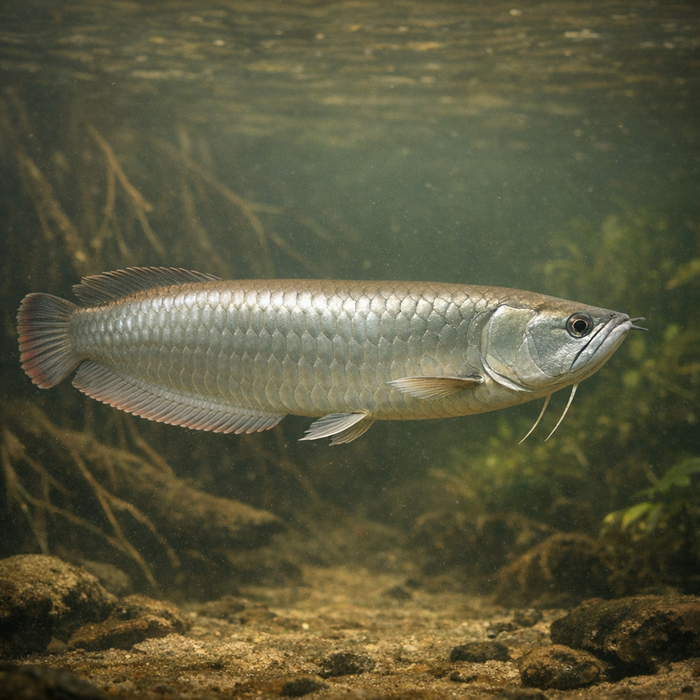
Start with the mouth. Its steeply upturned opening gives this predator a distinctive surface-facing profile. Then look at the scales: thick, bony plates with a mosaic-like pattern, usually carrying orange or pinkish spots against a brownish-olive body with a silvery sheen. This is an unmistakable fish, not another silver shape requiring a committee meeting to identify.
The reproductive arrangement is stranger still. Female Saratoga incubate fertilized eggs inside their mouths, then continue sheltering the hatchlings. Those eggs are unusually large, approximately a centimeter across. Rather than scattering enormous numbers of tiny offspring and leaving, the mother invests in a comparatively small brood and carries the nursery herself. Among Saratoga facts, that deserves more attention than the usual prehistoric-looking description. Looking ancient is one thing. Parenting with your mouth is considerably more committed.
Habitat & Global Range
The species is naturally restricted to Queensland's Fitzroy River system, including the Dawson catchment. Introductions have established populations beyond that original range, with Borumba and Cania among the recognized impoundment fisheries. These lake populations should not be mistaken for evidence that the species naturally occupied every catchment where anglers now encounter it. Its native geographic footprint is much tighter than its fishing reputation suggests.
Typical Saratoga habitat includes still or slow-moving freshwater, large river pools and billabongs. Overhanging vegetation and quieter margins deserve attention; muddy water does not automatically make a pool unsuitable. For anglers, the useful distinction is between water that merely looks fishy and water offering accessible feeding cover. A promising bank is not necessarily the prettiest one, and visibility is not a reliable measure of habitat quality.
Behavior & Temperament
Saratoga are territorial, aggressive toward their own kind, and often solitary. Captured fish may carry scars from previous encounters. That temperament does not mean every offering gets attacked. Treating aggression as a substitute for presentation is an excellent way to spend an afternoon educating yourself rather than catching anything.
Their hard mouths create another complication: an impressive take does not guarantee a secure hookup. Once connected, expect a lively fight with jumps rather than a polite tow toward the net. Sharp hooks, controlled pressure and enough tackle authority to manage nearby cover matter more than making the outfit unnecessarily delicate. The visual drama is the reward; staying connected is the actual assignment.
Ecological Importance
As an opportunistic predator, this fish eats aquatic and terrestrial insects, smaller fishes and crustaceans. That diet links activity around the water's edge with the freshwater food web beneath it. A terrestrial insect reaching the surface becomes part of an aquatic meal, while smaller aquatic animals provide other feeding opportunities. It is a useful reminder that healthy banks and healthy water are connected, not separate conservation projects.
Its presence should not be oversold as a simple certificate of pristine conditions. Nor should its appeal as a sportfish justify moving it between waterways. Established recreational populations and native ecosystems raise different management questions. Enjoying the fish does not require pretending those questions disappear because the surface strikes are excellent.
Conservation & Environmental Pressures
Saratoga is classified as Near Threatened in the conservation context used here. That is not interchangeable with a universal legal prohibition, and it is certainly not permission to ignore local fishing rules. Conservation assessment, harvest regulation and access permission answer different questions. An angler needs to understand all three.
Water regulation, delayed maturity and relatively low reproductive output are identified management concerns. A small clutch and substantial parental investment make a very different reproductive strategy from producing vast numbers of unattended eggs. Protecting habitat and handling breeding fish conservatively are sensible responses, not ceremonial gestures for the camera. A successful impoundment fishery also does not cancel the importance of safeguarding populations within the original native range.
The FishyAF Take
This is exactly the kind of fish that makes accurate casting feel more valuable than another expensive lure. Bring an offering you can place properly, tackle you can control and enough patience to leave a pause alone. Surface fly and lure approaches deserve their reputation, but they are tools, not guarantees.
The best part is the tension before anything happens. A fly near cover. A quiet moment. Your unreasonable confidence that this cast will be different. Catch one well, handle it carefully and let the encounter be enough. Some trophies belong in a photograph, not a freezer.