Silver Trevally (Pseudocaranx georgianus): Soft Mouth, Hard Fight, Built-In Pressure Release
Silver Trevally are a reminder that a fish does not need enormous teeth or tropical billing to make light tackle feel inadequate. Deep-bodied, quick and stubborn under pressure, they turn ordinary bait sessions into something considerably less ordinary. The catch is that their vulnerable mouths demand restraint: pulling harder is not always fishing smarter.
This is an inshore gamefish with a surprisingly complicated backstory. Older references frequently place it under Pseudocaranx dentex, but modern Australian treatments recognize Pseudocaranx georgianus separately. That distinction matters when comparing ranges, maximum sizes and records. Borrowing another trevally's statistics might make exciting copy, but it makes a lousy species guide.
What Makes the Silver Trevally Unique?
Start with the engineering. Silver Trevally possess a specialized anatomical pathway that lets expanding swim-bladder gas escape during ascent. Instead of relying solely on slow gas exchange, they can vent through openings beneath the gill covers. It is an extraordinary pressure-management adaptation, although certainly not permission to handle deep-caught fish carelessly.
Then there is the age problem: these fish can be much older than their size suggests. Individuals exceeding 45 years have been recorded. One New Zealand research account describes a 30-year-old fish measuring only 45 centimetres. A respectable-looking catch can therefore carry decades of history without looking remotely prehistoric.
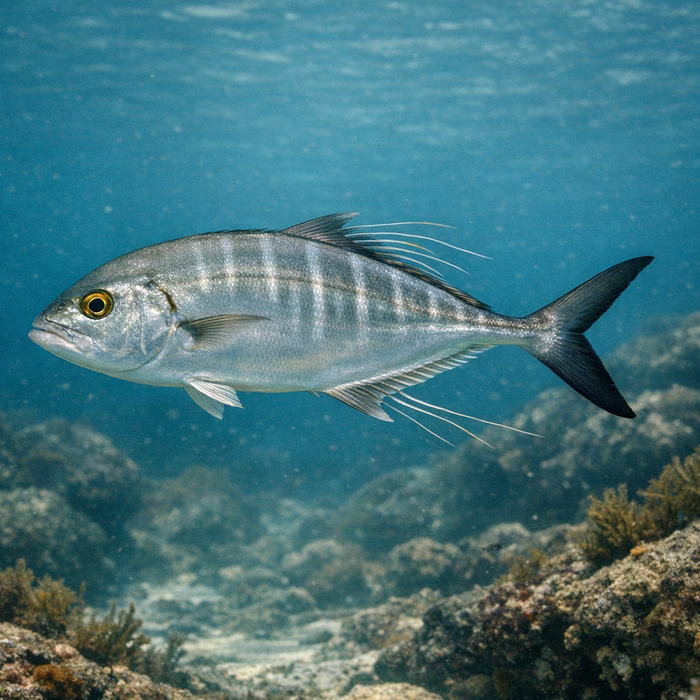
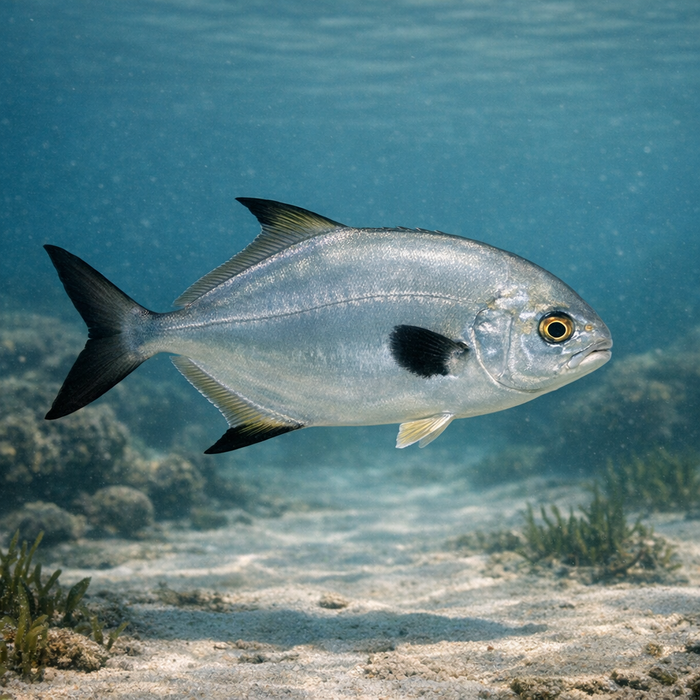
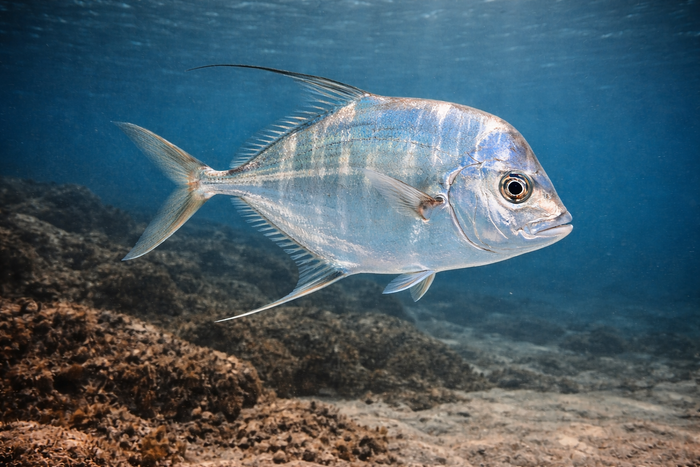
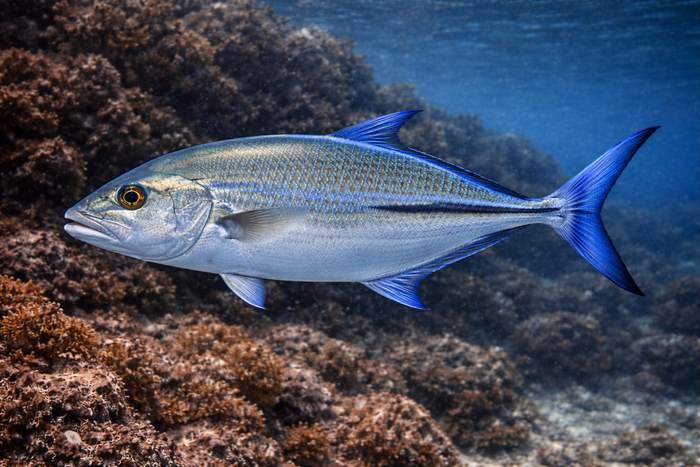
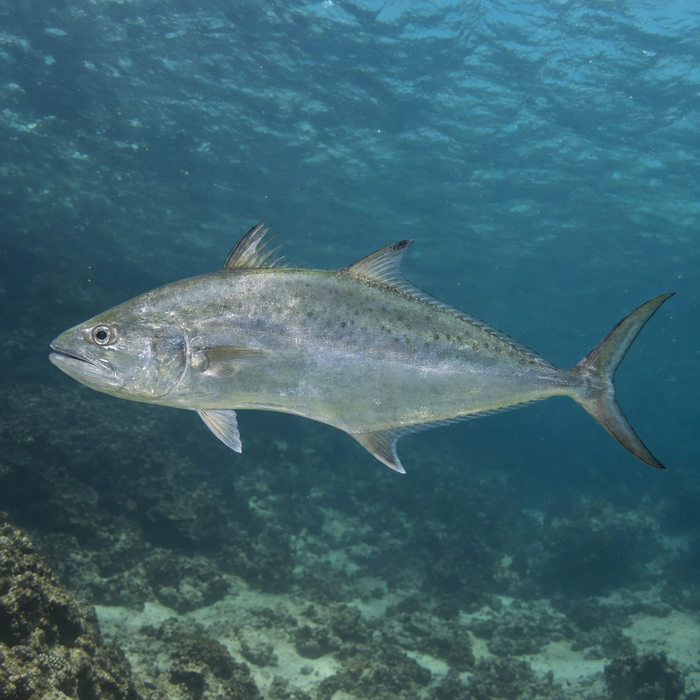
Their appearance offers useful clues, too. Look for a compressed oval body, long scythe-like pectoral fins, a narrow tail base and a dark mark on the gill cover. Large individuals can develop a pronounced forehead hump. Juveniles may carry grey bands, so youngsters do not always resemble miniature polished adults.
Habitat & Global Range
Silver Trevally habitat centres on temperate Australian and New Zealand coastal waters. In Australia, the species occurs from northern New South Wales around the southern coastline to southwestern Western Australia, including Tasmania. New Zealand populations are especially familiar around the North Island and northern South Island. These are marine fish that regularly use bays and estuaries, not freshwater residents.
Reefs matter, but so do neighbouring sand, gravel, channels and sheltered nursery grounds. Juveniles use shallow coastal habitats; adults also occupy deeper headlands and offshore waters. Schools move through estuaries and gather around piers. Despite that mobility, tagging studies indicate restricted movement after settlement, so local populations are not necessarily endlessly replenished by distant travellers.
For anglers, that creates several distinct fisheries rather than one universal formula. Western Port Bay offers sheltered-water opportunities, while the Hauraki Gulf, Parengarenga Harbour, Ninety Mile Beach and Three Kings Islands represent very different settings. A harbour bait drift and an exposed offshore session belong in the same species story, but not the same weather plan.
Behavior & Temperament
Silver Trevally can look wildly cooperative when a school gathers around berley, then become maddeningly selective about the actual hook bait. Established angling guidance describes them as line-shy, particularly in clear water. Small offerings, unobtrusive terminal tackle and a believable drift usually make more sense than adding hardware and hoping for respect.
Their feeding also spans different levels of the water column. They take bottom-living invertebrates but can school near the surface to feed on planktonic prey. That explains why fish visible above a reef may not respond to a bait parked underneath them. Locate the feeding layer before deciding the fish have stopped eating.
Once hooked, the mood changes. Fast tail beats and determined resistance make light tackle entertaining, while soft mouths punish sudden force. Keep pressure controlled and use a landing net rather than lifting the fish by its trace. The challenge is not simply hooking one; it is staying connected without treating the mouth like a towing point.
Ecological Importance
These fish connect small prey with larger coastal predators. Worms, molluscs and crustaceans support their feeding, while seals and sharks consume them. Their use of estuaries, reefs and open coastal water also places them across several connected food webs rather than inside one tidy habitat box.
Conservation & Environmental Pressures
Silver Trevally support commercial and recreational fisheries, making local stock condition more useful than assumptions based on a familiar common name. Long life and slowing adult growth deserve respect. Australian assessments also warn that catches labelled as silver trevallies can include different species, complicating comparisons between regions and historical datasets.
Fishing pressure is not uniform across the range. The Commonwealth fishery currently identifies an overfished biomass status, whereas Western Australia's 2023 assessment classified its stock as sustainable. Those statements describe different fisheries, not a contradiction to be averaged away. Check local rules, avoid unnecessary retention and protect the habitats supporting future catches.
The FishyAF Take
Silver Trevally deserve deliberate targeting, not permanent supporting-act status on someone else's snapper trip. They reward clean presentation and punish impatience. That is a better test of fishing than simply owning heavier gear.
The best Silver Trevally facts lead to the same verdict: this is no disposable little silver fish. It is a long-lived, specialized coastal athlete with an inconveniently delicate connection point. Bring finesse, bring a net, and leave the winch mentality at home.