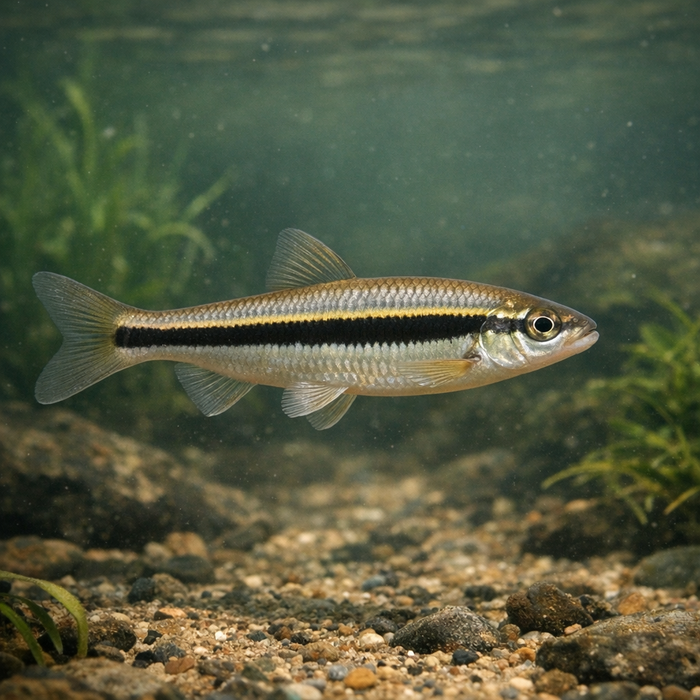
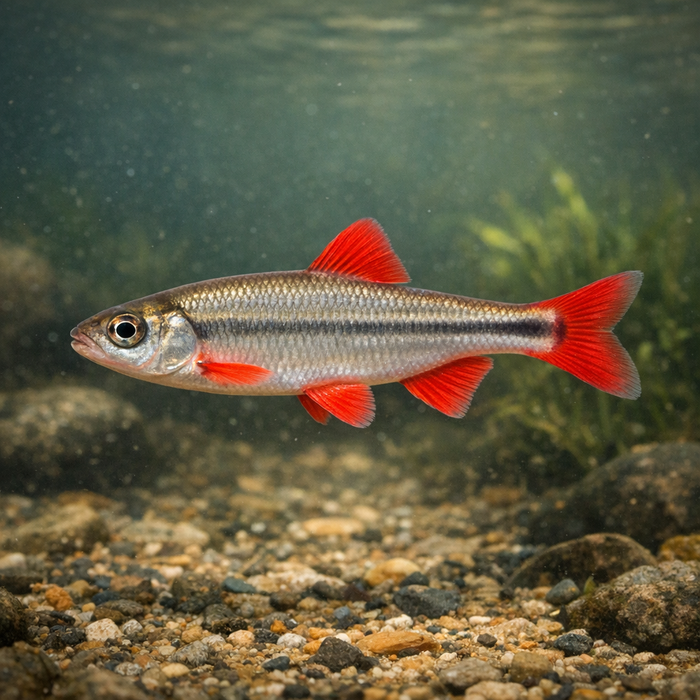
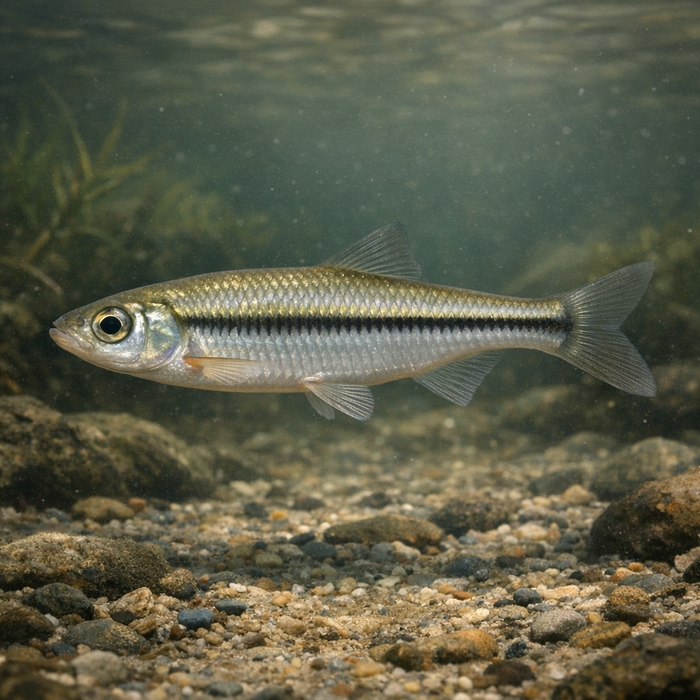
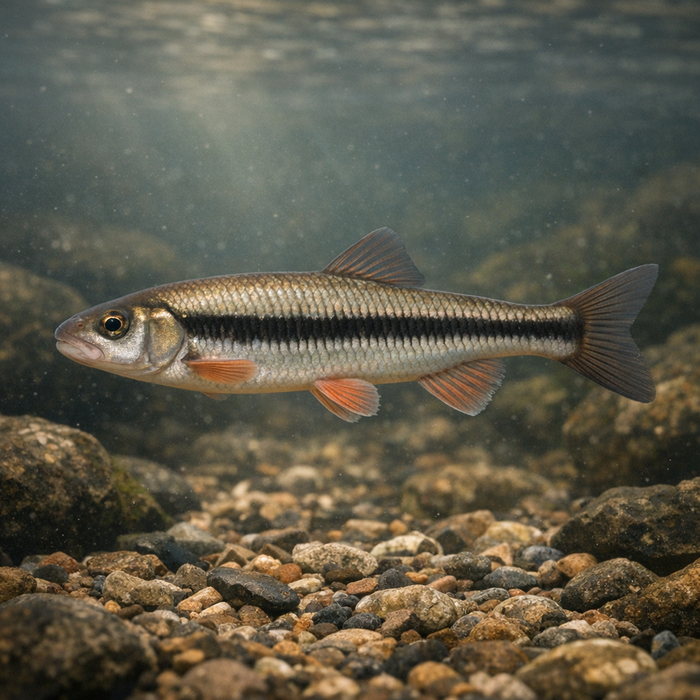
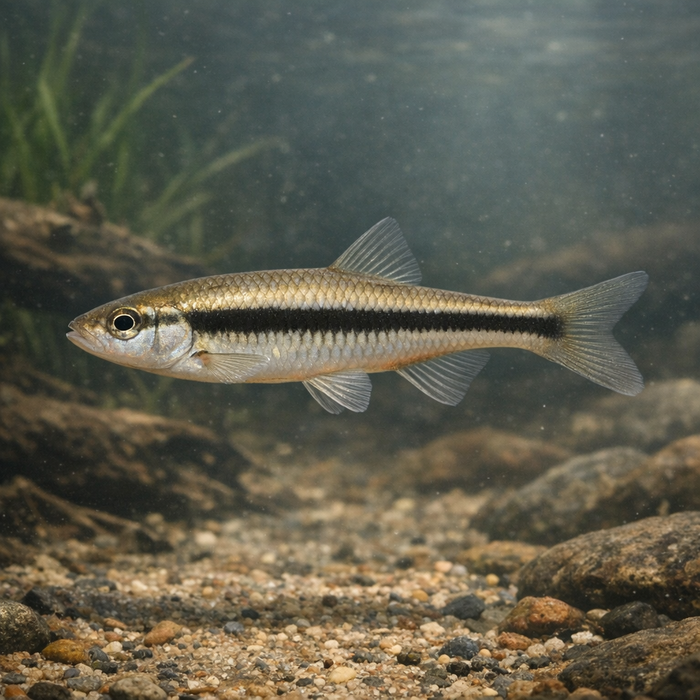
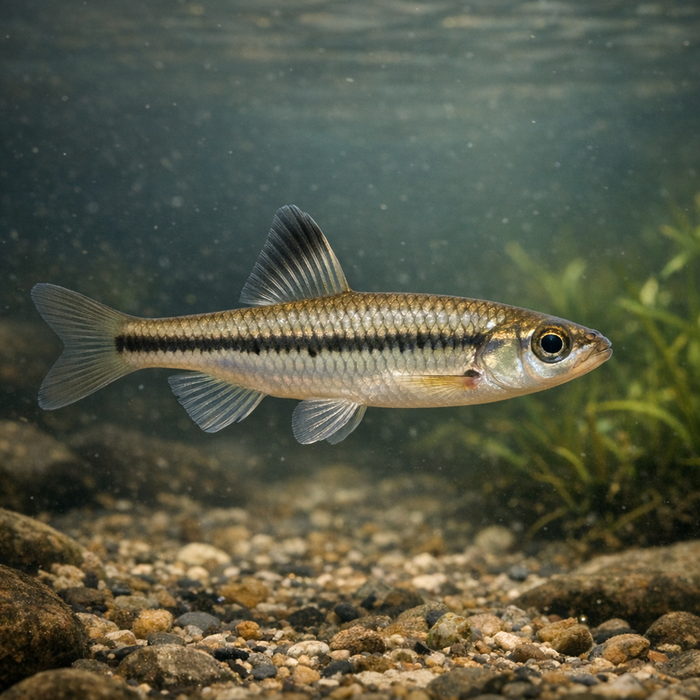
Silverside Shiner (Alburnops candidus): A Bold, Memorable Hook LineIntroductionThe Silverside shiner is proof that small fish can bring big personality. Flashy as a thrown spoon and quicker than your camera finger, this bait-sized minnow lights up sun-splashed runs with a strobe of chrome. If you're into microfishing, stream ecology, or just collecting river trivia, the Silverside shiner deserves a spot on your radar.What Makes the Silverside shiner Unique?That signature mirror stripe isn't just pretty. It's a tactical cloak made from guanine crystals that turn the fish into drifting silver. Schools use it like a shared signal: one flash turns into many, and predators get confused by the glare. Also unique is the taxonomic plot twist. Long wrapped up in Notropis, modern genetics spun this species into the revived genus Alburnops, a reminder that minnows hide more diversity than most folks expect. Last, the Silverside shiner grows fast, lives fast, and fuels entire river food webs, punching way above its weight.Habitat & Global RangeWhen anglers search for Silverside shiner habitat, they're really looking for current that moves like a lazy treadmill. Think clear to lightly tannic rivers and creeks with sand and fine gravel, modest depth, and good oxygen. The fish cruises the midwater lane, often just above the bottom where drifted insects pass. Geographically, the species is a Southeastern fixture, especially across Gulf-draining systems where sandbars, point bars, and gentle riffles are standard-issue. Backwaters and low-velocity edges hold schools when flows spike, and side channels refill the buffet once water drops.Behavior & TemperamentSilverside shiners are team players. They school tight, track the drift, and pivot as a unit. Aggression is low; efficiency is high. They're not bulldogs on the line, but they're expert at stealing bait and vanishing in a shimmer. Light changes matter. On bright days they cruise higher, flashing like sequins. In low light or stained water, they slide lower and tighten formation. Spawning runs kick up with warming water; eggs are broadcast over clean gravel so current can scatter the next generation downriver.Ecological ImportanceHere's the underrated magic: the Silverside shiner is mobile protein. It converts drifting insects into energy that climbs the food chain. Sunfish, juvenile bass, and even walleye-sized predators get paid every time a school shivers past. Their short lifespan and strong reproduction stabilize forage supply through wet springs and dry summers. In plain terms, if you like catching bigger fish, you should silently appreciate every chrome-sided shiner you see.Conservation & Environmental PressuresDespite their resilience, Silverside shiners rely on clean substrate and steady flow. Silted riffles smother eggs. Channelization flattens the menu. Prolonged, hot, low-oxygen spells squeeze schools into shrinking refuges. The good news: they're not drama queens. Given decent water quality and patchy gravel, they bounce back fast. Still, local bait collection, water withdrawals, and chronic sediment can chip away at populations piece by piece. Keep an eye on watershed health, not just single creeks.The FishyAF TakeThe Silverside shiner is the river's confetti: small, bright, and celebrating every riffle worth fishing. It's not a grip-and-grin star; it's the reason grip-and-grin stars grow up fat. For micro anglers, it's a perfect entry fish: visible, cooperative, and wildly photogenic in a glass of clear water. For everyone else, it's the breadcrumb trail to predators. Follow the flash and you'll learn real Silverside shiner facts: where current concentrates food, where clean substrate still survives, and where the river quietly hums along. When that chrome ribbon lights up, you're in the right water. Fish accordingly.