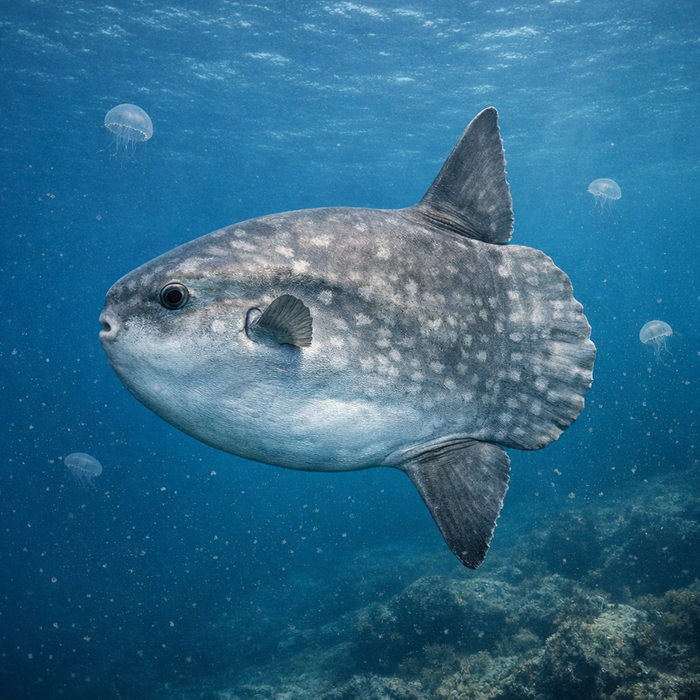
Slender sunfish (Ranzania laevis): A streamlined misfit that turns the ocean-sunfish stereotype on its headIntroductionMeet the ocean sunfish's fast cousin. The slender sunfish is the sleek, scaled-down member of the molid clan that doesn't lumber like a half-submerged boulder. It shows up out in the bluewater where the surface glitters and jellyfish drift, and when you do see one, it looks like a shrunken UFO with an attitude. For anglers, the slender sunfish is more surprise cameo than target species, but it's unforgettable. If you're hunting Slender sunfish facts or wondering about Slender sunfish habitat, strap in.What Makes the Slender sunfish Unique?First, design. Unlike the hulking Mola mola, this fish is comparatively streamlined, with a narrower body, a pointed snout, and a tidy, rudder-like clavus where most fish would have a tail. The dorsal and anal fins beat in perfect tandem like twin props, giving it more speed and control than its slab-sided relatives. Second, attitude. Slender sunfish may cruise right under your bow or hang just off your transom, eyeballing the scene with zero panic. They're oddly social with boats yet maddening when you try to make them eat. Third, the look. Adults can flash bars, spots, and pewter-silver tones that shift with light. One roll in the sun and you'll see why every deckhand reaches for a camera.Habitat & Global RangeThe slender sunfish is a citizen of the open ocean's sunlit zone. Think offshore edges, temp breaks, weedlines, jellyfish drifts, and those cobalt rips where life stacks up. They ride broad currents and show seasonally along temperate coasts when conditions go glassy and warm. While the species is global, your odds spike in bluewater with stable weather and clear surface activity. You're not "working structure" for this fish; you're hunting signs in the big empty and scanning for that unmistakable saucer silhouette finning just beneath the glare.Behavior & TemperamentSlender sunfish are wanderers with a chill vibe. They bask at the surface, tilt on their side to loaf in the sun, and then disappear below the glitter with a couple of efficient fin beats. They're not bruisers, and fights are usually short on light tackle. Hook sets can pull free because the mouth is small and beaklike, so gentle pressure and small hooks matter. They often ignore hardware and lures, yet a dainty strip of squid or a jellyfish imitation will sometimes flip the switch, especially when they're shadowing natural drifters.Ecological ImportanceDespite the goofy shape, this species slots neatly into pelagic food webs. Slender sunfish help regulate gelatinous plankton by picking off jellyfish and similar soft-bodied drifters. That grazing can indirectly protect forage fish and larval stages from jellyfish booms. They also host a carnival of parasites, which sounds gross until you realize they're mobile buffets for cleaner fishes and seabirds. When a slender sunfish tilts near the surface and lets birds go to work, you're watching ocean maintenance in real time.Conservation & Environmental PressuresRanzania laevis is generally listed as Least Concern, thanks to a wide distribution and lack of heavy directed fishing pressure. Still, life in the bluewater isn't exactly cushy. Bycatch in pelagic gear, plastic debris, and climate-driven shifts in jellyfish populations can all squeeze the margins. Their curiosity around boats doesn't help either; it's easy to mishandle a fish shaped like a flying saucer with sandpaper skin. Smart release practices and calm dehooking keep them in good shape after those rare encounters.The FishyAF TakeThe slender sunfish is the pelagic plot twist you brag about for years. You're out trolling for tuna, nothing's chewing, then a chrome pancake with airplane fins sidles up like a tourist asking directions. Hooking one is more fortune than finesse, but there is craft in reading the moment: cut the engines, slide a tiny squid strip back on light leader, and be patient. The Slender sunfish is never a program, always a cameo, and that's exactly why we love it. It's the ocean's reminder that not everything needs to be fifty knots and fangs to be a trophy story. Keep your eyes up, your tackle light, and your respect high. When the saucer shows, you'll know.