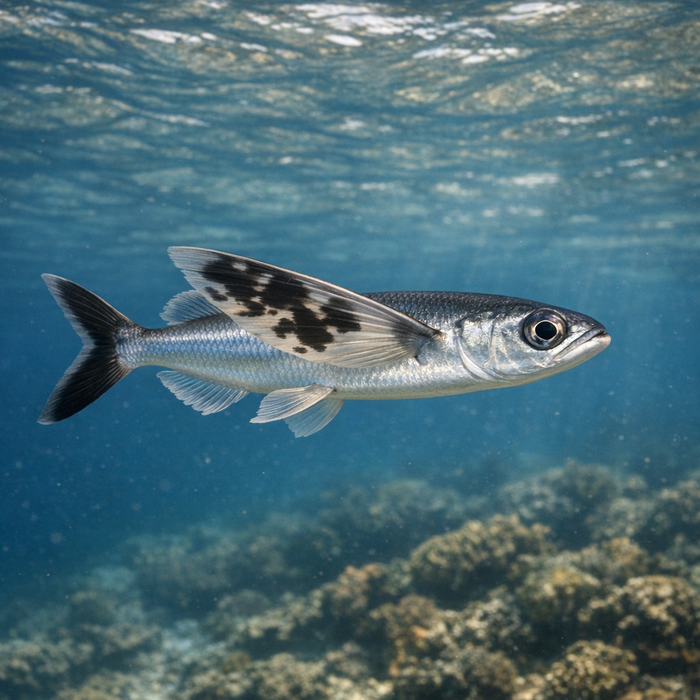
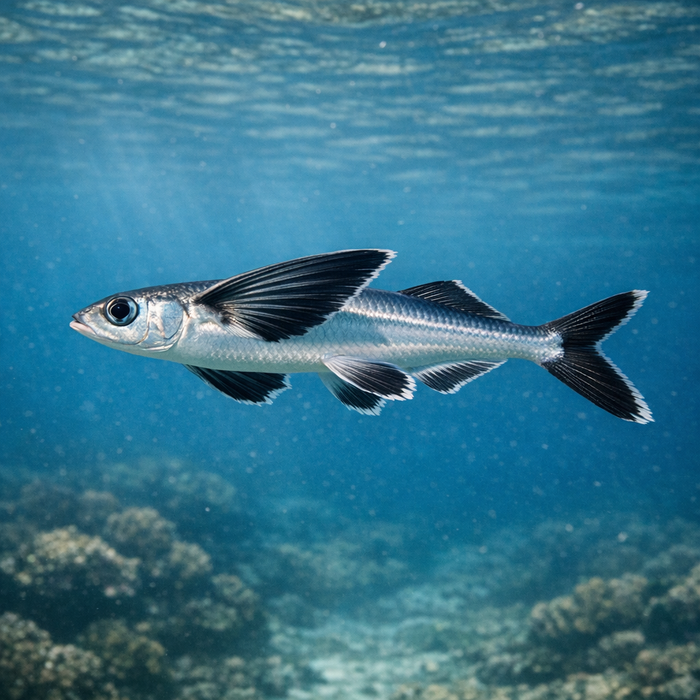
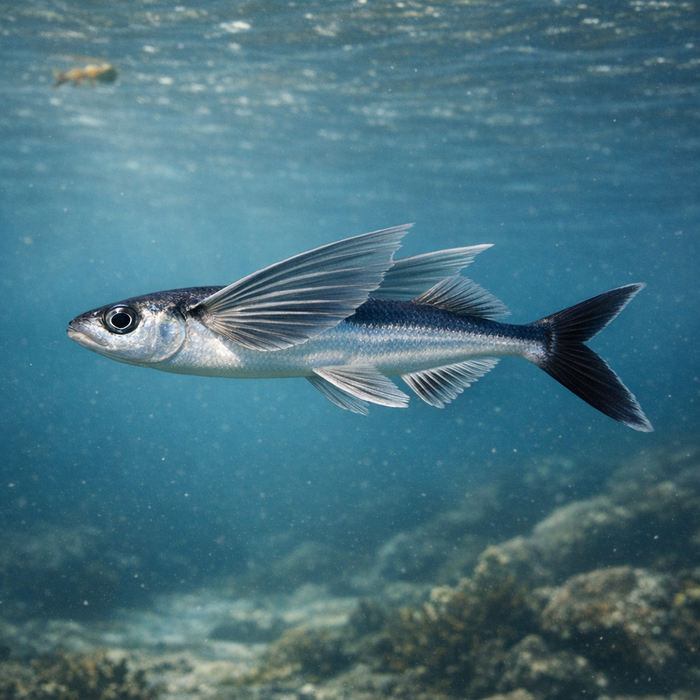
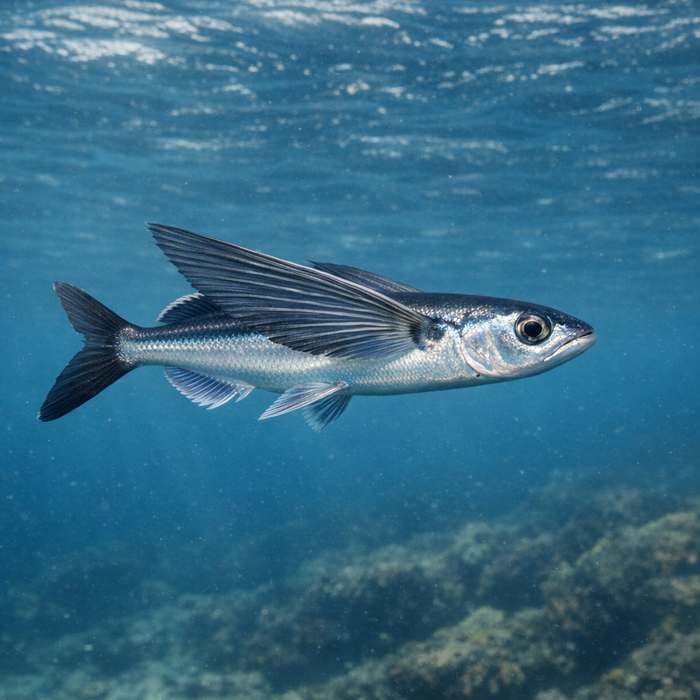
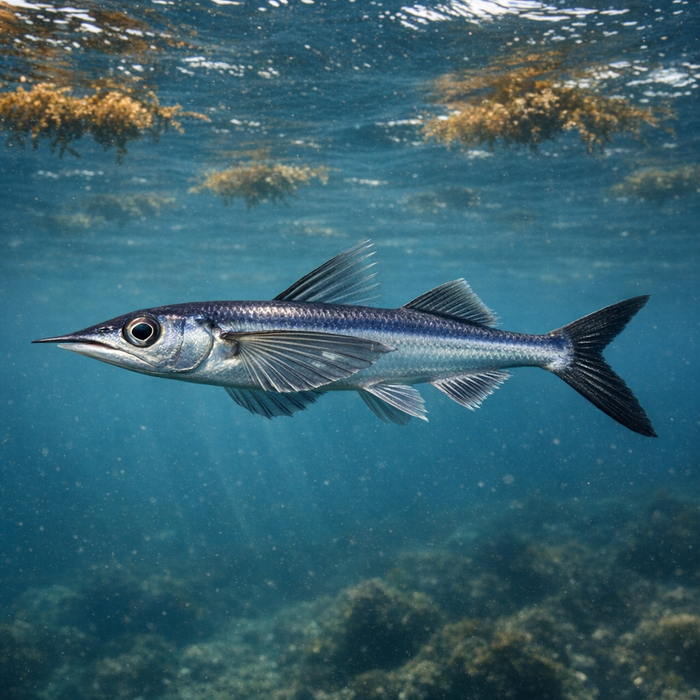
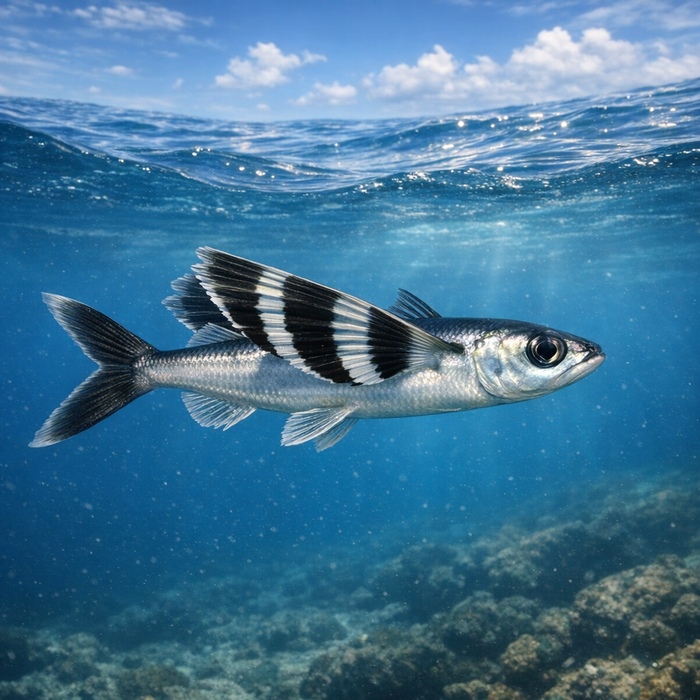
Oceanic Two-wing Flyingfish (Exocoetus obtusirostris): Sea Skippers Built To LaunchIntroductionThe oceanic two-wing flyingfish is the tiny bluewater daredevil every big predator wants for lunch and every night-lighting angler secretly roots for. One second it is a silver streak in the chop, the next it is airborne and surfing spray like it bought a plane ticket. Small? Sure. Forgettable? Not a chance. This fish rewrites what a fin can do.What Makes the Oceanic two-wing flyingfish Unique?Most flyingfishes wear four wings. This one does it with two. Exocoetus obtusirostris sports oversized pectoral fins and notably small pelvic fins, a streamlined planform that trades surface area for speed and clean launches. The species also lives up to its name: obtusirostris means blunt snout, a quick tell when you're squinting at a flopping silver rocket in your cockpit. The oceanic two-wing flyingfish pairs those broad pectorals with a stiff, keel-like belly that keeps its glide stable while the lower tail lobe can slap the surface to stretch airtime. That blend of lift, control, and sudden acceleration is its superpower.Habitat & Global RangeThis is a bluewater specialist. If you are chasing Oceanic two-wing flyingfish habitat, you are looking at warm, clear, open ocean with current seams, weed lines, and flotsam that collect life after dark. It is a circumtropical traveler, riding rips and eddies, seldom flirting with the beach unless the bait parade drifts close. By day, schools hold just below the surface, but at night they slide right up top under the lights. Think offshore drifts near sargassum mats, FADs, and tidy convergences where the food web piles up.Behavior & TemperamentSkittish and spring-loaded, the oceanic two-wing flyingfish is built for panic. A flash of mahi-green or a shadowy tuna, and it punches the throttle, planing up and out. In calm seas they may stack into tight schools that burst like popcorn at the first hint of pressure. Under lights, they act moth-like, circling and darting through the glow, then knifing into the dark to avoid nets and beaks. You do not so much fight them as finesse them, since their mouth is paper-thin and their first move after a hookset is often to try flying again.Ecological ImportanceThe oceanic two-wing flyingfish is pure jet fuel for pelagic predators. Dorado, wahoo, tuna, billfish, even seabirds line up for these bite-size glide bombs. Their nightly vertical shuffle to the surface ferries energy upward through the food chain, and their sticky, filamented eggs hitchhike on sargassum and drifting debris, seeding the open ocean with future flights. Anytime you see sails, dolphin fish, or skipjack rampaging at the surface, you are basically watching a flyingfish story unfold.Conservation & Environmental PressuresGlobally, the species rides a knife-edge environment. It is listed as Least Concern, but that status leans on broad distribution and short lifespans, not invincibility. Marine debris can both help and hurt, offering egg substrate while tangling adults. Light pollution around FADs and fleets alters natural behavior. Industrial harvest targets flyingfishes in some regions, and floating sargassum dynamics shift with warming waters. The oceanic two-wing flyingfish is tough in numbers, yet sensitive to the open ocean's mood swings.The FishyAF TakeIf you are here for Oceanic two-wing flyingfish facts, here is the headline: this little flyer is the blueprint for airborne bait. It is not a grip-and-grin trophy, but it is the spark that lights entire offshore food webs. Anglers who learn its rhythms catch more of everything else. Work rips, find weed, and use light with a gentle touch. When one skitters into your cockpit like a silver paper airplane, appreciate the engineering. The oceanic two-wing flyingfish is your best tip-off that predators are locked in and the bluewater switch is on.