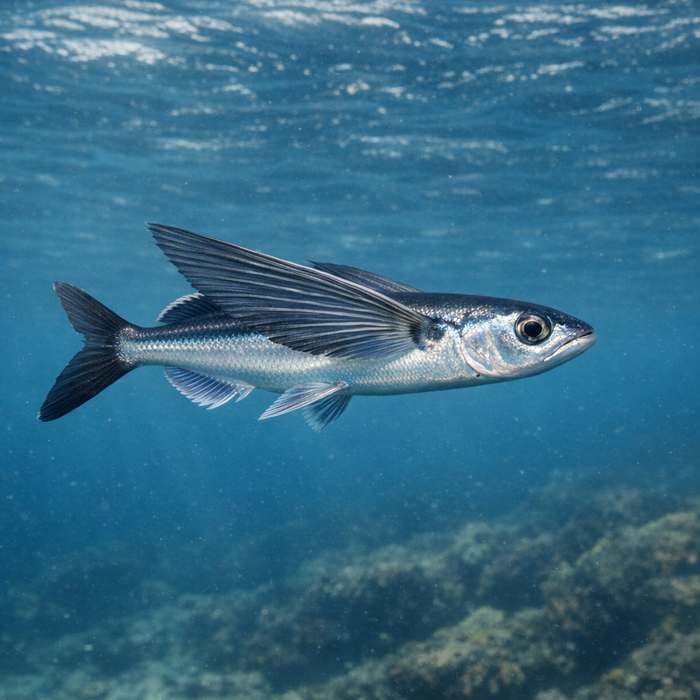
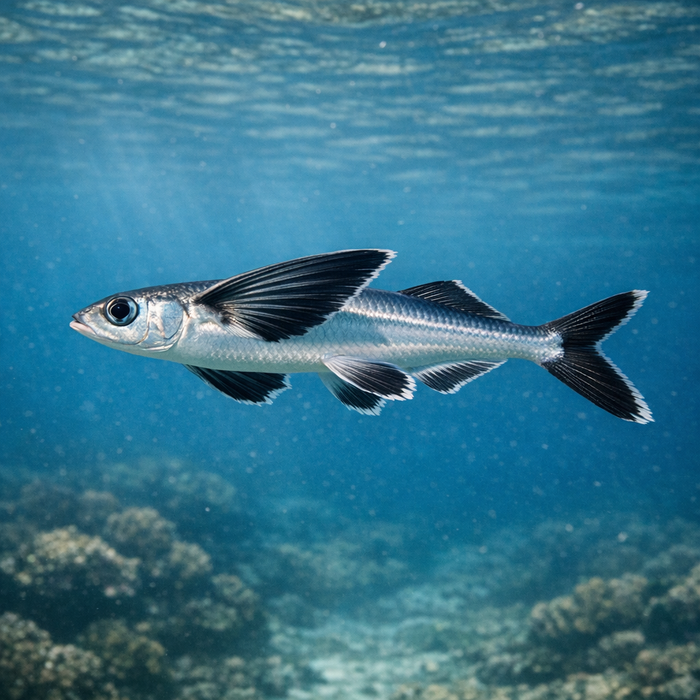
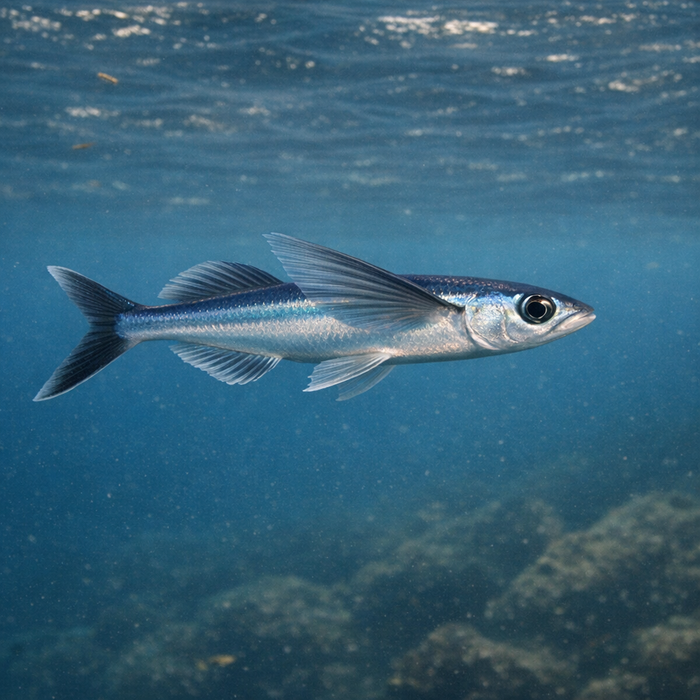
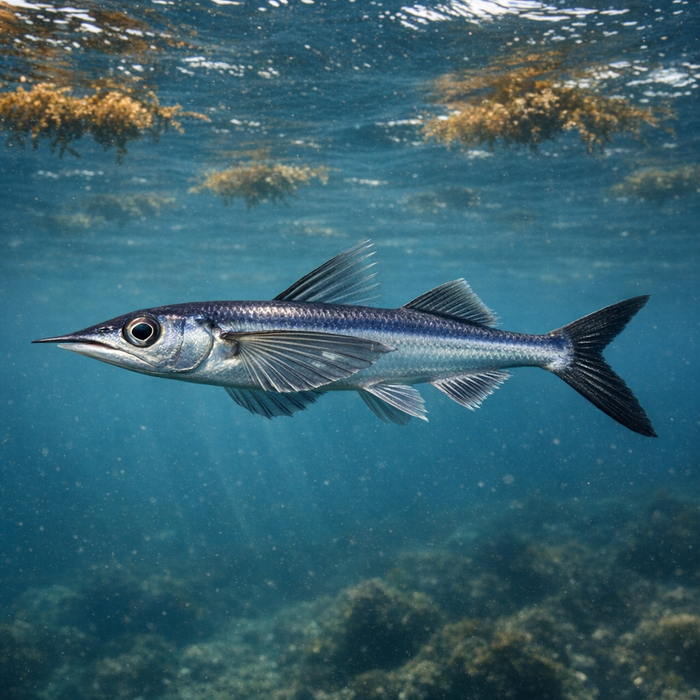
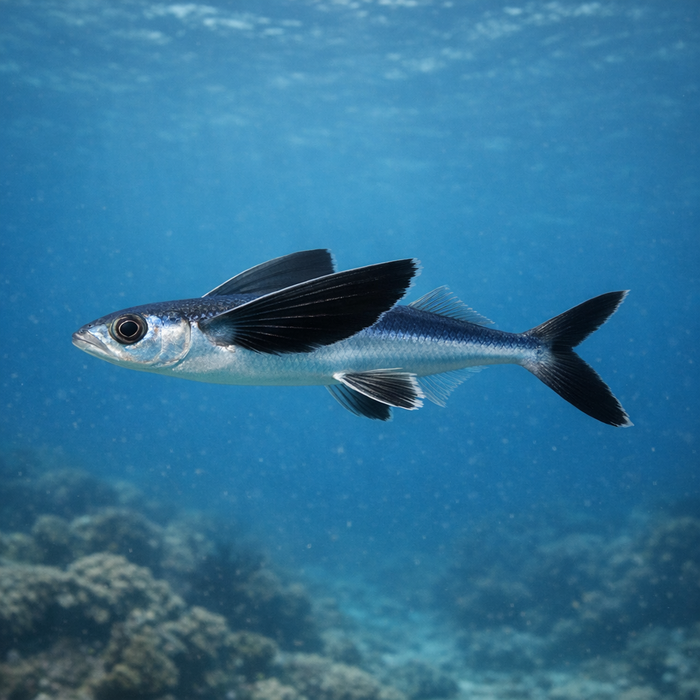
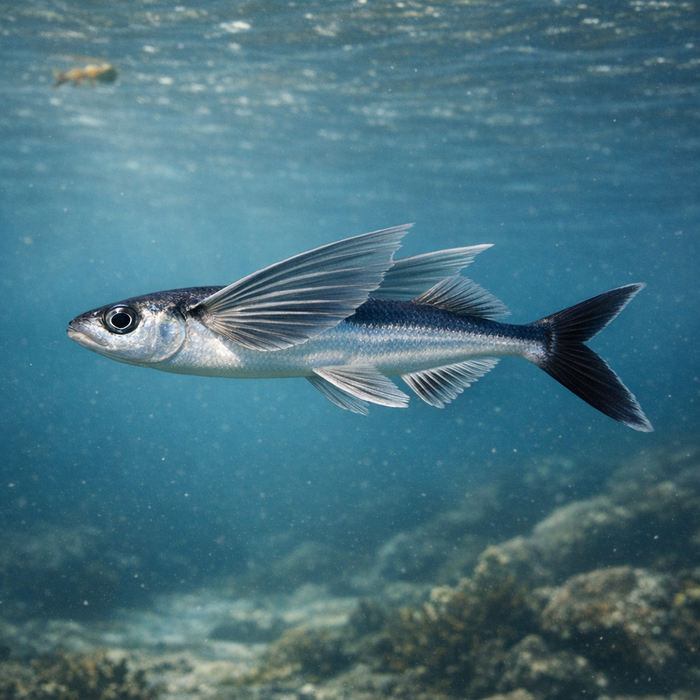
Blotchwing Flyingfish (Cheilopogon hubbsi): High-speed winged baitfish with flashy fins and zero respect for gravityIntroductionMeet the blotchwing flyingfish, the pelagic prankster that refuses to stay in the water when things get spicy. It's small, fast, and armed with pectoral "wings" splashed with dark blotches that flash when spread. Anglers rarely target it with hooks, yet every offshore night mission seems to star in a surprise cameo. If you're here for legit Blotchwing flyingfish facts and some perspective on Blotchwing flyingfish habitat, you're in the right place.What Makes the Blotchwing flyingfish Unique?Two standout traits define this fish. First, those blotched pectoral fins. They're not just for show; when the fish launches, the pattern turns into visual static that helps break its outline against moonlight and whitecaps. Second, the takeoff system is absurdly efficient. With a turbo-charged lower tail lobe, the blotchwing flyingfish rockets up, skims the surface with a few tail taps, and converts that speed into a glide that clears chop and predators in one move. The result: instant airborne chaos that predators hate and anglers secretly love to watch.Habitat & Global RangeThink warm, blue water. The blotchwing flyingfish keys on offshore current lines, weed mats, and drift zones where plankton concentrates. At night, under deck lights or underwater LEDs, schools cruise the skin of the sea and vacuum micro-prey. During daylight, they keep close to the surface but spread out, mixing with other flyingfishes in the open ocean. They're pelagic commuters, riding temperature breaks, rips, and tidy edges of Sargassum. While exact distribution varies by source and season, offshore and open-ocean habitat defines the playbook everywhere they show up.Behavior & TemperamentThis fish does one thing better than almost anything its size: escape. Startled schools detonate in a run-and-gun sequence, each fish hitting takeoff speed with tail slaps, then throwing those blotched wings wide for a gliding sprint. They're crepuscular and nocturnal feeders, dialing up activity when plankton rises. Schooling is the rule, especially around lights. Aggression stays low; they're not brawlers, they're sprinters. Hooking one on purpose is tough because they sip micro-prey and bolt at weird angles. Expect more aerial acrobatics than tug-of-war.Ecological ImportanceThe blotchwing flyingfish is a cornerstone snack in the pelagic food web. Dorado, tunas, billfish, and even night-stalking dolphins use weedlines as buffets, and flyingfishes like this one headline the menu. Their eggs, famously sticky, attach to floating debris and Sargassum, spreading life along drifting nursery lines that also host crabs, jacks, and juvenile mahi. When a school lifts off, it isn't just a spectacle; it's a signal that energy is moving, predators are hunting, and the open ocean is fully online.Conservation & Environmental PressuresWhile not a mainstream commercial target, flyingfishes feel the squeeze indirectly. Floating habitats get hammered by pollution and plastic, and the very debris their eggs cling to can be a double-edged sword. Temperature swings push plankton around, shifting feeding windows. Light pollution influences nocturnal behavior. The blotchwing flyingfish isn't waving red flags today, but offshore ecosystems change fast. Keeping weedlines healthy and reducing trash in the gyres helps keep these winged rockets in business.The FishyAF TakeThe blotchwing flyingfish is a small fish with big-stage presence. You don't chase it for hero shots. You watch it to read the ocean. If they're thick under your lights, predators aren't far. If they're popping at gray dawn, get ready for fast company. Hooking one? Possible with micro rigs, but they're more barometer than quarry. Among flyingfishes, the blotchwing earns bonus style points for those inked wings. If you're hoarding offshore trivia or just love weird little athletes, this fish delivers the goods without asking for a headline. That's our kind of wingman.