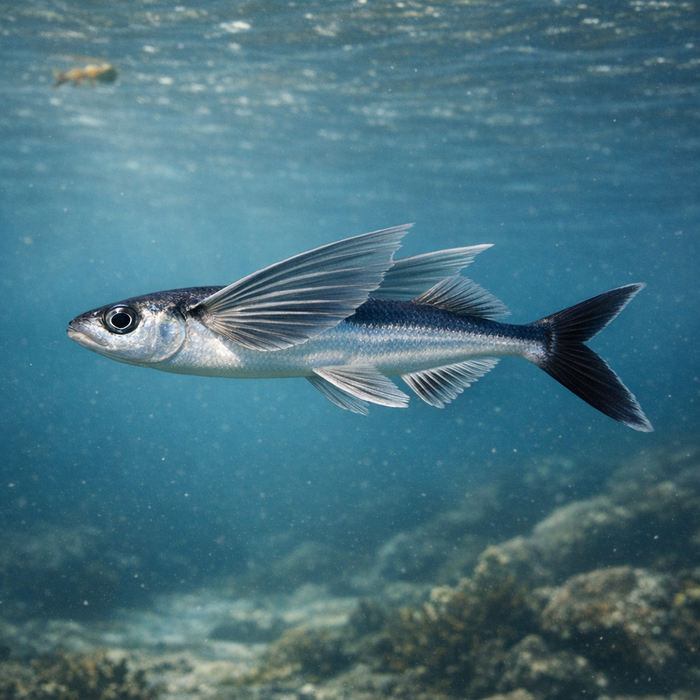
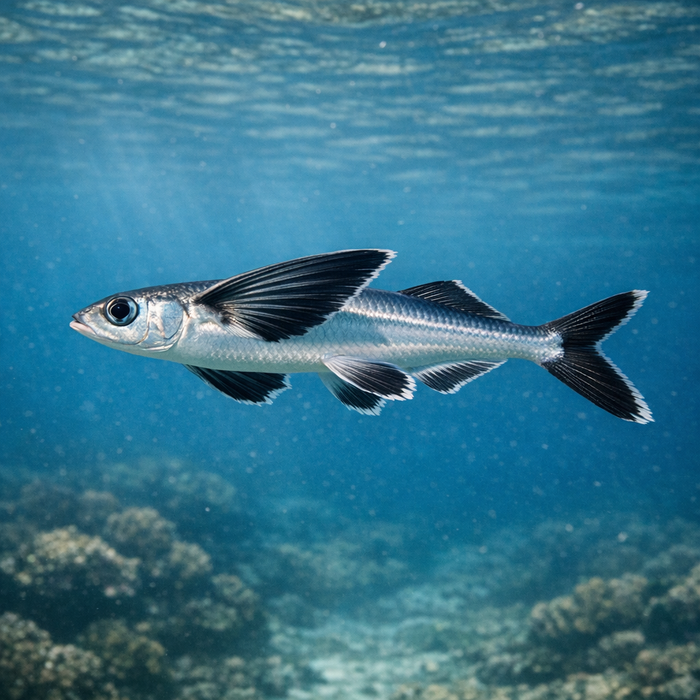
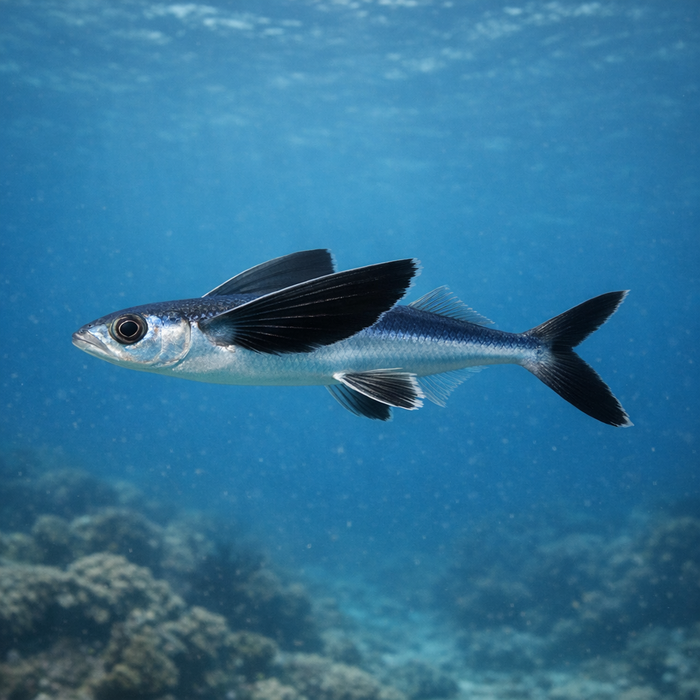
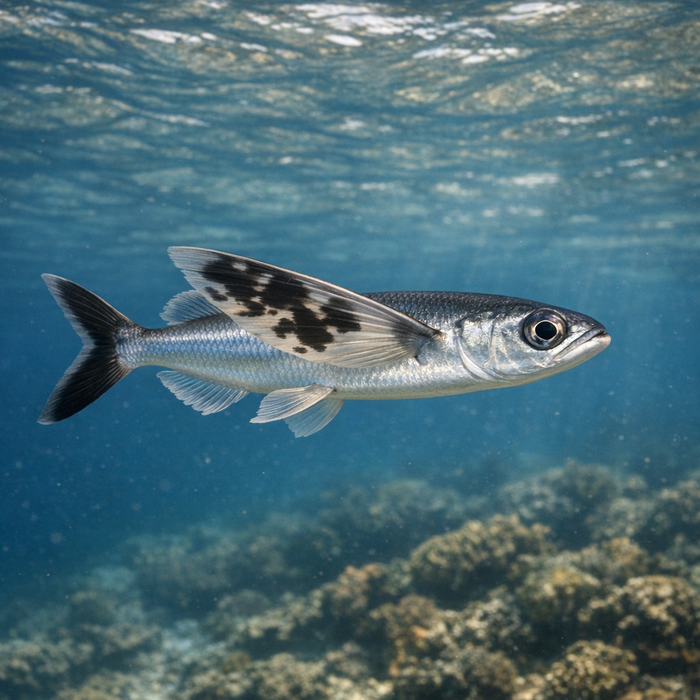
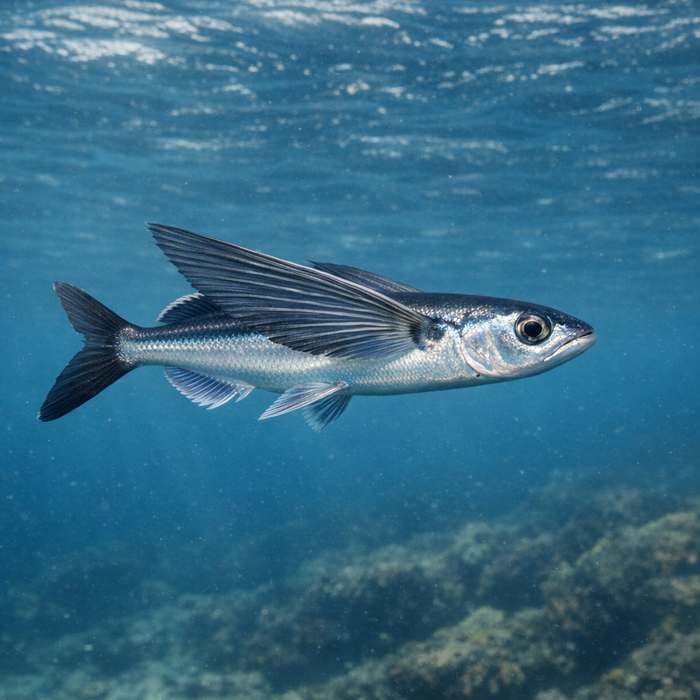
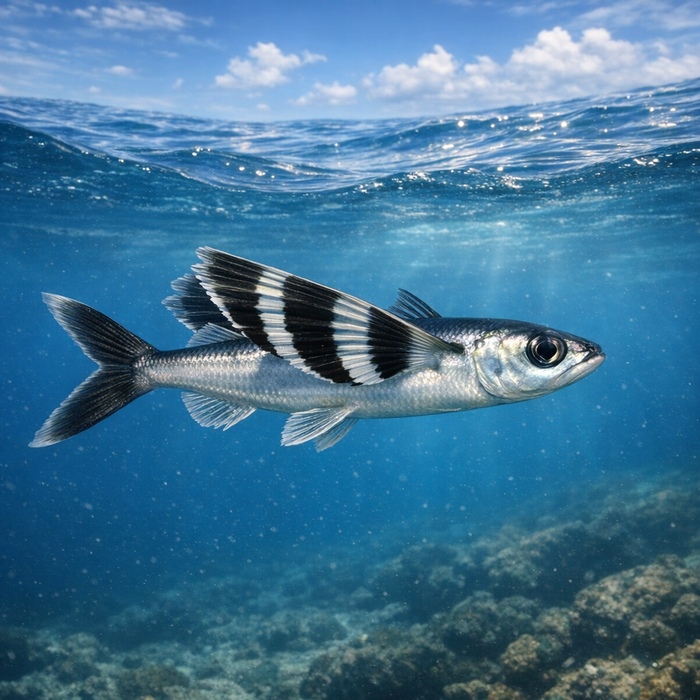
Sharpchin Flyingfish (Fodiator acutus): A Bold, Memorable Hook LineIntroductionThe sharpchin flyingfish is the tiny torpedo that turns moonlit chop into a runway. Blink and it's airborne, banking on absurdly long pectorals like a hang glider with attitude. You'll hear it before you see it: a flick, a splash, then a silver streak skittering past your bow light. If you're chasing Sharpchin flyingfish facts or wondering whether this little speedster is even catchable, you're in the right place.What Makes the Sharpchin flyingfish Unique?Start with the namesake chin. Fodiator acutus carries a pointed lower jaw that slices the surface film right before liftoff, giving its jump a clean release. It's a two-wing flyer, meaning the pelvic fins aren't the massive "secondary sails" seen on some cousins. That leaner wing plan screams efficiency: quick bursts, flat glides, and a knack for tail-slapping the water midair to relaunch. It's a fish built to embarrass predators and confuse anglers in equal measure.Habitat & Global RangeCall the sharpchin flyingfish a surface addict. It rides the skin of warm blue water, keying on flotsam lines, bait showers, and island drop-offs. You'll see it most when the world turns dark: dock lights, boat lights, and any glow that concentrates plankton and glass minnows. Think open-ocean edges and offshore structure made of nothing but trash, weed, or current seams. If you're scouting Sharpchin flyingfish habitat, hunt that razor-thin boundary where clean water meets chaos.Behavior & TemperamentThe sharpchin flyingfish doesn't fight. It escapes. The entire playbook is sprint, launch, and glide. Schooling is common, and those schools wheel like starlings when a dorado or tuna buzzes through. They'll pin tight to debris, then blast out in synchronized flights. At night they crash the party around lights, sometimes nosediving straight into coolers. Skittish by day, bold around glow by night, they're paradox in motion.Ecological ImportanceThis fish is the protein shuttle between the microscopic and the monstrous. It hoovers zooplankton and tiny nekton, then donates that energy to apex hunters: mahi, billfish, tunas, and even seabirds that pluck them mid-glide. Its sticky-threaded eggs adhere to floating debris, seeding the next generation where food concentrates. Cut the surface food chain, and the sharpchin flyingfish is one of the first cards to flutter - followed by the predators we obsess over.Conservation & Environmental PressuresOfficial listings peg Fodiator acutus as Least Concern, but that's not a free pass. It lives at the interface where heat, plastics, and currents tangle. Warming shuffles its playbook. Debris helps eggs, but microplastics poison the pantry. Light pollution draws night schools, compacting them for predators and nets. It's not commercially hot, yet it gets brushed by everything from dip nets to bycatch. Healthy pelagic edges and responsible lighting matter more than you'd think for a fish this small.The FishyAF TakeThe sharpchin flyingfish is a chaos gremlin with wings. You don't so much target it as choreograph an accident: lights, tiny hooks, calm seas, and a lot of luck. Still, every offshore angler has a story - the silver streak in the spread, the thump on the deck, the airborne baitfish that made a dorado go feral. Treat it like the sparkplug of the bluewater food web. Small fish, huge role, and worth knowing far beyond the novelty of flight.