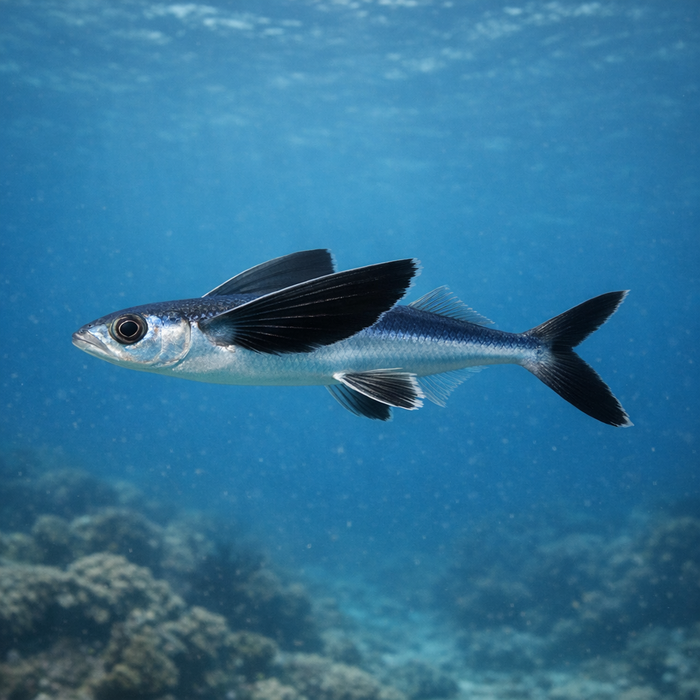
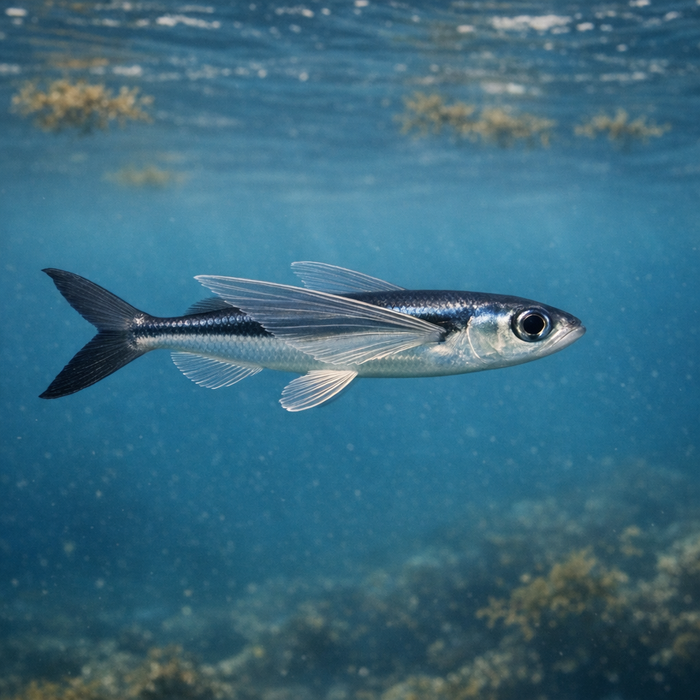
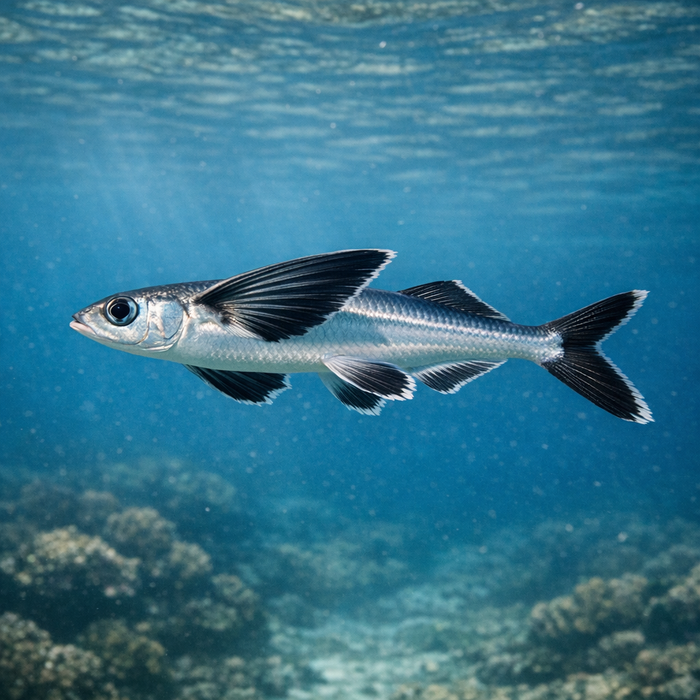
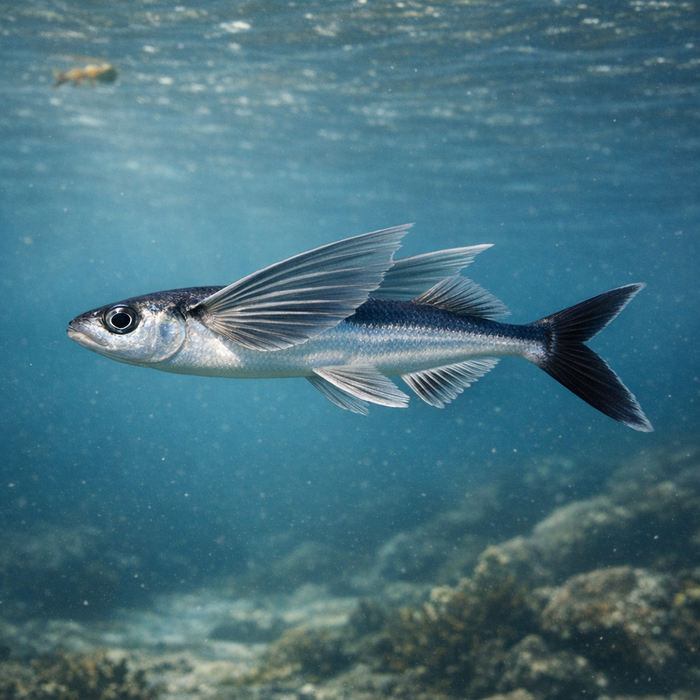
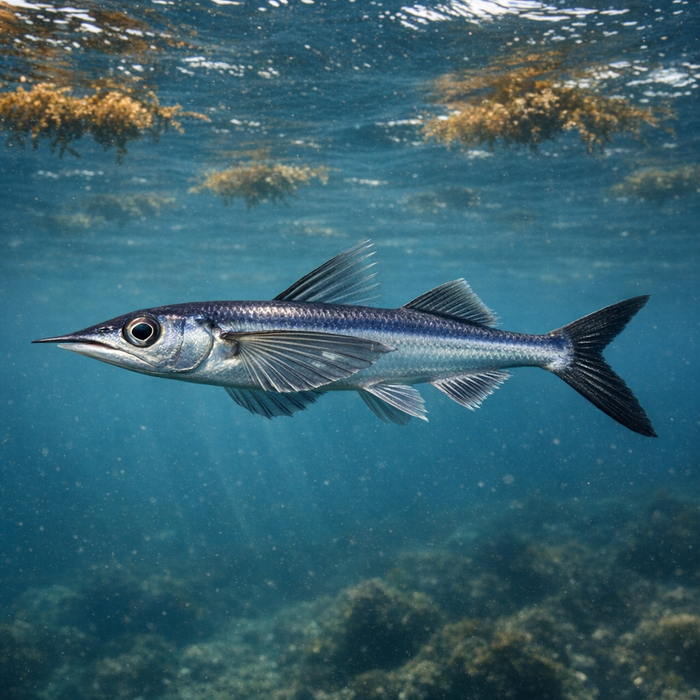
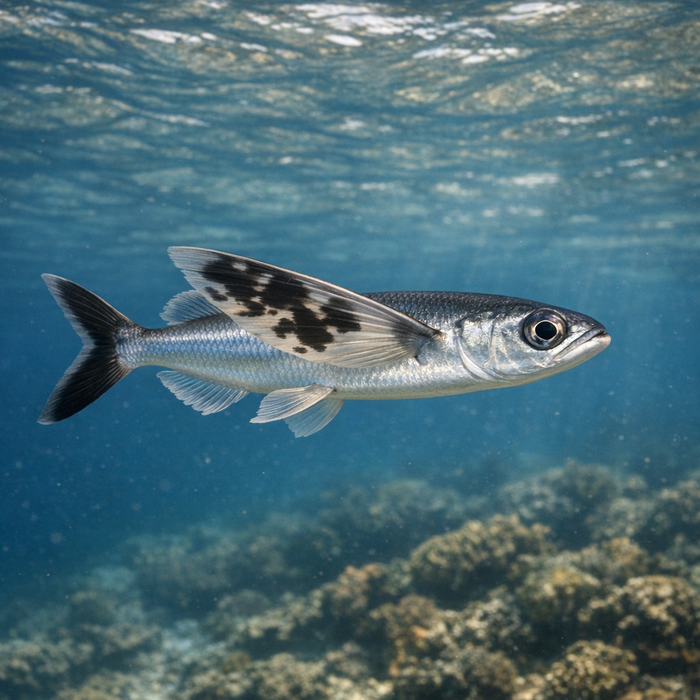
Bandwing Flyingfish (Cheilopogon exsiliens): Wings, stripes, and a launch button built into its tail.IntroductionThe Bandwing flyingfish is the slippery little rocket that makes offshore nights more interesting. One second it's a silver flash in the spread, the next it's airborne, pectoral fins spread like sails, skipping past your bow light. For anglers who geek out on weird, agile pelagics, the Bandwing flyingfish checks every box. If you wanted Bandwing flyingfish facts without textbook yawns, buckle up.What Makes the Bandwing flyingfish Unique?Start with the calling card: those long pectoral "wings" stamped with a bold dusky band. That band is a dead giveaway when you're staring into a cone of LED light at 2 a.m. It's built for escape artistry, not brawling, powered by an oversized lower tail lobe that pounds the surface before liftoff. The Bandwing flyingfish can re-launch off wavelets to extend a single glide, a trick that keeps it just ahead of tuna, mahi, and you. A glide isn't random either; the fish angles with wind and swell like a tiny sailor, tucking the wings tight for a clean re-entry.Habitat & Global RangeThis is a surface-oriented, bluewater specialist. Think rip lines, weed mats, current edges, and moonlit lee sides of islands. The Bandwing flyingfish works that slim real estate where air kisses water, especially when plankton and crustaceans stack. While it shows up near coasts when currents push bait in, its heart is offshore. If you're mapping Bandwing flyingfish habitat, draw boxes around sargassum lines, FAD shadows, and any stretch where clean water meets a temperature edge.Behavior & TemperamentCall it jumpy and you won't be wrong. The species schools loosely, tightens up when predators charge, then detonates into synchronized flight. Under lights it moves in and out of the glow, skirting the fringe like a pickpocket. Hooked fish don't slug; they skitter, dart, and sometimes launch. The bite is subtle, the spook factor is high, and leader glare can end your fun instantly. Approach with finesse: thin line, tiny hooks, and quiet movements around the rail.Ecological ImportanceThe Bandwing flyingfish is ocean currency. It turns plankton and micro-crustaceans into fuel that powers bigger predators. Mahi, wahoo, billfish, skipjack, and even seabirds cash that check daily. Eggs attach to floating debris via long filaments, anchoring the next generation right where the buffet drifts. When you see a slick, nervous patch of water peppered with small leaps, you're watching a pelagic food web in real time.Conservation & Environmental PressuresGlobally, flyingfish species face the same headwinds as everything else that lives near the surface: warming water, shifting currents, plastic debris, and light pollution that reshuffles nighttime behavior. Targeted pressure for the Bandwing flyingfish is generally low, but local harvests for bait or table use can spike. The bigger risk is habitat quality. Kill the current lines and the sargassum rafts, and you thin the neighborhood that raises them.The FishyAF TakeThe Bandwing flyingfish is not a grip-and-grin trophy. It's a precision play and a window into the offshore machine. Dialed anglers use it as a tell: if bandwings are thick under the lights, predators aren't far. Catching them is a stealth mission with micro hooks, a whisper of chum, and a long-handled net ready the second a fish looks committed. It's delicate, surgical, and strangely addictive. You're not muscling giants; you're reading a living surface and stealing a few from the fastest bait on the block. That's the Bandwing flyingfish experience, and it never gets old.