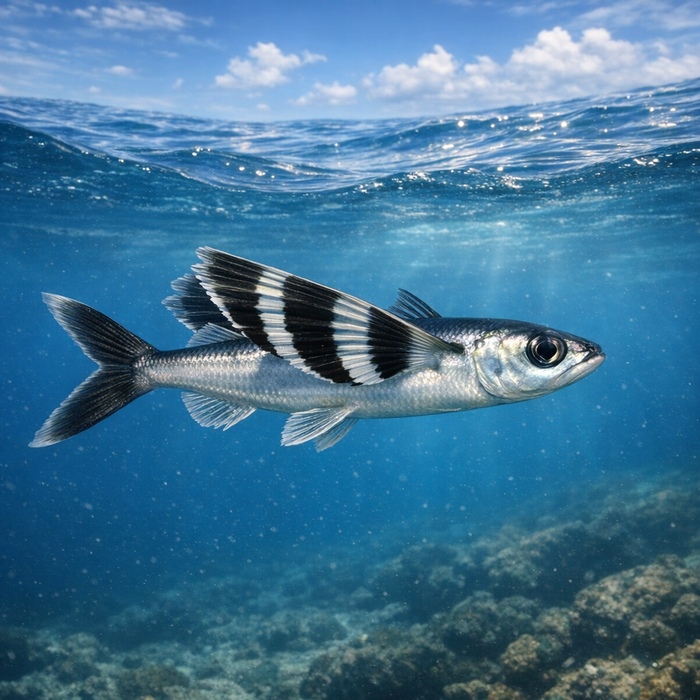
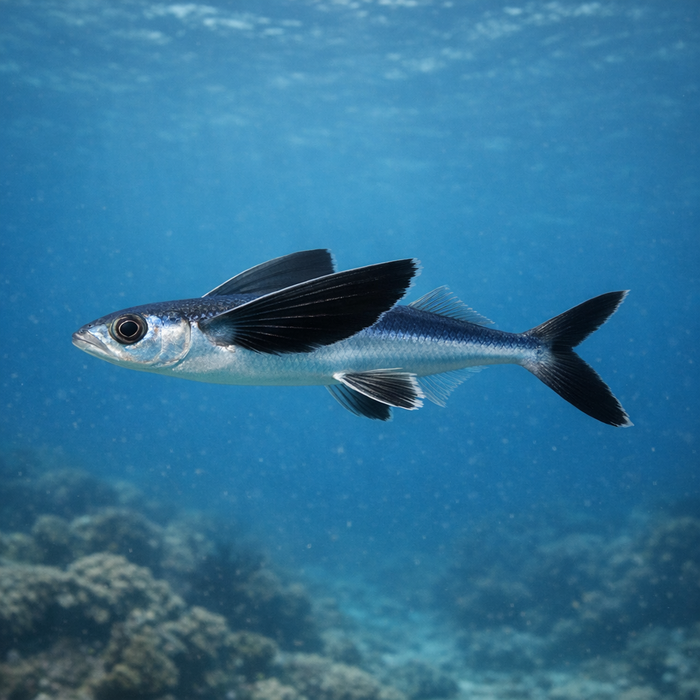
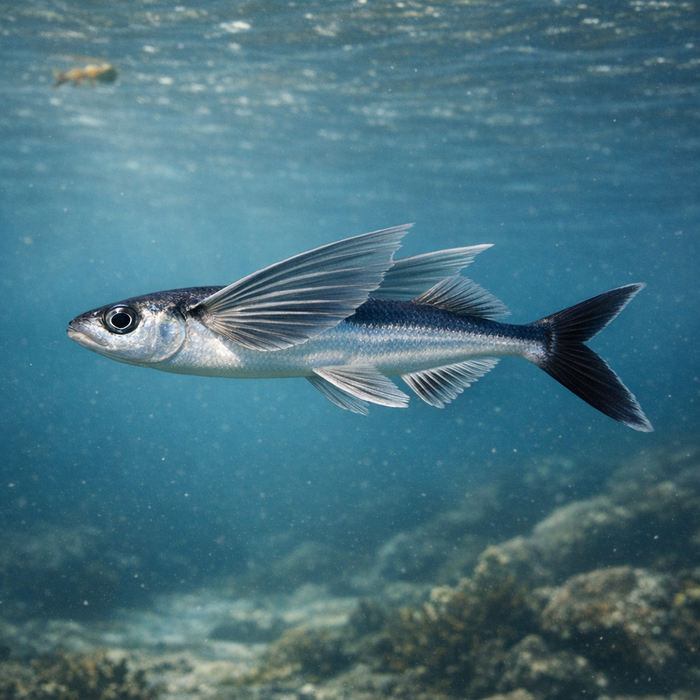
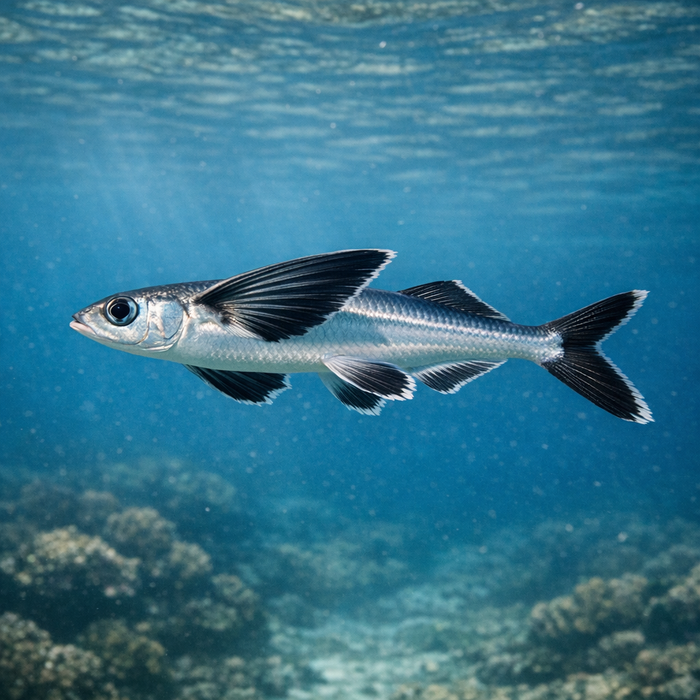
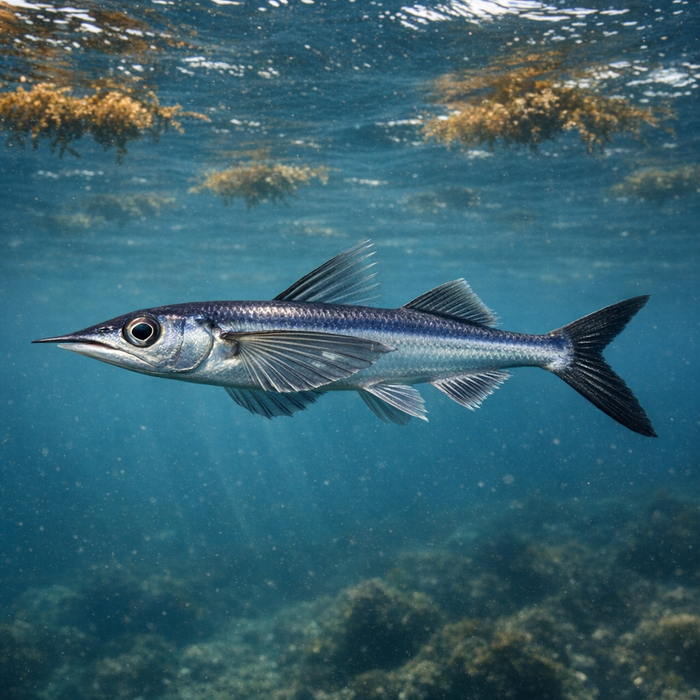
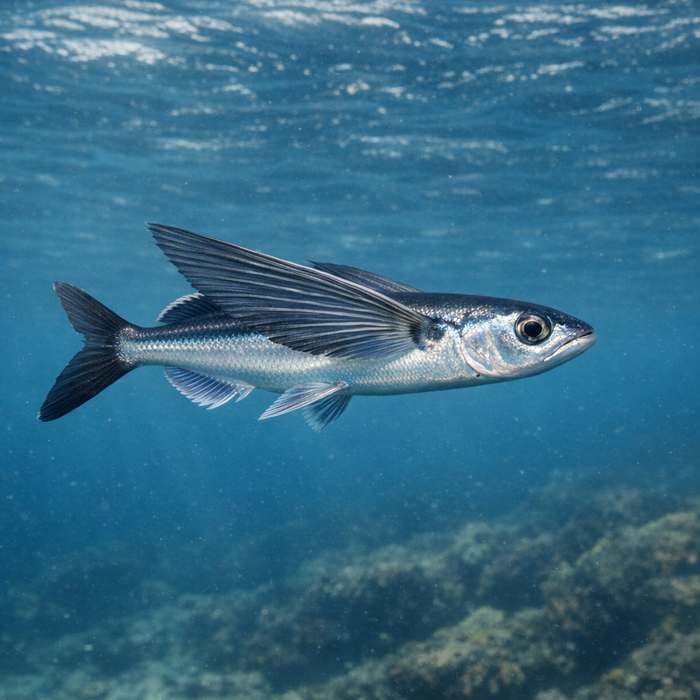
Flyingfish (Parexocoetus hillianus): The Atlantic's pocket rocket with wings and zero interest in your net.IntroductionIf a baitfish and a paper airplane had a caffeinated baby, you'd get the flyingfish. Specifically, Parexocoetus hillianus is the small, zippy Atlantic model that rockets out of the water, uncorks a glide, and sometimes smacks right into your transom light like it meant to. Anglers bump into it around weedlines, rips, and night-time lights, where the species becomes both show and supply: a spectacle to watch and an unbeatable snack for anything with teeth.What Makes the Flyingfish Unique?This is a two-wing flier. Instead of the big pelvics that create four-wing lift in some species, P. hillianus keeps those fins small and pushes its oversized pectorals to do the heavy work. That trade-off helps it launch quickly and skip the surface by tail-slapping between bursts, a nifty maneuver that buys an extra beat when tuna or mahi are closing in. It's also compact. Most adults sit in the seven to eleven inch range, a sweet spot for being eaten by everything you actually want to catch offshore. Add in adhesive eggs that hitch to Sargassum and you've got a blueprint for fast life, fast turnover, and endless aerial drama.Habitat & Global RangeThink warm Atlantic edges. This flyingfish gravitates to the top few meters of clear blue water along current seams, weed mats, and pressure lines. It shows across the tropical and subtropical Atlantic, including the Caribbean, Gulf Stream fringes, and East Atlantic archipelagos. When anglers ask about Flyingfish habitat, the honest answer is simple: look where the ocean stitches different water masses together. Weedlines are conveyor belts of food and cover. Rips stack plankton, glass minnows, and the whole micro food web. At night, hull lights or dedicated bait lights pull these fish in like moths. They're pelagic wanderers, but where the groceries concentrate, so do the gliders.Behavior & TemperamentSkittish doesn't cover it. One shadow and the school detonates into silver wings skipping downwind. They're visual feeders, keyed to low light, and they draft along Sargassum and flotsam like little sailplanes hugging lift. Parexocoetus hillianus forms loose-to-tight schools depending on pressure; tight balls happen right before a group launch. They rarely dig deep, spending their lives in the surface skin, and they'll ring the dinner bell under lights as long as the current's moving. Hooked fish don't brawl. Expect a flurry, a pingy shake, and a surprisingly easy unbutton if you're too heavy-handed.Ecological ImportanceFlyingfish are the street tacos of bluewater. Everything eats them. Tuna, mahi, wahoo, billfish, dorado, even frigatebirds plan their day around these gliders. By turning plankton and micro-crustaceans into sleek, high-protein packages, P. hillianus moves energy up the chain at warp speed. Adhesive eggs on Sargassum tie reproduction to floating habitat, so weed mats become nurseries for future bait and hunting grounds for predators. Want to find pelagics? Find the flyers. That's one of the truest Flyingfish facts in the book.Conservation & Environmental PressuresBig picture, the species sits comfortably in Least Concern territory. Still, local pressures exist. Night-light dip-net fisheries can thin schools around islands when effort spikes. Plastic junk tangles with Sargassum and can snag egg filaments. Heatwaves and current shifts reshuffle the buffet line, sometimes pushing flyers off traditional edges. Purse seines working pelagic grounds vacuum up everything nearby, weed and bait included. None of this screams crisis for P. hillianus today, but the species is welded to surface habitat that's changing fast.The FishyAF TakeThe flyingfish is the unsung MVP of offshore mayhem. You won't brag about its fight, but you'll brag about what eats it. Parexocoetus hillianus is the slick little winged mint that tells you the ocean's rigged right. Weedline alive, current ticking, lights loaded with panicked gliders? Tie on a sabiki, nab a few fresh ones, and you're basically printing pelagics. Call it bait, call it wildlife theater; either way, when the flyers show up, you're in the right zip code.