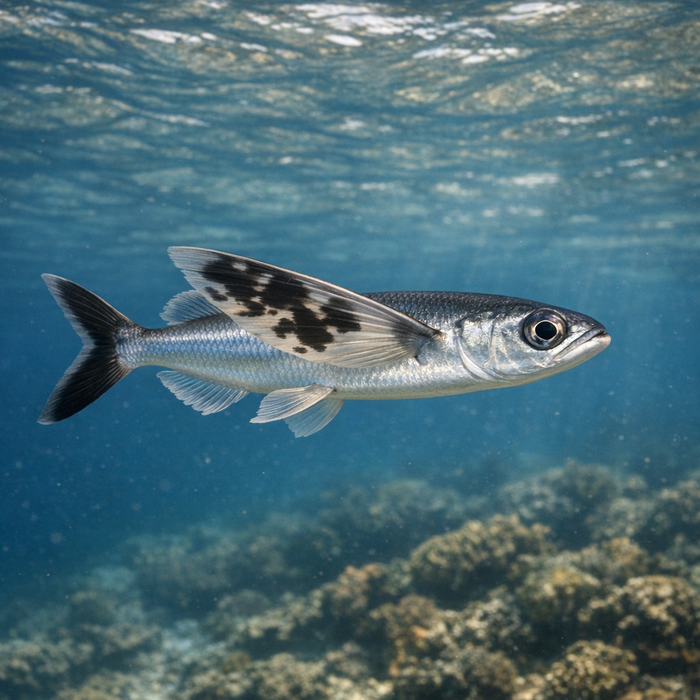
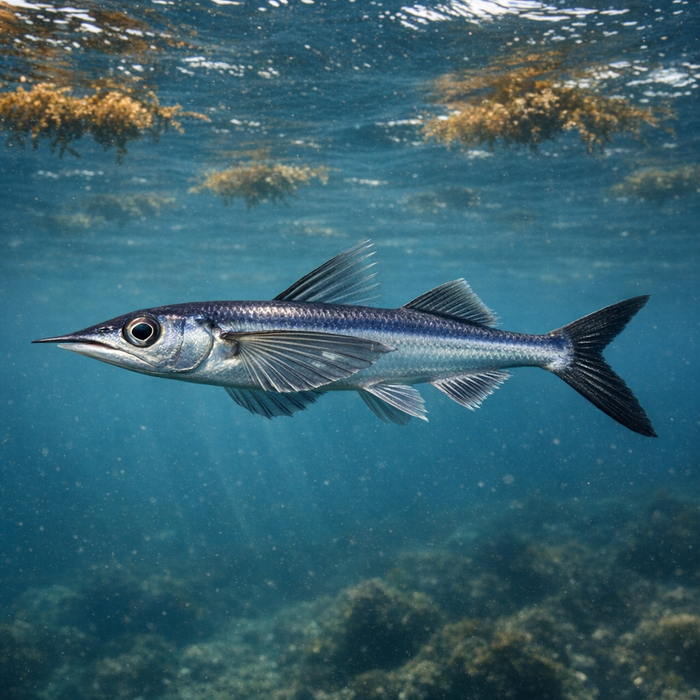
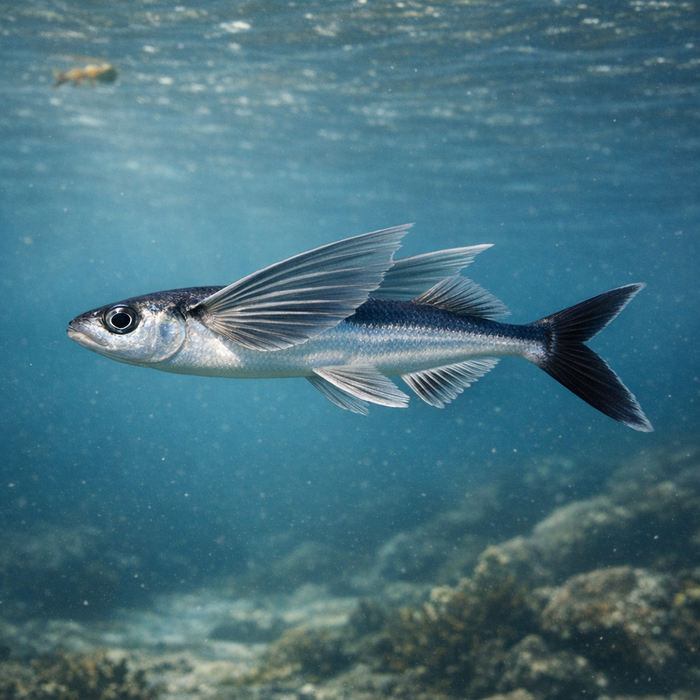
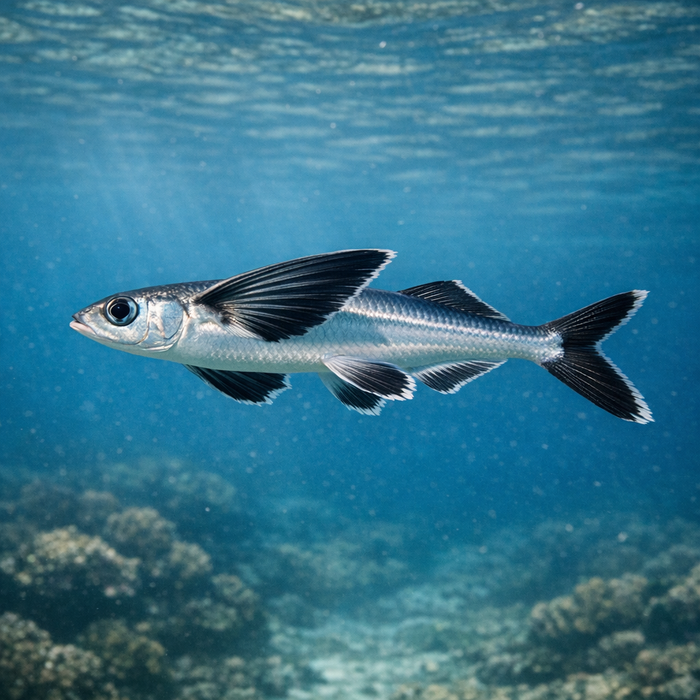
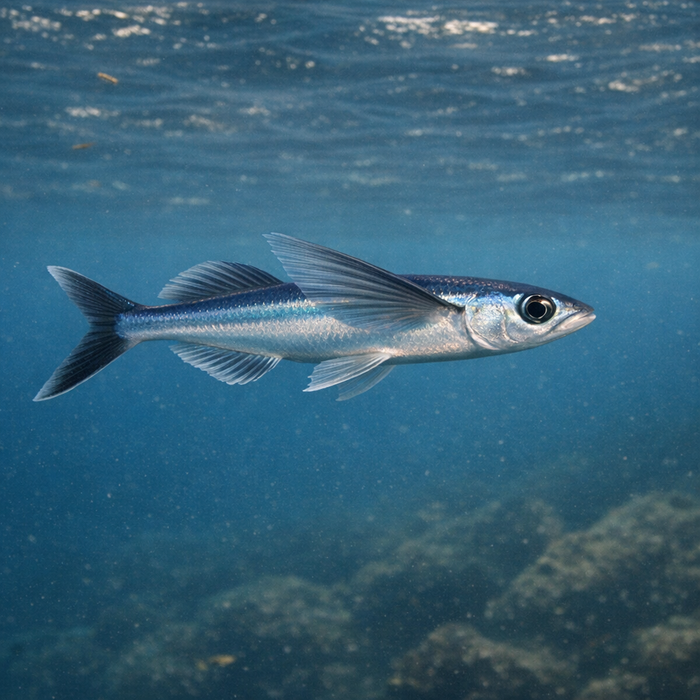
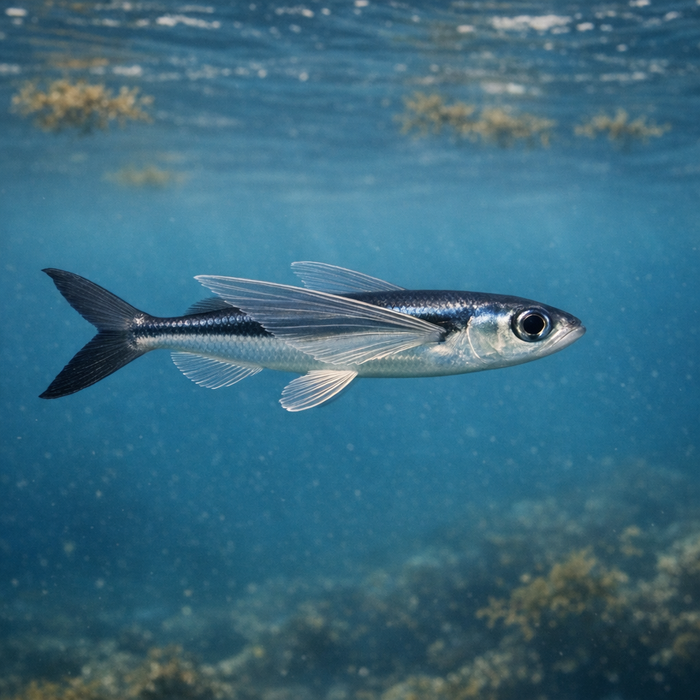
California Flyingfish (Cheilopogon californicus): The tiny torpedo that takes to the skiesIntroductionYou're not hallucinating. That silver flash really did sprout wings and glide across the chop. The California flyingfish is the ocean's most dramatic exit strategy wrapped in a hand-size package, a surface rocket that turns predator panic into hang time. It's not a traditional sportfish, but when you fish warm, glassy nights offshore and the lights go on, this species steals the show. If you're here for California flyingfish facts and a straight-talking breakdown, you're in the right place.What Makes the California flyingfish Unique?Start with the hardware. Cheilopogon californicus is a "four-wing" flyingfish, meaning both the pectoral and pelvic fins are oversized and spread wide to form two sets of airfoils. That extra surface area lets it hold a glide longer and steadier than the two-wing crowd. Power comes from the tail, especially the stretched lower lobe that slaps the surface like a prop, building speed before liftoff. Throw in eyes adapted for the glare and refraction circus at the air-water line, and you've got a surface specialist that sees trouble coming and leaves the scene at speed.Habitat & Global RangeThe California flyingfish works the eastern Pacific's warm tongue, especially the Southern California Bight, Baja's offshore lanes, and the Gulf of California. It's a classic pelagic drifter that lives at the skin of the sea, running with current lines, weed mats, and random flotsam. You'll meet it in blue water near the coast or way out over deep basins, usually in packs. When conditions align, warm intrusions push schools north, creating those magic summer nights off the West Coast. Curious about California flyingfish habitat? Think warm, clean surface layers, gentle seas, and anything that casts a thin line of shade.Behavior & TemperamentThis fish is built around one decision: bail out. When dorado, yellowfin, skipjack, or billfish blitz the top, flyingfish erupt in synchronized glides, clearing wave tops and sometimes relaunching from the next swell face. They school by day, tuck under shade or flotsam, and go opportunistic at night, when boat lights invent a new food chain. They're wary and shock-prone around hooks, notoriously soft-mouthed, and they'll happily crash-land into your cockpit when the spotlight scrambles their circuits. Anglers pick them off with tiny baits and micro rigs, but most folks use a dip net and call it a win.Ecological ImportanceThe California flyingfish is the conveyor belt moving small planktonic calories into big-game mouths. Everything fast with teeth eats them, from tuna and mahi to marlin and sea lions. Their eggs stick to drifting kelp and debris by hairlike tendrils, anchoring the next generation to the same offshore highways the adults patrol. Pull flyingfish from the system and the surface trophic party collapses; leave them in place and the pelagic food web hums along. They're also a signal species for anglers. Find dense flyingfish schools and you're usually orbiting the right neighborhood for predators.Conservation & Environmental PressuresGood news first: the species is generally listed as Least Concern, with no heavy directed fishery in most places. That said, this is a fish welded to the surface layer, which makes it vulnerable to environmental weirdness. Marine heatwaves, shifting currents, plastics that imitate floating habitat, and night lighting near industrial zones all play with the deck the California flyingfish depends on. Light commercial harvest for bait can spike locally, but it's the climate gearshifts and debris fields that pose the bigger long-game questions.The FishyAF TakeThe California flyingfish is a small fish with big personality. It's a bucket-list oddball for anglers who like collecting stories, not just fillets. Fish a warm, breathless night, flip on the lights, and watch the ocean invent wings. Most of the time, you'll catch them to feed something meaner, but don't underrate the challenge of a legit hook-and-line catch. Tiny hooks, featherweight drags, and nerves of silk. You'll lose some. You'll laugh more. And every time a dorado detonates under a cloud of flyingfish, you'll remember why you came offshore in the first place.