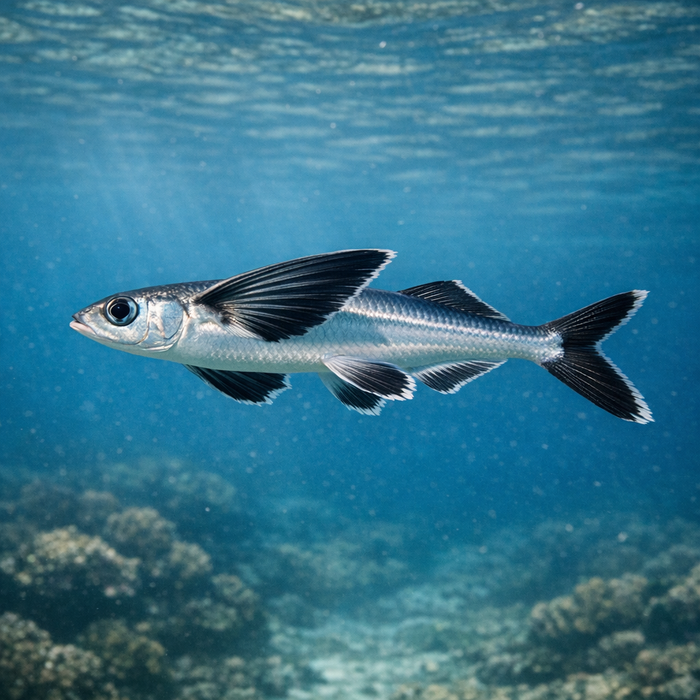
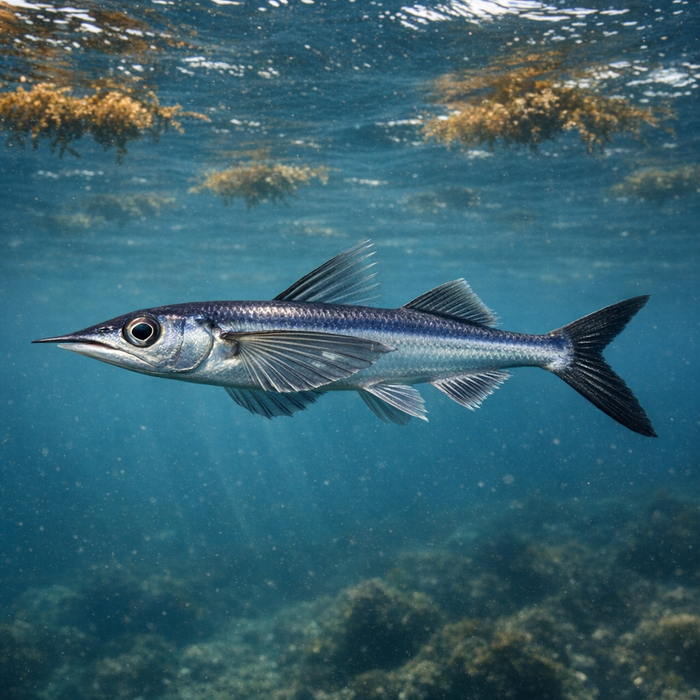
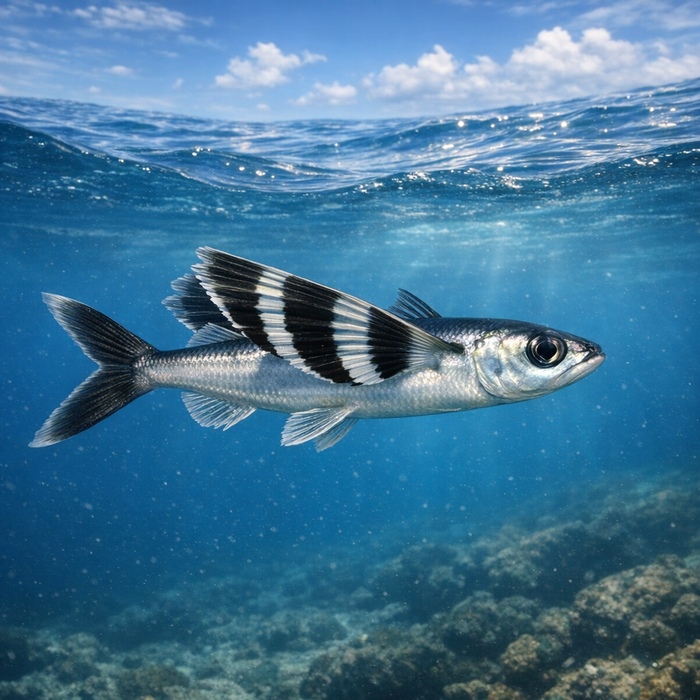
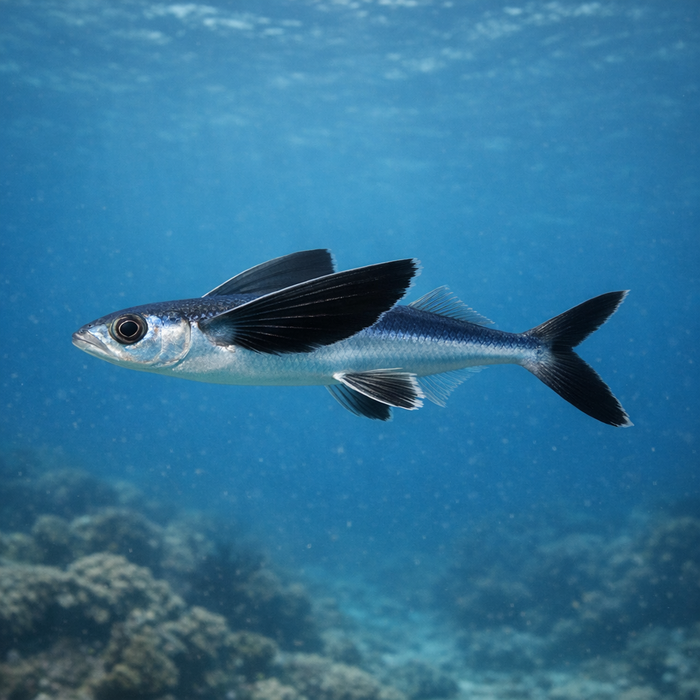
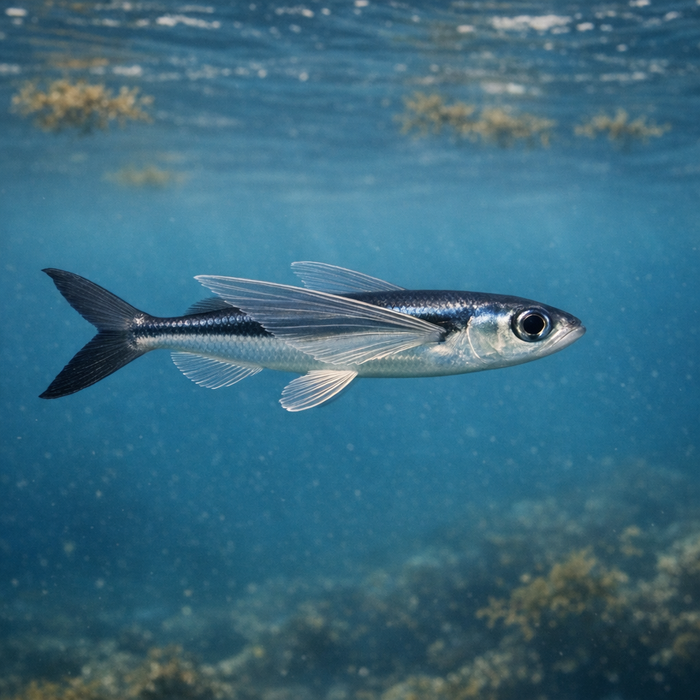
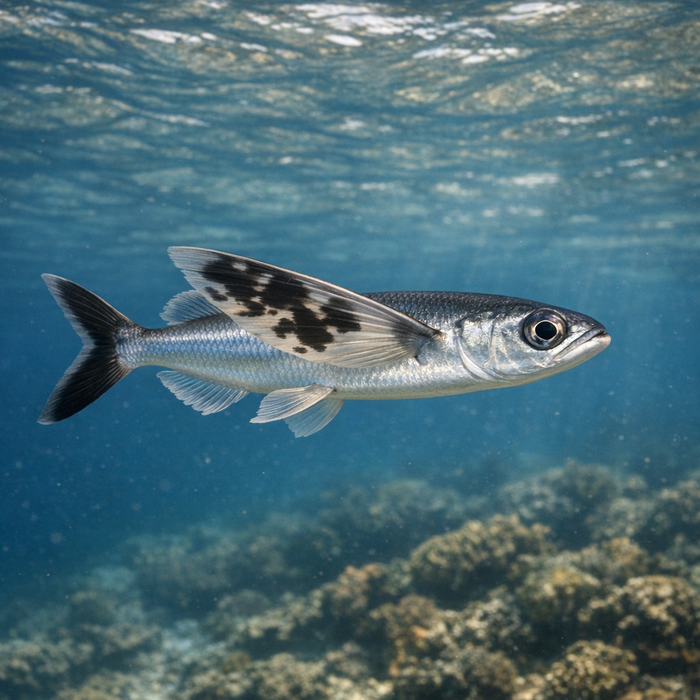
Atlantic Flyingfish (Cheilopogon melanurus): Surface acrobat with four wings and zero respect for wavesIntroductionThe Atlantic flyingfish is the little bluewater daredevil that turns calm nights into chaos by rocketing out of the water, banking on air, and sometimes dive-bombing your deck. It's bite-sized, fast, and built like a torpedo with wings. Most anglers meet it as live bait for mahi, tuna, or marlin, but the species has plenty of its own swagger. If you're collecting Atlantic flyingfish facts or chasing authentic offshore oddities, this one delivers.What Makes the Atlantic flyingfish Unique?Start with the wings. Cheilopogon melanurus is a classic four-wing flier: enlarged pectorals and pelvic fins that open like a biplane, giving real aerodynamic lift once it breaks the surface. That lower tail lobe acts like a water propeller during takeoff and midair relaunches, letting the fish extend glides well past a football field with the right wind angle. The species name melanurus means black-tailed, a nod to the dusky-edged caudal fin that helps separate it from lookalike cousins when you have it in hand.Habitat & Global RangeThink warm, blue, and alive with current. The Atlantic flyingfish haunts sargassum lines, rip edges, and color changes throughout tropical and subtropical parts of the Atlantic, including the Caribbean and Gulf Stream corridors. It's mostly epipelagic, hugging the top few meters where light, plankton, and predators collide. Weed mats are both buffet and bunker, concentrating microcrustaceans while offering cover from mahi, wahoo, and tuna. At night, these fish get bold around boat lights, oil platforms, and piers that create a floating oasis for plankton and the things that eat them. If you're interested in Atlantic flyingfish habitat, picture the surface of an endless highway where everything is either chasing or being chased.Behavior & TemperamentSkittish, yes. Helpless, no. The Atlantic flyingfish responds to pressure by exploding forward, tail-beating the surface at sprint speed, and launching clear of danger. Schools roam high in the water column, loosely tied to current features rather than hard structure. Feeding ramps up in low light and at night when the buffet is open and shadows make predators miss more often. They don't fight like gladiators on a line, but they're escape artists with soft mouths and frantic energy that tests tiny hooks and patient hands.Ecological ImportanceThis species is the neon sign that says dinner is served. It's a keystone prey item for pelagic predators that anglers adore. Take away the Atlantic flyingfish and you dim the lights for mahi and tuna action. Eggs have sticky filaments that attach to floating debris and sargassum, turning sea junk into nurseries. By vacuuming zooplankton and ferrying that energy up the food chain, they help power some of the most famous fisheries on Earth.Conservation & Environmental PressuresWhile not a headline conservation case, Atlantic flyingfish feel every change at the surface. Sargassum shifts, warming seas, and floating plastic all tweak where and how they spawn. Night lighting near coastlines can alter behavior, concentrating fish and reshuffling predation. They're harvested commercially in a few regions and used heavily as bait elsewhere, but overall pressure is modest compared to big pelagics. Data gaps are real, and species-level reporting often lumps multiple flyingfishes together, masking trends.The FishyAF TakeIs the Atlantic flyingfish a traditional sportfish? Not really. But it's the spark plug of offshore life and a gateway obsession for detail-nerd anglers. Targeting them on micro gear or with a long-handled dip net under lights will teach you more about current, plankton, and predator traffic than a dozen scattered tips. And if you're stockpiling Atlantic flyingfish facts for bragging rights, here's one more: the biplane design actually works. In a world of sensory-overload predators, this tiny aerialist literally takes the fight to the sky. Respect the wings, fish smarter around sargassum, and you'll fish better for everything that eats them-including the trophies you really came for.