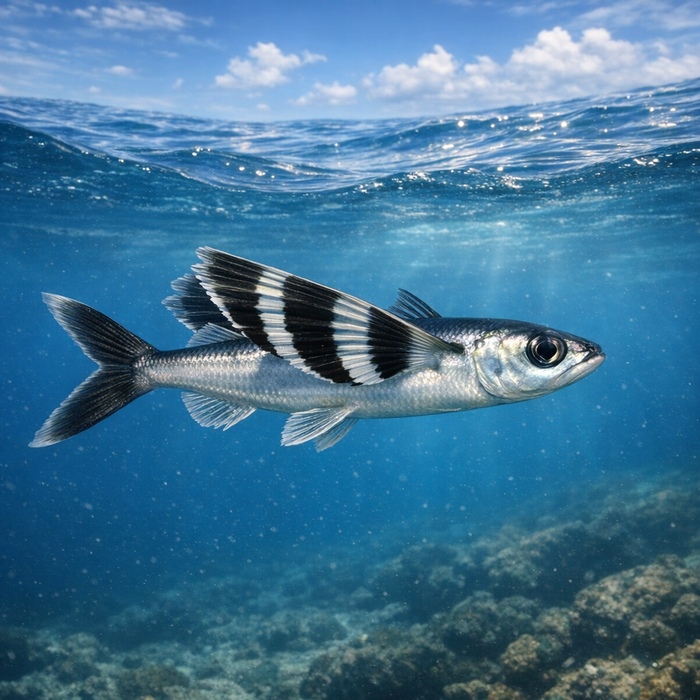
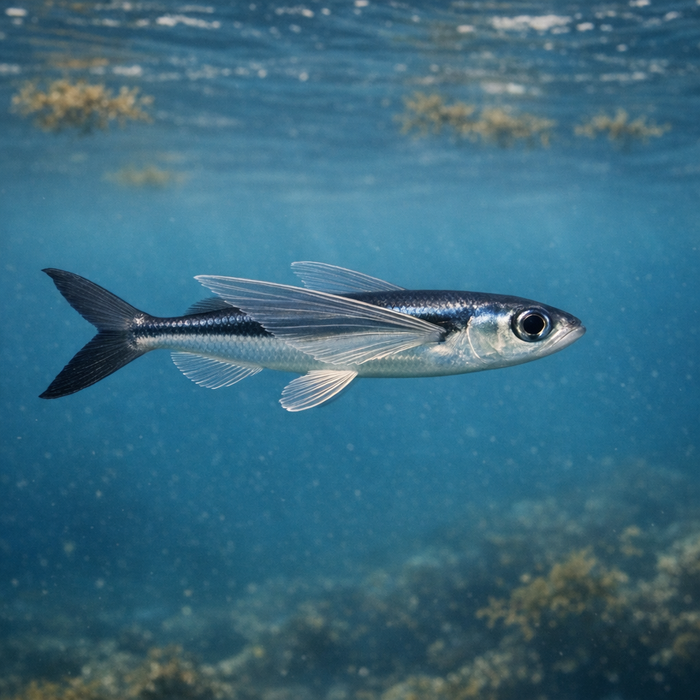
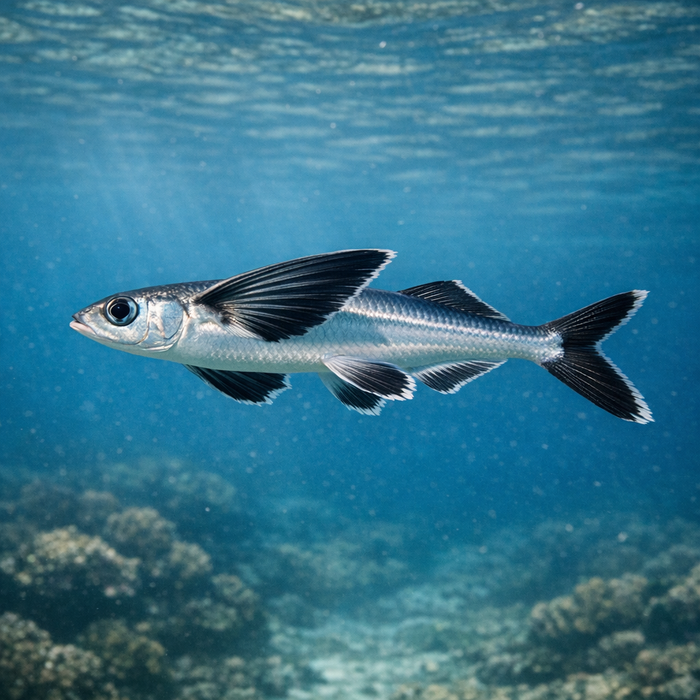
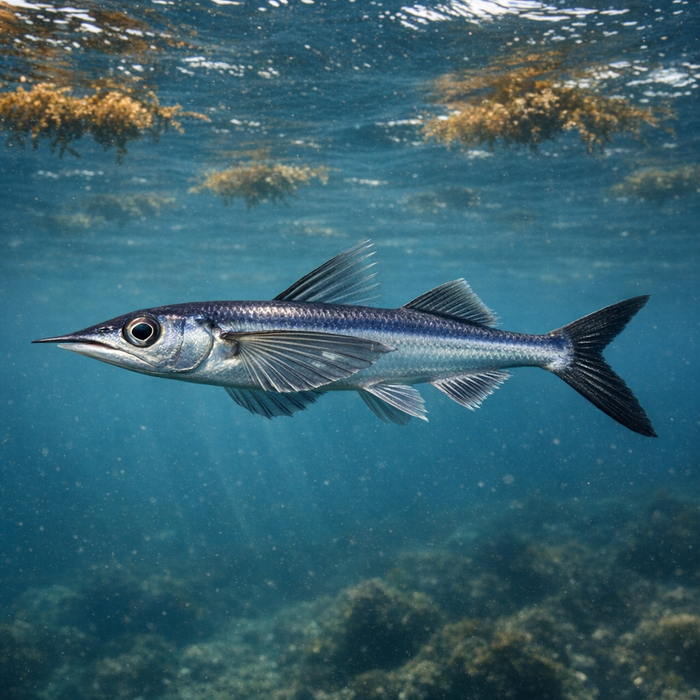
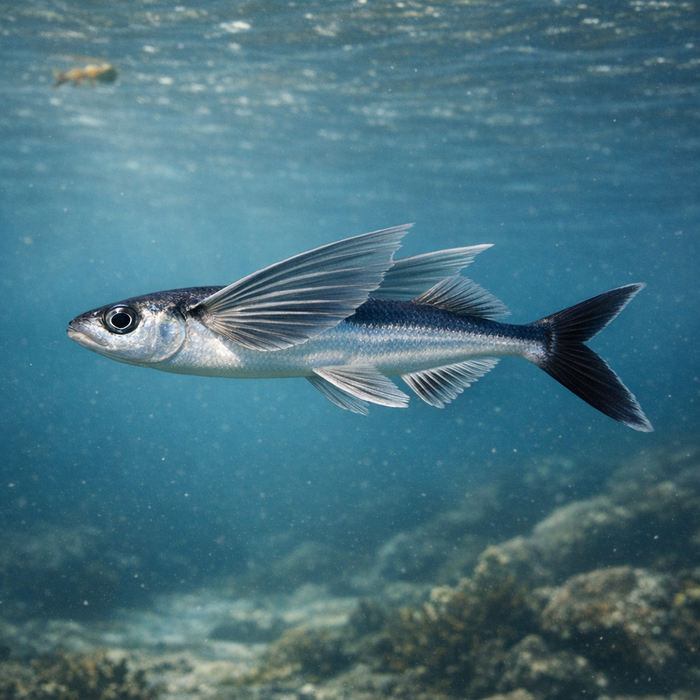
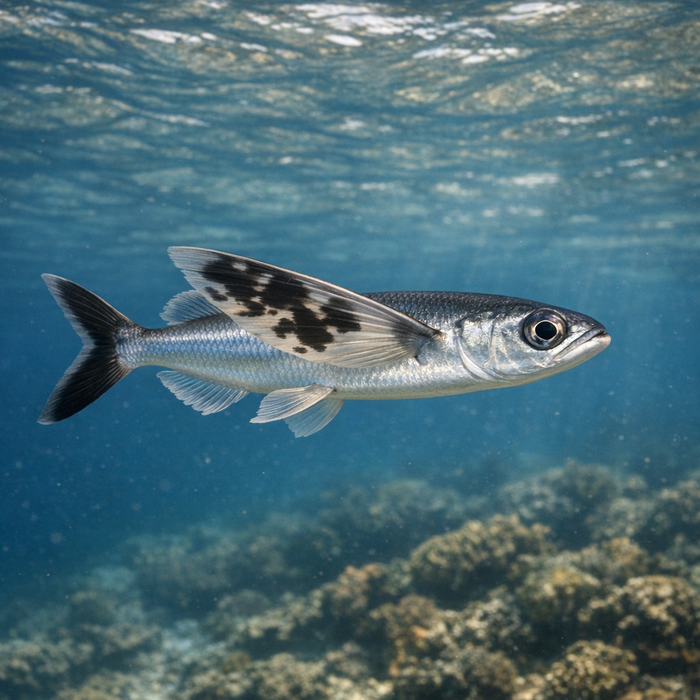
Black Wing Flyingfish (Hirundichthys rondeletii): Air With AttitudeIntroductionThe black wing flyingfish is the ocean's unbothered stunt pilot. One second it's a silver blur in the chop, the next it's airborne, banking on jet-black wings like a tiny sailplane. For anglers running offshore at night, this species is the surprise visitor that sometimes lands in the cockpit. For everyone else, it's a masterclass in speed, lift, and clever survival. If you're here hunting black wing flyingfish facts or scoping black wing flyingfish habitat, you're in the right wake.What Makes the Black wing flyingfish Unique?Two big things: wings and contrast. Unlike the four-wing fliers with oversized pelvics, Hirundichthys rondeletii is a two-wing specialist with long, dark pectorals that flash like ink when it launches. That sharp coloration isn't just for looks. Against moonlit skies, those pectorals can melt into the background, buying an extra heartbeat before a mahi or tuna recalculates its attack vector. The second trick is taxiing. Right before liftoff, the fish beats its tail against the surface to build speed, then pops out and rides ground effect over the waves. It's part physics, part panic button, and it works.Habitat & Global RangeThink warm epipelagic water, foam lines, and weed patches. The black wing flyingfish runs the open ocean's conveyor belts, tracking current edges, rips, and Sargassum mats where life piles up. You'll see its silhouette most often in the tropics and subtropics, especially around island arcs and along major current highways. While it strays near the continental shelf and even wanders close to shore during calm, warm spells, this species is most at home on the bluewater side of the world, where a slick can stretch for miles and the runway never ends. In short: the black wing flyingfish habitat is wherever the surface buffet meets speed and light.Behavior & TemperamentTimid, twitchy, and tuned to escape. Schooling behavior is common, and the group's first launch tends to trigger a cascade of glides. At night, bright lights can flip the script. The fish are both curious and overwhelmed by illumination, which is why they sometimes end up in boats. Hook-and-line takes are possible with micro gear and tiny hooks, but most encounters are visual: flashes over a swell, skitters beside the bow, then silence. There's no bulldog fight in this program. This species is built for instant acceleration, not prolonged battles.Ecological ImportanceThe black wing flyingfish is pelagic Velcro holding food webs together. It converts plankton and microcrustaceans into snack-sized protein that fuels mahi, wahoo, tunas, and billfish. Birds join the party too, timing dives with those skittery takeoffs. When Sargassum patches are healthy, black wings run the perimeter like track athletes, concentrating energy that ripples up the chain. For big-game anglers, seeing them airborne is like spotting arrows pointing to predators.Conservation & Environmental PressuresRight now, the species sits in the safe zone, but its neighborhood is volatile. Changes in currents, heat spikes, and drifting algae blooms can shuffle the deck on where and when schools stack up. Light pollution along coastlines doesn't help either, occasionally disorienting nightly movements. Commercial pressure is light to modest and mostly regional. The bigger vulnerability is habitat quality at the surface: plastics, film slicks, and degraded weedlines that no longer host the micro-life these fish ride and eat.The FishyAF TakeThe black wing flyingfish is not your standard "target" fish, but it's absolutely a target experience. If you run bluewater at night with serious lights, you're playing in its world. When those inky wings flare and a silver dart clears the wave tops, you're watching evolution clown on gravity. Call it bycatch, call it bait, or call it a living tell that predators are close. However you label it, the black wing flyingfish keeps offshore fishing weird, fast, and worth staying up for.