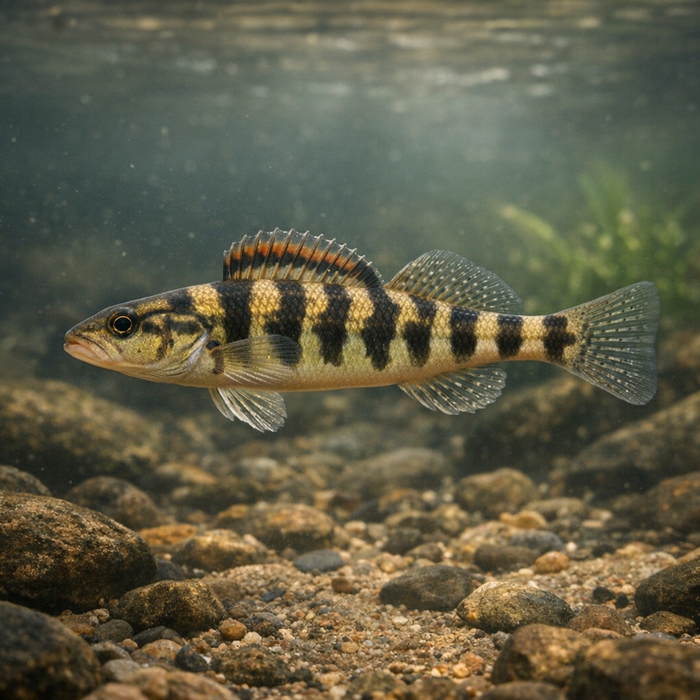
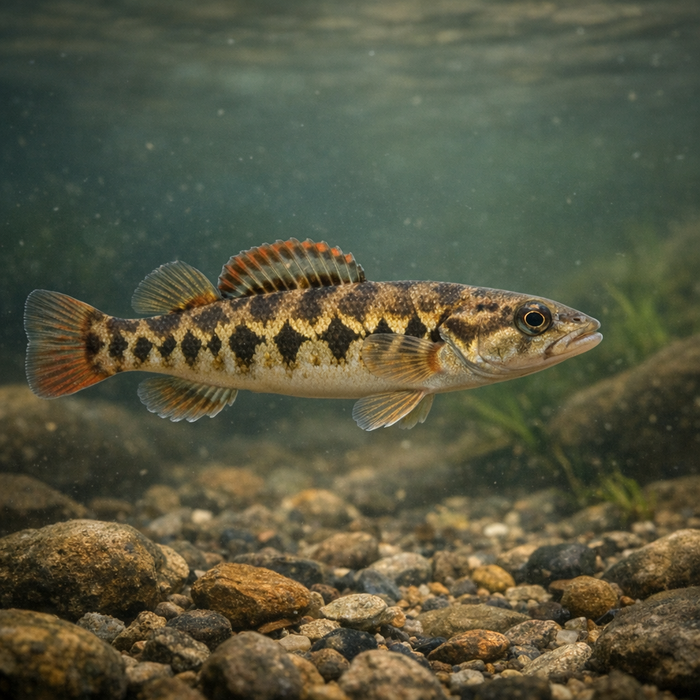
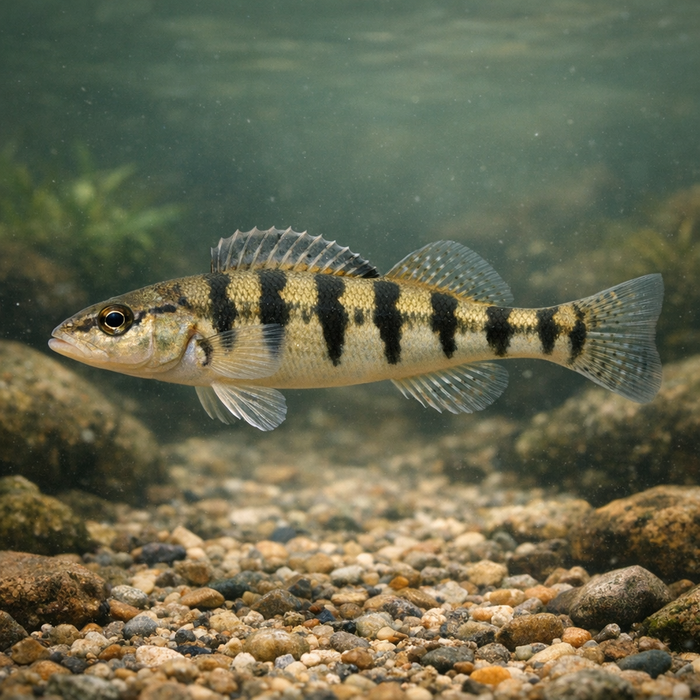
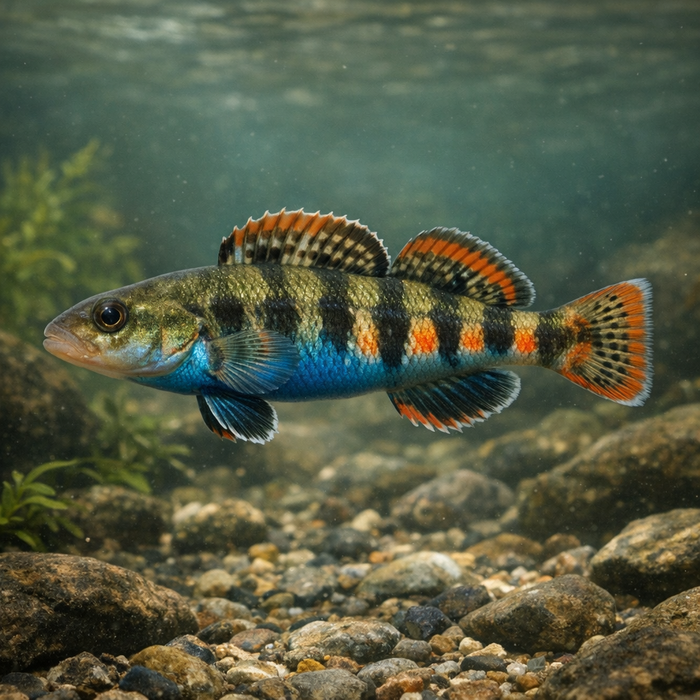
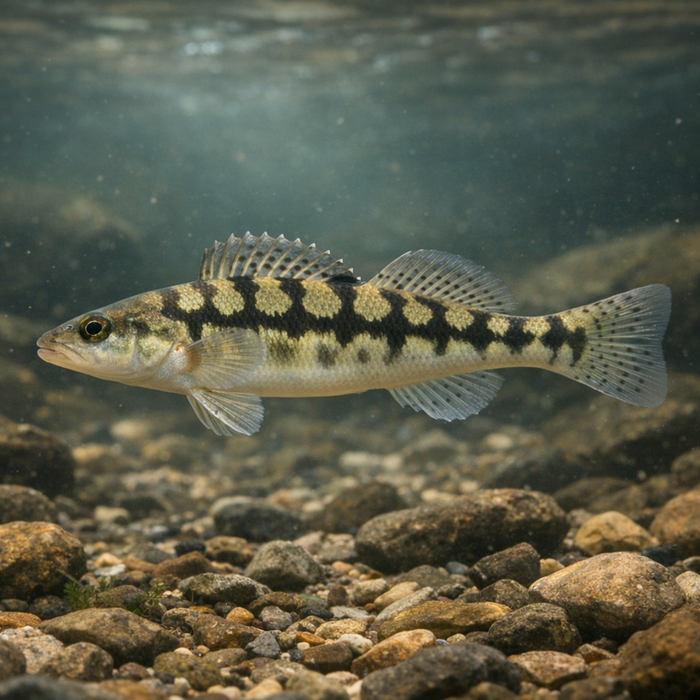
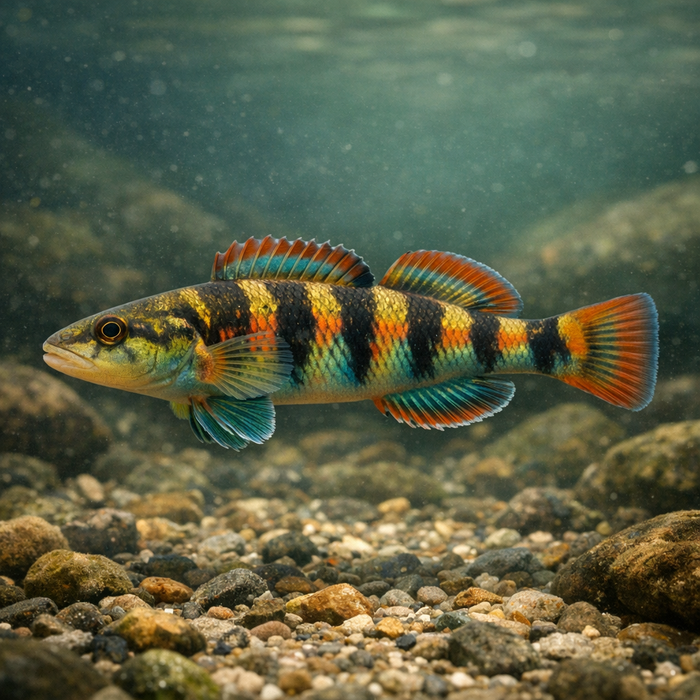
Slenderhead Darter (Percina phoxocephala): The Micro Torpedo Owning Fast WaterIntroductionMeet the river's pocket-sized gladiator. The slenderhead darter is tiny, twitchy, and built specifically for fast water. It doesn't cruise like a bass or glide like a trout. It clings and darts, turning riffles into its personal racetrack. For micro anglers and natural-history nerds alike, the slenderhead darter punches absurdly above its weight class. This overview packs real-world slenderhead darter facts without the sleepy textbook vibe.What Makes the Slenderhead darter Unique?Start with the head. True to its name, the slenderhead darter wears a long, sharp snout that pries opportunities from the gravel. It practically lacks a swim bladder, so instead of floating around like a cork, it locks to the bottom and moves in controlled bursts. Big, splayed pectorals act like brakes and stabilizers, letting the fish "stick" in current that would send minnows tumbling. During spring, males dial up their contrast with darker bars and crisper fin margins, looking like tiny riffle warriors guarding prime real estate.Habitat & Global RangeIf you want to grasp slenderhead darter habitat, think fast, clean, and rocky. This species thrives in clear to lightly stained rivers with firm gravel or small cobble riffles. It shows up across big swaths of the Mississippi and Ohio River drainages, plus some lower Great Lakes tributaries. The fish favors moderate to strong flow, low silt, and complex bottom texture that offers both camouflage and ambush slots. Micro shifts in depth matter; a seam six inches wide can be the whole game. Seasonal movements are modest, with fish hugging riffles and nearby runs and sliding around as flows and temperatures change.Behavior & TemperamentThe slenderhead darter isn't a cruiser; it's a sprinter. It holds tight to bottom, then rockets a few inches to nab drifting insect larvae. Those bursts are surgical, not reckless. It rarely leaves the substrate, and surface feeding is practically nonexistent. Aggression is low, wariness is medium, and feeding windows can be short but predictable around stable flows. When spooked, it freezes against stone like a gravel-colored sticker instead of bolting across open water.Ecological ImportanceSmall doesn't mean small-time. The slenderhead darter is a clean-water barometer that tells you if a river's riffles are working. It mows through benthic invertebrates and in turn feeds larger predators. By being locked into gravel-cobble habitat, it helps convert drifting insect production into fish biomass right where that energy enters the food web. Lose the gravel, choke the riffles with silt, and you lose a lot more than one tiny fish.Conservation & Environmental PressuresOverall, the slenderhead darter is doing fine where rivers keep their pulse: firm substrate, clear flow, and intact banks. The villains are predictable. Excessive sediment buries the interstitial spaces darters need to forage and spawn. Poorly timed dewatering or extreme flow swings strand fish or strip riffles of their insect supply. Pollution loads knock back the macroinvertebrates these fish rely on. Because the slenderhead darter telegraphs riffle health, declines often point to bigger watershed issues. Protecting gravel beds and keeping fine sediment out of the system are the non-negotiables.The FishyAF TakeThe slenderhead darter is the fish version of a rally car: small, twitchy, and absolutely glued to the track. Anglers who shrug at micros are missing one of freshwater's best technical puzzles. You learn current, micro-structure, and precision presentations fast, or you learn nothing at all. Catching one doesn't fill a cooler, but it will sharpen your game for every other species that uses current. When a river is honest and the riffles are clean, the slenderhead darter is there doing its thing, turning chaos into control. That's the kind of river truth we can get behind. If you came here for quick-hit Slenderhead darter habitat notes and a few sharp edges of behavior, great. Now go find a clean riffle, respect the tiny torpedo, and keep your presentations measured in inches, not feet.