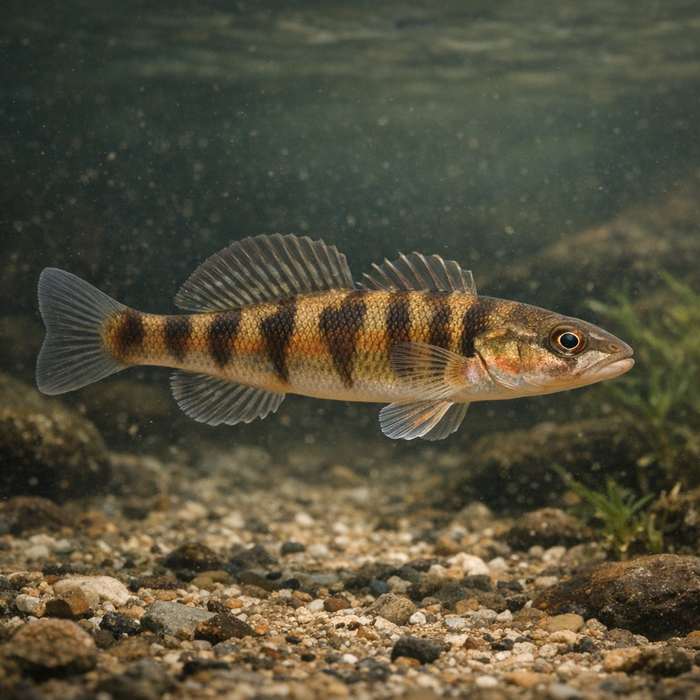
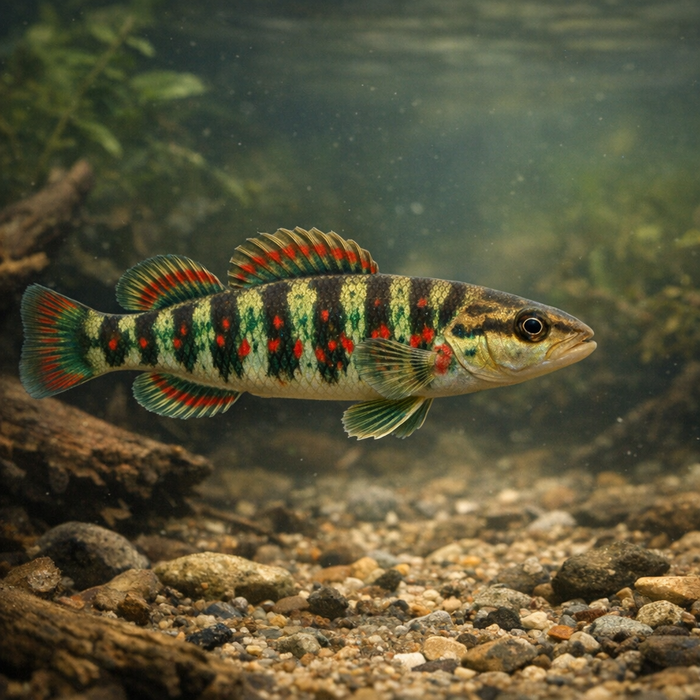
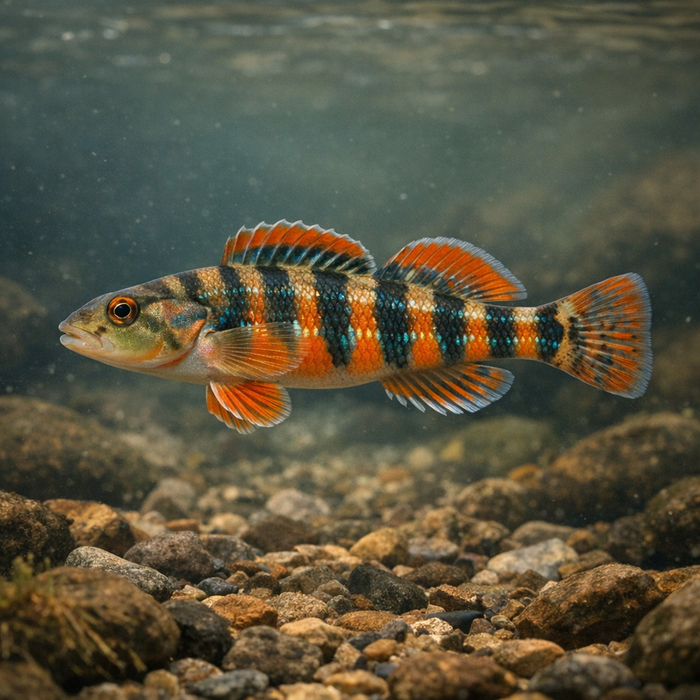
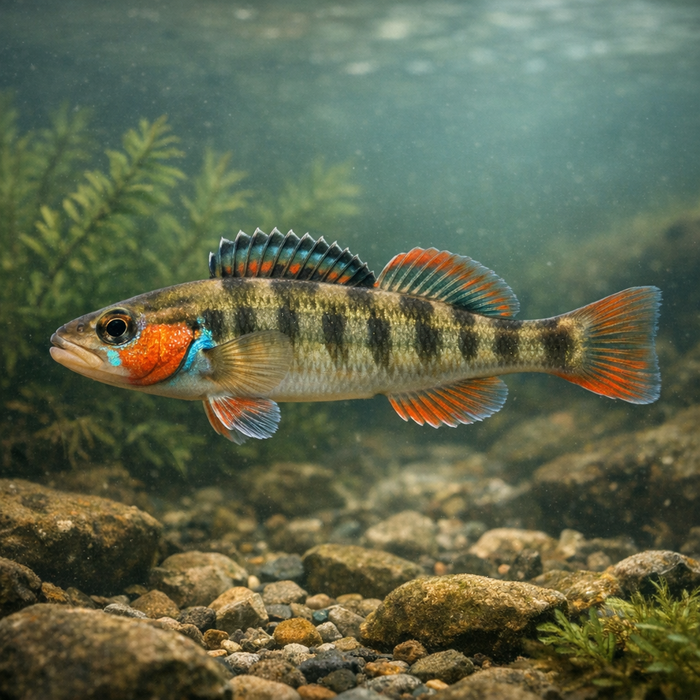
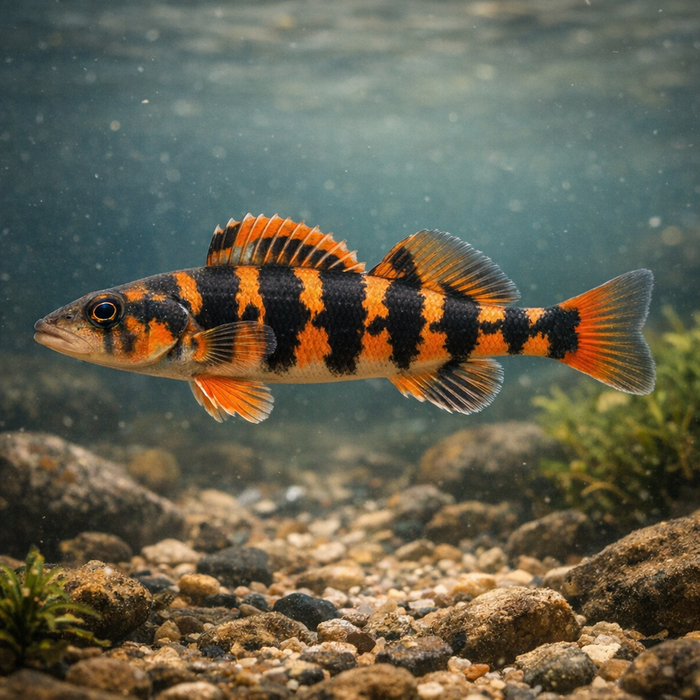
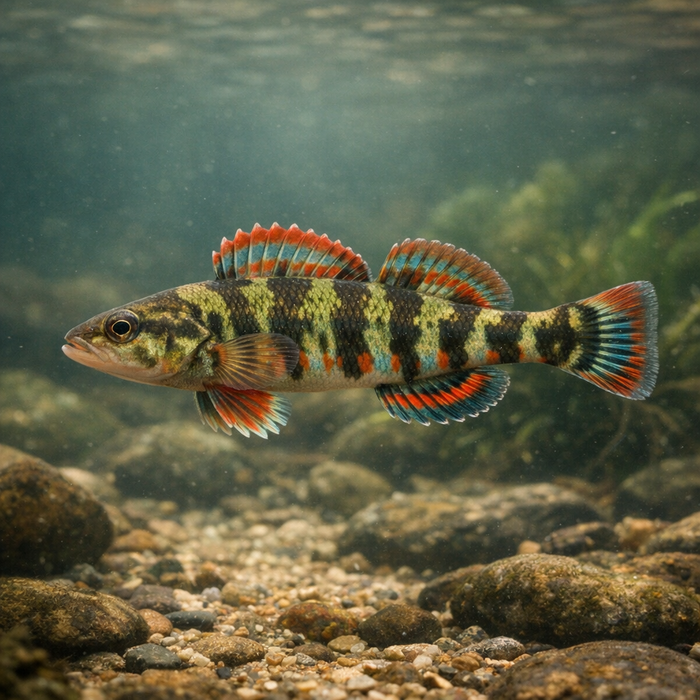
Smallscale darter (Nothonotus microlepidus): A Bold, Memorable Hook LineIntroductionThe smallscale darter is proof that not all targets have to be big to be addictive. This tiny riffle ninja glues itself to fast water, flashes shockingly bright breeding colors, and dares you to thread a hook smaller than a grain of rice. For microfishing diehards, the smallscale darter is a trophy scaled to pocket water. For the rest of us, it's a reminder that precision and stealth can be just as satisfying as horsepower.What Makes the Smallscale darter Unique?Start with the name: microlepidus, meaning tiny scales. The smallscale darter really is a fine-scaled marvel, built for life pinned to current. It sports a reduced swim bladder that keeps it from bobbing up when the water cranks, letting it scoot over rock like it's got traction. Males in spawning dress go full art project, flashing electric blue bars, orange-edged dorsal fins, and a crisp, contrasty pattern that looks airbrushed. And unlike the rovers you're used to chasing, the smallscale darter doesn't migrate far. It stakes out prime riffles and defends sections of clean rock, especially during the spring show.Habitat & Global RangeIf you're hunting smallscale darter habitat, think clear, cool, oxygenated streams with bedrock shelves, cobble, and gravel. Riffles and fast runs are the home address, especially where current concentrates insect drift. Depth is often ankle to knee deep, and the water is usually transparent enough to see every scale. The species' natural distribution is limited to upland drainages of the Southeast, which keeps it under the radar unless you fish those waters with intent. "Smallscale darter habitat" searches will all point you to the same story: small water, firm substrate, and honest flow. It's a niche fish in a niche environment, which is exactly why micro anglers obsess over it.Behavior & TemperamentThe smallscale darter is a bottom sitter, more sprinter than cruiser. It perches on broad pectoral fins and makes quick, inches-long lunges to grab drifting invertebrates. During the spawn, males carve out tiny territories, posture with a raised first dorsal, and guard eggs glued to the undersides of flat rocks. It's not a brawler on the line, but it is hyper alert. Shadows, heavy footfalls, and sloppy drifts push it under cover in a blink. The best windows are when light softens and insect traffic picks up. This isn't power fishing. It's chess in kneepads.Ecological ImportanceFor such a small predator, the smallscale darter punches above its weight. It trims back prolific insect larvae, converts that biomass into fish flesh, and then pays it forward as forage for larger stream fish. Because it needs clean, well-oxygenated riffles, its presence is a thumbs-up for water quality. When smallscale darter numbers slide, biologists start poking at sediment, nutrient loads, and flow regimes. In short, this fish is a canary with gills for highland streams.Conservation & Environmental PressuresThe smallscale darter's narrow tastes make it vulnerable to the usual suspects: siltation from poor land practices, warm pulses from deforestation, low flows during drought, and water grabs that flatten natural variability. Add in barriers that chop up riffle habitat and you've got a recipe for local trouble. Angling pressure is not the issue; habitat is. If you want more smallscale darter facts, start with stream protection. Keep the water clear, the banks vegetated, and the rock clean, and these fish will do the rest.The FishyAF TakeThe smallscale darter is the antithesis of hype. No screaming drag, no hero shots, just precision and presence. It asks you to slow down, crouch low, and nail a drift the size of a credit card. That's not a compromise. That's a flex. If you've never targeted a fish this small on purpose, you're leaving skill on the table. The smallscale darter rewards those who bring tweezers, patience, and a sense of humor. Get your feet wet in a fast riffle, and you'll understand why microfishing isn't a fad. It's a recalibration of what makes fishing great.