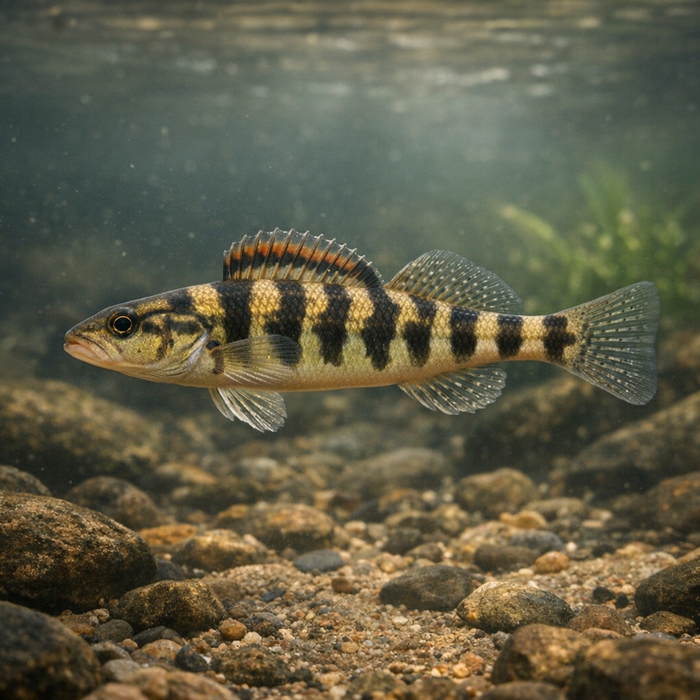
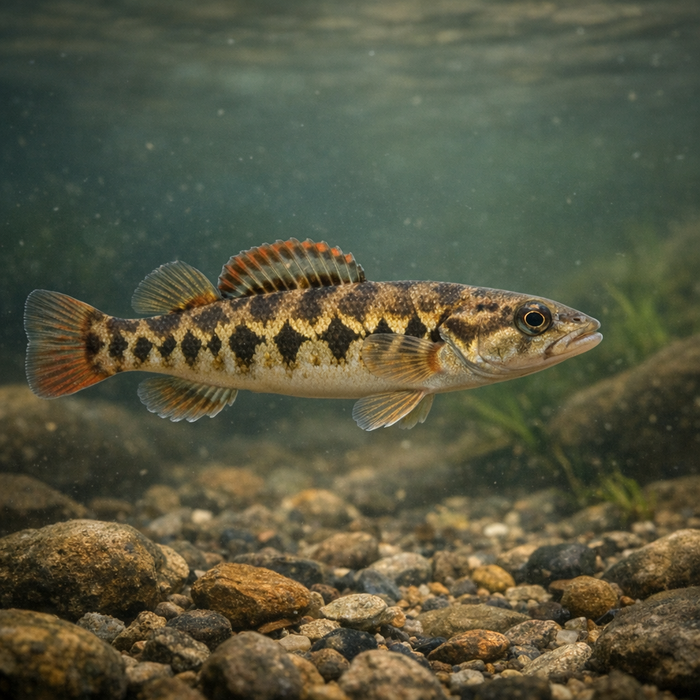
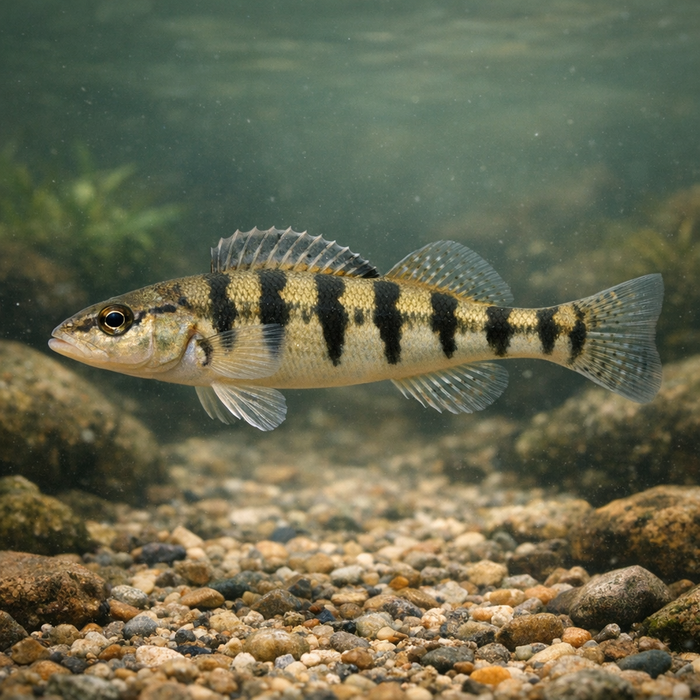
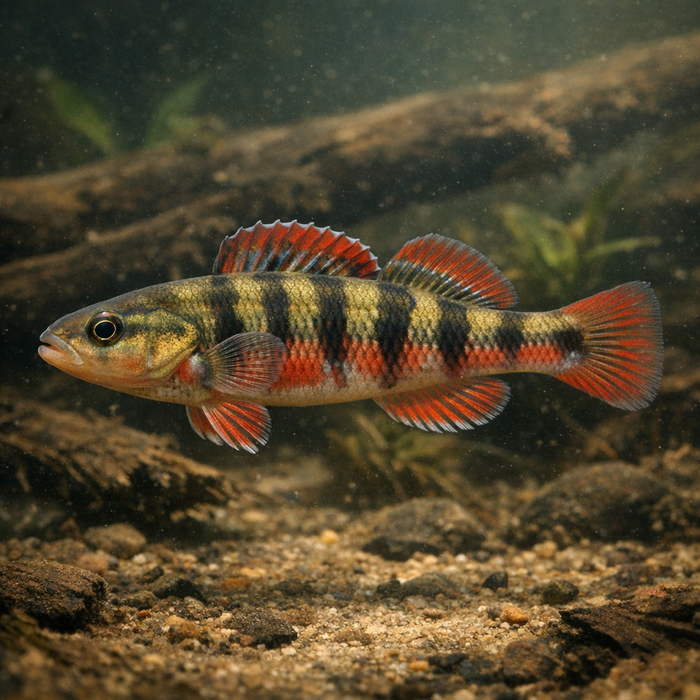
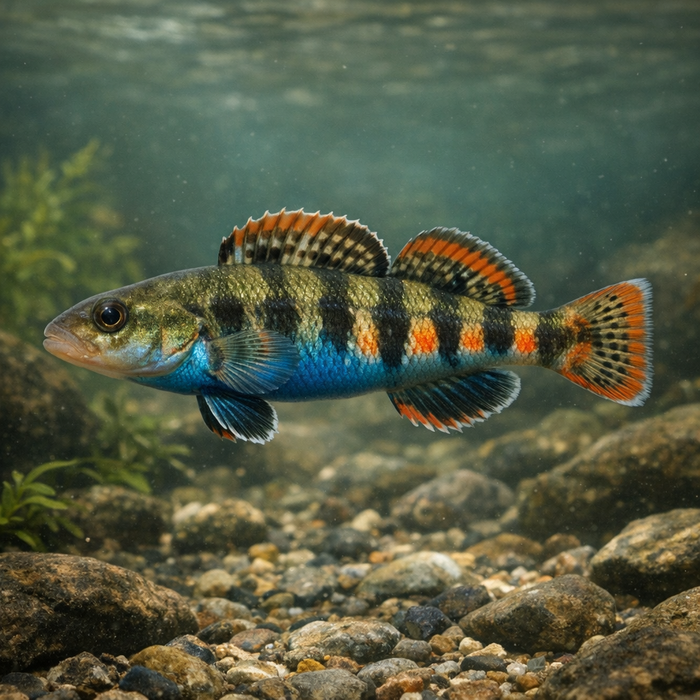
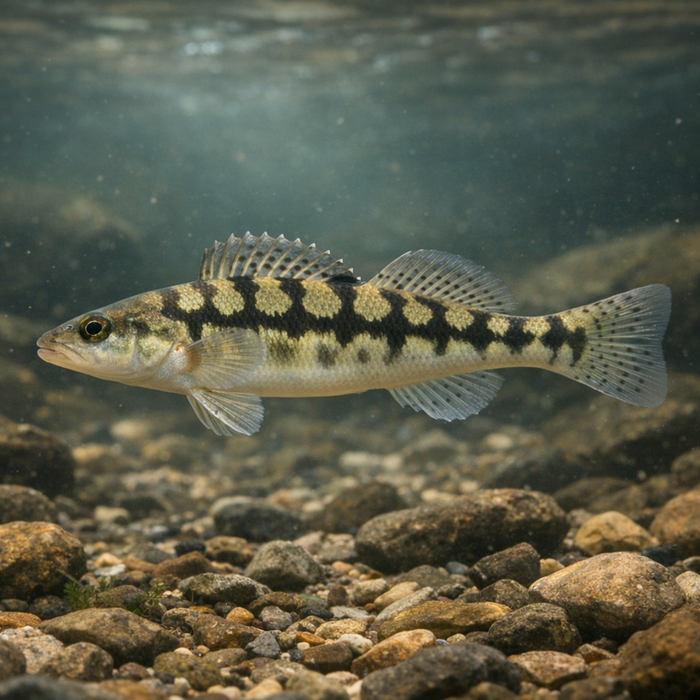
Southern Sand Darter (Ammocrypta meridiana): Sand-slipping phantom with a serious current habitIntroductionThe Southern sand darter is the kind of fish that makes you rethink what a "catch" looks like. It doesn't smash topwater. It won't burn drag. Instead, it simply disappears. One second it's a pale streak hugging the bottom; the next, it's buried in sugar-fine sand with only its eyes peeking out like tiny periscopes. For anglers who chase life lists or just love a challenge that demands finesse, the Southern sand darter delivers in spades.What Makes the Southern sand darter Unique?Two things: shape and stealth. Slender and nearly translucent, this darter is built like a living sand grain. A reduced swim bladder keeps it pinned to bottom even when current pushes hard, and that helps it hold tight to lanes of clean, well-sorted sand. Then there's the vanishing act. The Southern sand darter doesn't run to cover; it becomes the cover, slipping under the substrate in a blink. Those tricks, along with high-set eyes, make this little predator extremely good at being invisible until it's not. If you're looking for honest Southern sand darter facts, start there: it wins by not being seen.Habitat & Global RangeWhen people ask about Southern sand darter habitat, keep it simple: clean, sandy runs in clear, flowing water across parts of the Gulf Coastal Plain in the southeastern United States. It keys on stretches where the sand is fine and well sorted, not packed with silt or choked by algae. Think straightened runs between riffles, the tails of sandbars, and shallow lanes with steady, laminar flow. Even slight turbidity or siltation can push this fish out. The range is regionally limited, and within that footprint the species is patchy-common where conditions are right, absent when they're not.Behavior & TemperamentThis is a bottom-hugger through and through. It tracks along the substrate in jittery bursts, then freezes, then buries. The posture is classic darter: fins flared, eyes up, body anchored. It feeds low and quiet, taking tiny invertebrates swept along the sand. It's not skittish in the panicky sense; it's skittish like a stage magician-now you see it, now you don't. Handle with care if you even get that far. Most encounters end with a quick slip back into the grains.Ecological ImportanceThe Southern sand darter is a small fish with a big job. By keying on clean, mobile sand, it acts as a bellwether for sediment health and flow stability. Where it persists, you usually have well-oxygenated runs, intact riparian cover upstream, and a flow regime that still sorts sand properly. Where it fades, you often have silt, bank erosion, or nutrient-driven muck. And as a pint-sized predator, it helps convert drifting invertebrates into fish biomass that other species can eventually use.Conservation & Environmental PressuresNo need to dramatize: the threats are simple and real. Siltation from poor land use buries its world. Dams and channel alterations flatten current or trap sediment in the wrong places. Excess nutrients glue sand together with algae and gunk. Because the Southern sand darter is already a specialist with a limited range, local disruptions can have outsized effects. Protection doesn't require moon shots; it requires clean water, stable flows, and sand that moves and breathes.The FishyAF TakeThe Southern sand darter is not a numbers game. It's a precision hunt you do with your eyes, your patience, and a willingness to celebrate small victories. For anglers who love microfishing or want to expand the playbook, this fish is a lesson in restraint and reading water. Catch one cleanly, document it, and you'll understand why a two-inch fish can feel like a trophy. When your target literally becomes the riverbed, the win is finding it at all. That's the Southern sand darter in a nutshell-quiet, exacting, and way cooler than its size suggests.