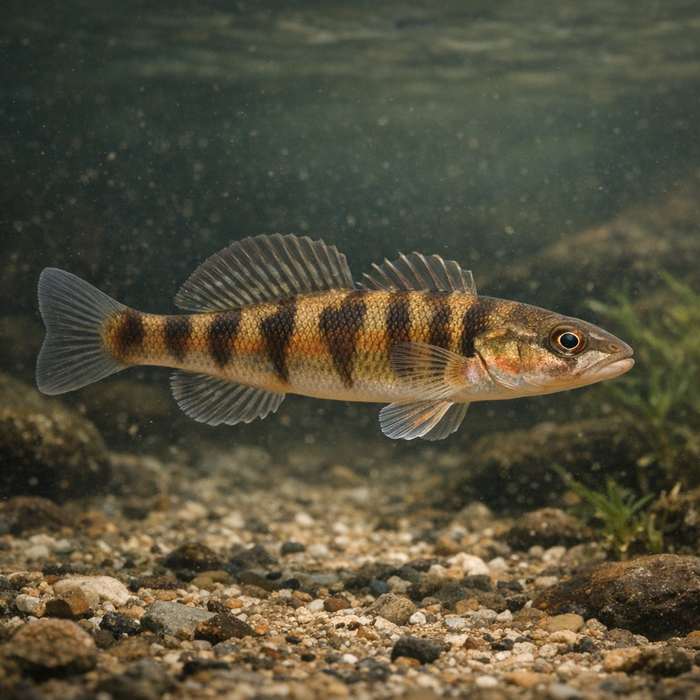
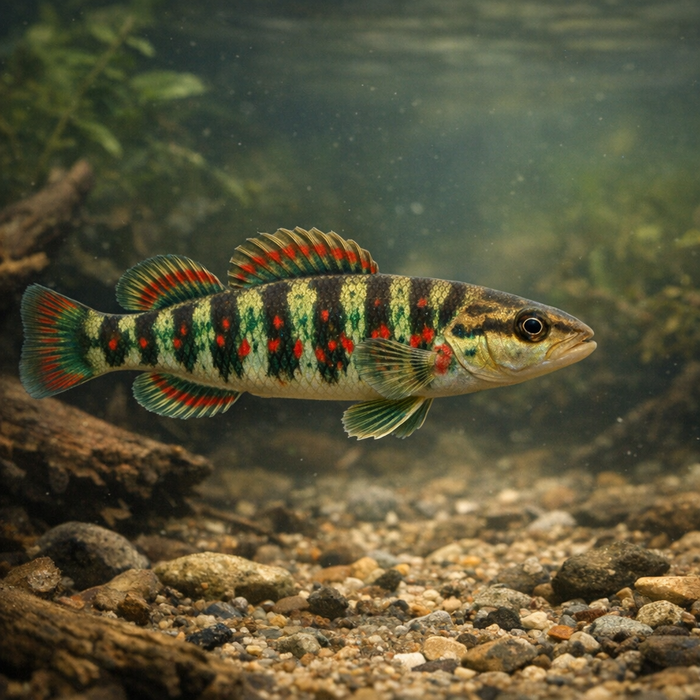
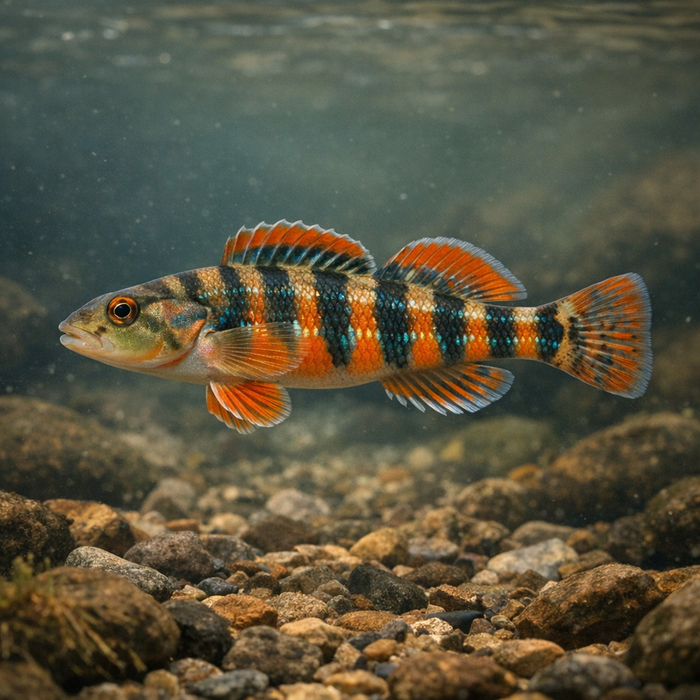
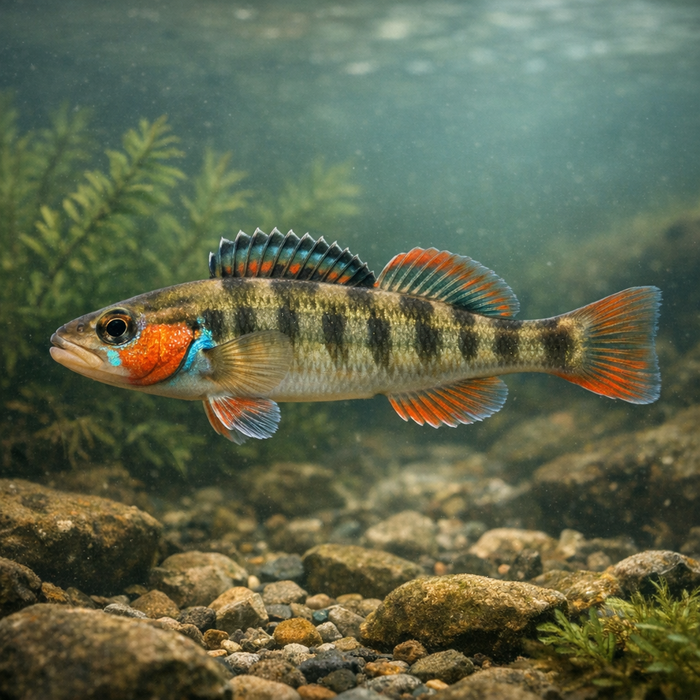
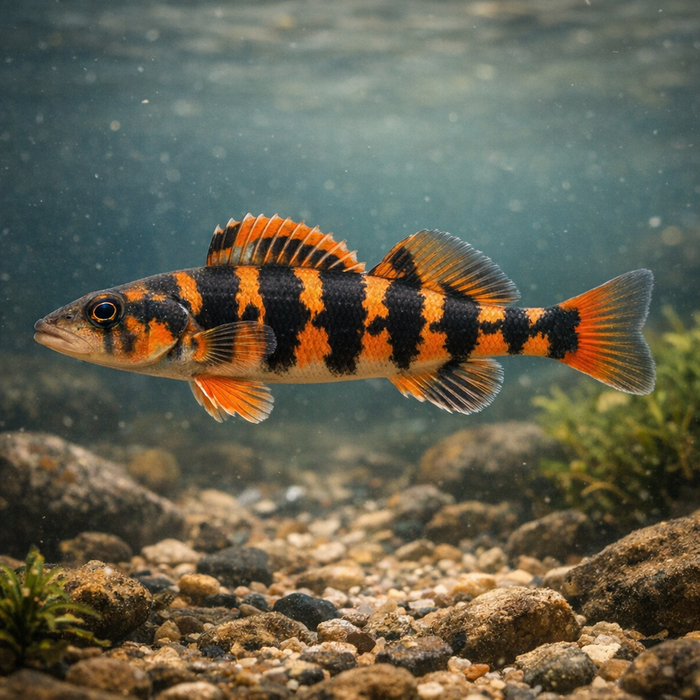
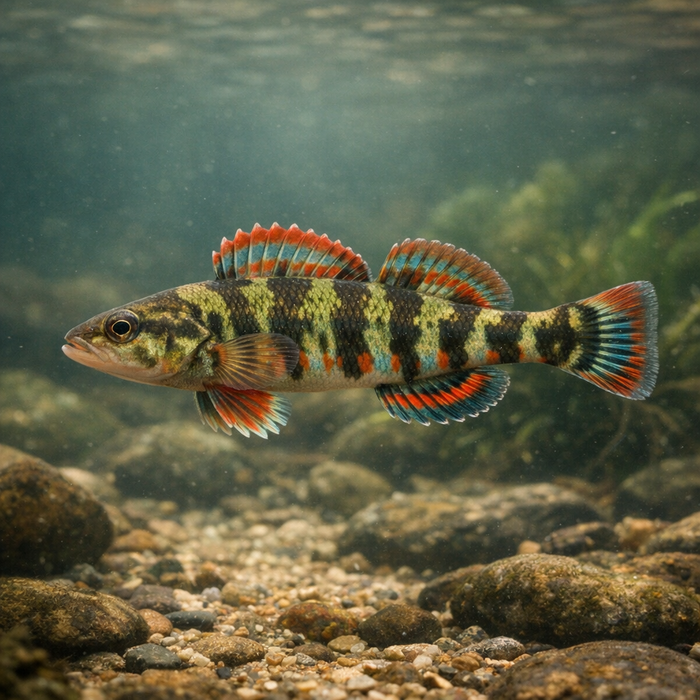
Spangled Darter (Etheostoma obama): Neon Riffling On A Pebble RunIntroductionIf you think tiny fish can't bring big personality, the spangled darter begs to differ. This riffle rocket is a pocket-sized showpiece, flashing electric blues and oranges as it perches on gravel like a tiny fighter jet. For anglers who love creeping creeks and solving micro-puzzles, the spangled darter is pure dopamine: quick bursts, tiny targets, and colors that look airbrushed.What Makes the Spangled darter Unique?Two things: swagger and paint job. The spangled darter male flips a switch in breeding season, lighting up with blue spangles and orange bars that seem unreal in shallow water. And unlike cruisers that roam midwater, this fish owns the bottom. It braces on broad pectoral fins, hugging current and darting a few inches at a time. When you finally see one in full color, it's like someone dropped a tropical fish in a Tennessee riffle. Those are the Spangled darter facts that hook people for life.Habitat & Global RangeLet's talk spangled darter habitat. This species is a riffle specialist, favoring clear, cool streams with moderate to fast current. Think ankle-to-knee-deep water slipping over clean gravel and cobble, punctuated by small pockets and micro-eddies. The fish sits low, using stones as windbreaks and launching at invertebrates washing downstream. Turbid floods and silted runs are a hard pass; it wants clean flow, oxygen, and stable substrate. The broader family story tracks the southeastern U.S. creek belt, with the spangled darter tied to high-quality tributaries in the Tennessee River system. If you're hearing riffle chatter and feeling cobble under your boots, you're in the neighborhood.Behavior & TemperamentThe spangled darter is a sight-feeder with a short fuse and a shorter commute. It doesn't wander far, choosing high-perch stones and ambushing within inches. Males carve tiny territories in spring, flashing spangles and posturing with shivers and sidesteps to impress females and shove rivals. It's not aggressive like a bass; think surgical strikes. Spook one, and it won't bolt a hundred yards-it just vanishes behind the nearest stone and plays statue. The fish is most animated when current is steady and visibility is good, and it often positions in shallow heads of riffles where drift concentrates.Ecological ImportanceCreek jewelry aside, the spangled darter punches above its weight ecologically. As a bottom-hugging insect hunter, it helps regulate aquatic insect communities and transfers energy up the food web to larger fishes and wading birds. Because it's picky about clean, well-oxygenated flow over stable gravel, its presence signals a healthy stream. Lose the riffles to silt, channelization, or chronically low flows, and darters go missing fast-an early warning siren for watershed health.Conservation & Environmental PressuresThis fish thrives where the water runs clean and the stones stay put. That makes it vulnerable to sediment from poorly managed construction, bank erosion, and row-crop runoff. Low-head dams and culverts fragment riffles, stranding populations. Drought and water withdrawals flatten flows. Even if the spangled darter isn't formally listed across its range, its real status is "only as safe as the next storm drain." Local protection of riparian buffers, smarter culvert designs, and flow-friendly management keep these micro legends on their stones.The FishyAF TakeThe spangled darter is not a grip-and-grin heavyweight. It's a scalpel species. Anglers who slow down, read micro-current, and appreciate neon on pebbles will get it instantly. Pack ultralight gear, tiny hooks, and the patience to kneel in cold water while your buddy wonders what planet you're from. When a male lights up in spring, you'll understand why people name species after presidents. Small fish, big vibe. And that's exactly why this creek jewel belongs in your mental tacklebox as the most charismatic two inches in freshwater.