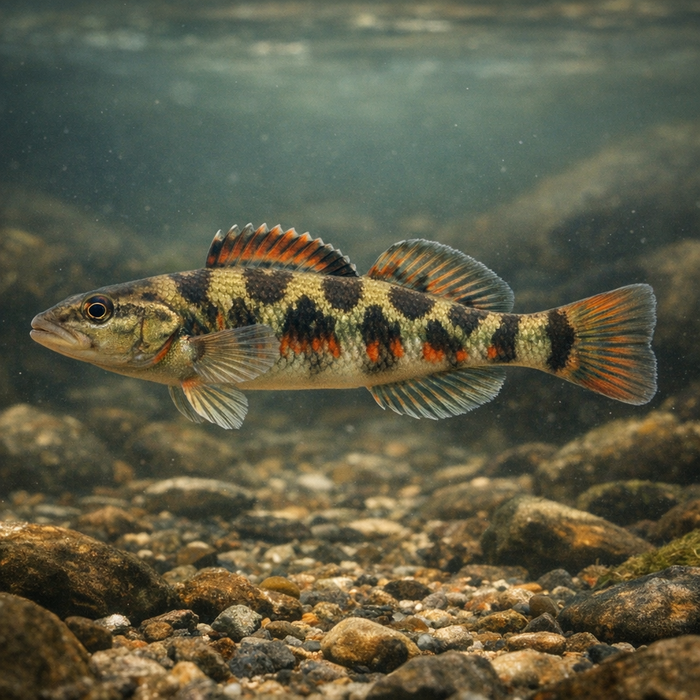
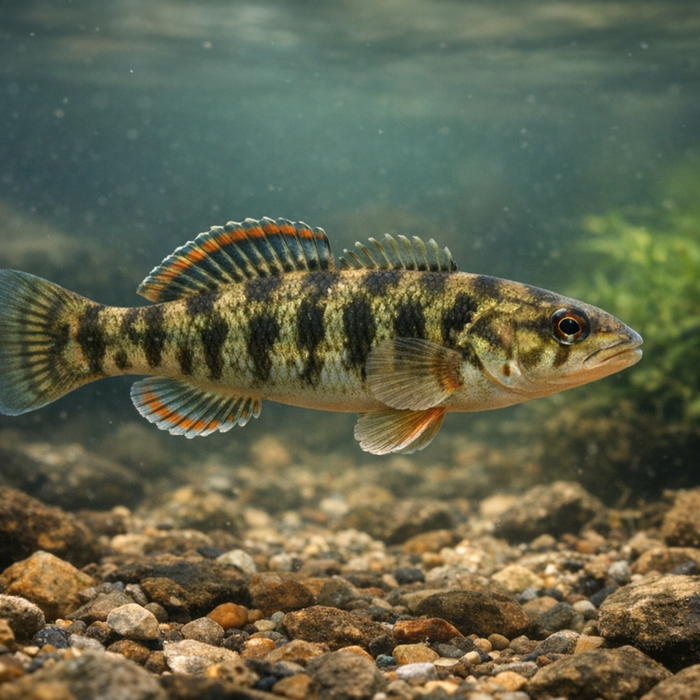
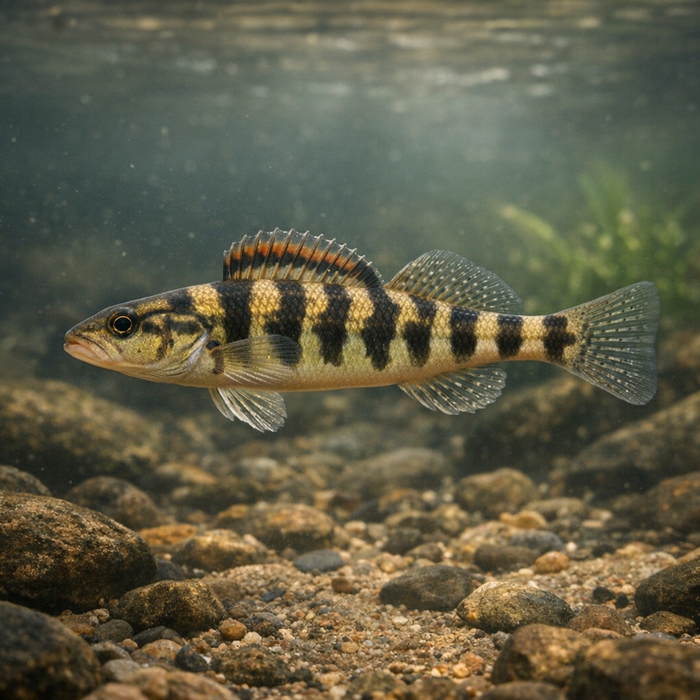
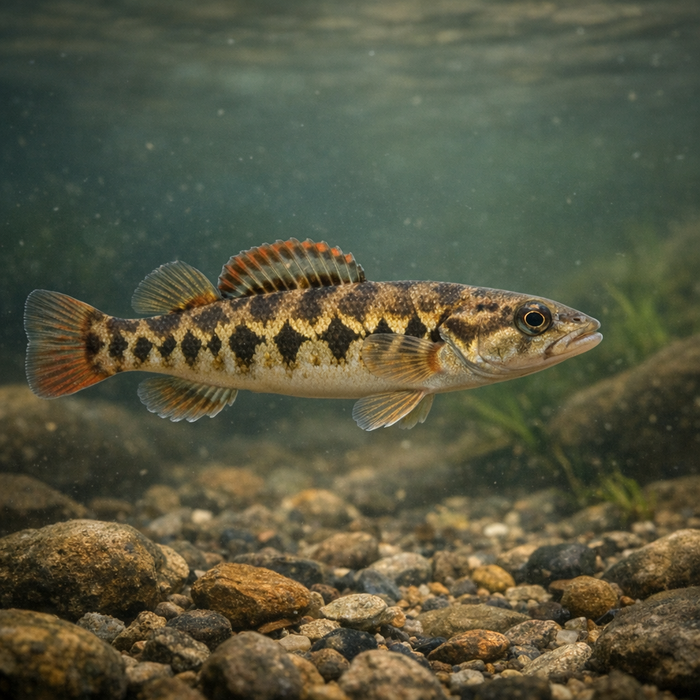
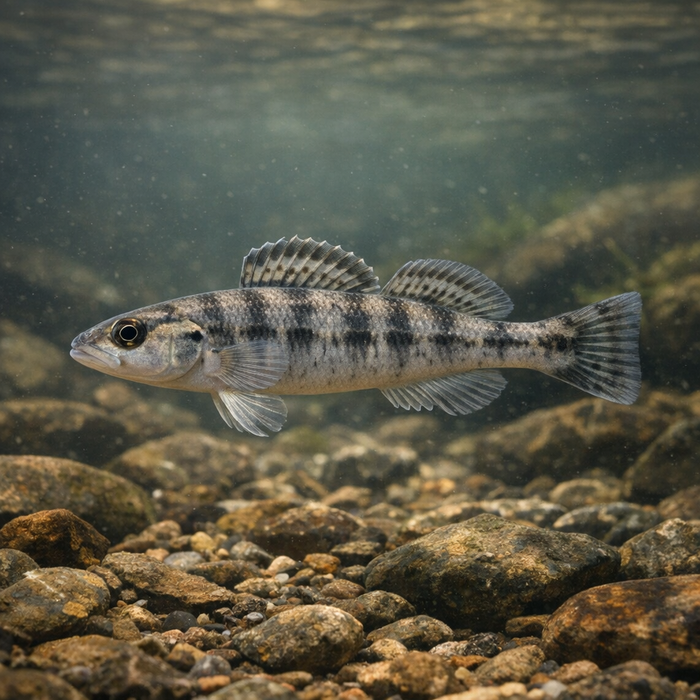
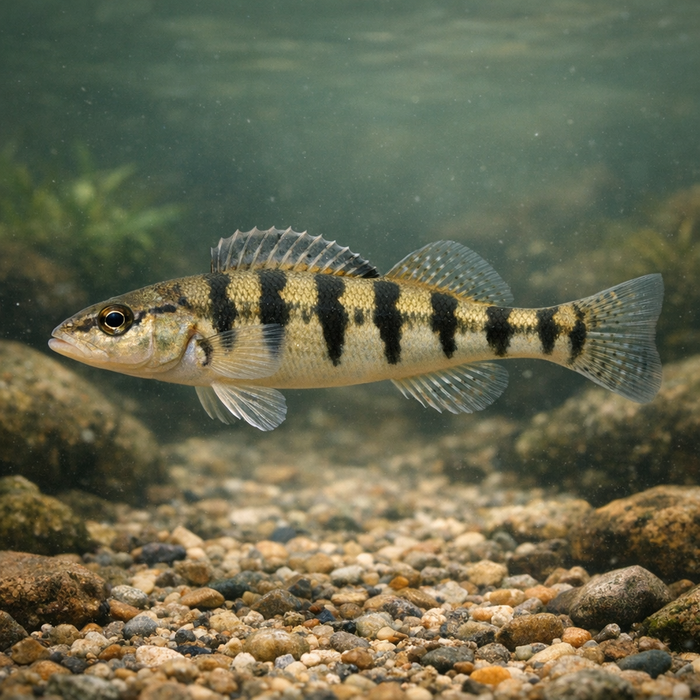
Stone darter (Etheostoma derivativum): Small fish, huge personality, pure current-addict.IntroductionBlink and you'll miss it. The stone darter is a pebble-patterned rocket that treats fast water like home turf and makes big fish egos look bloated. It's the freshwater definition of ultralight: tiny, tuned to current, and perfectly designed for the riffles most anglers stomp through without a second glance. If you've ever wondered what lives between the cobbles your boots nudge aside, this little bottom-dweller has answers. And yes, it's a real fish with a real attitude, even if it rarely fills a net.What Makes the Stone darter Unique?Start with engineering. The stone darter runs without a swim bladder, which means no accidental bobbing, no drift, just laser-stable bottom time. Pair that with wide pectorals that act like living kickstands and a low-slung head that slices under pebbles. It doesn't swim so much as dart, pausing and exploding forward in inches-long sprints. Then there's the style. During spawning, males can throw down shocking contrasts and fin tints that look airbrushed. For a fish barely longer than your index finger, the stone darter brings undeniable swagger.Habitat & Global RangeWhen anglers talk stone darter habitat, think clear water, clean rock, and a pulse of flow you can hear. Riffles and quick runs are the main stage, especially where pea gravel, cobble, and flat stones create tiny alleys and overhangs. Depth is usually ankle to knee, with the occasional pocket deeper than your boot tread. Distribution with darters is famously patchy, often tied to specific drainages and headwater networks, and a stone darter is no exception. Local abundance can be high in the right substrate, then drop to zero after a mile of silt or impounded water. Translation: it's a stream specialist that thrives where the bottom stays clean and the current feeds it a nonstop buffet.Behavior & TemperamentThe stone darter's life is all about the bottom. It ambushes close, dashes inches, and locks back to the gravel. This fish doesn't cruise midwater or sip the surface. It's a tactical homebody, defending thumbnail territories and using microstructure the way bass use laydowns. Wariness is part of the deal. Shadows, footfalls, and clumsy casts push it deeper into the rock maze. The fight is a micro flicker: a fast tap, a headshake, and then it either pins itself or vanishes like smoke. You're not here for screaming drags; you're here for precision.Ecological ImportanceSmall doesn't mean minor. The stone darter scavenges the benthos for larvae and other tiny prey, moving energy from the streambed up the food web and into the mouths of larger fish and birds. Its presence signals a healthy, oxygen-rich run with low silt loads. Lose the riffles, clog the interstitial spaces with fine sediment, and you lose fish exactly like this. For managers and bug nerds alike, a robust stone darter population is a stream-health headline.Conservation & Environmental PressuresRiffle specialists live and die by clean substrate and stable flows. Excessive sediment, nutrient surges, poorly timed dam releases, and channelization are bad news. Even small withdrawals that drop summer baseflows can turn perfect water into a dry rattle of stones. Because many darters have drainage-limited ranges, a single culvert or barrier can isolate populations. Some jurisdictions protect specific Etheostoma outright; others allow collection under tight rules. If you needed a nudge to step carefully in riffles, consider this it.The FishyAF TakeThe stone darter won't pad your PB list, but it will sharpen your game. It rewards stealth, exact drifts, and a habit of reading water down to the square inch. That's graduate-level fishing hidden in ankle-deep flow. Want real Stone darter facts? It's the fish that proves streamcraft matters more than muscle, and it will humble anyone who thinks only big predators teach lessons. Learn to see the run the way a stone darter does and you'll fish everything better, from trout to smallmouth. Tiny fish, big upgrade.