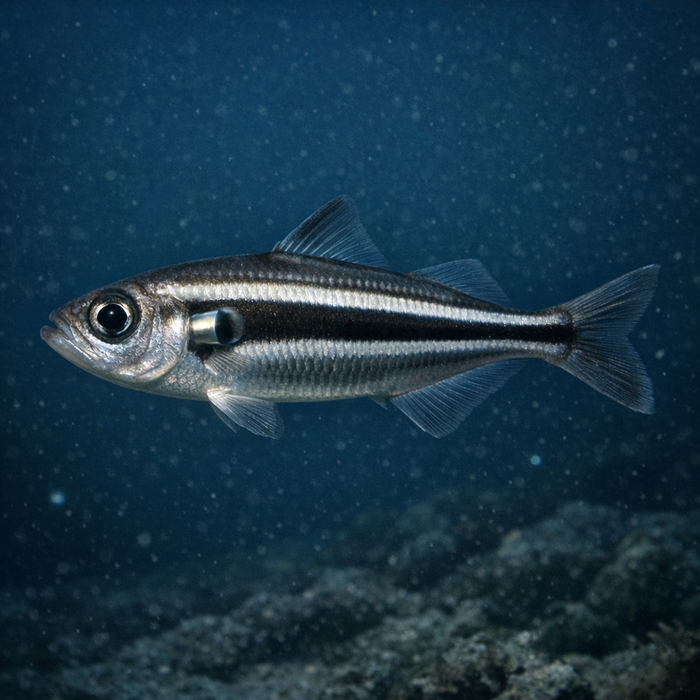
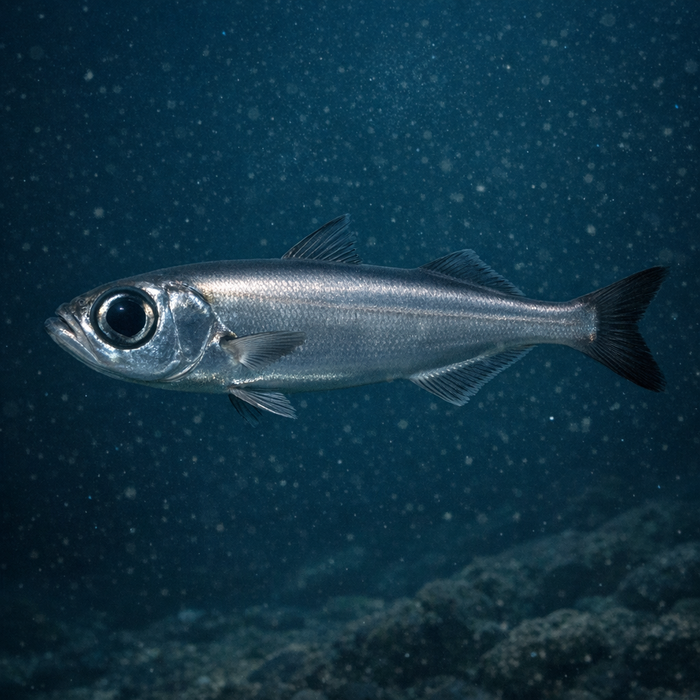
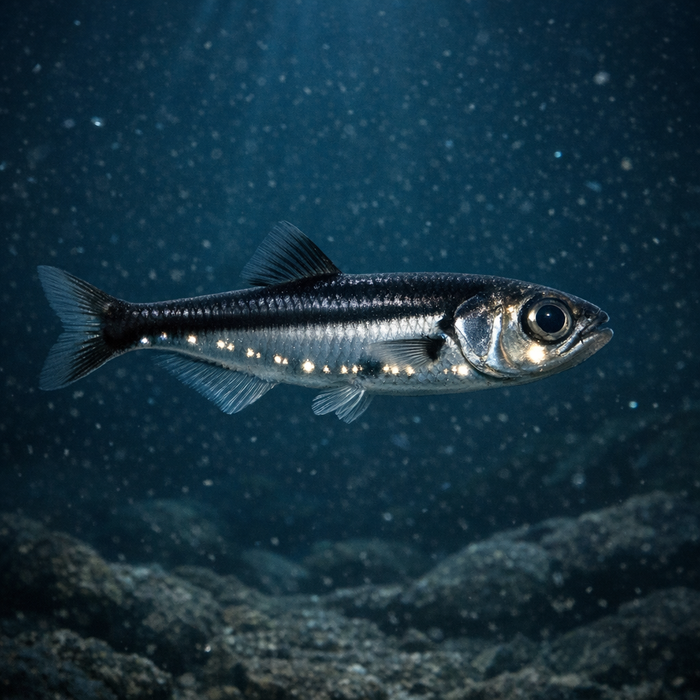
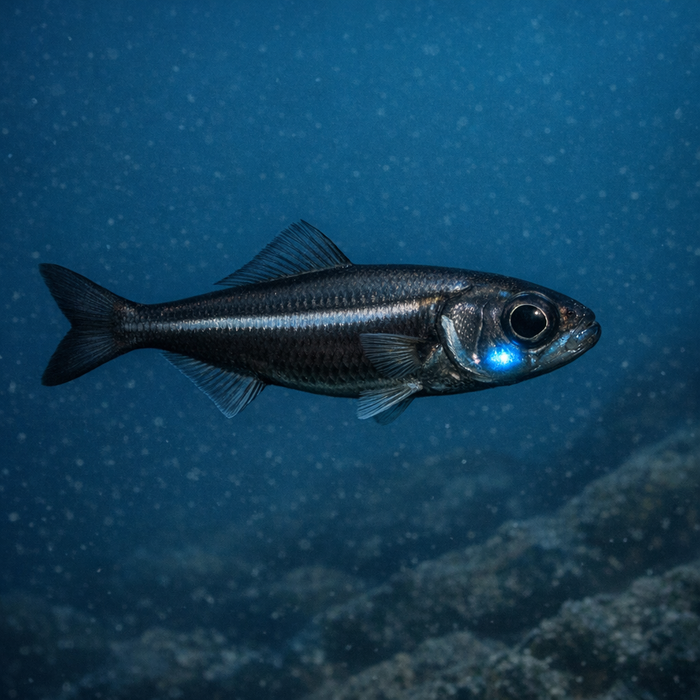
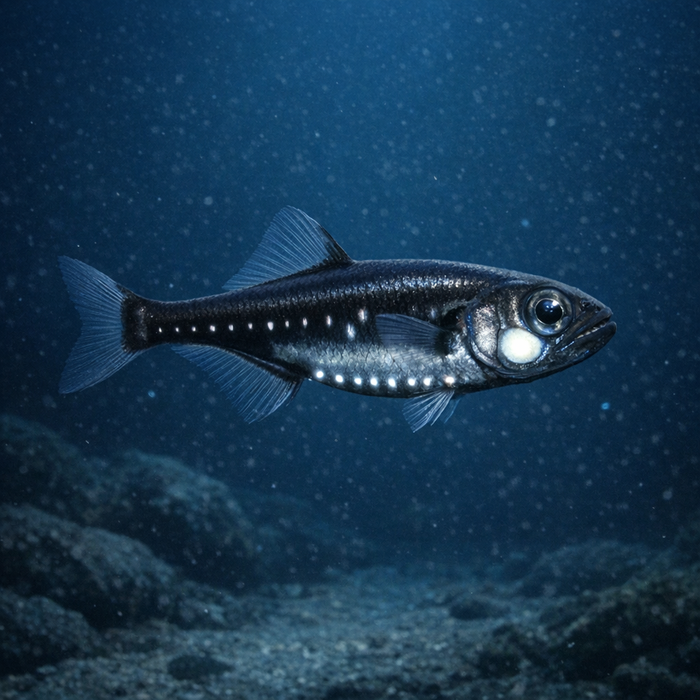
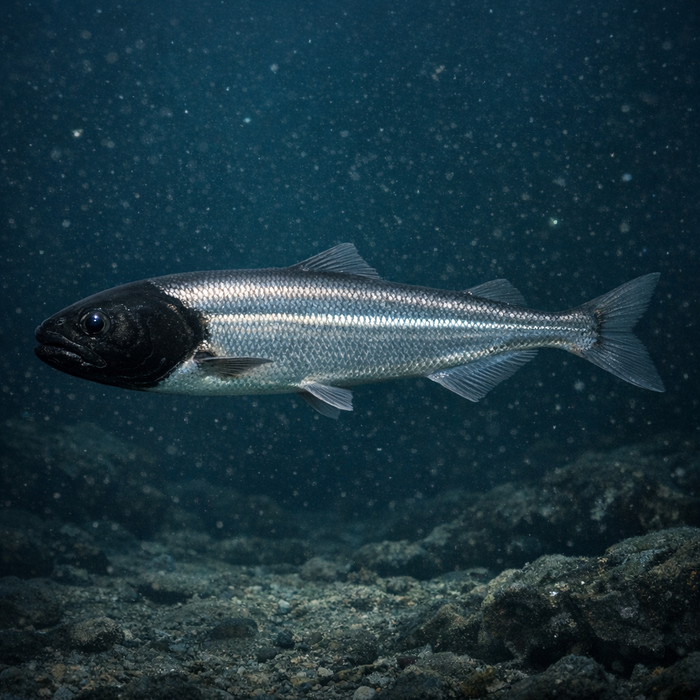
Streaklight tubeshoulder (Holtbyrnia latifrons): A Bold, Memorable Hook LineIntroductionThe streaklight tubeshoulder is deep-sea weirdness at its finest. It's small, secretive, and armed with a glowing party trick most predators never forget. You won't see it finning around the pier lights. This is a midwater specialist that turns darkness and pressure into home-field advantage, a pint-sized player with a surprisingly flashy defense. If you're here for wild Streaklight tubeshoulder facts, you're in the right trench.What Makes the Streaklight tubeshoulder Unique?Two things: the shoulder hardware and the head. Like other tubeshoulders, Holtbyrnia latifrons packs a lateral luminous gland that channels bioluminescent goo through tube-like ducts to the shoulder. When trouble shows up, it can blast a streak of light, confusing attackers in a galaxy of blue-green. The head deserves its own shoutout. Latifrons means wide forehead, and this species wears that profile with oversized eyes tuned to the mesopelagic's dim blue. Toss in slickhead skin that shrugs off turbulence and you've got a deep-roaming specialist built for the long dark.Habitat & Global RangeIf you're building a Streaklight tubeshoulder habitat mental map, think water, then more water. This fish roams the open ocean's midwater zones above continental slopes, trenches, and seamounts, usually far from land. It likely participates in nightly vertical migrations, tracking planktonic layers and drifting prey up and down the water column. Sightings and samples suggest a broad, probably worldwide distribution in temperate to tropical belts, but reliable dots on the map are scarce because very few anglers ever cross paths with one.Behavior & TemperamentThe streaklight tubeshoulder is not a brawler. It's a cruiser. Expect schooling tendencies when conditions stack bait at a particular depth, then looser spacing when food is scattered. Feeding is opportunistic: tiny fishes, shrimpy bits, maybe a larval buffet. The bioluminescent slime cannon isn't just flashy-it's an escape plan. A sudden streak gives this fish a head start while a predator chases the light instead of the lunch. You won't see surface busts or shoreline raids. This is a midwater specialist playing keep-away at hundreds to thousands of feet.Ecological ImportanceDeep pelagic food webs run on small, mobile links, and the streaklight tubeshoulder is one of them. It helps move energy from plankton-rich layers into bigger predators like tunas, billfish, squid, and deep-diving mammals. Its waxy buoyancy tricks and soft body are evolutionary answers to life without a swim bladder-useful adaptations that keep the midwater engine humming. When we talk about ocean carbon and the biological pump, creatures like this quietly do the hauling, day after day, light cycle after light cycle.Conservation & Environmental PressuresThere's no glaring, species-specific crisis on the bulletin board, but Data Deficient or Not Evaluated status is common for deep dwellers. The threats are broader: deep-sea trawling that scrapes slope communities, unreported bycatch, and climate-driven changes to oxygen minimum zones and plankton layers. Shift those layers and you shift the playbook for a fish designed around nightly vertical commutes. Add light pollution in deeper fisheries and even the darkness starts to change.The FishyAF TakeThe streaklight tubeshoulder is the fisher's paradox: unforgettable yet nearly untargetable. You chase swordfish, golden tilefish, or deep tunas and maybe-maybe-you get a tubeshoulder cameo on a glow jig or squid strip. That tiny glowing smear on your leader at 2 a.m.? That's a calling card from Holtbyrnia latifrons reminding you most of the ocean's life is small, strange, and nowhere near Instagram. If you came for Streaklight tubeshoulder facts, here's the best one: it's proof that the ocean doesn't need size to be spectacular. Respect the deep, keep a camera ready, and don't be surprised if the coolest catch of the trip weighs less than your pliers.