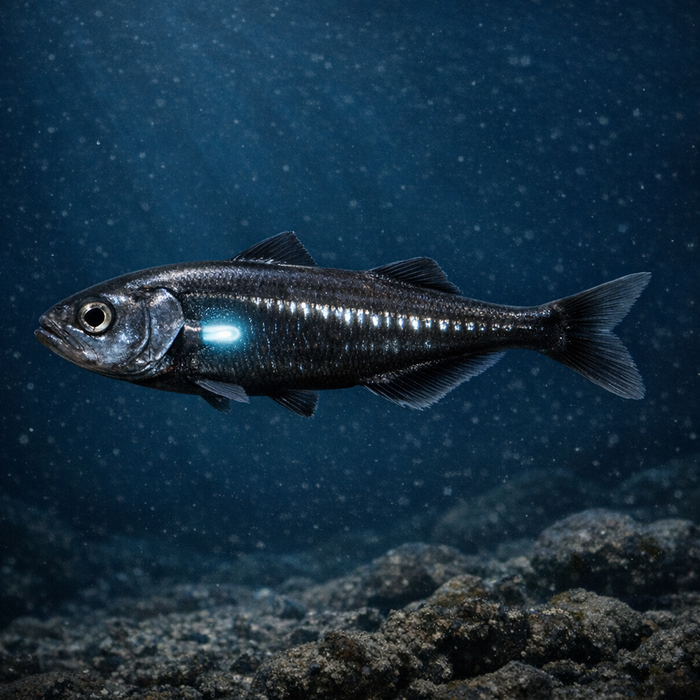
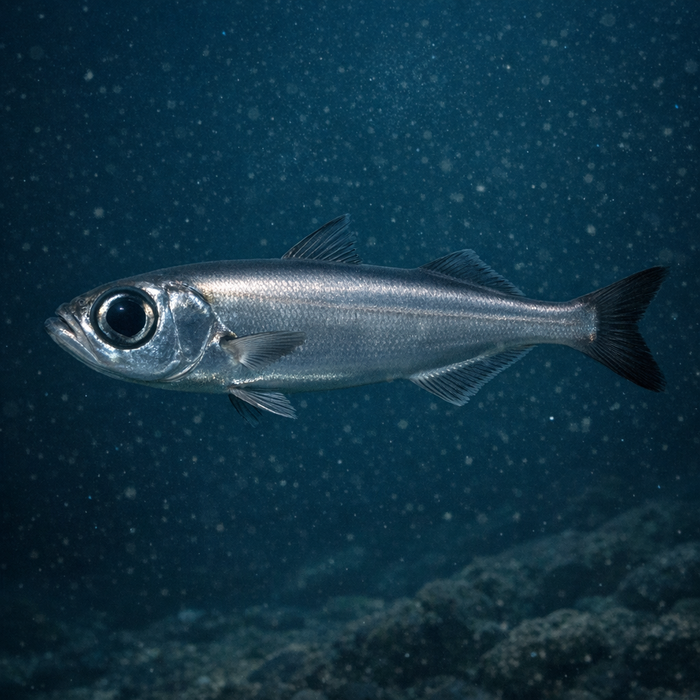
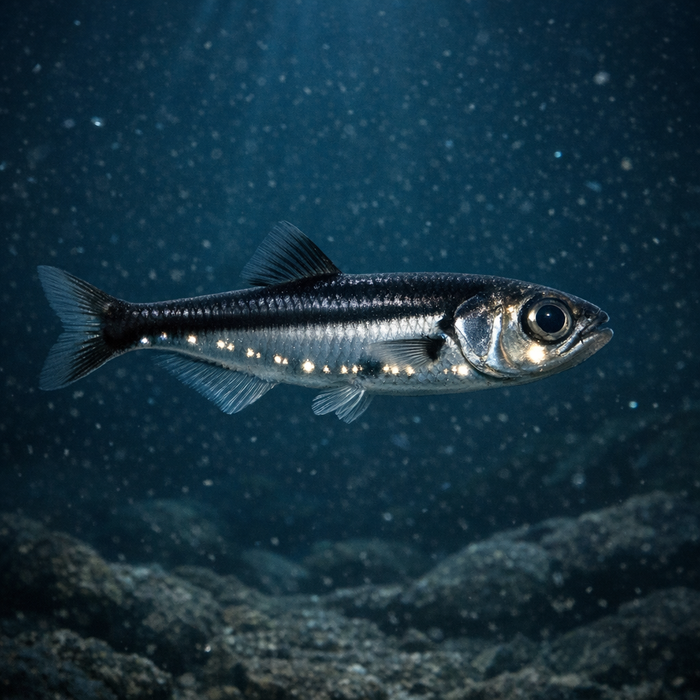
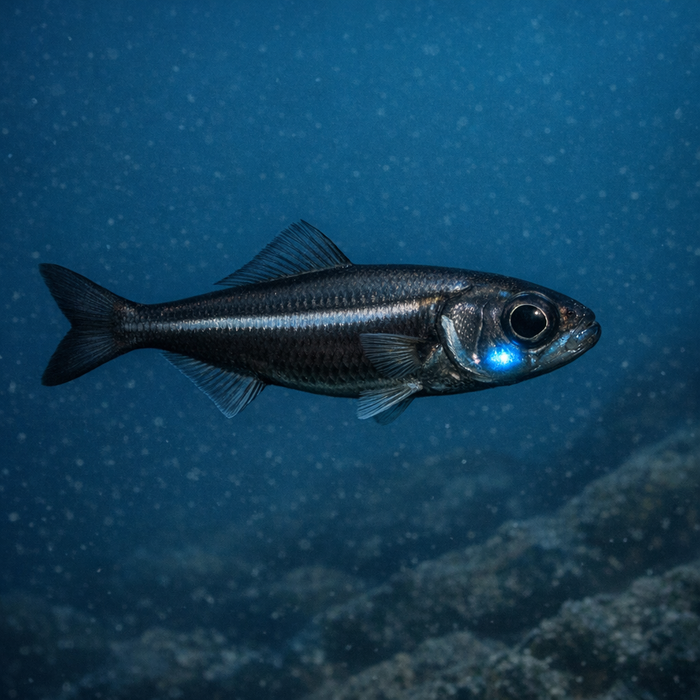
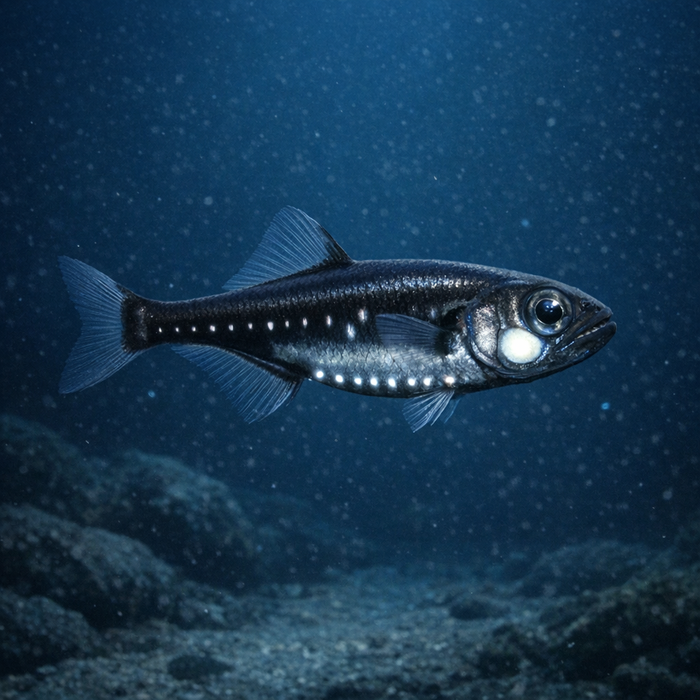
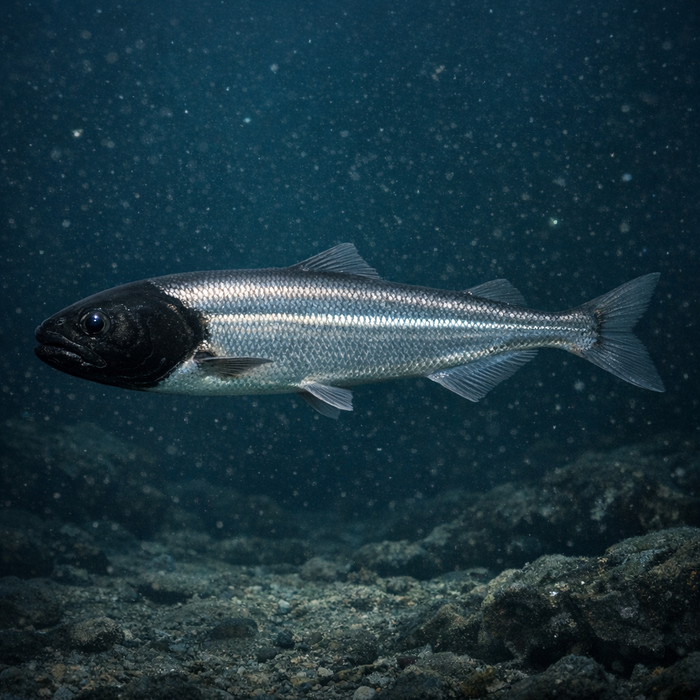
Striped Tubeshoulder (Mirorictus taningi): A Bold, Memorable Hook LineIntroductionThe striped tubeshoulder isn't out here auditioning for your grill. It's a twilight-zone weirdo that lives where sunlight taps out and strange biology takes over. Small, slippery, and armed with a bioluminescent shoulder squirt gun, this deep-sea drifter is more science-fiction prop than Saturday target. For anglers who obsess over oddities, though, the striped tubeshoulder is pure catnip. It's obscure, slick with waxy buoyancy tricks, and occasionally turns up when someone drops gear way deeper than anyone sane would call fun. If you're here for striped tubeshoulder facts or just curious about striped tubeshoulder habitat, strap in.What Makes the Striped tubeshoulder Unique?Start with the shoulder hardware. This fish packs a specialized gland and duct behind the pectoral fin that releases a glowing secretion. In a world lit by bioluminescence, a sudden burst of sticky light is both a smokescreen and a "tag-you're-it" on would-be predators. Add the reflective lateral band that flashes under stray glows and you get the origin of that "striped" vibe. Finally, the body chemistry is loaded with wax esters that help it hover in midwater without a big energy bill. It's a neutrally buoyant ninja with a light show.Habitat & Global RangeThe striped tubeshoulder is a mesopelagic nomad of the open ocean. Picture a huge three-dimensional desert with food drifting in bands called deep scattering layers. This fish shadows those layers through the night, rising and falling hundreds of meters as the planktonic buffet moves. It's likely distributed widely across major oceans, but records come in drips because it rarely meets hooks; most specimens reach science via surveys and nets. If you're an angler, think featureless water, a lot of nothing on the sounder, and then, maybe, a flicker of life at impossible depths.Behavior & TemperamentThis is not a brawler. The striped tubeshoulder cruises, snacks, and avoids trouble. Oversized eyes sip the faintest photons, and a jet-black stomach helps conceal any glowing prey it swallows. When threatened, it can eject that luminous slime, creating chaos and sometimes literally tagging a predator with glow goop. It likely schools loosely at times, especially around dense scattering layers, then thins out when food spreads. As for fight, expect a deep-drop passenger more than a street fighter. The challenge is contact, not combat.Ecological ImportanceDeep-sea food webs hinge on midwater couriers moving energy from the surface into the abyss. The striped tubeshoulder plays that messenger role, feeding on delicate organisms and small fishes, then feeding larger predators in turn. Its bioluminescent countermeasures aren't just flashy; they're survival tech in an ecosystem where light is currency. Even if anglers rarely touch this species, it's one more cog in the global engine that moves carbon, energy, and nutrients down the water column.Conservation & Environmental PressuresDeep doesn't mean safe. Broad-scale changes in ocean temperature and oxygen can shift the vertical neighborhoods these fish rely on. Midwater trawling and bycatch can clip populations no one is measuring well. The striped tubeshoulder tends to be filed under Data Deficient because scientists don't have enough clean numbers. That's not a hall pass; it's a reminder that unknown isn't the same as okay. If the deep scattering layers shuffle, the entire menu plan for countless species shuffles with them.The FishyAF TakeThe striped tubeshoulder is the fish you brag about precisely because nobody else will know what you're talking about. It's tiny, waxy, and armed with a glow gun. Anglers obsess over blue marlin and giant tuna; fine. But there's a different kind of trophy in coaxing up a creature designed for permanent midnight. If your idea of a good time is dropping lights, micro-baits, and patience into the abyss, consider this oddball a bucket-list footnote. It's not dinner. It's a story, a specimen, and a reminder that the ocean's strangest flexes happen where we rarely look.