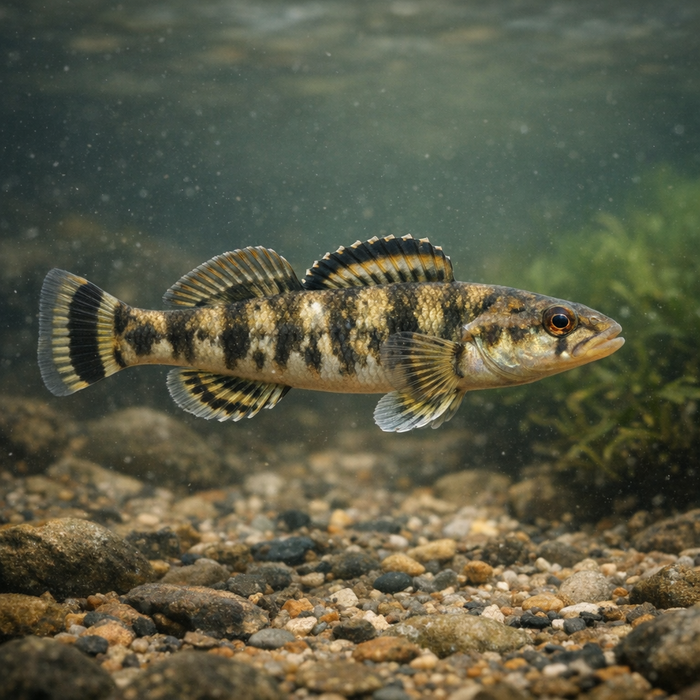
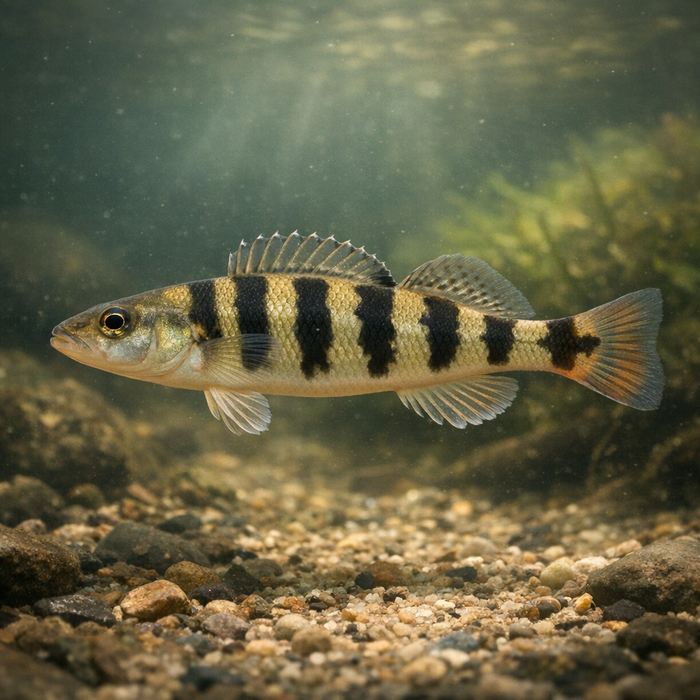
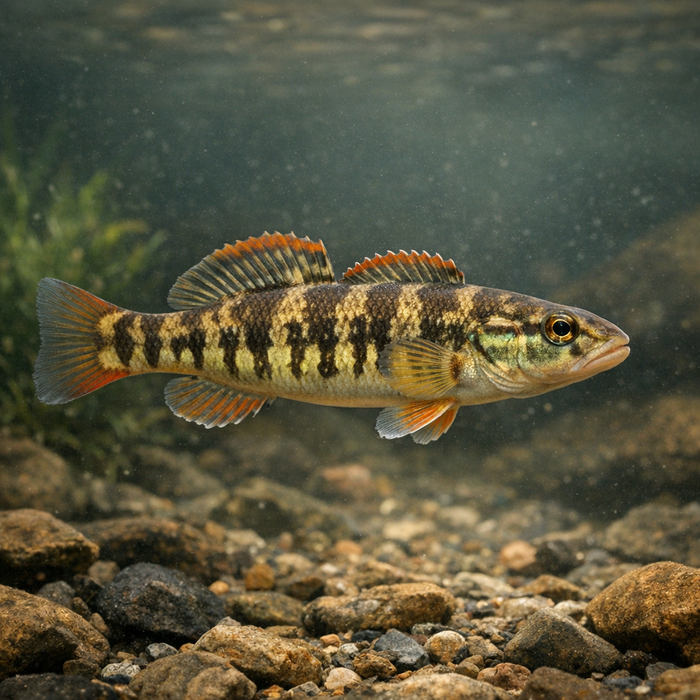
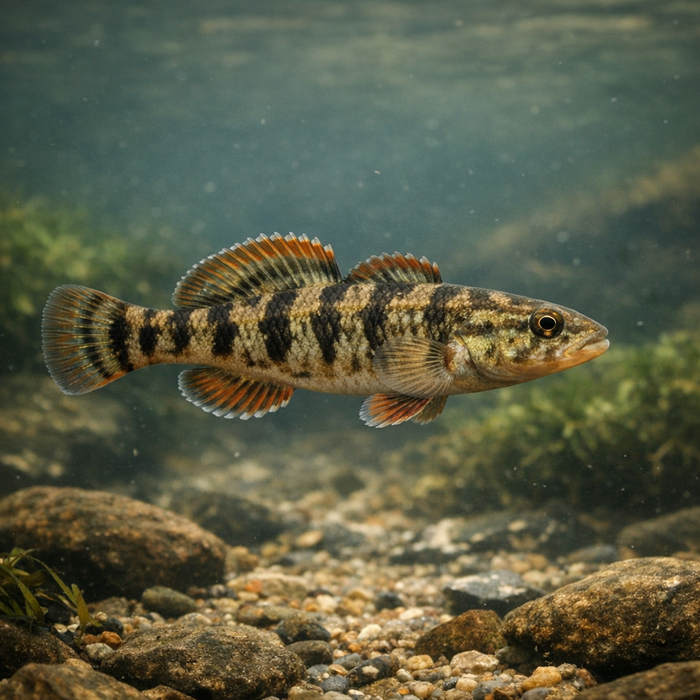
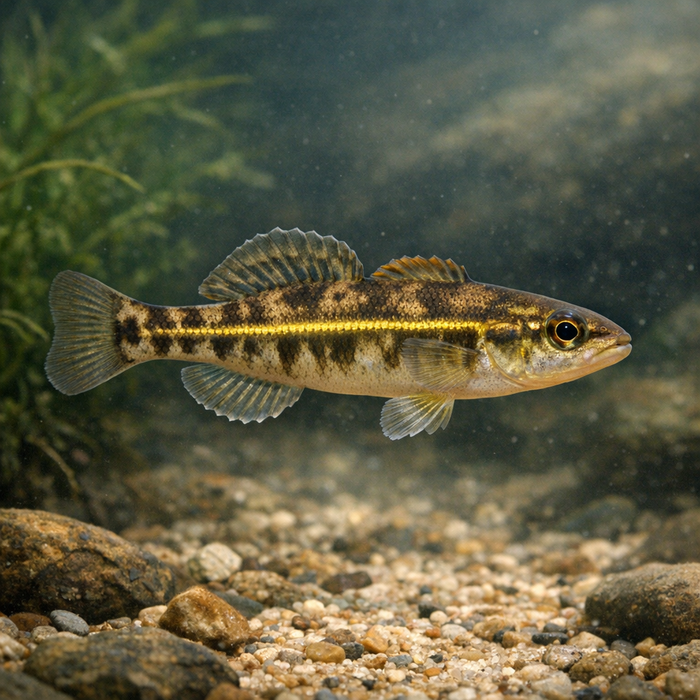
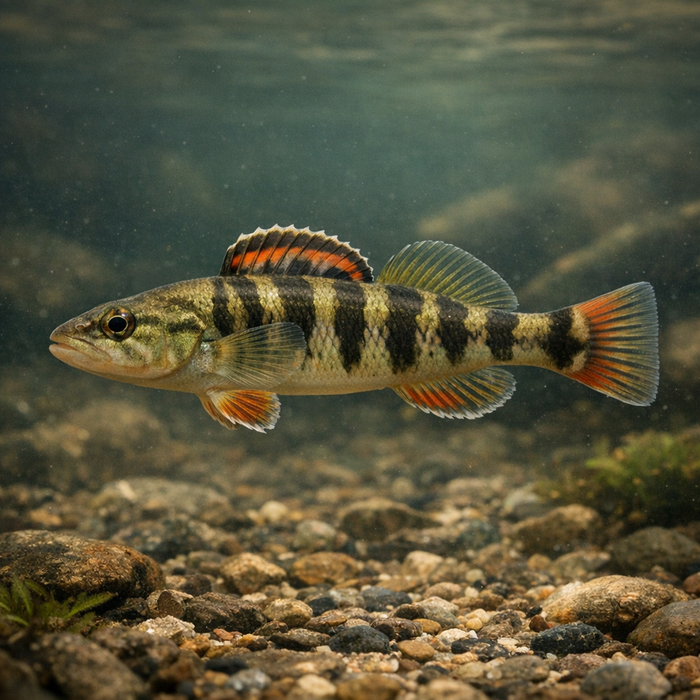
Striped Darter (Etheostoma virgatum): A Bold, Memorable Hook LineIntroductionThe striped darter is a pocket-rocket of a fish that lives where most folks just splash through. It's tiny, gorgeous, and completely at home in fast, shallow riffles that bully bigger fish out of the way. If you're into microfishing or just appreciate wild stream jewelry, the striped darter delivers. It's subtle until it isn't, and once you see one up close, you'll start scanning every gravel run for more.What Makes the Striped Darter Unique?Two things: design and attitude. First, the body plan. Like many darters, this species has a reduced swim bladder, which lets it stay pinned to the substrate in heavy current. Instead of cruising, it scoots in crisp, controlled bursts and then clamps down to the rock like a tiny gecko. Second, the showmanship. Breeding males flaunt bold lateral striping and vivid fin highlights that look like a custom paint job. For a fish that rarely breaks three inches, the striped darter wears its name with full swagger.Habitat & Global RangeThe striped darter is a Southeast and lower Midwest riffle specialist, favoring cool, clear streams with clean gravel and cobble. Think ankle- to shin-deep chutes, knee-deep runs, and the pocket water behind fist-sized stones. Silt is the enemy; swift current and oxygen-rich water are the vibe. That focus on clean, moving water is the headline in any serious Striped darter habitat discussion and one reason anglers stumble into this species while wading for other targets.Behavior & TemperamentThis fish lives small and thinks fast. Individuals hold tiny territories, sometimes just one perfect rock and its micro wake. They "walk" on broad pectorals, make a few surgical dashes for drifting morsels, and slam back to the bottom. Spawning kicks off when spring flows warm, with males guarding eggs attached to the undersides of flat stones. They're sight-oriented, light-sensitive, and quick to bolt when shadows creep over them. Yet if you slow down and crouch, the striped darter will often reappear right where it was-because that's the only spot that works.Ecological ImportanceThe striped darter is a clean-water litmus test inside a small, feisty package. Because it demands good flow and low sediment, its presence often signals a healthy stream. Its role near the base of the predator tier, picking off small invertebrates, helps link primary production to bigger stream players. Healthy darter assemblages typically mean stable riffle habitat, which in turn supports macroinvertebrates, mussels, and a whole parade of stream specialists. If you like trout and smallmouth up the line, you want striped darters doing their thing down in the cobble.Conservation & Environmental PressuresWhile generally listed as Least Concern, the striped darter still lives a fragile life. Siltation from poor land use, altered flows from impoundments, and nutrient spikes can erase its world one riffle at a time. Pave a watershed carelessly and you trade rock gardens for sand pits, which darters absolutely hate. Localized declines can happen quickly when sediment blankets spawning stones. Keeping riparian buffers intact and stormwater managed is as much striped darter conservation as any rulebook. When in doubt, think like a riffle: fast, filtered, and clean.The FishyAF TakeThe striped darter is proof that awesome fishing isn't always about grip-and-grin monsters. It's about reading water the size of a kitchen sink, dropping a fleck of bait with sniper precision, and watching a living exclamation point materialize between pebbles. Want Striped darter facts that matter? Here's one: master the riffle and you'll start seeing fish everywhere. This species rewards patience, stealth, and a sense of humor. You're not muscling giants; you're solving tiny puzzles. And when that banded blur snaps your micro offering, it feels like you just cracked the code on a wild stream's most overlooked secret.