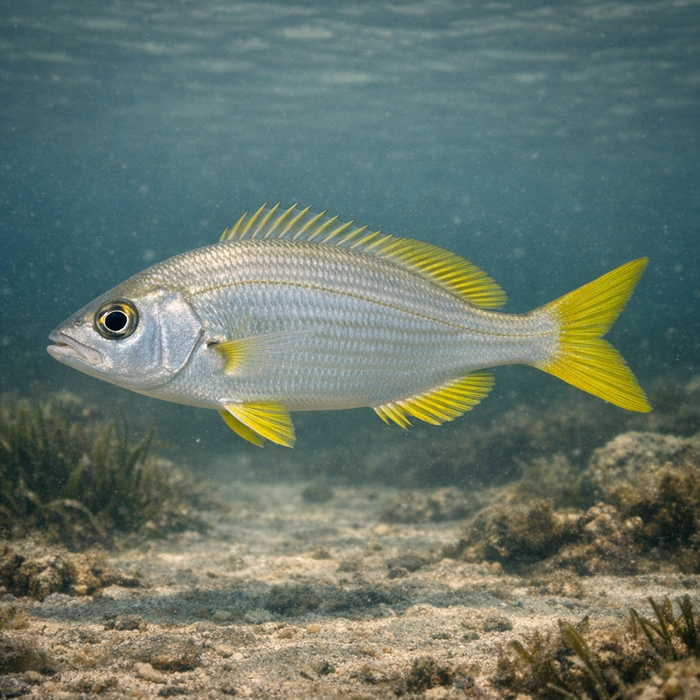
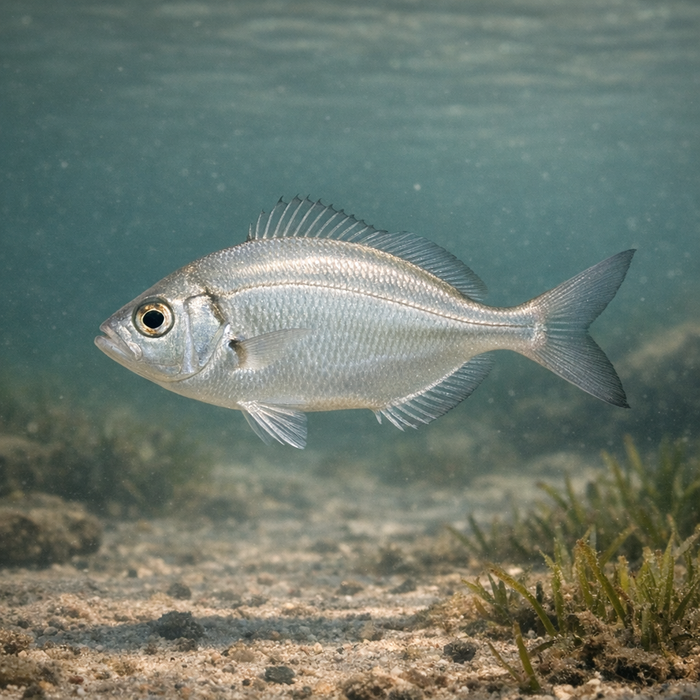
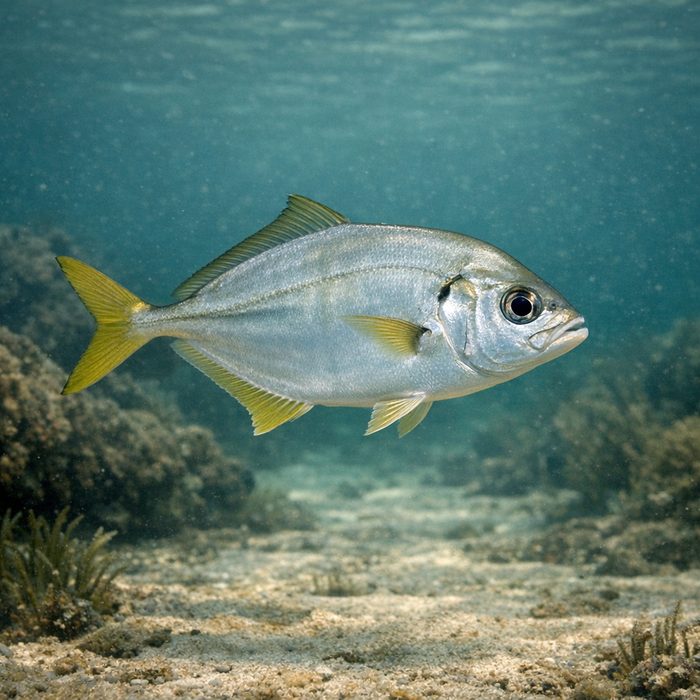
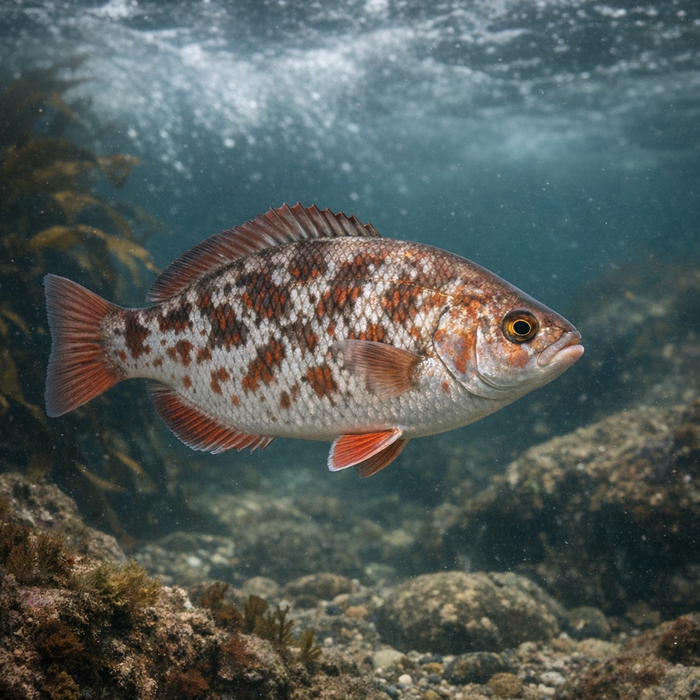
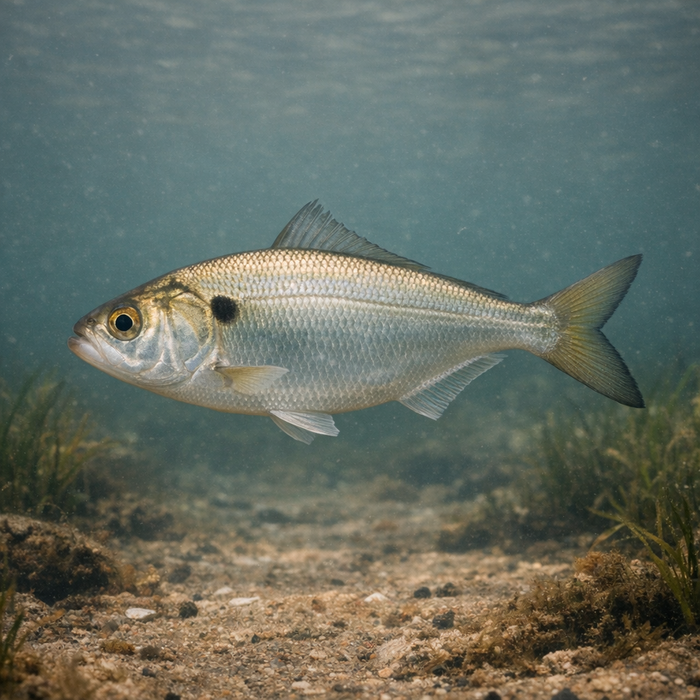
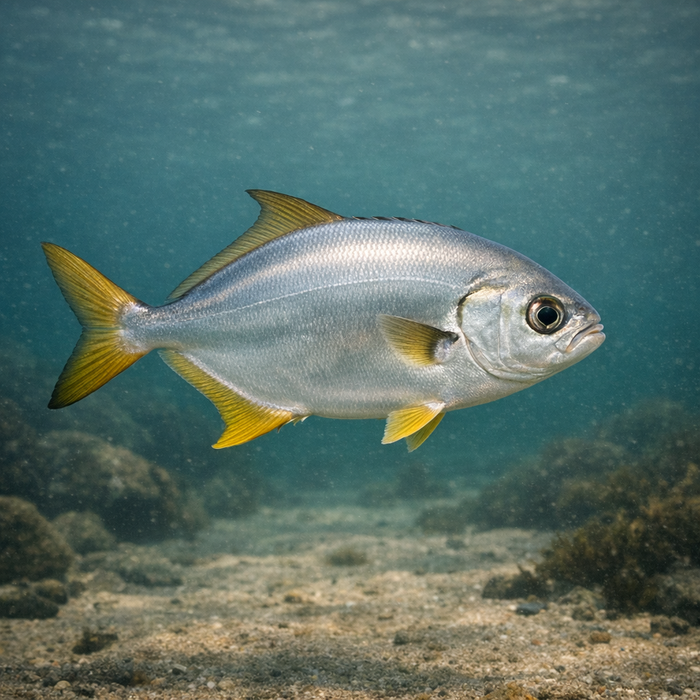
Striped Mojarra (Eugerres plumieri): Vacuum-Mouthed Flats Bandit With Zebra SwaggerIntroductionThe striped mojarra is the little silver troublemaker you keep spotting puffing sand on tropical flats. It's not flashy like a tarpon, but it has a party trick: a telescoping mouth that drops like a periscope and hoovers up anything edible hiding beneath the surface. For anglers who appreciate finesse and clean water, striped mojarra are underrated, plentiful, and straight-up fun. If you're here for striped mojarra facts or curious about striped mojarra habitat, welcome to your crash course.What Makes the Striped mojarra Unique?First, that jaw. Few inshore fish deploy a mouth like this. It juts downward in a blink, forming a suction tube that rips worms, tiny crabs, and shrimp straight out of the sand. Second, the built-in camouflage. Those vertical bars darken and fade depending on background and mood. One moment they're bold zebra, the next they're polished chrome. Finally, they're tactical bait royalty. A striped mojarra pinned to a hook is snook and tarpon candy in half the Caribbean.Habitat & Global RangeThe striped mojarra lives where clean, moving water meets sand and grass. Think mangrove-lined creeks, bright flats, and sandy potholes peppered through seagrass meadows. They're common across the Western Atlantic, from the Southeast U.S. down the Gulf Coast through the Caribbean into northern South America. Inside an estuary they roam specific micro-zones: current-swept cuts, channel edges, and calm lee sides where dislodged crustaceans collect. On the flats, they love ankle- to waist-deep water, often cruising in small schools along light bottom where their bars help them disappear. When tides swing, they slide in and out with precision, riding flow like commuters chasing a train.Behavior & TemperamentStriped mojarra are picky and skittish, yet curious. They'll nose a bait two inches from a stingray, then spook at your shadow. Feeding is all about the bottom: they tip forward, puff the sand, and create a tiny blizzard of debris, then circle to pluck stunned morsels. Schooling is tight, with synchronized pivots that flash silver and confuse predators. They feed best with moving water, especially when tide sweeps across grass and sand transitions. Hook one and you won't be clearing the deck; the fight is flicky, fast, and over quickly on ultralight tackle. But the challenge is getting that miniature mouth to commit without feeling your hardware.Ecological ImportanceThe striped mojarra bridges energy from invertebrates to bigger gamefish. It converts shrimp, worms, and micro-crabs into bite-sized protein packets for snook, tarpon, jacks, and shorebirds. Their bottom-vacuum routine also stirs and recycles sediments, helping unlock nutrients for the food web. And because schools hover around salinity edges, they're decent sentinels for estuary health: when the water gets funky, mojarras move, shrink back, or vanish first.Conservation & Environmental PressuresGood news: striped mojarra are generally abundant and resilient. Less-good news: they are estuary specialists, and estuaries catch every problem upriver. Poor water quality, mangrove removal, and seagrass die-offs can knock local stocks sideways. Overharvest isn't the typical concern here, but coastal sprawl is. These fish handle salinity swings fine, but long-term nutrient overloads, chronic turbidity, and habitat fragmentation are tougher. Keeping mangroves intact and grass beds healthy is the best insurance policy.The FishyAF TakeStriped mojarra are the flats' humble workhorses, equal parts bait and puzzle. If you want to sharpen your small-bait game, they're perfect practice. Sight fish them on glassy mornings, thread a micro shrimp on a size 8, and learn to read sand pockets like a map. The striped mojarra won't smoke your drag, but it will tune your stealth, your presentations, and your understanding of how life flows through an estuary. Master them, and every other inshore target gets easier.