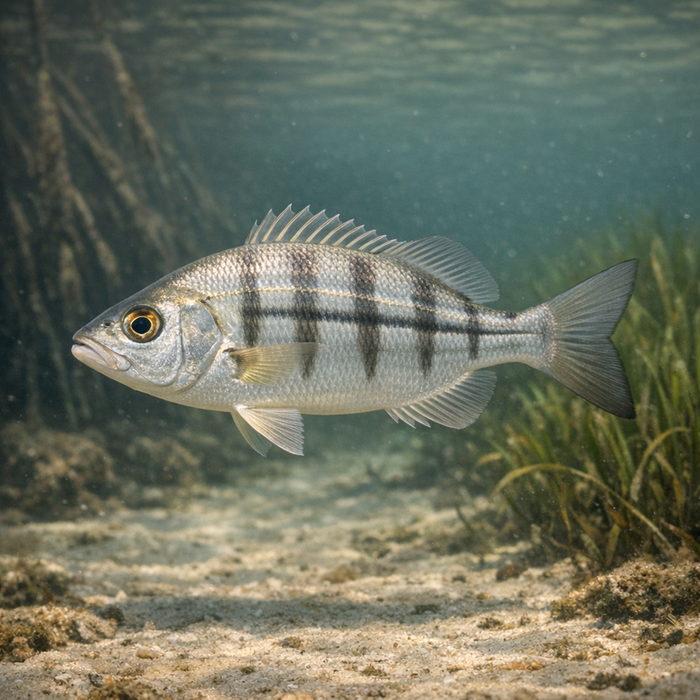
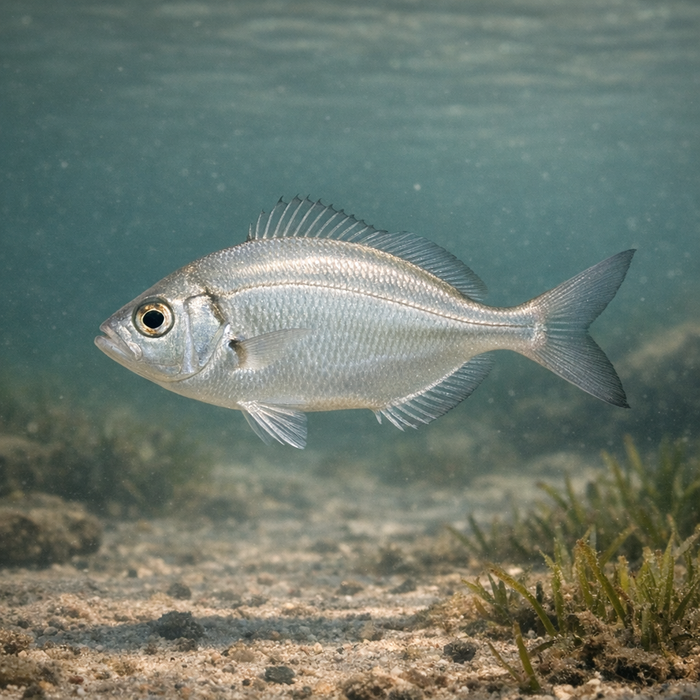
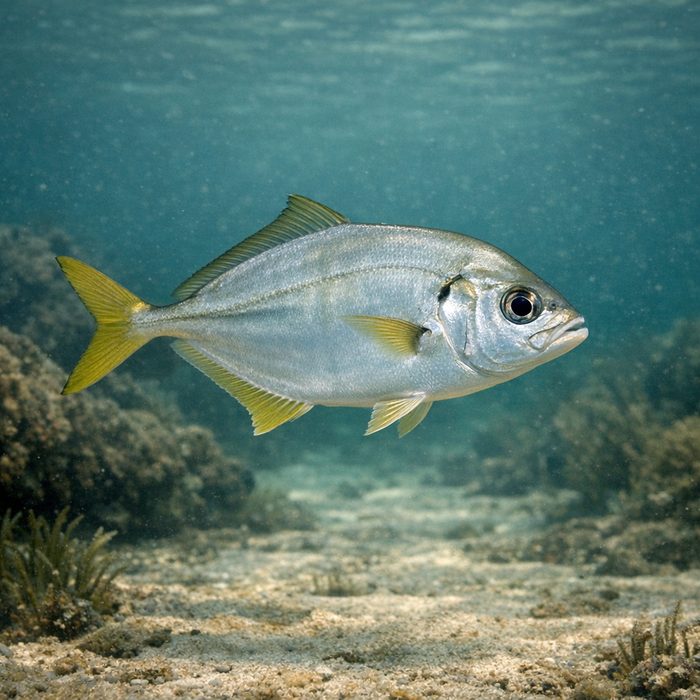
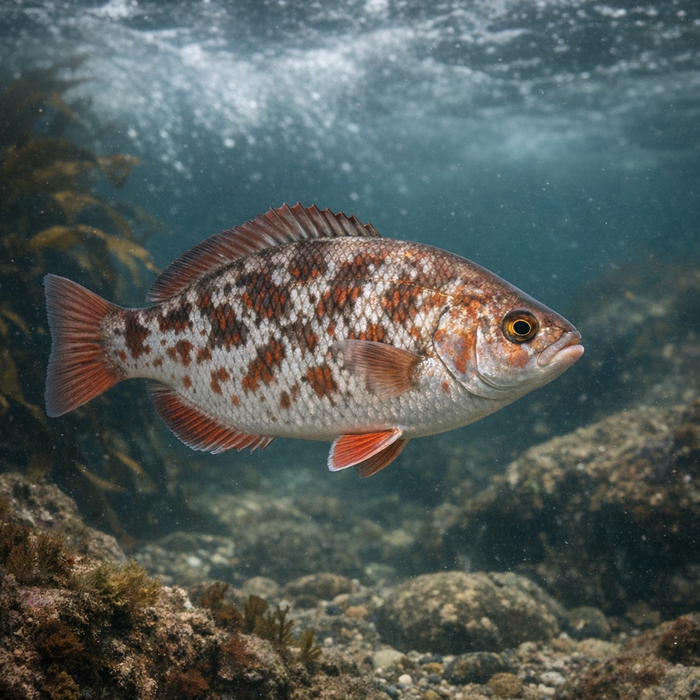
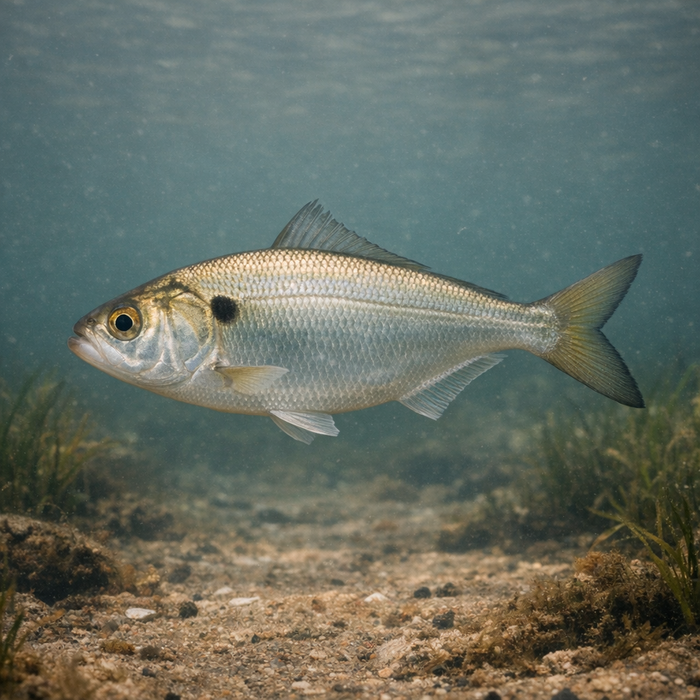
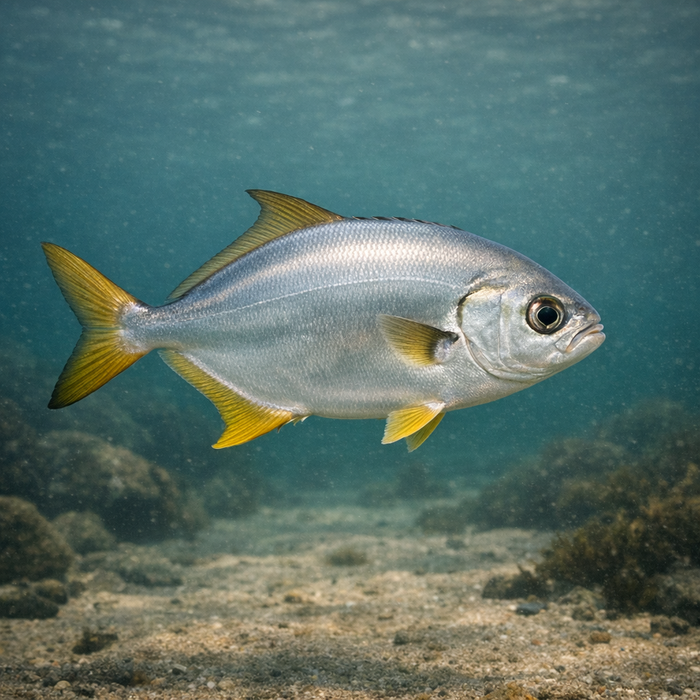
Yellow Fin Mojarra (Gerres cinereus): A Bold, Memorable Hook LineIntroductionThe yellow fin mojarra is the silver coin flickering in your surf wash, the snack-sized speedster vacuuming sand like its a buffet. Not flashy like tarpon or as moody as bonefish, but if youve ever bought live mojarra for snook, you know this fish matters. Compact, plentiful, and wildly efficient at life on the flats, the yellow fin mojarra is the unsung utility player of tropical inshore waters.What Makes the Yellow fin mojarra Unique?First, that mouth. Gerres cinereus sports a hyper-protrusible, downward-shooting snout that telescopes out to hoover worms, shrimp bits, and tiny crabs hiding in sand. One jab, one puff, and lunch is gone. Second, the fins: when light hits right, the pelvic and anal fins light up lemon-yellow, making the school look like a string of blinking LEDs. Third, body design. Deep-sided and razor-forked at the tail, the yellow fin mojarra turns on a dime and sprints in short bursts, perfect for dodging predators and hopping between sand pockets.Habitat & Global RangeIf youre Googling Yellow fin mojarra habitat, think warm, shallow places: beaches, estuaries, sandy troughs, and seagrass edges from Florida and the Gulf of Mexico through the Caribbean and into tropical Latin America. They cruise ankle-to-waist-deep water, often inches from the shoreline, and also work mangrove creeks where tide and current funnel food. Theyre equally happy in slightly brackish water, sliding up bay systems after rains, then drifting back to open edges when the water clears. For shore-bound anglers, this is one of the most accessible saltwater species on the planet.Behavior & TemperamentYellow fin mojarra run in schools that pulse and shimmer. The silver flash isnt just pretty; it scrambles ambush timing for jacks, snook, and small barracuda. Feeding looks like a choreography of sand puffs: noses down, tails twitching, then a quick sprint to the next pocket. Theyre more nibblers than smashers, tapping baits with quick curiosity. Hook one and youll get a darty, rattly fight on ultralight tackle fun, not freight train. Theyre heavily tuned to tide and current; a little flow and clean sand go a long way.Ecological ImportanceAs tireless sifters, yellow fin mojarra help cycle nutrients through the shallow zone. Theyre key prey for marquee predators like snook and small tarpon, turning crustaceans and worms into protein that powers the inshore food web. Their habit of rooting in the substrate also turns microfauna and detritus back into circulation, a little housekeeping service that keeps flats lively. If you ever wonder why your favorite gamefish lurk around grass-sand edges, the answer often involves a school of mojarras being efficiently delicious.Conservation & Environmental PressuresGerres cinereus is listed as Least Concern, and that tracks with what anglers see: lots of fish, wide range, adaptable. But coastal development chops up exactly the spaces they use, and seagrass kill events dont do anyone favors. Add stormwater pulses, sediment, and marina sprawl, and the buffet line gets patchy. Because yellow fin mojarra double as prime live bait, localized harvesting pressure can happen near busy snook docks, though it rarely dents regional abundance. Keeping water clean and grass healthy benefits this species and, by extension, everything that eats it.The FishyAF TakeThe yellow fin mojarra wont headline anyones bucket list, and thats fine. Its the flats version of a pocketknife: always there, always useful, surprisingly well-engineered. If youre chasing snook or tarpon, theyre bait gold. If youre showing a kid the surf zone, theyre fast, cooperative, and right under your feet. Curious about Yellow fin mojarra facts that matter? Start with this: simple fish, serious role. Take them out of the picture and your inshore scene gets a lot quieter, less bright, and way less tasty for the predators we love to catch.