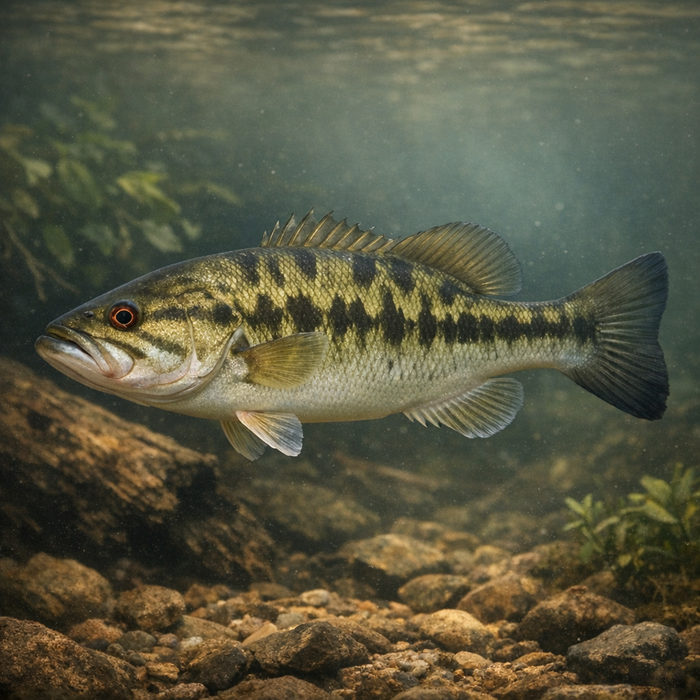
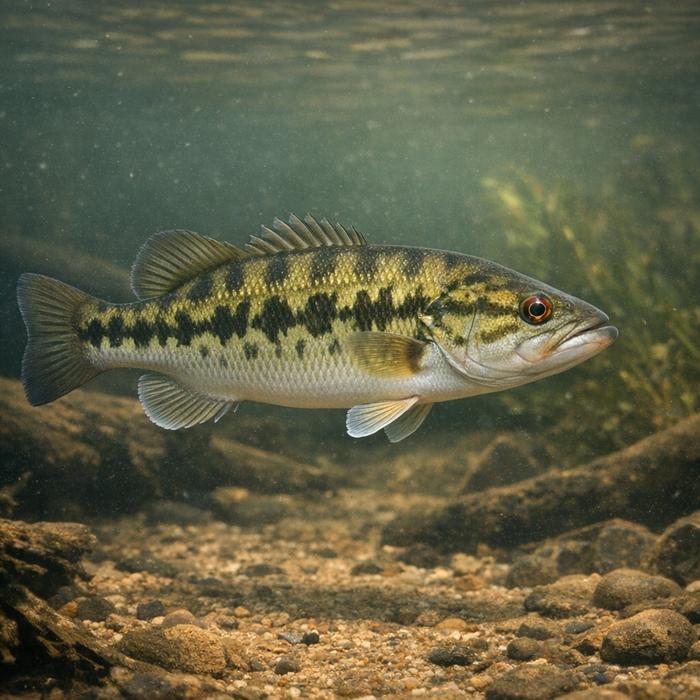
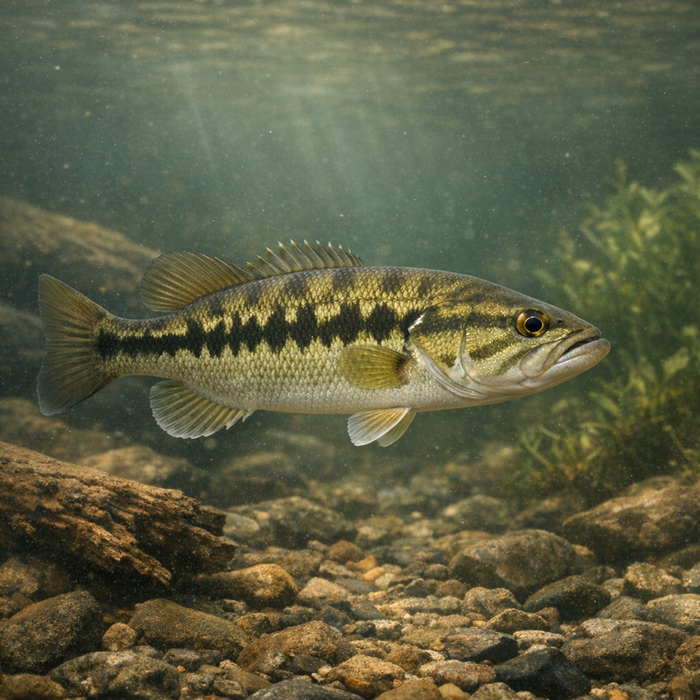
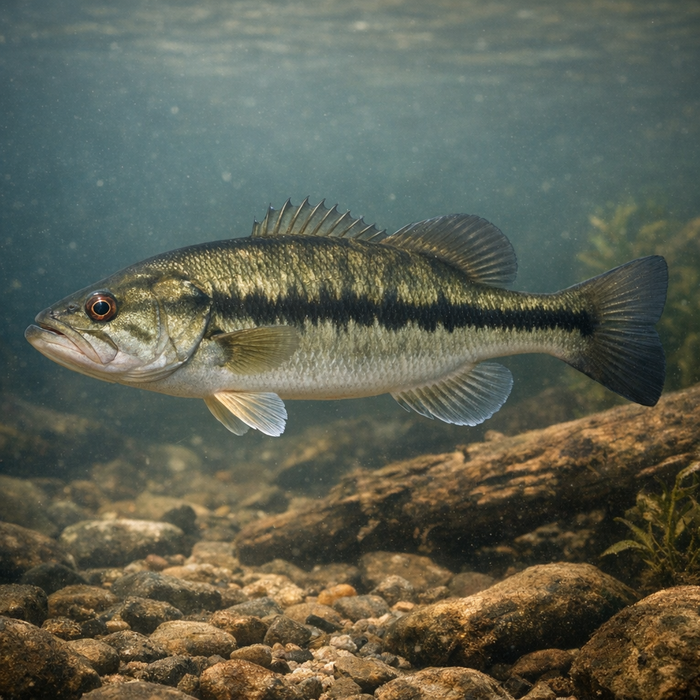
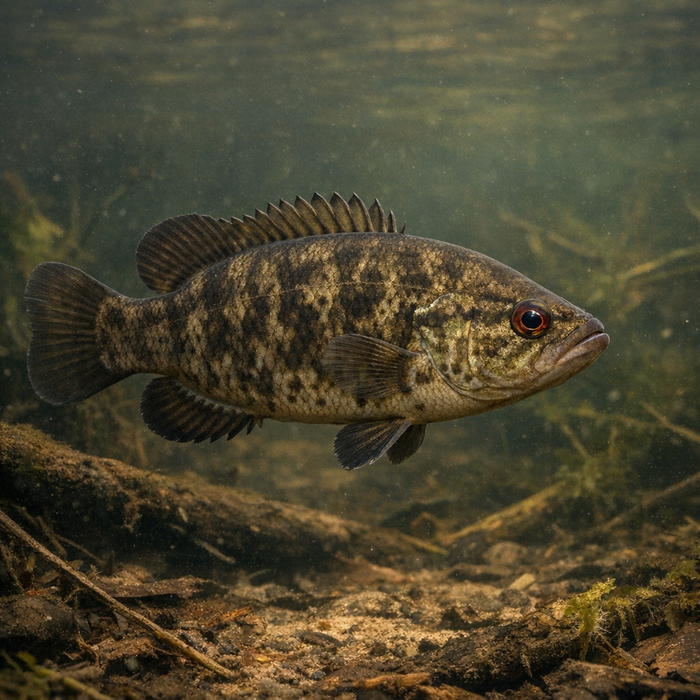
Suwannee Bass (Micropterus notius): A Bold, Memorable Hook LineIntroductionThe Suwannee bass is a pocket-sized river brawler with a big attitude and a tiny ZIP code. Think smallmouth swagger stuffed into a compact Florida native that loves current, rock, and clean spring water. If you're hunting Suwannee bass facts, start here: it's one of North America's most localized black bass, a specialist that punches well above its weight in fast water.What Makes the Suwannee bass Unique?First, the look. Dark bars, copper-green flecking, and during the spawn the males can flash electric-blue cheeks and bellies. Second, the attitude. The Suwannee bass behaves more like a current-obsessed smallmouth than a dock-hugging largemouth, exploding on craw imitations and using flow to fight dirty. Third, the scale. It's the runt of the black-bass litter by length and weight, which means finesse rigs and precise presentations matter more than brute gear.Habitat & Global RangeSuwannee bass habitat is a tight script: clear, limestone-derived rivers with shoals, boulders, and woody debris, often spring-fed. These fish set up on seams, below riffles, near undercut banks, and around current breaks where oxygen and forage stack. Their range is short by design; they are a Florida-and-nearby drainages specialist. If you crave an authentic Suwannee bass experience, you'll be reading flows, light angles, and rock gardens, not wandering endless reservoirs.Behavior & TemperamentSuwannee bass hit with ambition but demand clean drifts. They'll pin bait against current and structure, then blast it. Expect quick, surging fights amplified by flow, not marathon runs. They feed best at low light and when the river's breathing steady. Glassy, high sun conditions turn them cautious and angle-sensitive. Topwater plays during warm months over shoals, but craw-shaped plastics, small cranks, and hair jigs are the everyday hammers.Ecological ImportanceThis species is a sharp indicator of river health. Stable flows, spring inputs, good oxygen, and intact riparian buffers build Suwannee bass strongholds. Trash the water or smother the rock with silt and you kneecap spawning, foraging, and oxygen delivery. As a mid-tier predator, the Suwannee bass helps keep crayfish and small-fish populations honest, passing nutrients upstream to downstream as it moves through riffle-run-pool sequences.Conservation & Environmental PressuresWith a limited range, small problems get big fast. Flow alterations, nutrient spikes, heavy silt, and bank degradation all hurt. Hybrids introduced by well-meaning bucket biology can blur genetics. Even normal fishing pressure stacks up when most of the population lives in a handful of shoals. Good news: targeted management, angler ethics, and spring protection go a long way. Handle fish in the water, watch water temps, and keep the riverbed where it belongs.The FishyAF TakeThe Suwannee bass is a specialist's delight: quick, technical, and anchored to gorgeous, clear rivers. It won't win you a forklift photo, but it will make you a better angler. Read seams like a steelheader, cast like a trout bum, and fight like you're in a rock garden. If you want the real Suwannee bass experience, finesse the presentation, respect the flow, and let the limestone do the set dressing. Call it small. Then try not to grin when it spanks your craw. That's the Suwannee bass, distilled.