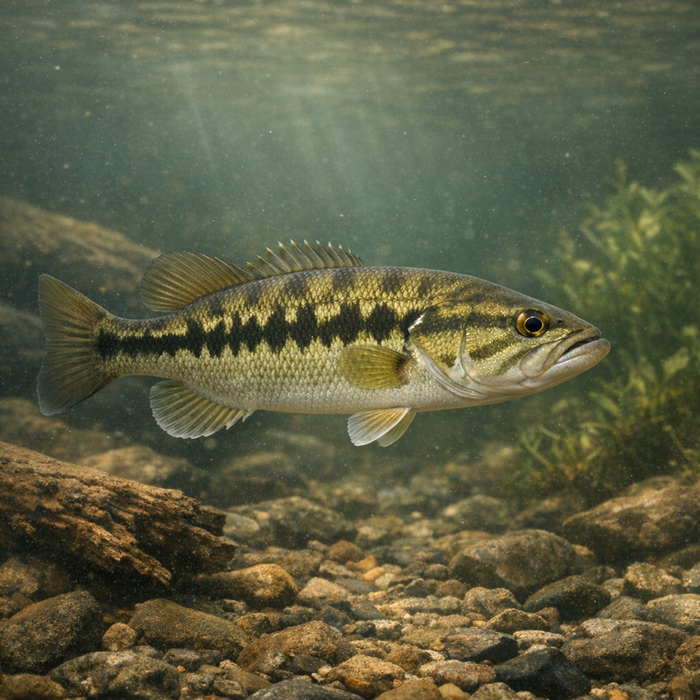
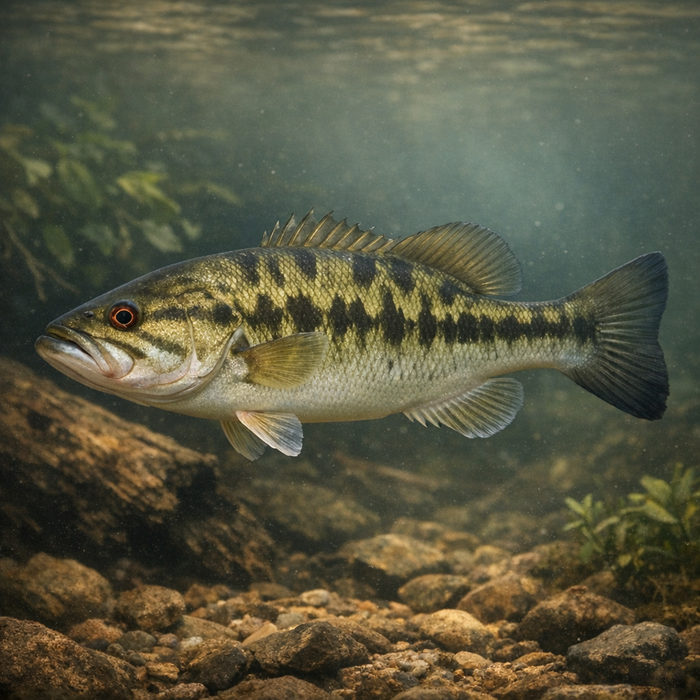
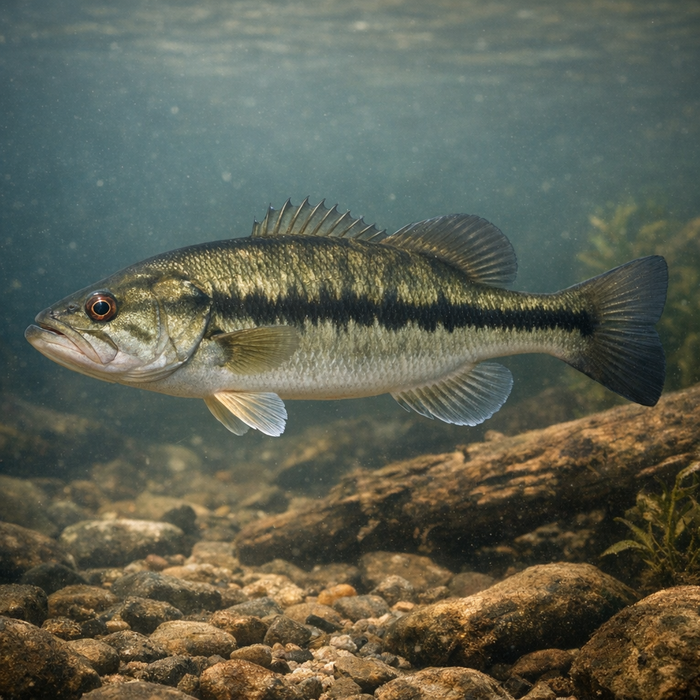
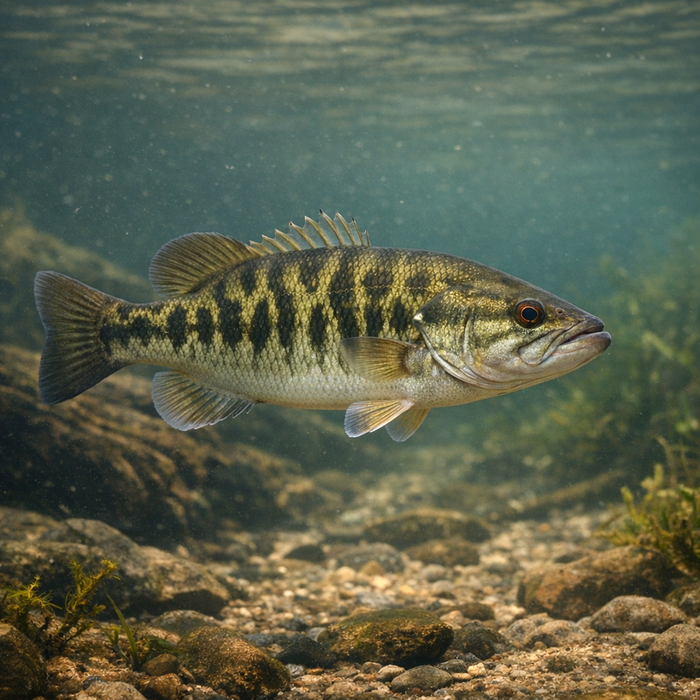
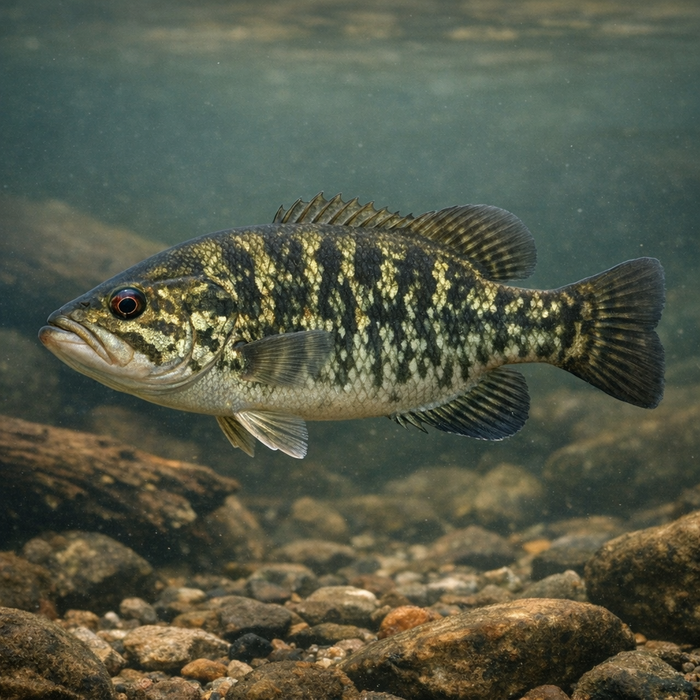
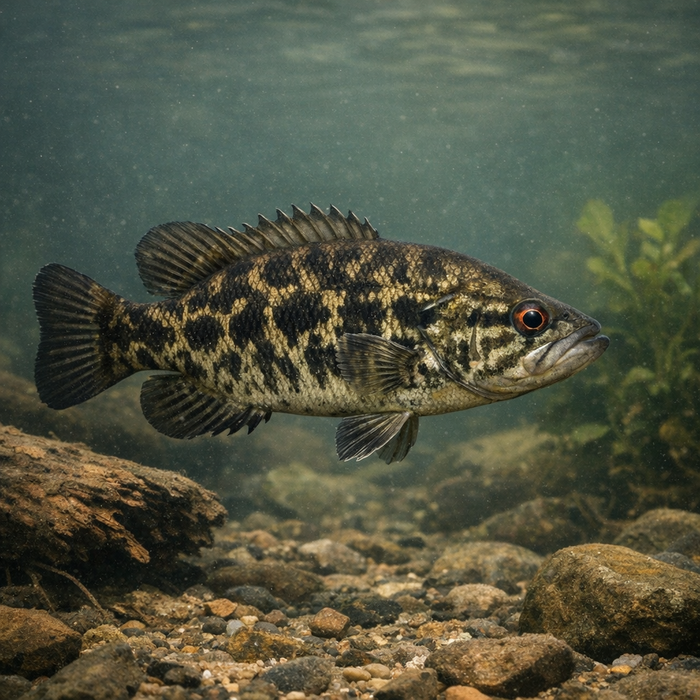
Altamaha bass (Micropterus calliurus): A native stream bruiser with red eyes, blue war paint, and shoal swaggerIntroductionThe Altamaha bass is the local that never left home, a native black bass built for Georgia shoals and skinny water. It trades bulk for attitude, living in fast seams, rocky pockets, and tannin-tinted runs where a 15-incher feels like a champ. If you're into precise casts, quick hits, and fish with serious style points, this one's your jam. Here are the Altamaha bass facts you actually need.What Makes the Altamaha bass Unique?Two things: look and lineage. The Altamaha bass sports electric-blue facial streaks against a brick-red eye, plus broken lateral bars instead of a single bold stripe. It's part of the redeye bass clan but genetically distinct, a true native carved by the Altamaha system's mix of Piedmont rock and Coastal Plain tannins. It doesn't balloon like a largemouth. Instead, it's a current athlete, compact and efficient, hammering crayfish and small baitfish with fast-twitch ambushes.Habitat & Global RangeThe Altamaha bass is a homebody confined to the Altamaha River basin of Georgia, working creeks and rivers with rock, wood, and moving water. Think clear to tea-stained riffles, pocketwater, and shoals with knee- to waist-deep current, plus adjacent pools where they rest between bursts. They'll slide under banks and timber when flows jump, then return to seams when levels drop. If you're scanning Altamaha bass habitat, look for boulder gardens, broken current, and a forgiving casting lane.Behavior & TemperamentThis fish is bold but not dumb. It'll smash a small craw, then ghost you if you clank a rock. Altamaha bass track current like a blueprint, holding behind boulders and in tongues of flow. Surface feeds happen during low light and insect hatches, but most strikes come tight to bottom. They school loosely as juveniles and spread out as adults, defending nests hard in spring and patrolling prime edges the rest of the year. Expect quick hooksets, short but scrappy runs, and a few aerial surprises.Ecological ImportanceThe Altamaha bass anchors a native predator slot in these streams, converting crayfish and small forage into muscle and momentum. Their nest fanning cleans gravel patches used by other species, and their territorial habits shape where smaller fish and invertebrates dare to hang out. Because they evolved in these exact flows, their presence signals intact hydrology, good sediment control, and functioning riparian buffers. Lose that, and you lose the whole web.Conservation & Environmental PressuresTwo words: habitat and hybrids. Siltation from poor land use buries gravel and shoals. Unnatural flow swings punish nests. And stocking or illegal transfers of Alabama bass risk genetic swamping, diluting Altamaha DNA fast. Add summer heat and low dissolved oxygen in dewatered reaches, and you get pressure from every angle. Management is trending smarter, but protection hinges on local choices: keep flows sane, sediment out, and nonnative bass out of the basin.The FishyAF TakeThe Altamaha bass is a finesse brawler. You won't tape double-digit weights, but you will grin like a maniac after threading a cast through a shoal slot and watching blue-cheeked lightning chew your craw. It's native, picky about real estate, and worth traveling for. Treat it like the small-stream trophy it is: quick photo, gentle release, and a nod to the river that built it. Altamaha bass habitat is special. Fish it like you want it around forever.