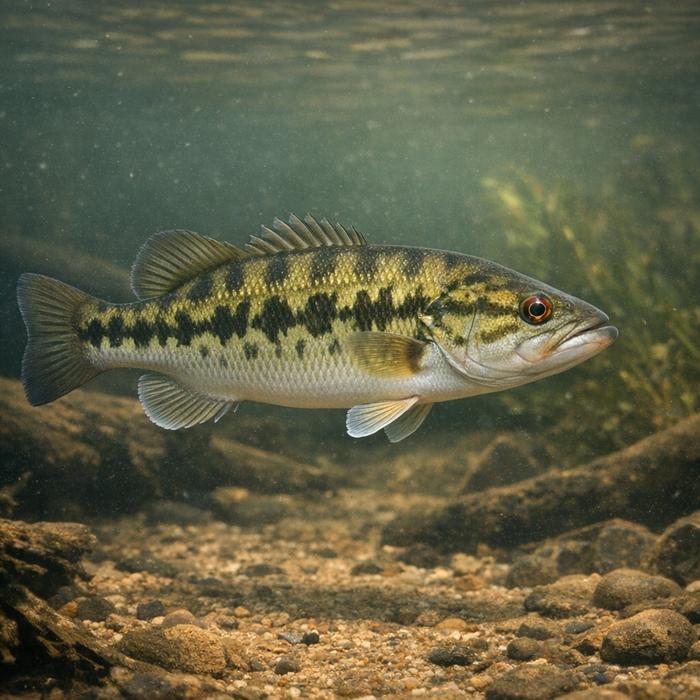
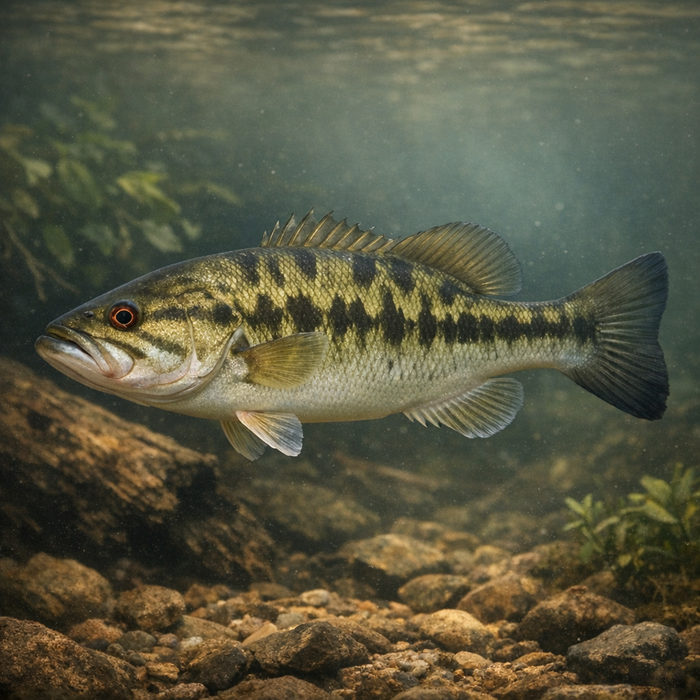
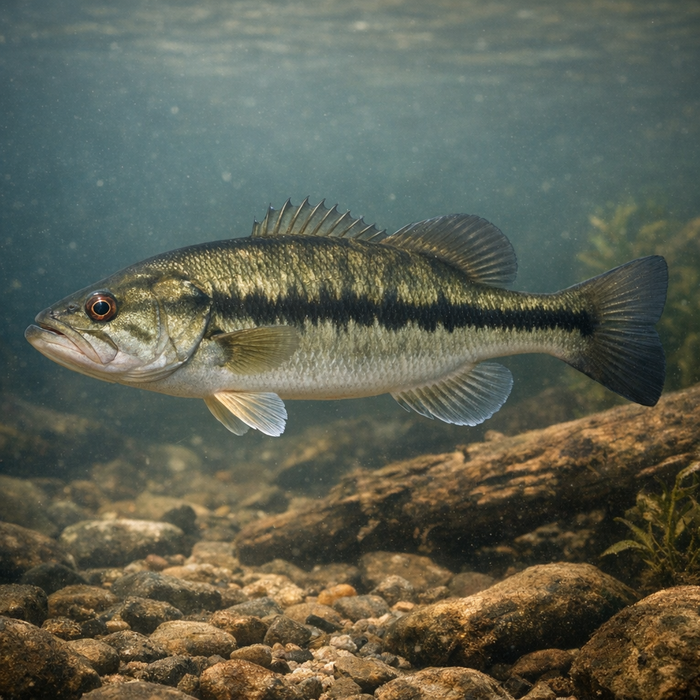
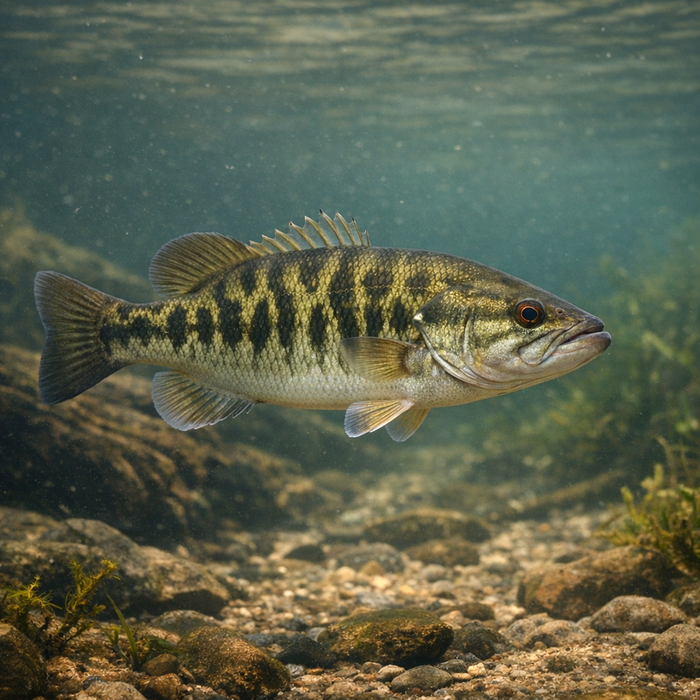
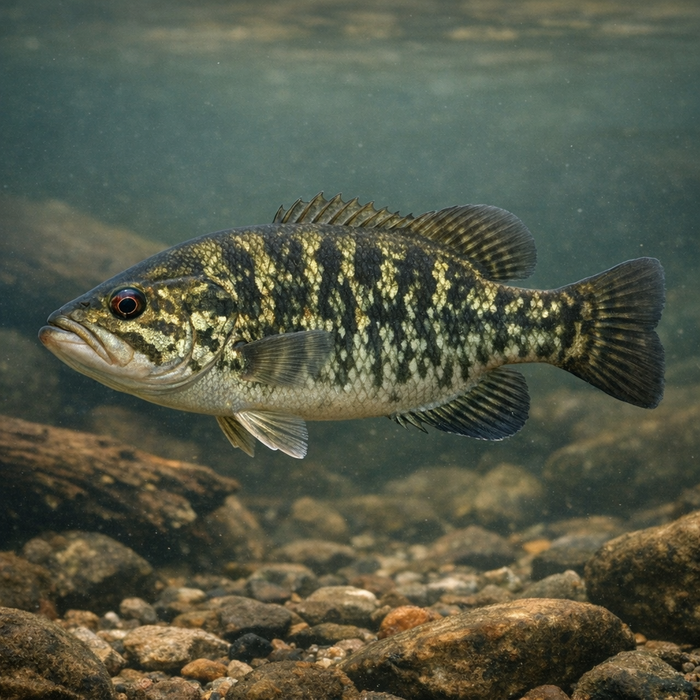
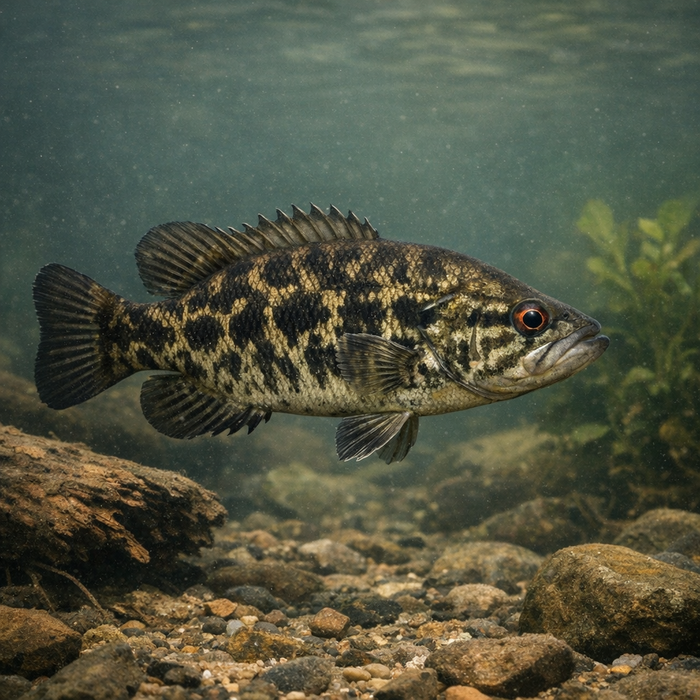
Bartram's bass (Micropterus pucpuggy): A red-eyed river bruiser that hits above its weight classIntroductionBartram's bass is the native black bass of the Savannah River system, a compact, rock-loving predator that lives where the water talks back. Think riffles, shoals, and emerald pockets where a precise cast gets punished. It won't break your scale, but it will test your footwork, your stealth, and your ego. If you're into small-water chess matches with mean, beautiful fish, welcome to the club.What Makes the Bartram's bass Unique?For starters, identity. Long tossed into the redeye basket, Bartram's bass earned its own name: Micropterus pucpuggy, honoring William Bartram's Muscogee nickname meaning "flower hunter." Genetics sealed the deal, giving this fish a distinct slot in the black bass family tree. Second, it's a shoal athlete. Everything about it is optimized for current: tight build, sharp turns, short sprints. Third, those looks. Red eyes, jade cheek streaks, and white-edged tail tips make even small fish look custom painted. Collectively, that's a package you don't confuse once you've met it.Habitat & Global RangeThis is a homebody. Genuine Bartram's bass live in the Savannah River basin across Georgia and South Carolina, from bouldery piedmont creeks to moderate-sized rivers. They prefer clear, cool-to-warm flows with cobble, bedrock, and woody pockets. They'll tuck into eddies behind house-sized boulders, slide under root wads, and patrol shallow tongues of current at the head of pools. Reservoirs connected to that drainage also hold fish, but hybrids complicate ID. If you're researching Bartram's bass habitat, picture shoals and seams lit by sun, not mud-bottom backwaters.Behavior & TemperamentBartram's bass hunts like a river smallmouth with a redeye's attitude. It ambushes on seams, smacks small topwaters when shadows get long, and bullies minnows and crayfish pinned to rock. It's wary in bright conditions and ultra-clear water, so long casts and skinny leaders pay off. Expect quick bursts, short but spirited runs, and a stubborn refusal to quit once it digs behind a rock. Seasonal shifts are classic bass logic: push shallow to spawn in late spring, slide deeper and tighter to shade in summer, and feed windows pop during low light or bumping flows.Ecological ImportanceAs a native apex ambusher for small streams, Bartram's bass helps keep crayfish and small fish populations in check, tightening the feedback loop of healthy riffle-and-run ecosystems. Its presence is also a clean-water signal. When sediment and warm, nutrient soup take over, this fish fades. Keep Bartram's bass around and you keep the neighborhood honest: benthic bugs thrive, darters persist, and those shoals stay alive.Conservation & Environmental PressuresIts biggest headache isn't angling; it's genetics. Introduced Alabama bass hybridize readily, and a few years of mixing can erase native lineages. Add in sedimentation from development, altered flows, and riparian abuse, and the species gets squeezed from multiple angles. Official conservation status is catching up, but many managers already treat Bartram's bass with extra care. Release is common culture. Some waters encourage removal of non-natives; some clubs even run "spot-bash" tournaments to protect natives. If you value Bartram's bass, clean your gear, don't move fish, and keep hybrids out of the gene pool.The FishyAF TakeBartram's bass is the Southeast's trout substitute for anglers who like teeth and swagger. It's technical, visual, and honest: make the right cast and you're rewarded, botch it and the river laughs. This fish deserves the same respect we give native cutthroats and brookies. Treat it like a regional treasure, because it is one. Want Bartram's bass facts? Here's the headline: it's small, rare-ish, and absolutely worth the chase. Pack your light rod, your best footwork, and a promise to put it back.