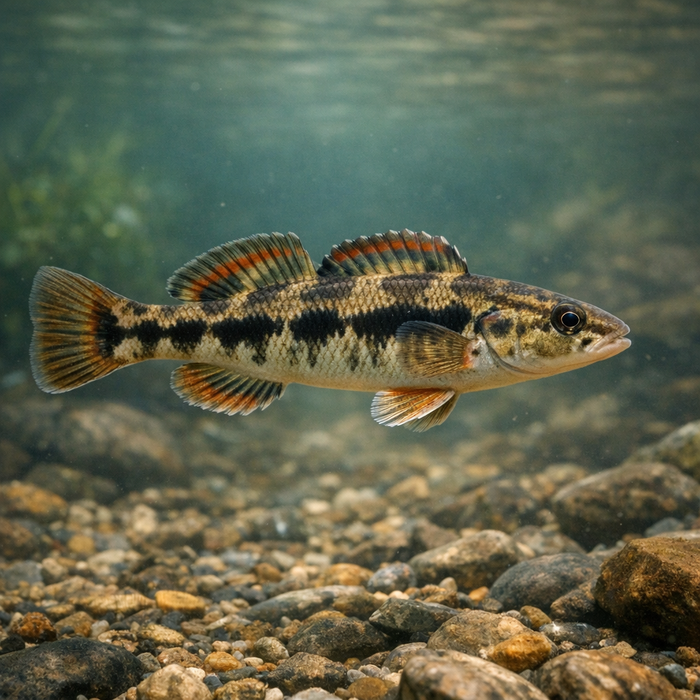
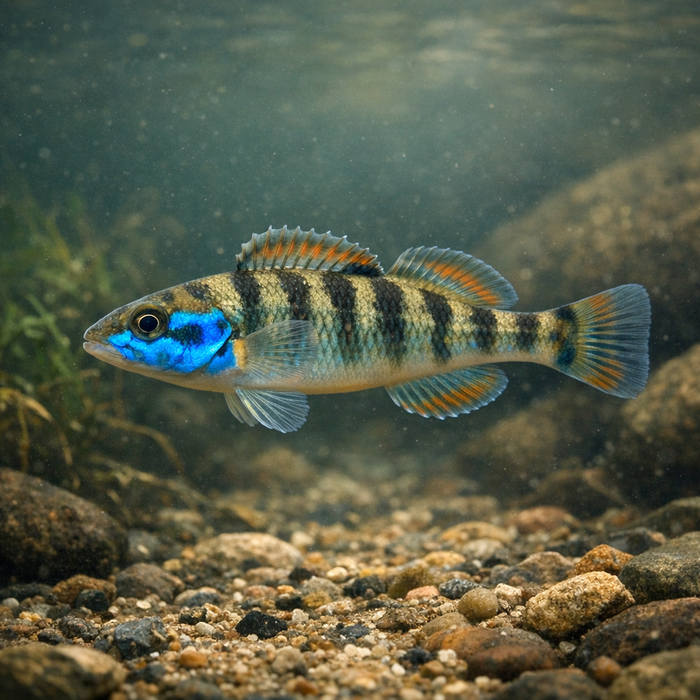
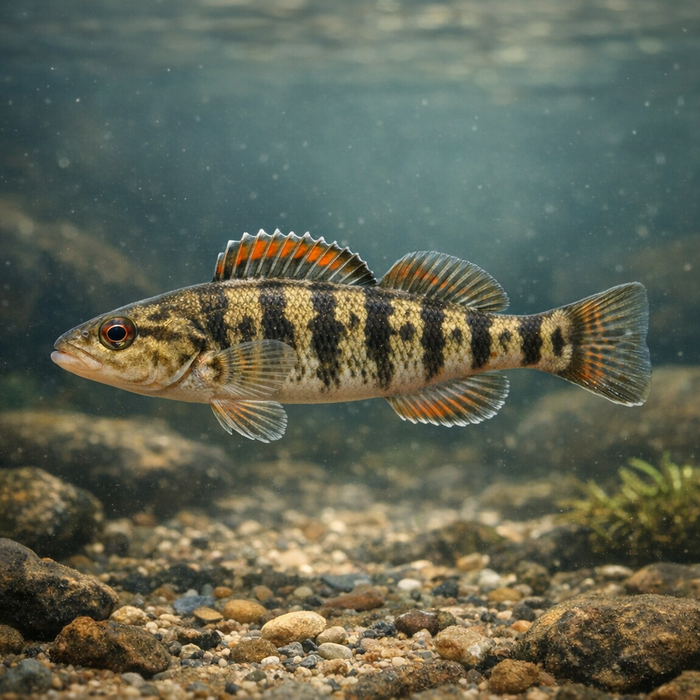
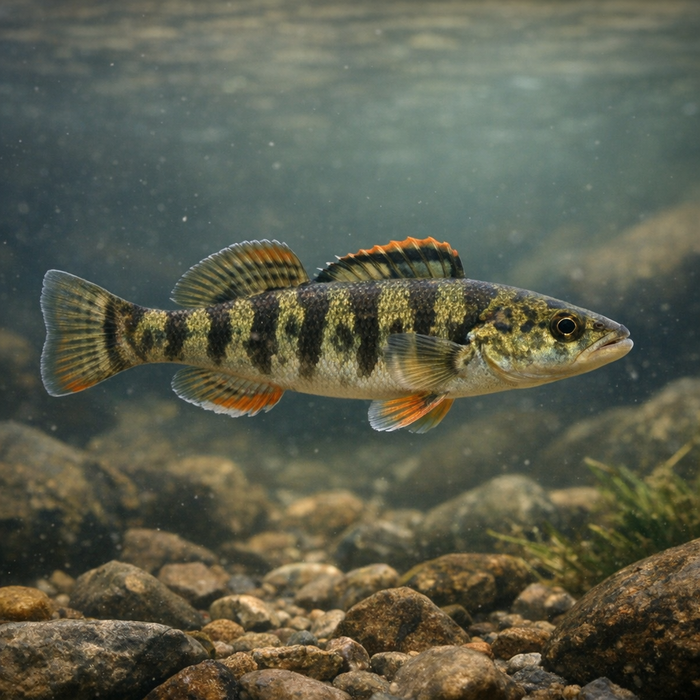
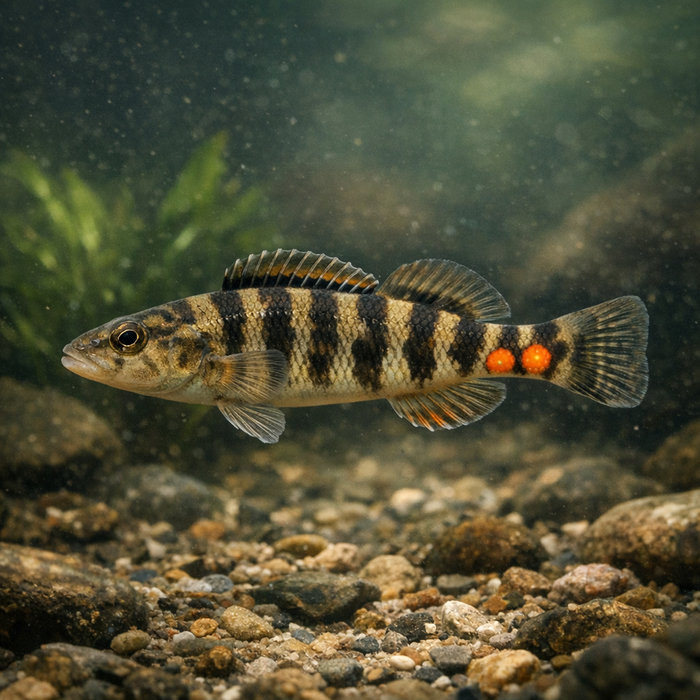
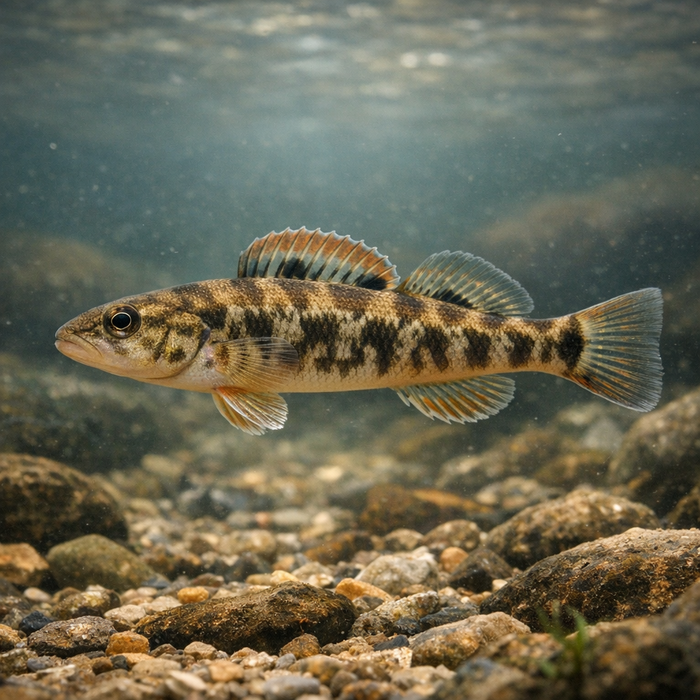
Tuckasegee Darter (Etheostoma gutselli): A Bold, Memorable Hook LineIntroductionThe Tuckasegee darter is the punk-rock cousin in the perch family, decked out for fast water and zero nonsense. It doesn't cruise lakes or chase shad; it hugs stone and owns the riffles. For anglers who like micro targets and technical water, this little speedster is a masterclass in precision. Call it a tiny predator with giant attitude.What Makes the Tuckasegee darter Unique?Start with engineering. Like other true darters, the Tuckasegee darter lacks a swim bladder, which is basically legal permission to ignore buoyancy. It's built to stay put on the bottom, even when the current is trying to evict everything else. Add wide, splayed pectorals and a torpedo body and you get a fish that can launch forward a few body lengths, stop dead, and disappear into gravel like a magic trick. During spring, males dial the color knob up with bold fin bars and subtle body hues that scream look-at-me in the clear flow. That display, combined with nest-guarding behavior under flat stones, is one of the cooler Tuckasegee darter facts you can witness without scuba gear.Habitat & Global RangeIf you're shopping for Tuckasegee darter habitat, skip the ponds and go straight to cool, clear Appalachian streams with cobble, pebble, and pocket water. Think ankle-to-knee-deep riffles that churn just enough to make reading seams an art. This species sticks tight to the bottom in runs and riffle margins where the current delivers a steady buffet of insect drift. It's a specialist, and specialists key on perfect oxygen and substrate. No silt, no deal. That narrow focus is a big part of its mystique and tells you exactly where to start looking.Behavior & TemperamentThe Tuckasegee darter is a bottom sniper. It watches the drift, flares those big pectorals, and pounces on nymphs and micro-invertebrates with crisp little bursts. Spook it and it doesn't bolt downstream like a trout; it flicks twice and locks down, becoming pattern and texture in the stones. During spawning, males defend egg patches tucked beneath flat rocks, fanning and cleaning them like obsessive housekeepers. Daylight hours can be surprisingly productive in clear water because vision is the name of the game. At flood-stage flows, fish tuck into micro-crevices behind cobble and boulder lips the size of a coin.Ecological ImportanceThis darter is a clean-water litmus test in a fish suit. When the Tuckasegee darter is thriving, the riffles are healthy, the insect community is balanced, and the substrate isn't choked with silt. It's mid-level prey for bigger stream predators and a ruthless grazer of larval insects, knitting energy from the riffles into the food web. Take it out of the picture and you feel the disruption up and down the chain.Conservation & Environmental PressuresSiltation is enemy number one. Clogged substrate wipes out nesting real estate and buries the bug buffet. Add in altered flows from upstream development or poorly timed water releases, and you get riffles that look right but fish wrong. The Tuckasegee darter needs clean, cold, moving water and complex gravel that hasn't been cemented by fines. Local protection and watershed care matter. Even when regulations allow microfishing, smart handling, short air time, and gentle release are the only acceptable tactics with a fish this size and specificity.The FishyAF TakeThe Tuckasegee darter isn't a numbers game or a grip-and-grin. It's a microscope. You're hunting inches of current, not miles of river. If you crave finesse, this fish will sharpen your presentations and your humility. For anglers obsessed with details, the Tuckasegee darter is a perfect challenge: small target, tight window, big reward. Nail the seam, keep the terminal gear truly micro, and you'll learn a lot fast. Whether you're here for Tuckasegee darter habitat nerding or just collecting hard-won Tuckasegee darter facts, this riffle ghost will make you a better angler across the board.